Best AI note takers for therapists in 2026


In this article
Best overall for flexible capture: Omi. Best for structured clinical documentation: a therapist-specific clinical scribe. Best for keeping session audio out of your workflow: post-session AI dictation. This 2026 guide ranks those approaches by what you need to capture, review, and retain—not by how many features fit on a product page.
- Best AI note taker for therapists 2026: Omi wins for flexible capture, not automatic clinical documentation.
- Choose a therapist-specific clinical scribe when your priority is a structured draft for clinician review.
- Choose post-session AI dictation when you do not want to record the therapeutic conversation.
- Check consent, data handling, contractual requirements, and deletion controls before recording any client session.
Why this matters
Capturing a conversation and documenting treatment are different jobs. A transcript records words. A clinical note must reflect your assessment, relevant observations, treatment, and plan. Generated text is a draft, not a clinical judgment.
Start with the document you need, then choose the capture method. If you reverse that order, you risk collecting sensitive material without a clear reason to retain it.
This guide compares a named capture system with two alternative workflows. It is not a head-to-head accuracy benchmark or a claim that every option meets your practice's requirements. Your clinical setting, client preferences, and data policies determine which approach belongs in the room.
What makes the best AI note taker for therapists?
Use these six criteria for your 2026 shortlist. A tool that fails a required privacy or practice-policy check should not advance because its summaries look good.
- Capture boundaries: Can you deliberately choose what to record and keep unrelated conversations out?
- Clinical fit: Does the output support the note you need, or does it only summarize a conversation?
- Reviewability: Can you check important statements against the source rather than trusting a polished paragraph?
- Data control: Can you export and delete material, and understand where processing happens?
- Session fit: Does the workflow suit in-person care, telehealth, or documentation after the client leaves?
- Language and attribution: Can you evaluate the relevant language and reliably distinguish the speakers?
Ask for a demonstration using fictional material. Include a correction, a negation, and a statement attributed to someone outside the session. Those examples let you inspect whether the draft preserves meaning without exposing client information.
Best options at a glance
The ranking separates three distinct needs: flexible conversation capture, structured documentation, and clinician-led recollection. There is no universal winner across all three.
| Rank and option | Best for | Standout feature or approach | Key limitation |
|---|---|---|---|
| 1. Wearable and companion app | Flexible in-person and computer-based capture | Transcripts, summaries, tasks, memories, and search | General-purpose output still needs clinical interpretation |
| 2. Therapist-specific clinical scribe | Structured clinical-note drafts | Evaluate tools against your required note format | Suitability depends on the individual vendor and configuration |
| 3. Post-session AI dictation | Avoiding session recording | You dictate your own account after the appointment | Details depend on what you remember and choose to include |
The second and third entries are workflow categories, not endorsements of unnamed products. Use their checklists to evaluate a specific tool before purchasing or processing client information.
1. Omi: best for flexible conversation capture
Best for: Therapists who want wearable, phone, and computer capture options and will review the resulting material themselves.
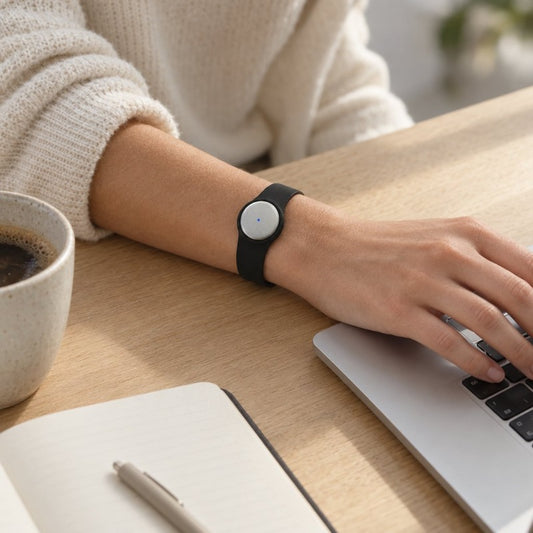
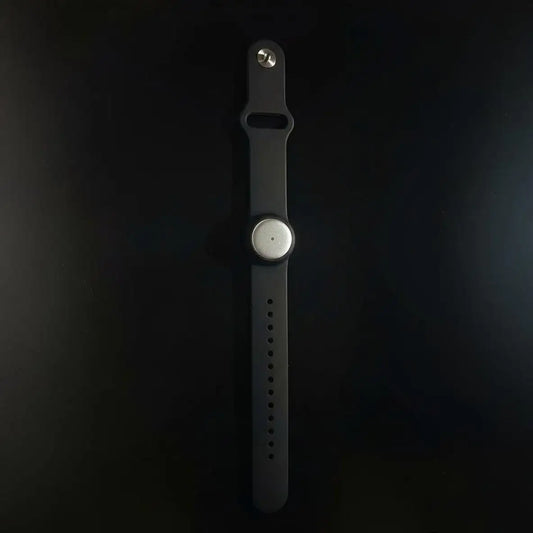
The system captures spoken interactions and produces transcripts, summaries, action items, and memories. You can search captured material and use the companion app without wearing the pendant: the phone or Mac app can record through its built-in microphone.
Omi is best for therapists who want flexible conversation capture and searchable notes rather than an assumed clinical-note replacement. That distinction matters. The verified features support capture and organization; they do not establish automatic clinical assessment, diagnostic coding, or a particular therapy-note template.
Where the capture options help
For an in-person conversation, the wearable provides a hands-free capture option. For online meetings, the Mac app records without joining the call as a bot; phone or wearable capture in the room is another supported approach. Check the actual audio path before using any setup with a client.
The system supports 33 languages, with English identified as the most accurate. You must select the language manually; it does not automatically switch languages during a conversation. That is a material limitation for multilingual sessions.
Speaker labels help distinguish voices. Speech Profile learns the wearer's voice in English, but you should still verify who said clinically significant statements.
Omi pros
- Wearable, phone, and Mac capture let you choose the recording setup.
- Searchable transcripts and summaries support later review.
- Full export and deletion controls support deliberate data management.
- Open-source hardware, firmware, and software provide visibility beyond a closed product description.
Omi cons
- General-purpose summaries are not a substitute for a clinician-authored record.
- Manual language selection limits conversations that switch languages.
- Local Sync is experimental; it should not be treated as an established offline workflow without evaluation.
What to check before clinical use
The published security information lists SOC 2 and HIPAA, TLS in transit, and AES-256 encryption at rest. Those statements do not replace your review of contractual requirements, data flows, access, retention, or practice policy. Confirm the appropriate business associate agreement where required.
Listening allowances also affect planning. Basic includes 300 listening minutes per month; Plus includes 1,500 listening minutes per month. Unlimited has no minute cap. Core features are the same across plans, and reaching a minute cap does not stop recording; audio remains available to manage and export.
Verdict: Buy for flexible capture only after your clinical-use checks pass. Skip it as an assumed replacement for a specialized clinical documentation system.
2. Therapist-specific clinical scribe: best for structured drafts
Best for: Therapists whose main problem is turning session information into a consistent clinical-note draft.
A therapist-specific clinical scribe is the category to evaluate when document structure matters more than the recording device. Require the vendor to demonstrate your actual documentation workflow rather than accepting a generic meeting summary as proof of clinical fit.
For a 2026 evaluation, ask the vendor to generate the format you use, such as SOAP or DAP, from fictional session material. Check where client statements, your observations, and your assessment appear. A well-formatted draft can still contain the wrong interpretation.
Therapist-specific clinical scribe pros
- A clinical-format evaluation keeps the purchase focused on documentation rather than gadget features.
- Required fields give you a concrete way to compare candidate systems.
- A source-to-draft review can expose omissions and unsupported additions before deployment.
Therapist-specific clinical scribe cons
- A clinical label does not establish accuracy, contractual suitability, or acceptable data handling.
- Template fit and export options vary; verify them for the specific product.
- Every draft still needs clinician review before it enters the record.
What a useful demonstration should prove
Ask the vendor to show how you correct a misattributed statement, remove an unsupported inference, and export the finished draft. Also ask what remains after deletion: source audio, transcripts, generated notes, and backups require separate questions.
Do not assume an electronic health record connection exists. Have the vendor demonstrate the exact transfer process your practice would use, including who reviews the content before it becomes part of the chart.
Verdict: Buy only after a specific clinical scribe demonstrates the required note format, review process, and data controls. Hold if the demonstration stops at a polished summary.
3. Post-session AI dictation: best for avoiding session recording
Best for: Therapists who do not want to record the therapeutic conversation but still want help drafting notes.
Post-session AI dictation starts with your account, not a recording of the client. After the appointment, you dictate relevant observations and decisions into an approved transcription or drafting tool, then review the result.
This approach changes what you collect. It does not remove confidentiality obligations: your dictated account can still contain sensitive client information and needs the same deliberate handling.
Post-session AI dictation pros
- You can keep client-session audio out of the workflow.
- You choose the clinically relevant information to dictate.
- The process separates the therapeutic conversation from documentation capture.
Post-session AI dictation cons
- The draft depends on your recollection and selection of details.
- There is no session transcript to check when wording is uncertain.
- Dictation still takes clinician time after the appointment.
Make dictation useful, not vague
Use a consistent sequence: relevant client report, your observations, interventions, response, and next steps. State uncertainty as uncertainty. Do not dictate a paraphrase as though it were an exact client quotation.
Keep a clear boundary between what the client reported and what you observed. Ask the drafting tool to organize your material without adding information, then inspect the result for unsupported interpretations anyway.
Verdict: Buy an approved dictation tool if avoiding session recording is your priority. Skip this approach when your essential requirement is an exact record of the conversation.
How we ranked these approaches
The order reflects fit for the three stated use cases, not measured superiority. Flexible capture comes first for therapists seeking searchable conversation records; a clinical scribe fits structured drafts; post-session dictation fits a no-session-recording preference.
The criteria are capture boundaries, clinical fit, reviewability, data control, session fit, and language handling. No accuracy score, time-saving estimate, or clinical outcome is claimed for this 2026 ranking.
Before you record: a practical approval sequence
Decide whether recording belongs in the workflow before deciding which recorder to use. Consent rules vary by location; check local law and your professional and organizational requirements. This is not legal advice.
For background, read the guide to recording conversations with a wearable pendant. A general recording guide does not replace advice specific to your practice.
Follow this sequence:
- Choose the output. Define whether you need a transcript, a summary, or a clinical-note draft.
- Check permission. Establish the applicable consent process and how you will handle a client declining recording.
- Map data. Identify what is collected, where it is processed, who can access it, and what is retained.
- Test fiction. Evaluate fictional material before introducing client information.
- Review drafts. Assign responsibility for checking the output before it enters the clinical record.
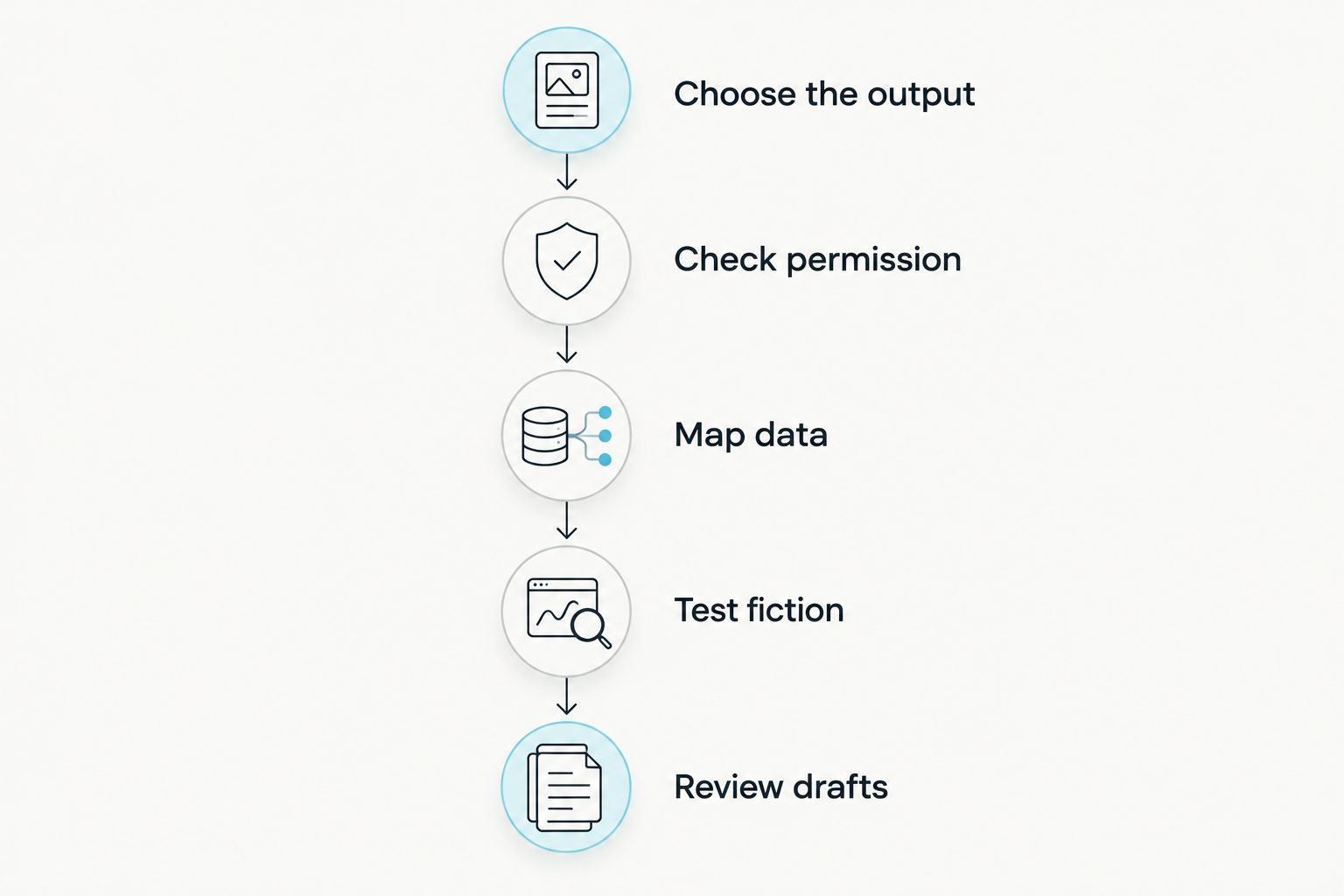
The test should include more than successful transcription. Inspect how the workflow handles a stopped recording, an incorrect speaker label, an export, and deletion. Write down the result so the purchasing decision rests on observed behavior rather than presentation quality.
Which option should you choose?
Choose flexible capture when you need the conversation record. Choose a clinical scribe when you need a structured draft. Choose post-session dictation when you do not want session audio collected.
For an undecided therapist in 2026, start with the recording decision. If recording does not fit your clients or practice, remove session-recording tools from the shortlist instead of trying to justify them through convenience.
Then evaluate the smallest workflow that meets the need. More captured material is not automatically more useful documentation.
FAQ
What's the best AI note taker for therapists in 2026?
Omi is the pick here for flexible conversation capture, while a therapist-specific clinical scribe is the category to evaluate for structured clinical drafts. Choose post-session AI dictation if you do not want to record the session itself.
Can I use an AI note taker during therapy sessions?
Use one only after checking consent, local law, practice policy, and the proposed handling of client information. Consent rules vary by location; this is not legal advice.
Does a HIPAA claim mean a note taker is approved for my practice?
No. Review the actual service, contractual requirements, business associate agreement where required, access controls, retention, and data flows before using client information.
Is a transcript the same as a therapy progress note?
No. A transcript records spoken content, while a progress note requires relevant clinical documentation and clinician judgment. Review generated text before including it in the record.
Can I use AI dictation without recording my client?
Yes. You can dictate your own account after the appointment into an approved tool. The resulting information remains sensitive, and the draft depends on what you recall and include.
What should I test before choosing a therapy note-taking tool?
Test fictional material for speaker attribution, negation, corrections, unsupported additions, export, and deletion. Also inspect whether the draft fits your documentation requirements.
Should I keep every session recording?
Do not default to keeping every recording. Establish a retention policy consistent with applicable obligations and practice requirements, and verify how deletion works for each type of stored material.
One last thing
The most revealing test is a correction. Include a fictional speaker saying something, then correcting it later. Check whether the draft preserves the correction or repeats the original error with confidence.
A readable note is not necessarily a faithful one. Choose the workflow you can inspect, correct, and control.