Best AI wearables in 2026: pendants, pins, glasses and rings


In this article
Best overall for conversation notes: Omi. Best for visual-capture development: Omi Glass Dev Kit. Best for reusing a pendant you already own: Limitless paired with the companion app. This 2026 ai wearable guide separates useful capture tools from discontinued hardware and form factors that need closer scrutiny.
- Omi is the best ai wearable for professionals who want conversation transcripts, summaries and tasks.
- Omi Glass Dev Kit suits creators and researchers, not buyers seeking finished consumer smart glasses.
- Existing Limitless Pendant owners can pair their hardware with the Omi app.
- Bee deserves a separate evaluation; Humane AI Pin is discontinued.
- Choose pendants, smart glasses or rings by the information you need to capture, not their shape.
Why this matters
A device on your body is not automatically a useful assistant. The purchase only makes sense when captured information becomes something you can find, review and act on.
For a sales conversation, that means an accurate record and clear follow-up tasks. For a technician, it means keeping spoken observations organized. For visual research, audio alone leaves out the scene you were trying to document.
The 2026 shortlist also needs a lifecycle check. Limitless stopped selling its pendant after an acquisition; Humane AI Pin was discontinued. A recognizable name is not a reason to choose hardware whose original product path has ended.
What makes the best AI wearable?
Use these six criteria before comparing shapes or brand names:
- Capture fit: Does the device capture conversations, visual context or the specific information your work requires?
- Useful output: Look for transcripts, summaries, searchable records and tasks rather than capture alone.
- Recording workflow: Check how in-person conversations, online meetings and phone calls actually get recorded.
- Data control: Check export, deletion, local operation and where captured information goes.
- Language handling: Confirm supported languages, speaker identification and whether you must select a language yourself.
- Product lifecycle: Distinguish an ongoing product, a developer kit, hardware you can reuse and a discontinued device.
Choose the output first. Choose the wearable second. If you need searchable conversation notes, a camera does not fix a weak transcription workflow. If you need visual context, an audio-only recorder does not capture what you saw.
Do not treat an undocumented specification as an advantage. Battery life, water resistance and storage matter when your work depends on them, but a buying decision needs published specifications rather than assumed performance.
AI wearables at a glance
This 2026 comparison ranks options by distinct use cases, not by a claim that every device does the same job. Product, plan and compatibility details reflect the supplied product and support information dated September 23, 2026.
| Rank and option | Best for | Standout feature or distinction | Key limitation | Verdict |
|---|---|---|---|---|
| 1. Omi pendant | Professionals capturing spoken work | Transcripts, summaries, tasks and searchable memories | Manual language selection; English is most accurate | Buy for conversation capture |
| 2. Omi Glass Dev Kit | Creators and researchers building around visual context | Camera and audio capture become transcripts, summaries, tasks and memories | Developer kit, not a finished consumer product | Buy for development |
| 3. Limitless Pendant | Existing owners extending hardware use | Can pair with the companion app | Original pendant sales ended after acquisition | Hold and reuse |
| 4. Bee | Buyers evaluating a separate wearable option | Wearable sold under the Bee brand following Amazon's acquisition | Requires a separate subscription | Hold for workflow evaluation |
| 5. Humane AI Pin | Recognizing a discontinued product before choosing | Clear lifecycle exclusion | Discontinued after HP bought Humane's assets | Skip |
Rings belong in the form-factor discussion, but this guide does not name a ring as a conversation-recording recommendation. A ring needs its own documented capture and output capabilities before it belongs beside a pendant or camera-equipped glasses.
1. Omi: best AI wearable for spoken work
Omi is the best ai wearable for professionals who want conversations turned into searchable notes and tasks. The wearable captures what you say and hear; the companion app produces transcripts, summaries, action items and memories.
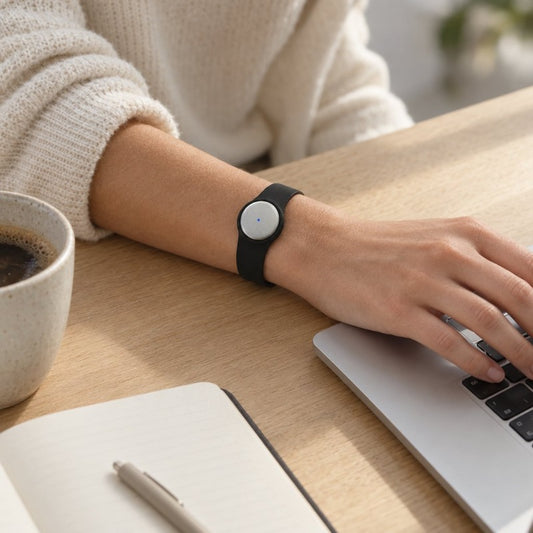
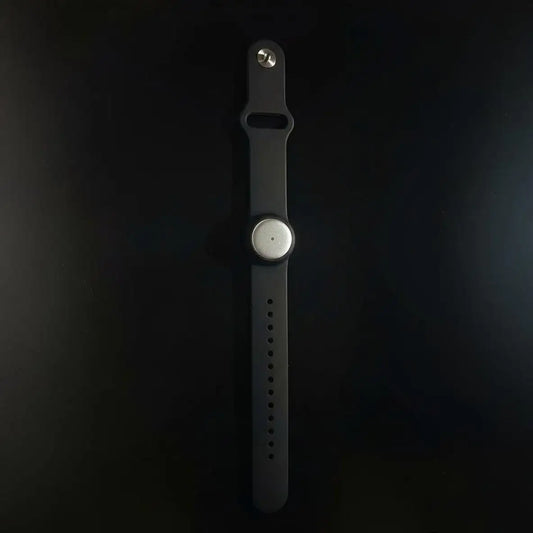
You can wear the device around your neck with its lanyard and silicone case, on your wrist with the separately sold wrist band, or under a shirt. A charger is included. That gives you different wearing options without changing the core purpose: capturing spoken interactions.
Conversation capture without a meeting bot
Apps are available for iPhone, Android, Mac and web, with Apple Watch recording also supported. You can record without the pendant using the phone or Mac's built-in microphone.
For Zoom, Meet or Teams, record through the Mac app, or capture the room's audio with the phone or wearable. The service does not join calls as a bot. For phone calls, the documented approach is speakerphone recording rather than assuming direct access to call audio.
The language setting matters. There are 33 supported languages, but English is the most accurate, and the app does not automatically switch languages mid-conversation. Speech Profile identifies the wearer's voice in English; speaker labels help separate contributions.
Plans and data control
Basic includes 300 listening minutes per month; Plus includes 1,500 minutes per month; Unlimited has no minute cap. Every plan has the same core features. Reaching a listening cap does not stop recording, and audio remains available to manage and export.
For sensitive information, examine the deployment as well as the device. Local, cloud-free operation is supported, alongside full export and deletion of individual items or everything. Experimental Local Sync stores conversations on the phone without internet and syncs them later.
Omi pros:
- Turns recorded speech into several useful outputs, including tasks and Daily Recap.
- Supports wearable, phone and Mac capture rather than requiring one recording method.
- Offers export, deletion and local operation.
- Publishes open-source hardware, firmware and software.
Omi cons:
- Requires manual language selection and does not auto-switch during a conversation.
- Wearer recognition through Speech Profile is English-only.
- Local Sync is experimental; test that workflow before relying on it.
Best for: Salespeople, technicians and other professionals whose work depends on remembering spoken details.
Verdict: Buy for conversation capture, after confirming consent and testing your recording workflow.
2. Omi Glass Dev Kit: best for visual-capture development
Omi Glass Dev Kit combines an always-on camera with audio capture. It turns what you see and hear into transcripts, summaries, tasks and memories.
The decisive phrase is developer kit. This is open-source hardware for creators, hackers and researchers, not a finished consumer product. Choose it when building or investigating a visual-capture workflow is the point of the purchase.
When glasses make more sense than a pendant
A spoken note describes a scene; a camera captures visual context. Those are different inputs. If your project depends on connecting observed information with spoken interactions, glasses address a need that an audio-focused pendant does not.
Do not buy a developer kit simply because glasses look more capable on a comparison chart. Development readiness and everyday convenience are different criteria, and this product is explicitly positioned around the former.
Omi Glass Dev Kit pros:
- Captures both visual and spoken context.
- Produces transcripts, summaries, tasks and memories from that capture.
- Uses an open-source approach suited to development work.
Omi Glass Dev Kit cons:
- Is not a finished consumer product.
- Adds camera recording to the consent and privacy decisions you must handle.
Best for: Creators and researchers developing applications around what a wearer sees and hears.
Verdict: Buy for development. Skip if you want finished consumer glasses.
3. Limitless Pendant: best for existing owners
Limitless belongs in a 2026 guide as a reuse option, not a fresh pendant recommendation. Meta acquired Limitless on December 5, 2025, and the company stopped selling the Limitless Pendant.
Existing owners can pair their pendant with the companion app described above. That creates a specific next move: evaluate the hardware you already own before replacing it.
Reuse is not the same as feature parity
Compatibility establishes that the pendant can work with another app. It does not establish that every behavior, setting or workflow matches the original service.
Test your actual use case: capture a conversation with permission, inspect the transcript, review the resulting output and check export. A pairing claim is the starting point, not the entire buying decision.
Limitless Pendant pros:
- Existing hardware has a documented app-compatibility path.
- Owners can evaluate reuse before choosing replacement hardware.
Limitless Pendant cons:
- Original pendant sales ended after the acquisition.
- Compatibility alone does not establish complete feature parity.
Best for: People who already own a Limitless Pendant.
Verdict: Hold and test the app pairing before replacing the pendant.
4. Bee: best for evaluating a separate wearable option
Bee is a wearable brand acquired by Amazon in July 2025. It remains a distinct option to evaluate, with a subscription attached to the wearable.
That is not enough to declare it better for transcripts, tasks or data ownership. Those decisions require a direct check of the capture workflow, outputs and controls you need.
Give the alternative a specific job
Before choosing Bee, define a task such as retaining a customer conversation or finding a spoken commitment later. Then check whether its documented workflow satisfies that task, including export and deletion requirements.
An acquisition identifies ownership. It does not establish recording quality, privacy protections or suitability for your work.
Bee pros:
- Provides a wearable-form-factor alternative.
- Remains under the Bee brand following the acquisition.
Bee cons:
- Uses a separate subscription.
- Ownership information alone does not answer the workflow questions that determine fit.
Best for: Buyers specifically evaluating Bee against their capture and data-control requirements.
Verdict: Hold until the documented workflow matches your needs.
5. Humane AI Pin: skip the discontinued device
Humane AI Pin was discontinued in February 2025 after HP bought Humane's assets. It does not belong on a 2026 buying shortlist for a new work tool.
This is a lifecycle decision, not a comparison of its original ambitions. A discontinued product needs to be identified clearly rather than presented beside other options as an equivalent recommendation.
Humane AI Pin pros: No current buying advantage is established here.
Humane AI Pin cons:
- The device was discontinued.
- Its earlier positioning does not establish a current supported workflow.
Best for: Understanding why an older pin recommendation no longer belongs on your shortlist.
Verdict: Skip.
Pendants, pins, glasses or rings?
Start with the information you need, then pick the body-worn format. The following distinctions keep unrelated products from competing on appearance alone.
- Spoken context: Choose a conversation-capture workflow when spoken details are the main input.
- Visual context: Choose camera-equipped hardware when seeing the scene is part of the task.
- Documented capability: Require explicit recording and output specifications before treating a ring or pin as an equivalent alternative.
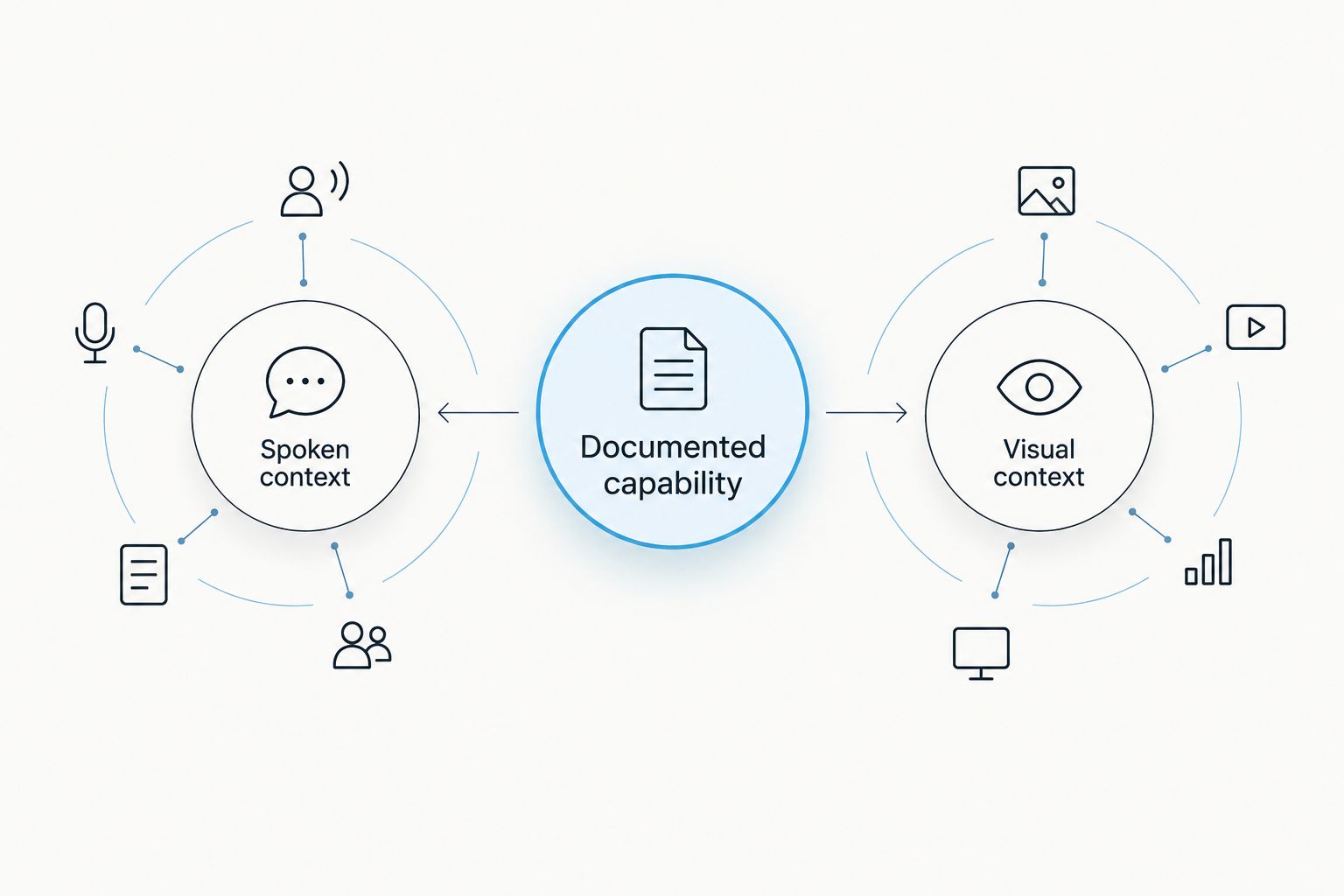
A ring label does not establish conversation recording. A pin label does not establish a supported assistant. Glasses do not automatically make a better note-taker. Require the same evidence from every shape: capture, useful output, data control and a viable product lifecycle.
How we ranked
This ranking prioritizes capture fit, useful outputs, recording workflow, data control, language handling and lifecycle. Each recommendation occupies a different use-case slot; no laboratory test results or performance scores are implied.
The pendant leads for spoken work because its documented outputs directly address that task. The glasses take the development slot because they add visual capture and are explicitly a developer kit. Existing-owner reuse, alternative evaluation and discontinued hardware receive separate verdicts rather than inflated rankings.
Which AI wearable should you choose?
For conversation notes, choose Omi as the default. Test the app with your normal work before deciding how you want to wear the hardware.
Choose the glasses only when visual-capture development is your goal. Keep a Limitless Pendant long enough to evaluate its compatible app path. Treat Bee as a separate workflow decision, and remove Humane AI Pin from your shortlist.
Check the conversation-capture device
Review the wearable that turns spoken interactions into transcripts, summaries, tasks and memories.
FAQ
What's the best ai wearable for work in 2026?
Omi is the best pick here for professionals who need conversation transcripts, summaries and tasks. Choose based on your recording workflow, language needs and data-control requirements.
Are AI glasses better than an AI pendant?
AI glasses are a better fit when your task requires visual context; a conversation-focused pendant fits spoken-note capture. Omi Glass Dev Kit is intended for creators and researchers, not buyers seeking finished consumer glasses.
Can I use the note-taking app without a wearable?
Yes. The phone and Mac apps can record through their built-in microphones, so you can evaluate the workflow before choosing hardware.
Can I still use a Limitless Pendant in 2026?
Existing Limitless Pendant owners can pair their hardware with the Omi app. Meta acquired Limitless in December 2025, and original pendant sales ended; test the pairing against your actual recording needs.
Is Humane AI Pin still a sensible recommendation?
No. Humane AI Pin was discontinued in February 2025 after HP bought Humane's assets, so it does not belong on a new-device shortlist.
Do AI rings record conversations like pendants?
Do not assume that an AI ring records conversations. Check the specific ring's documented capture capabilities, transcripts, outputs and data controls before treating it as a pendant alternative.
Is it legal to record conversations with a wearable?
Consent rules vary by location, so check local law before recording. Security features and healthcare compliance claims do not replace permission or your organization's recording policies.
One last thing
The most revealing test is not whether a wearable captures audio. It is whether you can retrieve the commitment you need afterward.
With permission, record a normal conversation, then search for an agreed action and inspect the transcript behind it. Keep the device only if that process helps you recover useful information. A wearable should reduce the work of remembering, not create another pile of recordings.