How to write SOAP notes with AI


In this article
To write SOAP notes with AI in 2026, capture an authorized encounter or dictate your observations, then ask the tool to organize only documented information into Subjective, Objective, Assessment, and Plan. Check every clinical statement against the source, correct omissions and speaker errors, and approve the note yourself before placing it in the patient record. Use AI to draft the documentation, not to supply the clinical judgment.
- For soap notes ai workflows, separate patient reports, observed findings, clinician assessment, and the documented plan.
- Omi supports conversation capture and transcription; clinicians must verify any SOAP draft produced from those records.
- Never turn an unanswered question into a negative finding or an undocumented treatment into a plan.
- Use only an organization-approved workflow for patient information, recording consent, storage, and review.
How to write SOAP notes with AI
Use this sequence whether your source is an encounter transcript, a clinician's dictation, or existing notes:
- Authorize capture. Follow your organization's recording and patient-information policies before collecting encounter audio.
- Prepare the source. Confirm the patient and encounter, correct speaker labels, and add documented findings that were not spoken aloud.
- Request a constrained draft. Require the 4 SOAP sections and prohibit invented findings, diagnoses, medications, and follow-up instructions.
- Verify the draft. Compare each statement with the source, paying particular attention to negatives, medication details, and the plan.
- Approve and file. Complete the required clinician review and use your organization's approved process for entering the note.
Recording permission and clinical documentation are separate checks. The guide to recording conversations with a wearable covers recording considerations; consent rules vary by location, so check local law and organizational policy. This article is documentation guidance, not legal or medical advice.
Why this matters
A transcript preserves spoken words. A SOAP note organizes information for clinical use, and those are different jobs.
The practical test for a 2026 workflow is not whether the output sounds polished. It is whether every statement belongs to the correct encounter, has a traceable source, and accurately reflects the clinician's assessment and plan. A fluent sentence is not evidence.
An assistant can place a patient's account under Subjective. It should not quietly convert that account into a confirmed examination finding under Objective.
Put each fact in the right SOAP section
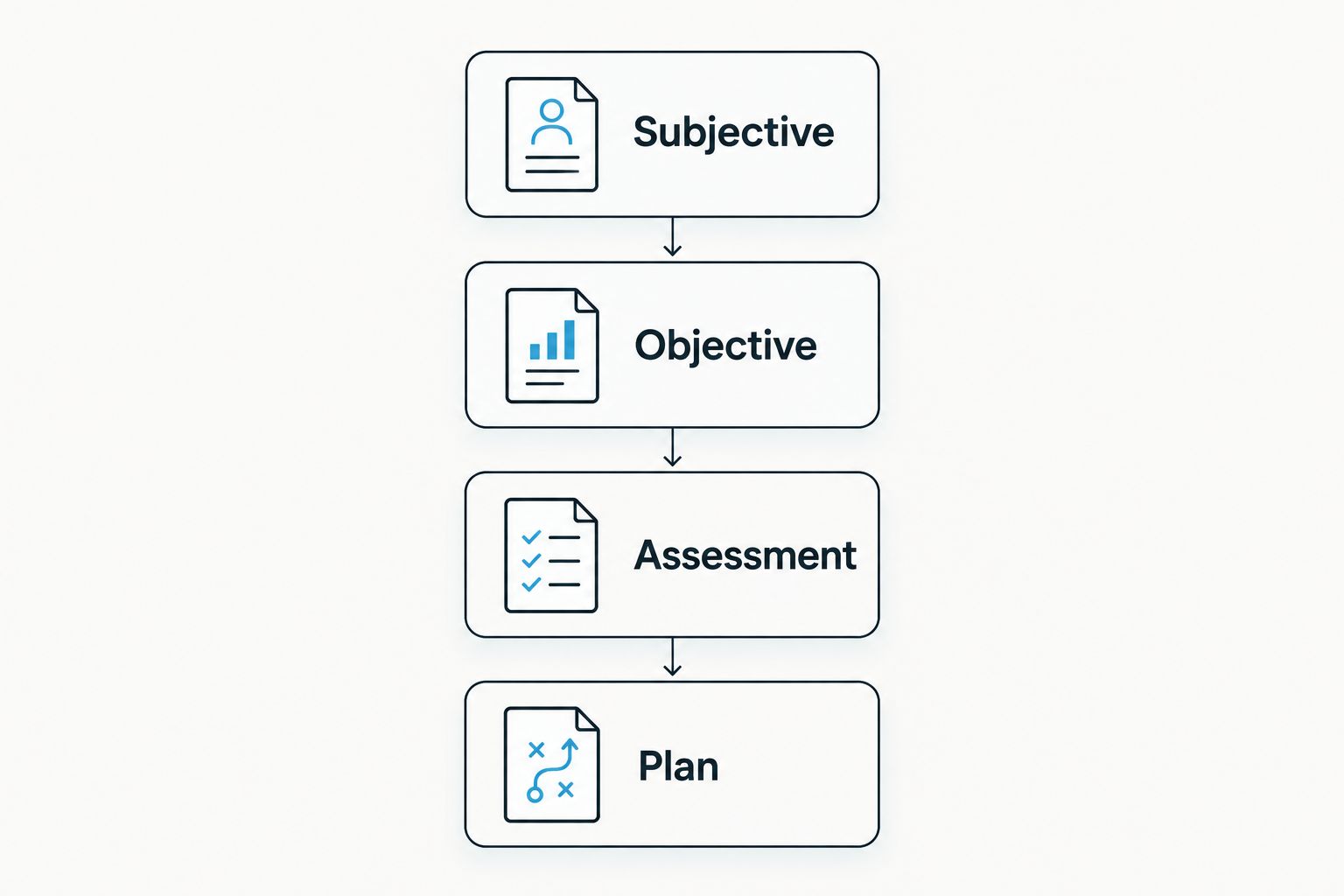
The SOAP format contains 4 sections. Use the distinctions below as drafting rules, not just headings to fill.
| Section | What belongs here | What to exclude |
|---|---|---|
| Subjective | Symptoms, history, concerns, and other information reported by the patient or another identified source | Findings presented as directly observed when they were only reported |
| Objective | Documented examination findings, measurements, and available test results | Invented normal findings or measurements absent from the source |
| Assessment | The clinician's documented interpretation, diagnoses, or differential | New diagnoses inferred by the drafting tool |
| Plan | The clinician's documented next steps, orders, counseling, and follow-up | Generic treatment suggestions added to make the note look complete |
The same topic can appear in different sections for different reasons. A patient's description of a symptom belongs in Subjective; the clinician's interpretation of that symptom belongs in Assessment.
When information is missing, leave a visible gap in the draft for review. Do not let the tool fill an empty Objective section with standard examination language.
Prepare the source before requesting a draft
Better instructions cannot repair a source that combines different encounters or attributes the clinician's words to the patient. Review the input first. Keep unrelated conversations out of the drafting request.
Confirm the encounter and speakers
Check that the recording, dictation, or notes belong to the intended patient and visit. Correct speaker labels where the distinction changes meaning, especially around reported symptoms, medication use, and instructions.
If a caregiver supplies the history, preserve that attribution. Do not rewrite the caregiver's account as something the patient personally reported.
Add documented findings that audio missed
A conversation transcript does not establish an unspoken examination finding. If the clinician documented relevant observations elsewhere, include those through the approved workflow and identify them as clinician-entered information.
Do not ask the assistant to reconstruct an examination from context. Missing information needs clarification, not a plausible substitute.
Preserve uncertainty and corrections
Keep qualifications such as uncertain timing, an unclear medication name, or a patient correcting an earlier statement. Ask the drafting tool to flag conflicting source material rather than choose whichever version sounds cleaner.
Resolve ambiguity before signing, not by making the prose more confident. A draft can be incomplete and still be useful; a complete-looking note with unsupported facts is not ready for the record.
Use a prompt that prevents invented clinical content
For a 2026 SOAP drafting workflow, constrain the task before supplying the encounter information. Use the following template only in an environment approved for the patient information involved.
Task: Create a draft SOAP note from the supplied encounter material.
Required instructions:
- Use the headings Subjective, Objective, Assessment, and Plan.
- Use only facts explicitly present in the supplied material.
- Preserve who reported each fact when the source matters.
- Separate patient-reported information from documented observations and results.
- Include only the clinician's stated assessment and plan.
- Do not invent diagnoses, examination findings, medications, doses, orders, counseling, or follow-up intervals.
- Do not convert an unanswered question into a negative finding.
- Preserve clinically relevant uncertainty, corrections, and conflicting statements.
- Flag missing or unclear information in a separate review list outside the draft note.
- Do not present the draft as reviewed, signed, or ready for filing.
Then supply the approved source material. If your organization uses specialty-specific templates, add their required fields without instructing the tool to fabricate content for them.
Keep the review list outside the patient-ready note. It is a work queue for the clinician, not documentation that every flagged issue has been resolved.
What should an AI-generated SOAP note look like?
A good draft is organized and restrained. The following is a fictional formatting example, not a clinical recommendation or a real patient record.
Illustrative source material: A patient reports a recurring concern and asks whether it needs further evaluation. The clinician says the information is insufficient to establish a diagnosis and discusses arranging an additional evaluation. No examination findings, measurements, medication changes, or specific follow-up interval are supplied.
| Section | Source-bound draft |
|---|---|
| Subjective | Patient reports a recurring concern and asks whether further evaluation is needed. |
| Objective | No objective findings supplied in the source material. |
| Assessment | Clinician states that available information is insufficient to establish a diagnosis. |
| Plan | Clinician discusses arranging an additional evaluation. |
The draft does not add a normal examination, a likely diagnosis, or routine medication advice. That restraint is the point.
Before filing, the clinician must determine what additional documentation is needed and adapt the draft to the organization's requirements. A missing-information marker is not a replacement for completing the encounter record.
Why SOAP note quality varies
The most useful differences are in the source and the review process, not the confidence of the generated language. Watch these factors:
- Capture clarity: Unclear speech leaves names, findings, and instructions unresolved.
- Speaker attribution: Confusing patient and clinician speech changes who asserted a fact.
- Source completeness: Audio cannot supply an examination result that was never recorded or added.
- Language selection: A mismatched transcription language makes the source harder to verify.
- Prompt boundaries: An unconstrained request leaves room for unsupported completion.
- Clinician review: A structured draft still needs verification against the encounter.
Compare prospective workflows using the same authorized material and the same review criteria. Judge whether the tool preserves meaning and exposes gaps, rather than whether it produces the longest note.
Where a wearable fits—and where it does not
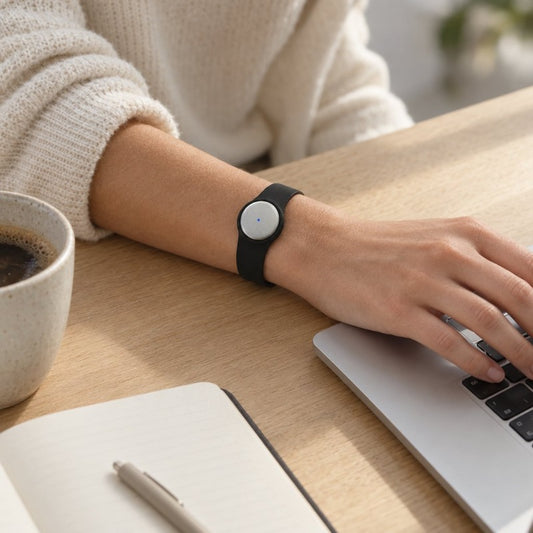
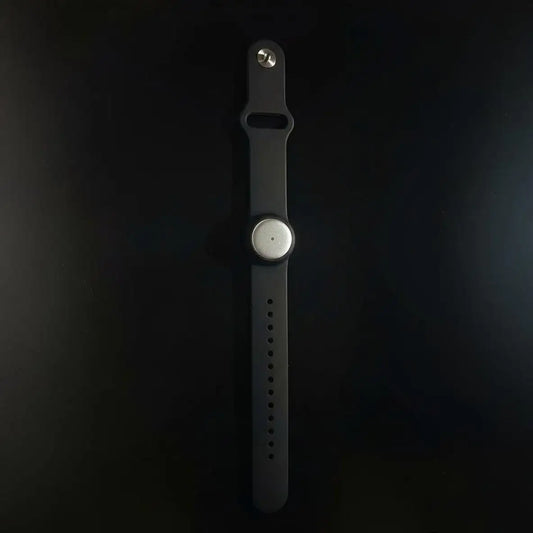
Omi is best for clinicians who need wearable conversation capture and searchable transcripts as inputs to a clinician-reviewed documentation workflow. It records spoken interactions and produces transcripts, summaries, action items, and memories; those outputs are not, by themselves, a verified SOAP note.
The Omi wearable and companion app provide a capture route. You can also record through the phone or Mac app without wearing the device, so a pendant is not required to evaluate the capture workflow.
The benefit is access to recorded conversation and searchable text. The limitation is equally clear: neither a transcript nor a summary supplies unspoken findings, establishes a diagnosis, or removes the need for review.
Omi supports 33 languages, with English identified as the most accurate. Select the language manually; the app does not automatically switch languages mid-conversation. Its Basic plan includes 300 listening minutes per month, while Plus includes 1,500 listening minutes per month; those limits describe listening allowances, not clinical accuracy.
Before using Omi with patient information, have your organization approve the actual configuration, access, retention, and export process. Do not treat a product feature list as approval for a clinical workflow.
Protect patient information and define review responsibility
For a 2026 rollout, document who can record, who can access the source, where drafts are created, and who approves the final note. Include the audio and transcript in that decision, not just the finished document.
Your organization should also define how patient chart review requirements apply to its setting; generating a draft and completing the required review are separate responsibilities. A completed template does not demonstrate that the appropriate clinician reviewed the record.
Use these questions to make the workflow explicit:
- Is this capture and drafting environment approved for the information involved?
- Have recording consent and notice requirements been addressed?
- Who can view, export, correct, and delete source material?
- How are unresolved drafting questions returned to the clinician?
- What must happen before the note enters the patient record?
Do not paste identifiable encounter material into an unapproved general-purpose account. Use the organization's established process for privacy, security, and clinical governance decisions.
How do you check an AI SOAP note before signing?
Check all 4 SOAP sections against the source. Start with patient identity and encounter context, then inspect attribution, positive and negative findings, assessment, and plan.
Verify medication names and any documented doses, routes, or frequencies directly against the approved source. Check that proposed actions were actually stated by the clinician and that unresolved questions remain visible outside the final note.
Can AI write the assessment and plan for you?
AI can format the clinician's documented assessment and plan. It should not supply missing clinical decisions in a source-bound SOAP drafting workflow.
If those sections are absent from the source, obtain the clinician's input. Do not ask the assistant to finish the note by guessing what usually happens next.
Can you make SOAP notes without recording the patient?
You can draft from clinician dictation or approved written encounter notes instead of recording the patient conversation. The same rule applies: the source must contain the facts that appear in the draft.
Choose the input method your organization permits and your review process supports. A different capture method does not remove documentation or privacy responsibilities.
FAQ
What's the safest way to use AI for SOAP notes?
Use an organization-approved environment, restrict the draft to supplied facts, and require clinician verification before filing. Keep recording permission, patient-information handling, and final approval as separate checks.
Can I turn a transcript directly into a SOAP note?
You can use a transcript to draft a SOAP note, but you must verify the result and add any required documented information absent from the conversation. A transcript alone does not establish unspoken examination findings.
Does Omi automatically create a verified medical record?
Omi captures conversations and produces transcripts, summaries, tasks, and memories; those outputs are not automatically a verified medical record. Any SOAP draft based on them needs clinician review and an approved filing process.
What should AI put in an empty Objective section?
The draft should flag that objective information was not supplied rather than invent normal findings. The clinician must determine what documentation is needed before filing.
Can AI add a diagnosis that seems obvious from the symptoms?
A source-bound SOAP drafting tool should not add a diagnosis that the clinician did not document. Ask it to preserve the clinician's assessment and flag missing information separately.
Do I need permission to record a patient encounter?
Consent rules vary by location, so check local law and your organization's requirements before recording. Technical ability to record is not permission to record.
Should I keep the audio after the SOAP note is finished?
Follow your organization's approved retention and deletion policy for audio, transcripts, and drafts. Do not assume the final note and its source recordings have identical retention requirements.
One last thing
For your 2026 workflow, add a final instruction: list every draft statement that lacks direct support in the source. Then verify that list yourself rather than treating the assistant's self-check as proof.
The strongest improvement is not a longer note. It is a shorter path from each clinical statement back to the evidence that supports it.