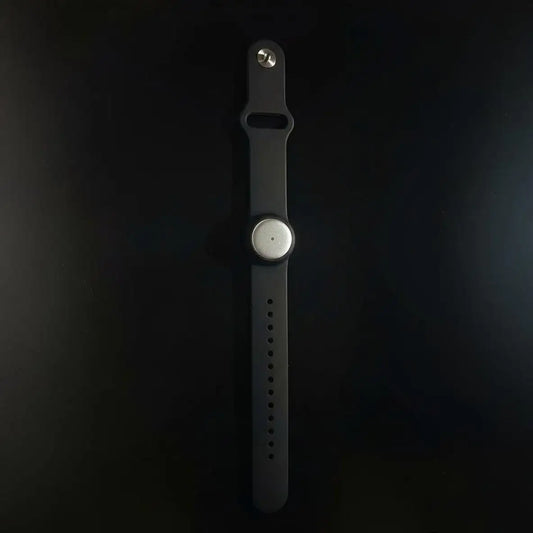
Is it legal to record conversations with a wearable AI pendant?


In this article
Recording conversations with a wearable AI pendant is legal only when the recording meets the consent rules and other laws that apply to the conversation. In the United States in 2026, federal law generally permits recording with one participant's consent, but state laws can require everyone's consent. A pendant's transcription features do not create an exception, and permission to record does not automatically authorize sharing the audio or uploading sensitive information.
- Is it legal to record conversations? Applicable consent laws decide, not the wearable AI pendant.
- Federal law generally allows one participant's consent; state law can require everyone's consent.
- Omi captures conversations and creates notes; its features do not replace recording permission.
- Ask before recording, check workplace rules, and separate recording permission from permission to share.
Why this matters
A wearable recorder makes capture easy. It does not make consent automatic. When a conversation becomes searchable audio, transcripts, and tasks, you must consider both the original recording and what happens to the resulting records.
Start with the one-party vs. two-party consent states guide, then check the current law for the relevant locations. This 2026 article provides general information, not legal advice; consult a qualified attorney about a specific recording situation.
Ask before you capture. Check before you share. Those are separate decisions, and a useful summary does not erase a problem with how you obtained the audio.
Is it legal to record conversations with a wearable AI pendant?
Yes, when the circumstances satisfy applicable recording law. The controlling questions are who participates, whose consent is required, where the participants are, and whether the conversation receives legal privacy protection. The device's size or ability to generate notes does not answer any of those questions.
For this 2026 U.S. overview, the federal baseline comes from 18 U.S.C. § 2511(2)(d). It generally permits a private person to intercept a communication when that person participates or one participant gives prior consent, subject to the statute's exception for a criminal or tortious purpose. State law can impose stricter requirements.
| Consent framework | Basic distinction | What it means for your pendant |
|---|---|---|
| One-party consent | One participant's consent generally satisfies the consent requirement | Your participation can matter, but you still need to check applicable law and exceptions |
| All-party consent | Consent from every participant is required for covered conversations | Obtain the required consent before capturing the conversation |
| Cross-location conversation | Participants are in different jurisdictions | Do not assume the rule where you wear the pendant settles the question |
The table explains consent frameworks, not a universal permission slip. Laws differ in which communications they cover, how they define privacy, and what counts as valid consent.
Being in the room is not the same as participating in the conversation. A pendant capturing a nearby discussion between other people presents a different question from a pendant recording your own meeting. Do not treat a one-party rule as permission to record everyone within microphone range.
What does one-party consent actually mean?
One-party consent generally means one consenting participant can satisfy the consent requirement under the applicable rule. If you participate, your own consent can be sufficient where that rule applies. It does not mean a person outside the conversation can authorize the recording merely because they own the device.
Consider a two-person conversation between you and a colleague. Under an applicable one-party rule, your consent generally meets that consent requirement; under an applicable all-party rule, both participants must consent to the covered recording. Other legal restrictions and workplace policies still need their own check.
The advantage of a one-party framework is that it does not always require a separate permission exchange with every participant. The limitation is that it is easy to overapply: your location, participation, purpose, and the type of conversation still matter.
Do not use the phrase one-party consent as a shortcut for covert recording. If you cannot identify the applicable rule, pause capture and get advice rather than building a permanent record first.
What does all-party consent require?
All-party consent requires the consent specified by the applicable law from every participant in a covered conversation. The phrase two-party consent is common, but it does not mean only two people need to agree when a larger group participates.
An explicit request makes the recording decision clearer. Explain that you want to capture audio and create a transcript or summary, then obtain the required agreement before starting. Whether notice, continued participation, or another action establishes legally sufficient consent depends on the jurisdiction and circumstances.
The practical benefit is transparency: participants know what you intend to capture. The limitation is that permission can be refused, and a new participant or a change in the conversation can require you to revisit the decision.
Do not treat a visible pendant as proof of consent. Someone seeing a device does not establish that they know it records audio, understand its processing, or have agreed to either.
Why recording legality varies
The same pendant can be used in very different circumstances. For your 2026 recording workflow, check these factors instead of relying on a blanket yes or no:
- Participant location: State and national rules differ. Remote conversations can involve more than one jurisdiction.
- Your participation: Recording a discussion you join is different from capturing other people's conversation without participating.
- Privacy expectations: Applicable law can distinguish protected private communications from speech in other settings.
- Recording purpose: The federal consent exception does not permit interception for a criminal or tortious purpose.
- Additional obligations: Employer policies, confidentiality agreements, professional duties, and sector-specific rules can impose separate restrictions.
- Later use: Uploading, distributing, or publishing the record raises questions beyond whether you could make the recording.
A lawful recording and an approved workplace workflow are not interchangeable. An employer's permission also does not replace consent required by law from a customer, patient, colleague, or other participant.
How do you check before recording?
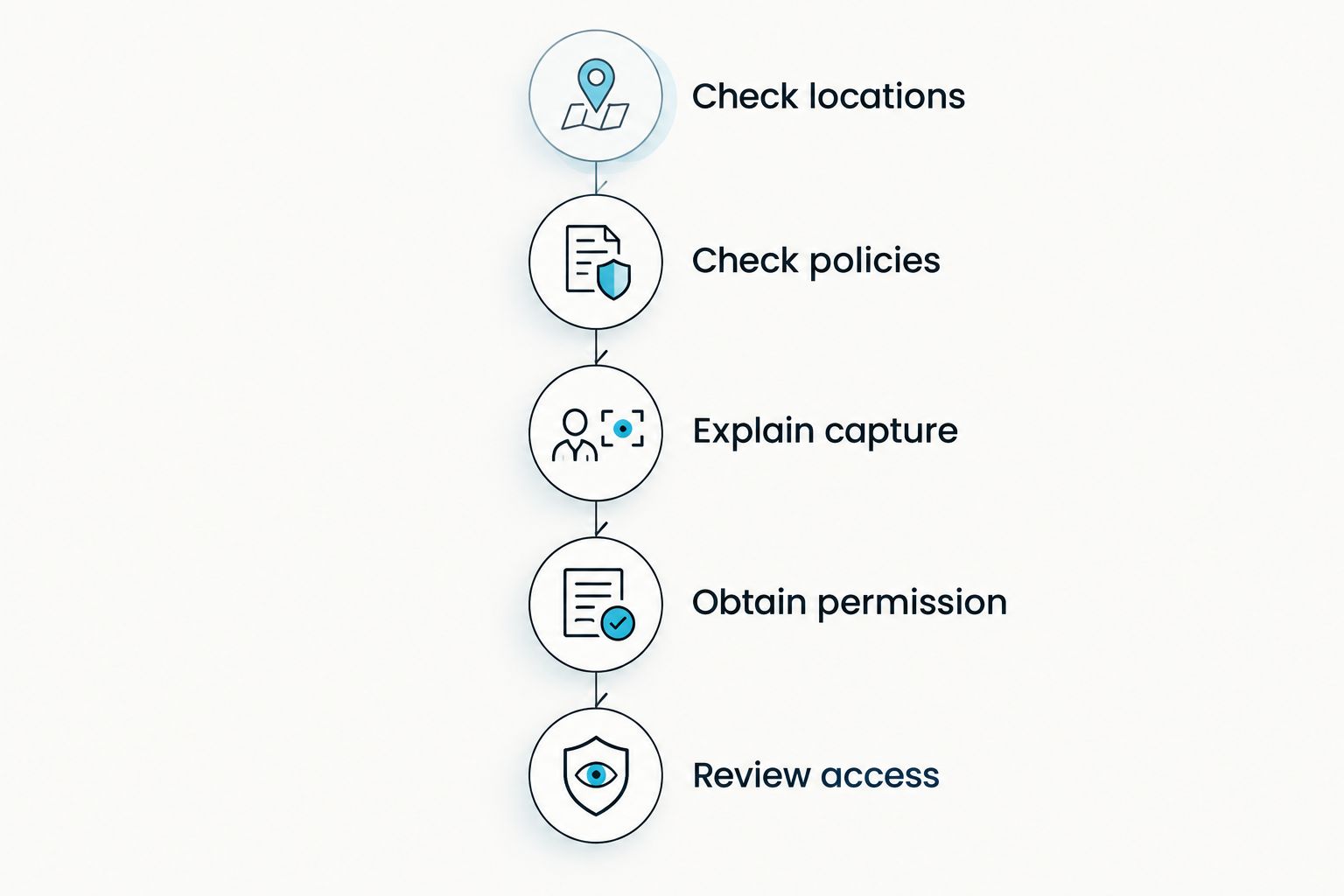
Use this sequence before a meeting, customer visit, or other planned conversation. It is a practical screening process, not a legal determination.
- Check locations. Identify where the participants are and which recording rules need review. For remote calls, do not check only your own location.
- Check policies. Review the organization's rules for recording, transcription, personal devices, and third-party processing. Confirm that the intended workflow is approved.
- Explain capture. State that you want to record audio and produce notes. Explain any planned upload or distribution rather than presenting the device as ordinary handwritten note-taking.
- Obtain permission. Obtain whatever consent the applicable rules require before capture begins. If permission is refused or unclear, leave recording off.
- Review access. Decide who needs the record, where it will be stored, and when it should be deleted. Do not distribute it just because the app makes sharing easy.
The order matters. Asking after the meeting does not establish that you had the required consent when recording began. Likewise, an approved storage destination cannot repair an unauthorized capture.
If someone joins late, revisit the disclosure and consent requirements. If the discussion moves into confidential material, reassess whether recording remains appropriate under the permissions and policies you checked.
Can you record at work, in healthcare, or during customer visits?
A professional setting adds obligations; it does not remove recording law. Before using a pendant for work in 2026, confirm that both the conversation and the processing workflow are permitted.
Workplace meetings
Check employer rules before recording colleagues. Permission to attend a meeting is not permission to capture it, and permission to use a note-taking tool does not necessarily approve sending meeting content to a third-party service.
Be specific about the workflow. Audio capture, transcription, shared summaries, and exported tasks can expose different information to different people. Ask the organization to approve the actual process, not just the device.
Healthcare conversations
Patient conversations require attention to consent, confidentiality, organizational policy, and applicable health-information obligations. A product's security or compliance statements do not, by themselves, authorize recording a patient encounter.
Use only the workflow approved by the healthcare organization. Confirm required agreements, access controls, and handling procedures with its privacy or compliance team rather than treating a personal pendant as an automatic substitute for an approved clinical system.
Sales and field visits
Ask before recording customer discussions, especially inside a customer's premises. A visitor's permission to enter a site does not establish permission to capture staff conversations or confidential business information.
Decide what belongs in the follow-up record. A useful task list does not need unrestricted access to the entire conversation, and an internal summary should not become a customer-facing message without review.
Is a recording in public automatically legal?
No. A public location does not create a universal right to record every conversation nearby. Applicable law and the circumstances determine whether the communication receives privacy protection and what consent is required.
A public presentation and a quiet personal discussion at a neighboring table are different situations. The word public is not a substitute for checking what you are capturing, whether you participate, and whether other restrictions apply.
A wearable's convenience creates a practical boundary problem: it can remain with you as the setting changes. Recheck the situation when you leave the meeting, enter a private space, or start a different conversation. Do not carry permission from one interaction into another by assumption.
Does transcription change the consent requirement?
No. Creating a transcript or summary does not eliminate the legal questions surrounding the original audio capture. Describing the activity as note-taking does not change what the microphone does.
Keep recording, processing, and sharing distinct. Permission to record is not automatically permission to upload confidential material, circulate a transcript, or publish excerpts.
Review generated notes before using them as a business record. A summary should not be treated as an exact quotation, and a task should be checked against what participants actually agreed to do. Keep the original context available when your approved retention policy permits it.
Where a wearable note-taker fits
Omi is a wearable conversation recorder with a companion app that produces transcripts, summaries, tasks, and memories. It provides full export and deletion controls, including deleting individual items or everything. Those controls help you manage captured records; they do not establish permission to capture them.
Omi is best for professionals who want spoken interactions turned into searchable notes and tasks. The trade-off is responsibility for consent, approved processing, and access to sensitive material. Wearable capture needs boundaries as much as it needs convenience.
Omi lists TLS protection in transit and AES-256 encryption at rest, which uses 256-bit keys. Encryption protects data; it does not legalize recording or authorize disclosure. For your 2026 workflow, evaluate permission, organizational approval, and security as separate requirements.
The device also records offline. Lack of an internet connection is therefore not a reliable way to ensure a conversation is not being captured; check whether recording itself is active.
FAQ
Is it legal to record conversations without telling the other person?
It depends on the applicable law and circumstances. One-party rules generally permit a participating person to consent, while all-party rules require everyone's consent for covered conversations; check local law before recording.
Does wearing an AI pendant count as getting consent?
No, wearing a visible pendant does not by itself establish consent. Obtain whatever permission the applicable law requires rather than assuming people recognize the device or its recording features.
Can I record a conversation if I am not part of it?
Do not assume you can record a conversation you do not participate in. One-party consent refers to a participant's consent, not simply the recorder owner's decision.
Can I use Omi to record confidential work meetings?
Use Omi for confidential work meetings only when applicable law and your organization's policies permit the recording and processing workflow. Confirm consent, storage, access, and third-party processing requirements before capture.
Is it legal to record a call across state lines?
A cross-state call requires checking the relevant jurisdictions, not only the state where your recorder is located. Obtain advice about conflicting rules when you cannot establish the applicable requirements.
Can I share a transcript if I had permission to record?
Permission to record does not automatically authorize sharing a transcript. Check confidentiality obligations, organizational policies, and the scope of the permission before distributing it.
Does recording offline avoid consent requirements?
No, offline recording does not remove consent requirements. The legal questions concern capturing the communication, not merely whether the device uploads it.
One last thing
Your best privacy control is the decision not to capture a conversation. Export and deletion tools act on records that already exist. When permission is missing, keep recording off and ask whether ordinary written notes are acceptable instead.
For every new recording workflow in 2026, decide the boundary before the microphone starts: which conversations are eligible, who must agree, and who can receive the results. A useful memory should not come at someone else's unapproved expense.