Omi vs Plaud Note Pro: which is better in 2026


In this article
Choose Omi if you want a wearable AI note taker that turns conversations into searchable memories and tasks; choose Plaud Note Pro if you want a dedicated recorder for sessions you deliberately start and review. In 2026, the deciding factor is your recording workflow—not which device promises to remember more.
- Omi vs Plaud Note Pro comes down to wearable conversation capture versus deliberate, session-based recording.
- Omi is best for professionals who want transcripts, tasks and searchable memories across their working day.
- Plaud Note Pro is best for buyers who prefer a dedicated recorder for planned conversations.
- Choose by capture habits, subscription structure and data control—not unsupported accuracy or battery comparisons.
Why this matters
A perfect transcript does nothing for a conversation you forgot to record. A full archive does nothing if you never turn its contents into useful follow-up.
Your choice starts with that distinction. Do you want to capture spoken work as it happens, or make recording a deliberate part of a meeting, interview or appointment?
Choose the workflow you will actually use. Before comparing hardware, decide what happens after recording: a meeting summary, a task list, a searchable conversation history or a document you share. These note-taking methods help you separate the capture step from the work your notes must support.
At a glance
| Dimension | Omi | Plaud Note Pro |
|---|---|---|
| Best for | Professionals capturing conversations throughout the day | Professionals recording planned sessions |
| Capture style | Wearable capture, plus recording through phone or Mac apps | Dedicated recorder for deliberate recording |
| Standout feature | Tasks, memories, Daily Recap and search across conversations | A separate recording device for session-based work |
| Meeting workflow | Mac app or room recording; no meeting bot | Recorder-led workflow; check the setup for your meeting type |
| Transcript and summary use | Transcripts, summaries and speaker labels | Transcription and summarization workflow |
| Language selection | 33 languages; manual selection; English is most accurate | Check support for your working language |
| Data control | Full export, deletion, local operation and open-source software | Review current export, deletion and processing terms |
| Pricing model | One-time hardware purchase plus listening plans | Hardware purchase plus transcription-plan choices |
This 2026 comparison separates workflow differences from performance claims. It does not declare an accuracy, microphone-range or battery winner without a directly comparable basis.
Wearable capture wins for conversations between meetings
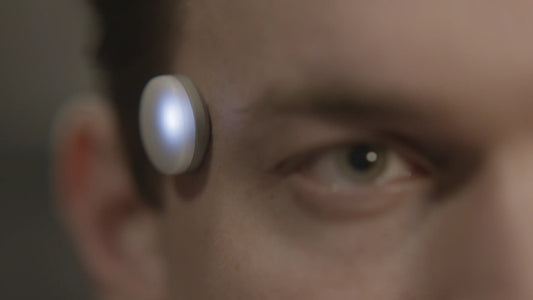
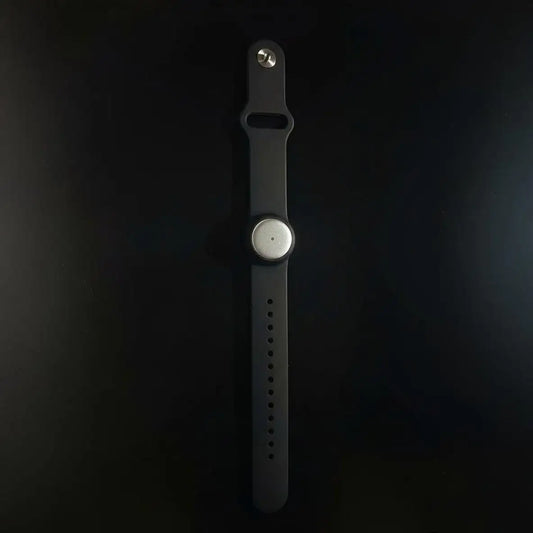
The pendant captures what you say and hear. You can wear it around your neck with the lanyard and silicone case, on your wrist with the separately sold wrist band, or under a shirt.
That format fits a sales professional moving between conversations or a technician talking through work while keeping their hands occupied. The recording device travels with you rather than becoming another object to position for each session.
Omi is the better wearable AI note taker for professionals who want conversations organized into tasks and searchable memories. Its advantage is the combination of capture and follow-up, not a claim that every recording will be better.
The tradeoff is responsibility. You need clear recording boundaries, an appropriate consent process and a habit of checking the resulting notes. Wearing a recorder does not make every conversation appropriate to capture.
Choose wearable capture when the useful conversation often happens outside the calendar invitation. Choose a more deliberate recording routine when each session needs an explicit beginning and end.
Plaud Note Pro wins for a deliberate recorder-first routine
Plaud Note Pro is the better fit for a buyer who wants recording to be an intentional session, not an ongoing wearable habit. A dedicated recorder gives that buyer a concrete object around which to build the routine: prepare, record, review and file.
This is a genuine advantage for someone who mainly wants records of scheduled discussions. If you already know which conversations matter, broader capture is not automatically better.
The corresponding limitation is the habit itself. You must bring the recorder into the session and remember to use it. That is acceptable for a planned interview; it is a less natural fit for an unexpected conversation between appointments.
Do not buy a dedicated recorder merely because it feels more purposeful. Buy it because you prefer that recording boundary and will repeat it consistently. Check the current recording instructions against your actual setup before committing.
The companion app wins when follow-up spans several conversations
A transcript preserves the words. Tasks and memories give you another way to use them.
The wearable's companion app produces transcripts, summaries, action items, memories and a Daily Recap. Search covers the collected information, and Ask Omi AI provides a chat interface for working with it.
That suits a professional whose next action depends on several conversations rather than one meeting. You can organize spoken interactions into a continuing record instead of treating every session as a separate document.
There is a limit worth respecting: generated tasks are drafts for you to check. Verify the owner, deadline and meaning before treating a suggested action as a commitment. The same applies to a summary that compresses a nuanced discussion.
Plaud Note Pro belongs on the shortlist when the recording and its resulting notes are the central deliverable. For a continuing conversation archive, prioritize search and follow-up; for a session record, prioritize the review and export process. Neither approach removes the need to read the output.
Phone and Mac capture win when you do not want another device
You can use the companion app without buying or wearing the pendant. The phone and Mac apps record through their built-in microphones; apps also exist for iPhone, Android, Mac and web, with Apple Watch recording supported.
This is a useful 2026 buying shortcut: test the software workflow before deciding whether a wearable belongs in your day. You can judge whether the transcripts, summaries and tasks serve your work without making the hardware decision first.
For Zoom, Meet and Teams, recording works through the Mac app or through a phone or wearable in the room. The service does not join calls as a bot. For phone calls, the stated method is speakerphone recording.
That last detail matters. If speakerphone is unsuitable for your calls, do not assume wearable capture solves the problem. Check Plaud Note Pro's current call-recording procedure against your phone and working environment rather than substituting a general phone-call claim for an actual setup check.
Both need transcript review before notes become commitments
Both options serve a transcription-and-summary workflow. Neither should replace your review of names, decisions and promised actions. The useful comparison is what you can do with a recording after capture, not whether an unchecked summary looks polished.
The companion app supplies speaker labels. Its Speech Profile learns the wearer's voice so that the wearer's lines receive their name; this feature is English-only.
There is no defensible accuracy winner here. A meaningful test uses the same language, speaker arrangement and recording conditions, then checks the output against what was actually said.
Use a short sample from your normal work. Inspect the details that matter most: a customer's requirement, an appointment instruction, a technical term or an assigned task. Do not score a recorder solely on how readable its summary feels.
The practical tie is simple: both workflows require a review step. Your choice should make that step easier to complete, not easier to skip.
Manual language selection is a real tradeoff
The wearable's software supports 33 languages, including English, Spanish, French, German, Portuguese, Chinese, Japanese, Korean, Hindi, Russian and Ukrainian. English is the most accurate supported language.
You select the language manually. The app does not automatically switch languages mid-conversation, so multilingual support is not the same thing as automatic handling of a mixed-language discussion.
For a team choosing a recorder in 2026, test the language people actually use—not just the language on the company website. Include the terminology that appears in customer calls or field work.
Treat Plaud Note Pro's language support as a purchase criterion to verify. A supported-language list alone does not establish how either system handles your accents, terminology or speaker overlap.
There is no language-performance winner without a relevant sample. The clear tradeoff on the wearable side is broad language selection with a manual setting and an English-only Speech Profile.
Explicit data controls matter more than a privacy slogan
The wearable platform supports full export, deletion of individual items or everything, and local, cloud-free operation. Its hardware, firmware and software are open source, with an API and MCP server available.
Those are concrete reasons to consider it when control over your conversation archive matters. They are not substitutes for checking your organization's requirements.
Local Sync is experimental. It stores conversations on the phone without internet and syncs them later; do not treat that experimental workflow as interchangeable with every other recording setup.
Before choosing Plaud Note Pro, review its current processing, export and deletion terms for the workflow you intend to use. A comparison should answer where your recordings go and how you retrieve or remove them—not award a privacy winner from a short slogan.
Consent rules vary by location. Check local law and your workplace policy before recording, especially around confidential or sensitive discussions. This is a recording decision, not legal advice.
Pricing: compare hardware and listening plans separately
For your 2026 budget, separate the device purchase from the ongoing processing plan. That prevents an attractive hardware offer from obscuring the subscription structure you will use.
The pendant is a one-time hardware purchase. Basic includes 300 listening minutes per month; Plus includes 1,500 listening minutes per month; Unlimited has no minute cap. Every plan has the same core features.
Hitting a listening cap does not stop recording. Audio remains available to manage and export. That distinction matters when estimating whether a capped plan fits your working month.
Plaud Note Pro also needs a hardware-and-transcription-plan assessment. Check its current allowances, renewal terms and treatment of recordings beyond a plan allowance before comparing total commitments.
Choose the plan around your recording habits, not the plan name. Monthly billing offers a shorter commitment; annual billing commits you for longer. Neither structure is automatically better if you have not established how much you record.
Final verdict: choose the recording habit you want
Choose Omi if your work happens across conversations
Best for: mobile professionals building a searchable working memory. Choose this wearable AI note taker when you want spoken interactions turned into transcripts, tasks and memories, with phone and Mac capture available alongside the pendant.
Accept its practical limits: speakerphone is the stated phone-call method, language selection is manual, and experimental Local Sync needs separate evaluation. Those details should shape your setup before you adopt it across a team.
Choose Plaud Note Pro if recording is a planned session
Best for: professionals who prefer a dedicated recorder and a deliberate review routine. Choose Plaud Note Pro when you mainly want to record specific conversations and work through their resulting notes afterward.
Verify the current recording procedure, language support, subscription terms and export controls against your requirements. Do not buy either device on an untested assumption about accuracy or call handling.
One-glance scorecard
| Dimension | Winner |
|---|---|
| Capture throughout the working day | Wearable workflow |
| Deliberate, planned recording sessions | Plaud Note Pro |
| Tasks and memories across conversations | Wearable companion app |
| Recording without buying hardware | Phone and Mac app workflow |
| Transcript and summary review | Tie: both require review |
| Language performance | No winner without a relevant sample |
| Data control | Decide against your export and processing requirements |
| Pricing model | Choose by usage and commitment, not device price alone |
FAQ
Is Omi better than Plaud Note Pro in 2026?
Omi is better for wearable conversation capture with tasks and searchable memories; Plaud Note Pro is better for a deliberate recorder-first routine. Choose according to when you record and what you need to do with the notes afterward.
Which is better for planned meetings?
Plaud Note Pro is the better fit if you prefer a dedicated recorder for planned sessions. Check its recording procedure against your meeting setup before buying.
Can I record without buying the pendant?
Yes, the companion phone and Mac apps record through their built-in microphones without the wearable. This lets you evaluate the note-taking workflow before choosing hardware.
Does the wearable join Zoom or Teams as a bot?
No, it does not join online meetings as a bot. Record through the Mac app or use the phone or wearable in the room.
What happens when I reach the listening limit?
Reaching the listening cap does not stop recording. Audio remains available to manage and export; Basic includes 300 listening minutes per month and Plus includes 1,500 minutes per month.
Does it automatically switch between languages?
No, you set the recording language manually. The app supports 33 languages, but it does not automatically switch languages mid-conversation.
Can I export or delete my conversations?
The wearable platform supports full export and deletion of individual items or everything. Compare those controls with your workplace's retention and confidentiality requirements.
Do I need permission to record a conversation?
Consent requirements vary by location, so check local law before recording. Workplace policies and confidentiality obligations also need attention; a recording device does not establish permission.
One last thing
Test the review step before the capture habit. Record an appropriate conversation, then check whether you can find the decision and identify the next action without rereading the entire transcript.
That is the useful 2026 test. A recorder earns its place when the resulting notes help you finish the work—not merely preserve the words.