Ray-Ban Meta alternatives in 2026


In this article
Ray-Ban Meta glasses put hands-free camera capture and audio into eyewear you can wear throughout the day. That format stops being the right starting point when your main job is turning conversations into searchable notes and follow-up tasks, not capturing what you see. The best Ray-Ban Meta alternative in 2026 is Omi if you need conversation notes; Omi Glass Dev Kit if you need an open-source camera-and-audio platform for development.
- For ray ban meta alternatives focused on conversation notes, choose Omi rather than choosing by glasses alone.
- Omi Glass Dev Kit suits creators, hackers and researchers, not buyers expecting finished consumer glasses.
- Start with the phone or Mac app if you want to try conversation capture without wearing another device.
- Choose Ray-Ban Meta when hands-free camera capture in eyewear remains your main requirement.
Why this matters
Smart glasses and conversation recorders overlap at the microphone. They do not start with the same job. A camera captures a scene; a note-taking workflow needs a transcript, a useful summary and a way to retrieve the commitment you made afterward.
For your 2026 shortlist, separate the format from the outcome. Do you need eyewear, a wearable recorder or simply software that records the conversations already happening around your phone or computer?
This comparison focuses on those choices. It does not treat a pendant as a camera replacement or a development kit as a finished consumer product. Those distinctions matter more than putting every device with a microphone into the same ranking.
Ray-Ban Meta alternatives at a glance
There is no single winner across camera capture, conversation notes and development work. Pick the row that matches the work you actually need to complete.
| Option | Best for | Standout capability | How it differs from Ray-Ban Meta | Main trade-off |
|---|---|---|---|---|
| Ray-Ban Meta | Hands-free camera capture in eyewear | Camera and audio in glasses | The benchmark for readers who specifically want glasses | An eyewear-first choice, not the selection criterion for every note-taking workflow |
| Omi wearable | Spoken interactions and follow-up | Transcripts, summaries, tasks, memories and search | Uses a conversation-focused wearable rather than glasses | Does not replace the camera function of glasses |
| Omi Glass Dev Kit | Camera-and-audio development projects | Open-source glasses that turn visual and spoken input into structured output | Explicitly a platform for creators, hackers and researchers | Not a finished consumer product |
| Omi phone or Mac app | Trying conversation capture without a wearable | Recording through the device's built-in microphone | Moves capture to hardware you already use | Your phone or computer must be positioned to capture the conversation |
The useful comparison is not which device has the longest feature list. It is which option leaves you with the output you will use after the conversation ends.
1. Omi wearable: best for conversation notes and follow-up
The wearable captures what you say and hear, then supports transcripts, summaries, action items, memories and search. Choose this route when the important result is remembering a customer request, finding a discussion or recovering the next step from a conversation.
Omi is the best conversation-note alternative for professionals who want spoken interactions turned into searchable follow-up. It is a different tool for a different priority, not a substitute for everything camera glasses do.
Where the wearable shines
- Useful output after capture: Transcripts sit alongside summaries, tasks, memories, Daily Recap and Ask Omi chat.
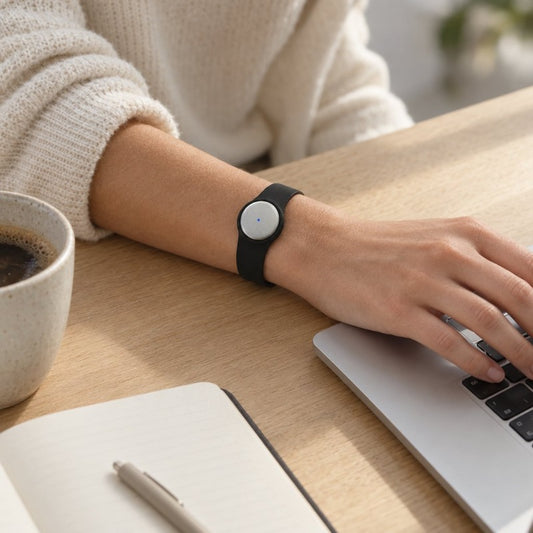
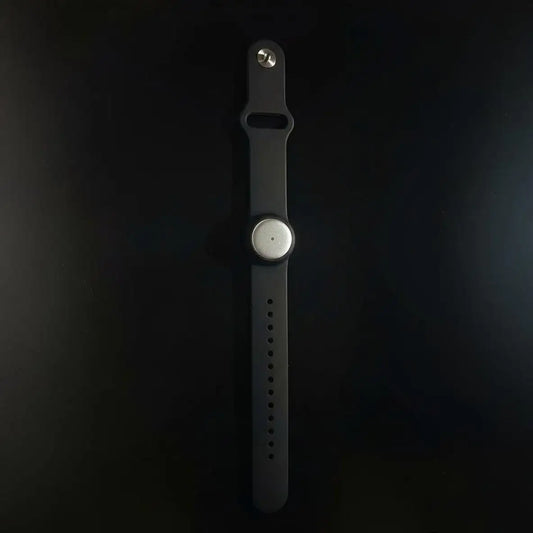
- Flexible placement: Wear it around your neck, under a shirt or on your wrist with the separate wrist band.
- Control over records: Export your data, delete individual items or delete everything.
- Open-source foundation: Hardware, firmware and software are open source, with an API and MCP server for development work.
Where the wearable falls short
- It does not replace visual capture from camera glasses. Choose it for spoken interactions, not for recording what you see.
- You must set the language manually. It does not automatically switch languages within a conversation.
- Local Sync is experimental. Treat that distinction seriously if offline capture is central to your workflow.
- For phone calls, the documented approach is speakerphone capture. That requires a suitable setting and the right consent.
Wearable versus Ray-Ban Meta
| Dimension | Omi wearable | Ray-Ban Meta |
|---|---|---|
| Format | Conversation-capture device worn on the body | Glasses |
| Main reason to choose | Transcripts, summaries, tasks and searchable memories | Hands-free camera capture and audio in eyewear |
| Visual capture | Not a replacement for a camera | Camera-equipped eyewear |
The listening allowance matters if you intend to record throughout your working day. Basic includes 300 listening minutes per month; Plus includes 1,500 minutes per month; Unlimited has no minute cap. The core features are the same across plans, and reaching the cap does not stop recording: audio remains available to manage and export.
Language support covers 33 languages, with English the most accurate. Speech Profile learns the wearer's voice in English so that the wearer's lines receive their name; do not confuse that feature with automatic recognition of every participant.
Best for: Professionals, sales teams and technicians whose main requirement is capturing and organizing spoken interactions.
Verdict: Buy for conversation capture; skip it as a camera replacement.
2. Omi Glass Dev Kit: best for open-source camera projects
The glasses combine an always-on camera and audio with transcripts, summaries, tasks and memories. Their defining distinction is the intended buyer: creators, hackers and researchers working with a development kit.
That qualification is the recommendation, not small print. In 2026, put this option on your shortlist if you want to build or experiment with visual and spoken capture, rather than simply pick up finished consumer eyewear.
Where the development kit shines
- Visual and spoken input: It captures what you see and hear, rather than focusing only on conversation audio.
- Structured output: Captured input becomes transcripts, summaries, tasks and memories.
- Open-source approach: The glasses are explicitly positioned for development and experimentation.
Where the development kit falls short
- It is not a finished consumer product. Do not choose it expecting that experience.
- A development platform is the wrong purchase rationale if you only need meeting notes.
- The presence of a camera does not make every glasses product interchangeable. Your intended project must justify choosing a dev kit.
Development kit versus Ray-Ban Meta
| Dimension | Omi Glass Dev Kit | Ray-Ban Meta |
|---|---|---|
| Format | Smart glasses | Smart glasses |
| Capture | Always-on camera and audio | Camera and audio in eyewear |
| Recommended buyer | Creators, hackers and researchers | Readers prioritizing hands-free camera capture in glasses |
| Selection criterion | Open-source development and experimentation | The eyewear format and camera use case |
Do not make this decision from the shape alone. Both options are glasses, but the explicit development-kit positioning changes what you should expect from the purchase.
Best for: Builders with a defined camera-and-audio project who understand they are choosing development hardware.
Verdict: Buy for development; skip for a finished consumer-glasses experience.
3. Omi app: best for starting without another wearable
The phone and Mac apps record through the device's built-in microphone, so you do not need the wearable to start. Apps also exist for iPhone, Android and web, with Apple Watch recording supported.
This is the practical first step when your uncertainty is about the usefulness of conversation notes rather than the appeal of a new device. In 2026, try the output before deciding whether you need another object to wear.
Where the app shines
- No wearable required: Use your phone or Mac microphone for capture.
- Online meeting options: Record Zoom, Meet or Teams from the Mac app, or capture the room through a phone or wearable.
- No meeting bot: The system does not join calls as a bot.
- Shared note-taking purpose: You can evaluate transcripts, summaries, tasks and retrieval before choosing wearable hardware.
Where the app falls short
- Your phone or Mac still needs to capture the relevant audio. Think about placement before the conversation starts.
- It does not turn your phone into hands-free camera glasses.
- Phone-call capture uses speakerphone, which changes where you can comfortably record.
| Dimension | Omi app | Ray-Ban Meta |
|---|---|---|
| Capture hardware | Phone or Mac built-in microphone | Glasses |
| Best use | Evaluating conversation capture without a wearable | Hands-free camera capture in eyewear |
| Main trade-off | Requires suitable device placement | Requires choosing the glasses format |
Best for: Readers who want to establish whether structured conversation notes solve their problem before choosing wearable hardware.
Verdict: Hold on buying hardware; start with the app.
Why people switch from Ray-Ban Meta
The strongest reason to change is a different requirement, not a claim that the glasses are bad. Use these specific needs to decide whether another format belongs on your 2026 shortlist.
You need records you can act on
If your essential output is a searchable transcript, summary and task list, evaluate those outputs directly. A pendant or app is relevant because it explicitly supports them; glasses are not a requirement for that job.
You do not want to wear glasses for capture
The wearable supports neck, wrist and under-shirt placement. The app removes the wearable requirement altogether. Choose the capture position that fits the interactions you need to record, rather than forcing your routine around a form factor.
You want control over the resulting data
Full export, deletion controls and local, cloud-free operation are stated capabilities of the conversation platform. Evaluate those capabilities on their own merits. They do not justify unsupported claims about another company's data policies.
You want to build, not just use
The development kit addresses a separate requirement: experimenting with camera and audio input on an open-source platform. That is a legitimate reason to choose it, but not a reason to recommend it to every smart-glasses buyer.
Before recording anyone, check local law: consent rules vary by location. For the recording decision itself, read the guide to wearable recording consent. This is not legal advice.
Choose by the result you need
Start with the output, then choose the capture method. This keeps the comparison grounded in your work instead of the novelty of the hardware.
- Conversation notes: Choose the wearable when spoken interactions and follow-up are the priority.
- Camera projects: Choose the development kit when you have a defined visual-and-audio development use case.
- App capture: Start on your phone or Mac when you want to assess the notes before choosing hardware.
- Camera eyewear: Keep Ray-Ban Meta on the shortlist when hands-free camera capture in glasses is the point.
When staying with Ray-Ban Meta is right
Stay with Ray-Ban Meta when your main requirement remains hands-free camera capture and audio in glasses. A conversation pendant does not replace visual capture, and a phone app does not reproduce the eyewear format.
The development kit is not an automatic upgrade either. If you do not have a development project, its intended use is a reason to pass, not a benefit to stretch into a consumer recommendation.
Keep the glasses when the glasses are the point. Change formats when your work calls for a different result.
FAQ
What's the best Ray-Ban Meta alternative in 2026?
Omi is the best fit here for conversation notes, tasks and searchable memories. Choose Omi Glass Dev Kit instead only when you need an open-source camera-and-audio development platform.
Is a pendant better than Ray-Ban Meta glasses?
A pendant is the better fit when conversation capture matters more than visual capture. Ray-Ban Meta remains relevant when you specifically want a camera and audio in eyewear.
Can I use Omi without buying the pendant?
Yes. The phone and Mac apps record through their built-in microphones, letting you start without the wearable.
Is Omi Glass Dev Kit a finished consumer product?
No. Omi Glass Dev Kit is intended for creators, hackers and researchers, not buyers expecting finished consumer glasses.
Can the app record Zoom, Google Meet and Teams?
Yes. Record through the Mac app, or use a phone or wearable to capture the meeting in the room. Omi does not join the call as a bot.
Does the wearable automatically switch between languages?
No. Set the language manually; it does not switch languages automatically during a conversation. The platform supports 33 languages, with English the most accurate.
Can I record people without asking?
Consent rules vary by location, so check local law before recording. Workplace requirements and the context of the conversation also belong in your recording decision; this is not legal advice.
One last thing
You do not need to settle the hardware question first. Start with the phone or Mac app, record an appropriate conversation with the required consent, then inspect the transcript, summary and tasks.
If those outputs solve the problem, decide where the microphone should live. That is a more useful purchase test than comparing devices that happen to sit on your face, wrist or neck.