

|

|  CMake Overview: How to Install, Pros & Cons, Price

CMake Overview: How to Install, Pros & Cons, Price

November 14, 2024

Explore CMake: installation, cost, device support. Perfect for firmware developers. Delve into its uses, pros & cons, and get answers to common FAQs.

What is CMake


  • CMake is an open-source tool designed to manage the build process of software projects across different platforms and compilers. It is crucial for configuring and generating build files, which can be utilized by various build systems like Makefiles, Ninja, or Visual Studio projects.
  •  
  • By using CMake, developers can easily create platform-independent project configurations, allowing for a single code base to be built on multiple operating systems. This characteristic makes CMake exceptionally valuable for firmware engineers working on cross-platform development.
  How CMake Works  
  • CMake uses `CMakeLists.txt` files to control the build process. These text files contain commands defining the project, specifying executables or libraries to be built, and listing source files involved in the build.
  •  
  • The tool performs an initial check of the system environment and available compilers to generate appropriate build scripts, automating what can be a complex and error-prone task.
  Advantages for Firmware Engineers  
  • CMake's ability to define intricate build configurations is particularly useful for firmware engineers who often deal with hardware-specific code requiring precise compilation settings.
  •  
  • Its flexibility supports multiple compiler and linker options, which is essential when targeting different processor architectures often found in firmware development.
  •  
  • The option to include and manage external libraries, as well as the ability to easily create custom compilation rules, supports robust and adaptable build processes necessary for complex firmware projects.
  Basic CMake Command Structure  
  • An essential understanding of CMake involves familiarity with its basic command structure, often starting with setting the minimum required version and defining the project:
  •   ``` cmake_minimum_required(VERSION 3.10) project(MyFirmwareProject VERSION 1.0 LANGUAGES C CXX) ```  
  • From here, additional commands can be added to include source files, link libraries, and specify target properties, all contributing to a structured and manageable build script.
 

What is CMake Used for

  Overview of CMake Usage in Firmware Development  

  • CMake is an essential tool for firmware engineers, primarily used to manage the build process in a compiler-independent manner. It defines a script language that allows developers to specify build parameters and configurations, enabling the automated generation of makefiles or project files for the environment in use.
  •  
  • Firmware development often involves cross-compilation, where code is compiled on one platform but intended to run on another (commonly a microcontroller). CMake facilitates this by supporting multiple compilers and toolchains, making it easier to configure builds for different target architectures.
  CMake's Role in Managing Dependencies  
  • In complex firmware projects, managing dependencies is crucial. CMake helps by automating the detection and inclusion of libraries and headers required for the build process. It can handle both locally hosted dependencies and external library packages.
  •  
  • CMake's `find_package` functionality allows firmware developers to easily check for required libraries at configuration time, ensuring that all dependencies are available before beginning the build process.
  Build Customization and Flexibility  
  • CMake provides features to customize builds using variables and scripting logic. This is useful for firmware projects as it allows developers to enable or disable features, select different hardware configurations, or set optimization levels without modifying the source code.
  •  
  • Its scripting capabilities extend further, allowing for the inclusion of external scripts or tools to be executed during the build process, providing even more flexibility to the development workflow.
  Is CMake Still Relevant?  
  • CMake remains very relevant and widely used in both the firmware and broader software development communities. It is not outdated; in fact, it continues to evolve and adapt to modern development practices.
  •  
  • With active maintenance and a large community, CMake consistently receives updates that incorporate new features and improvements, ensuring that it remains a top choice for developers across different fields, including firmware engineering.
 

Omi Necklace

The #1 Open Source AI necklace: Experiment with how you capture and manage conversations.

Build and test with your own Omi Dev Kit 2.

Is CMake Free

 

  • CMake is a free and open-source tool, widely used by software developers, including firmware engineers. It is available under the BSD 3-Clause License.
  Is It Free for Commercial Use  
  • Yes, CMake is free for commercial use. The BSD 3-Clause License allows for both personal and commercial use of the software without any charge.
 

What Devices Support CMake

  Operating Systems Supporting CMake  

  • Linux-based systems, including various distributions such as Ubuntu, Fedora, and CentOS.
  •  
  • Windows OS, allowing the use of native command line tools as well as integration with Visual Studio.
  •  
  • macOS, compatible with Xcode and other development tools available on the platform.
  Supported Architectures  
  • x86 architecture, covering both 32-bit and 64-bit systems.
  •  
  • ARM architecture, widely used in mobile and embedded devices.
  •  
  • PowerPC architecture, though less common, is also supported.
  Suitable Environments for CMake  
  • Embedded systems development, with support for cross-compilation toolchains.
  •  
  • IoT devices where building is required for ARM-based or other specialized processors.
  •  
  • Desktop applications across different OS platforms, using various development environments.
  Integration with Tools  
  • Integration with IDEs such as CLion, Visual Studio, and Eclipse to streamline the build process.
  •  
  • Compatibility with build systems like Make, Ninja, and Visual Studio solutions.
  •  
  • Support for version control systems like Git to incorporate CMake into continuous integration workflows.
 

Pros and Cons of CMake

Consistency Across Platforms  

  • CMake abstracts the details of various build systems, creating a consistent build process across platforms. This is especially beneficial compared to tools like Make that require platform-specific scripts.

Advanced Configuration Options  

  • CMake provides powerful configuration capabilities with its scripting abilities, making it suitable for complex projects. This often surpasses other build systems which may not support such advanced customizations.

Large Community and Support  

  • A large user base and extensive documentation make problem-solving and feature implementation easier, offering an advantage over niche build systems with limited resources.

Steep Learning Curve  

  • Despite its advantages, CMake can be challenging for newcomers to learn compared to more straightforward tools like GNU Make, which can be a barrier for quick project setups.

Verbose Syntax  

  • The syntax of CMake can be quite verbose and less intuitive, making it cumbersome for smaller projects where simpler build tools could suffice.

Poor Handling of Non-C/C++ Languages  

  • While CMake excels with C/C++ projects, its support and integration for other programming languages are limited compared to more generalized tools like Bazel or Meson.

Omi App

Fully Open-Source AI wearable app: build and use reminders, meeting summaries, task suggestions and more. All in one simple app.

Github →

How to Install CMake

  Download CMake  

  • Visit the CMake official download page to obtain the latest version suitable for your operating system.
  •  
  • Choose the installer package for Windows or the binaries (tar.gz for Linux and Mac) as per your requirements.
  Install CMake on Windows  
  • Execute the downloaded installer and follow the on-screen instructions to complete the installation.
  •  
  • During the installation, ensure that you opt to add CMake to the system PATH for efficient command line usage.
  Install CMake on Linux  
  • For Ubuntu or Debian-based distributions, execute: sudo apt-get install cmake.
  •  
  • For Red Hat-based distributions, such as Fedora, use: sudo dnf install cmake.
  •  
  • To manually install, extract the downloaded tar.gz file and run the following commands:
    • tar -zxvf cmake-version-x86\_64.tar.gz
    •  
    • cd cmake-version-x86\_64
    •  
    • sudo ./bootstrap && sudo make && sudo make install
  Install CMake on macOS  
  • If using Homebrew, open Terminal and execute: brew install cmake.
  •  
  • For a manual installation, extract the downloaded package and follow the instructions similar to Linux manual installation.
  Verify Installation  
  • Open a terminal or command prompt.
  •  
  • Type cmake --version and press Enter.
  •  
  • Ensure that the output shows the installed CMake version to verify successful installation.
 

CMake FAQ

How does CMake handle cross-compilation for different hardware architectures and what configurations are needed to set this up properly?

  Set Up a Toolchain File  

  • Create a toolchain file to specify compilers and tools for the target architecture.
  •  
  • Define variables like CMAKE_SYSTEM_NAME, CMAKE_C_COMPILER, and CMAKE_CXX_COMPILER
  Configure CMake Project  
  • Use the cmake command with the -DCMAKE_TOOLCHAIN_FILE option to specify your toolchain file.
  •  
  • Ensure proper environment paths for the cross-compiler tools are set up before invoking CMake.
  Handle Target-Specific Code  
  • Utilize if(CMAKE\_CROSSCOMPILING) checks to manage code differences between host and target architectures.
  •  
  • Use CMake variables to customize and configure build options specific for cross-compilation.
 

Are there specific best practices or common pitfalls to be aware of when organizing CMakeLists.txt files for large-scale firmware projects?

  Modularize CMakeLists  

  • Divide the project into distinct modules, each with its own CMakeLists.txt, to enhance maintainability and readability.
  • Use subdirectories and the add\_subdirectory() command to organize and manage dependencies between modules.
  Avoid Hardcoding Paths  
  • Prefer relative paths and environment variables to avoid issues with project portability across different environments.
  Set Useful Defaults  
  • Provide sensible default values for options and create custom options with option() for flexibility.
  Use Targets Wisely  
  • Leverage target_compile_options(), target_include_directories(), and target_link_libraries() for specifying settings per target.
 

How does CMake integrate with other development tools commonly used in embedded systems and firmware development, such as debuggers and performance profiling tools?

  Integration with Debuggers  

  • CMake supports generating build files that are compatible with popular debuggers like GDB by using configurations such as -DCMAKE_BUILD_TYPE=Debug.
  •  
  • Custom commands can be added to invoke debugger scripts automatically during the build or post-build phases.
  Performance Profiling Tools  
  • CMake can configure projects to include profiling flags and link with profiling libraries, integrating seamlessly with tools like Valgrind and OProfile.
  •  
  • It supports external toolchains, allowing easy setup of performance analysis environments tailored for specific embedded architectures.
 

Join the #1 open-source AI wearable community

Build faster and better with 3900+ community members on Omi Discord
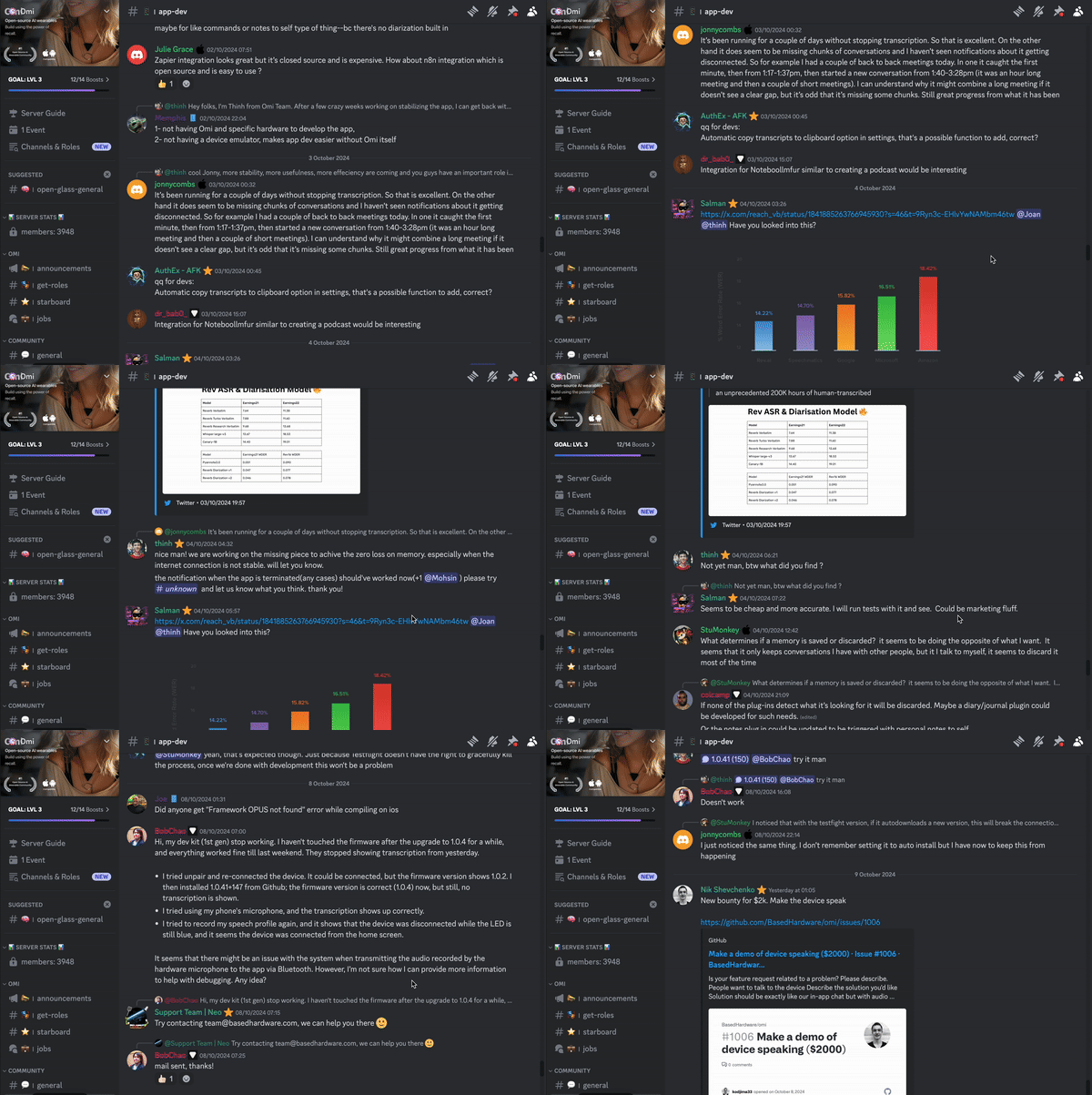
Participate in hackathons to expand the Omi platform and win prizes
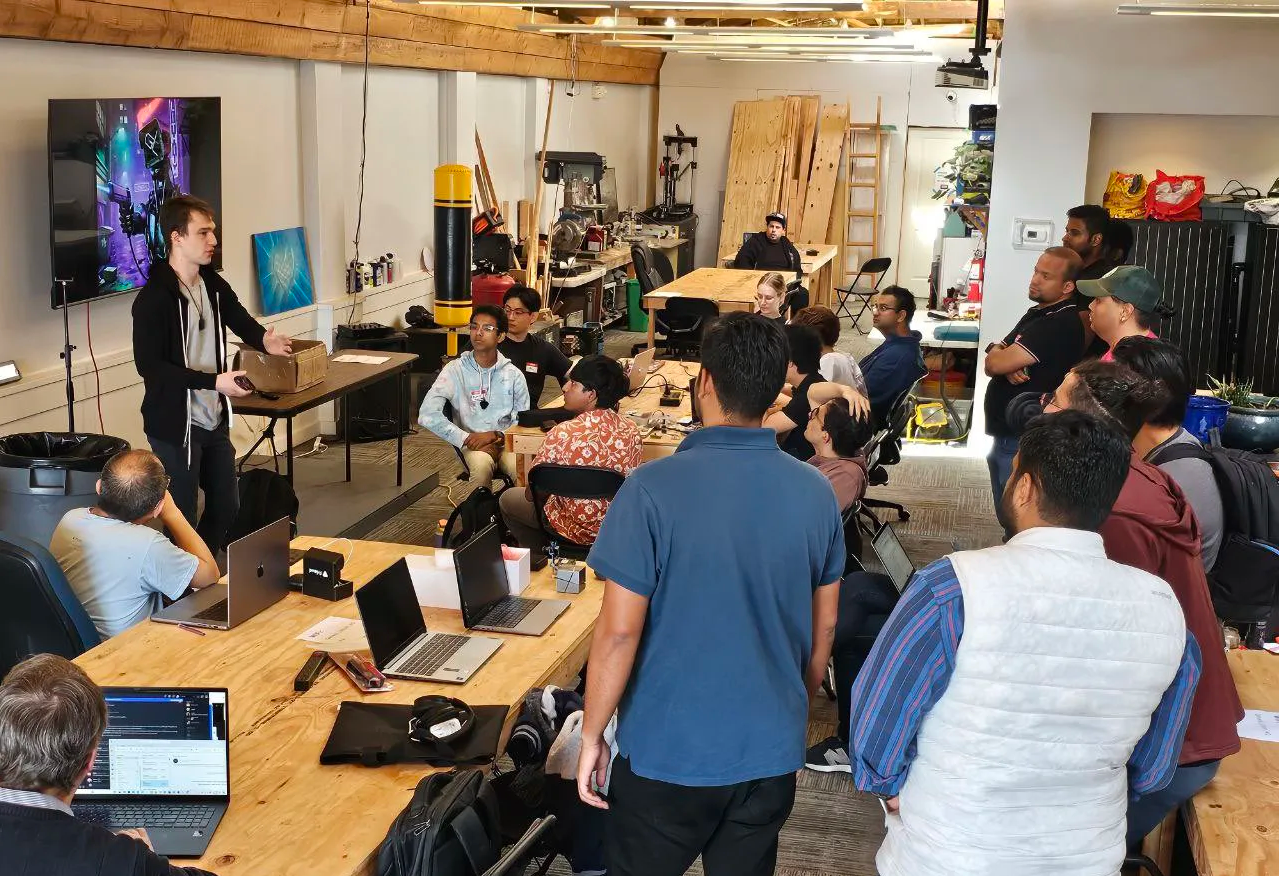
Participate in hackathons to expand the Omi platform and win prizes

Get cash bounties, free Omi devices and priority access by taking part in community activities
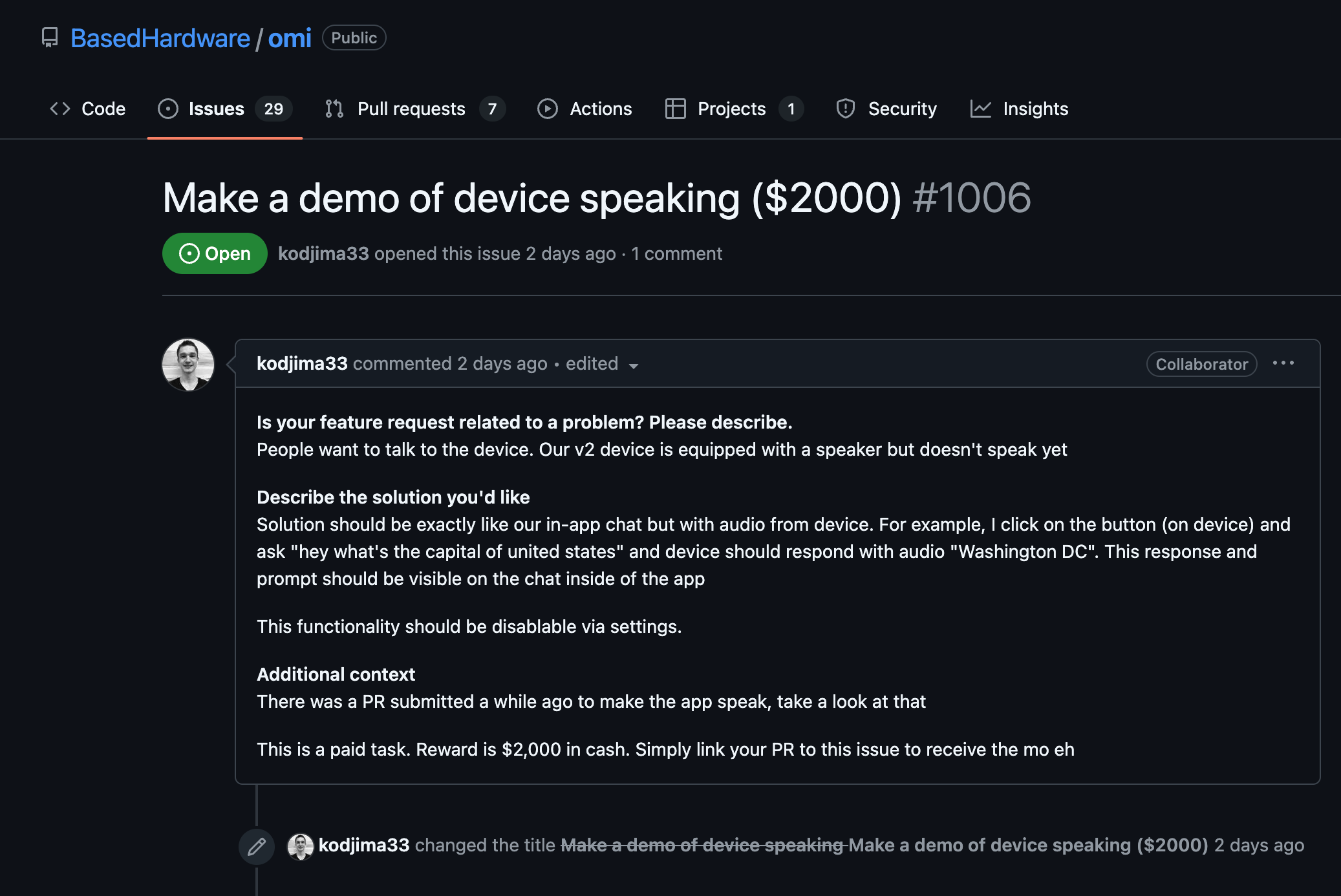
Join our Discord → 

OMI NECKLACE + OMI APP
First & only open-source AI wearable platform

a person looks into the phone with an app for AI Necklace, looking at notes Friend AI Wearable recorded a person looks into the phone with an app for AI Necklace, looking at notes Friend AI Wearable recorded
online meeting with AI Wearable, showcasing how it works and helps online meeting with AI Wearable, showcasing how it works and helps
App for Friend AI Necklace, showing notes and topics AI Necklace recorded App for Friend AI Necklace, showing notes and topics AI Necklace recorded