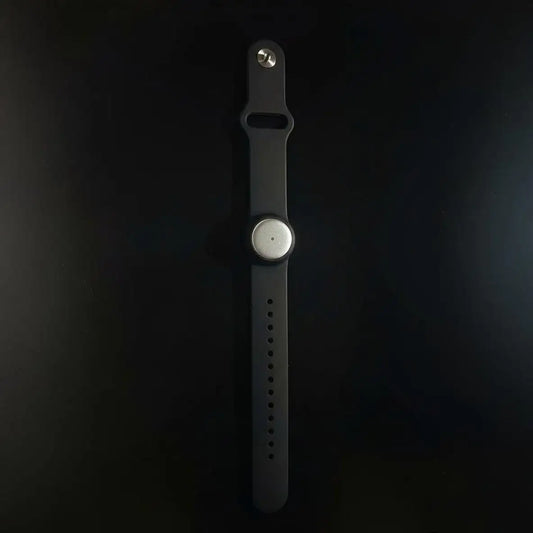
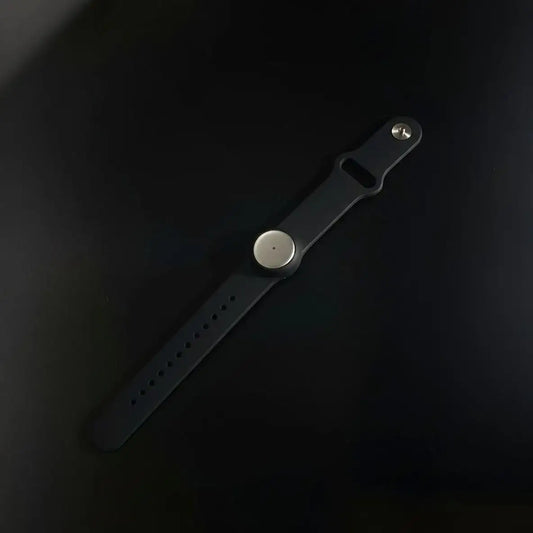
Omi is a wearable note taker plus a note taker app built for voice recording and transcription. You charge it overnight, wear it all day (necklace or wrist band, even under a shirt), and it can capture what you say and hear, then turn it into voice to notes: transcripts, summaries, ai notes, tasks, and searchable memories. For accounting teams, it’s a practical ai note taking app for close meetings, audit walkthroughs, vendor calls, policy decisions, and handoffs. It’s free for up to 1,200 minutes, and unlimited is about $16/month on the annual plan. Always get permission before recording—ask your manager/director and follow your company policy.
AI note-taking for accounting pros: capture decisions, close faster, and stop losing action items with Omi.
Accounting work is full of tiny, high-stakes details: a number that changed, a policy exception, an approval that “should be fine,” the one spreadsheet tab that matters, the promise a stakeholder made in a quick hallway chat. During close and audit season, those details don’t just disappear—they come back later as rework.
This guide shows how Omi fits real accounting workflows across levels—from VP of Accounting and Senior Director/Head of Accounting to Directors, Managers, Supervisors, Coordinators, Specialists/Analysts, Assistants, and Interns/Trainees—and how to use it responsibly.
What Omi is (and why it fits accounting teams)
Omi is a small wearable voice recorder with transcription plus a companion app. The device captures audio hands-free, and the app turns it into a transcript and structured output: summaries, tasks, and searchable notes. In practice, it behaves like a note taker app that doesn’t ask you to stop listening, stop thinking, or stop participating.
That matters in accounting because the work isn’t just “taking notes.” It’s tracking decisions. It’s remembering why a recon was signed off, what assumptions were agreed in a revenue meeting, what evidence the auditor asked for, and what the CFO actually meant by “let’s keep it simple.”
Omi tends to fit different accounting roles in slightly different ways:
- VP / Senior Director / Head of Accounting: capture decisions, align the team, and keep commitments from other departments searchable.
- Director / Manager: turn meetings into action items, close checklists, and clean handoffs with less “what did we agree on?” back-and-forth.
- Supervisor / Coordinator: keep daily standups, follow-ups, and audit requests organized in folders and easy to share.
- Specialist / Analyst: capture walkthroughs, tricky exceptions, variance discussions, and technical details without losing context.
- Assistant / Intern / Trainee: learn faster by reviewing transcripts, asking the AI to explain terms, and building consistent notes.
One more thing: Omi isn’t only about “meetings.” Accounting work happens in short bursts—calls, quick syncs, desk-side explanations, system walkthroughs. A wearable note taker is useful precisely because it’s there when the conversation happens.
How Omi works day-to-day for accounting
The routine is simple on purpose: charge it at night, wear it during the day, and let it capture what would otherwise vanish into “I’ll remember it.”
1) Charge overnight, then wear it like a necklace or wrist band
Omi is designed to be hands-free. You can wear it as a necklace (pendant style) or as a wrist band accessory. In an office setting, a lot of people prefer it discreet—yes, even under a shirt—because the goal is comfort and consistency. Still: be transparent. In many companies, recording requires explicit approval and sometimes written policy coverage.
2) Record conversations and get live transcription in the app
When connected, Omi can show live transcription while you talk. This is where “voice recorder to transcript” becomes a real workflow: you stay focused on the discussion, and the app handles voice recording and transcription in the background. If you’re in a spotty network environment, Omi can still capture and sync later (offline-to-online flow), so you’re not betting your notes on perfect Wi-Fi.
3) Use AI chat to clarify, summarize, and extract action items
After the conversation, you can talk to the transcript. Ask things like: “What decisions were made?” “List action items with owners.” “What did we agree about the accrual?” “Summarize this for the controller in 6 bullets.” This is where accounting teams get the most leverage: the notes aren’t just stored—they become usable output.
4) Organize, favorite, and share the parts that matter
Omi lets you organize conversations into folders (Close, Audit, AP, AR, Revenue, Payroll, Systems), favorite the critical ones, and share transcripts/summaries with the right people. That sounds small, but it removes the most annoying friction in accounting: hunting for the one message, the one email, the one half-remembered commitment.
5) Go deeper with web-connected AI (when you want context)
Sometimes accounting conversations include “we should do X” without anyone explaining the context. With a transcript in hand, you can ask the AI to explain concepts, produce examples, or outline options. Since Omi’s AI can connect to the internet, it can complement your conversation with broader context—useful for training, policy education, and preparing for stakeholder pushback.
Voice to notes for accounting: from conversations to clean records
The best mental shift is this: you don’t need perfect notes while you’re in the room. You need reliable capture, then fast shaping. That’s what people are really searching for when they look for an ai note taking app—or a simple note taking workflow that doesn’t collapse during close.
A simple accounting workflow that actually sticks
- Before the meeting: confirm you have permission to record, open the app, and verify transcription is active.
- During the meeting: stay present. If something is important, mark it (even if you only mentally note the moment). The goal is clarity, not typing.
- Right after (3–5 minutes): review the summary, rename it clearly (“Close day 3: accrual decisions”), and file it into the right folder.
- Follow-up: ask the AI for action items, owners, due dates, and a short status update you can paste into Slack/email.
10 real situations where accounting teams use Omi (and why it helps)
- Month-end close standups: capture blockers, decisions, and owner assignments so nothing gets lost between teams and time zones.
- Revenue recognition and contract review calls: turn nuanced discussions into a searchable record of assumptions, exceptions, and next steps.
- Audit walkthroughs: preserve exactly what the auditor asked for, what evidence was agreed, and which control owners are responsible.
- AP vendor calls: document disputed invoices, negotiated terms, and promised follow-ups—especially when multiple stakeholders join late.
- AR collections conversations: keep commitments, timelines, and escalation notes organized without relying on memory or scattered notes.
- Budget vs. actuals reviews: capture explanations for variances and the actions leaders approve (or reject) in the moment.
- Policy and process updates: record decisions about approvals, thresholds, and exceptions so the “new rule” is clear and shareable.
- ERP/accounting system implementation meetings: turn messy cross-functional discussions into structured tasks, risks, and open questions.
- Training and onboarding: help interns/trainees and new analysts review explanations later—then ask the AI to summarize in plain English.
- Cross-functional meetings with Sales/Legal/Operations: capture commitments made outside accounting (where misunderstandings usually start).
Across all of these, the core value is the same: less rework, fewer dropped details, and a cleaner chain from “we talked” to “we did.” That’s what good ai notes are supposed to do.
Best practices for recording accounting meetings (without messy transcripts)
Placement and audio tips
- Pick a clean spot: in a conference room, place yourself where voices are clear and not blocked by laptops or HVAC noise.
- Do a 10-second test: confirm the transcript is showing up before you rely on it.
- One meeting, one thread: if a call splits into side topics (tax + revenue + systems), consider separate recordings so the output stays clean.
Bookmarking matters more than speed typing
Accounting meetings often have a few “critical sentences” hidden inside 45 minutes of discussion. Focus on those moments: approvals, numbers, deadlines, and exceptions. If you do only one active thing, do this: capture and mark what matters. Later, pull the decisions and owners out in seconds.
Build a personal dictionary for accounting jargon
Transcription usually breaks on acronyms, vendor names, internal system terms, GL account nicknames, and people’s names. Omi lets you add custom vocabulary so your voice recorder with transcription gets more accurate over time. For accounting teams, this is huge: cleaner transcripts mean less time “fixing notes” and more time finishing the work.
Practical examples: internal tool names, business unit abbreviations, recurring vendor names, and any technical terms your team repeats during close.
Summary templates and custom accounting templates
A raw transcript is helpful, but structured output is what makes it operational. Omi lets you choose summary templates—and you can create your own. This is where the tool shifts from “recording” to “running the workflow.”
High-performing accounting summary templates (examples)
- Close recap: decisions, open items, owners, due dates, and risks to timeline.
- Audit request tracker: evidence requested, source system, owner, due date, status.
- Vendor call summary (AP): dispute reason, agreed resolution, amounts, next step, escalation path.
- Collections call log (AR): promised payment date, blockers, credit hold notes, follow-up schedule.
- Policy decision memo: options discussed, trade-offs, final decision, who approved, what changes next.
A custom accounting template you can copy
Title: [Topic + Date + Team]
1) 10-second summary (what happened)
2) Decisions made (with who approved)
3) Numbers mentioned (amounts, dates, thresholds)
4) Action items (owner + due date)
5) Risks / blockers (and mitigation)
6) Open questions (who will answer + when)
7) Evidence / attachments needed (audit/close)
8) One-paragraph update to send to leadership
This is the difference between “notes” and a real system. Your meetings become consistent artifacts: searchable, shareable, and easy to turn into next steps.
Voice to notes AI free: pricing and why it is worth it
Most teams want to test before committing. Omi includes a free tier with up to 1,200 minutes of recording/transcription so you can validate the workflow in real close cycles and real meetings.
- Free: up to 1,200 minutes of recording and transcription.
- Unlimited: about $16 per month on the annual plan.
For accounting, the ROI case is straightforward: if this prevents a handful of missed action items, reduces rework during close, or shortens time spent chasing “what did we decide,” it pays for itself fast. The bigger win, honestly, is calm: fewer things living only in someone’s head.
Privacy, security, and consent (read this part)
Always get permission before recording
Get explicit permission before you record—especially in corporate accounting where conversations can involve sensitive financial data, employee information, vendor disputes, or pre-close numbers. The safest path is to ask your manager/director (or your VP/Head of Accounting) what is allowed, and follow your company’s written policy. If your organization requires written consent or specific tooling rules, follow them. You are responsible for compliance.
Security and trust
Omi is open-source and designed with enterprise-grade safety in mind, including compliance positioning such as SOC 2 and HIPAA. It also supports strong encryption practices and gives you control over your data (export, delete, and data hygiene). For accounting teams, that matters because “notes” can become evidence—so you want control, visibility, and a serious security posture.
Where Omi is built
Omi is developed in San Francisco, California. The product is built around a simple idea: capture real life conversations and convert them into usable work—tasks, summaries, and searchable context—without making you act like a stenographer.
FAQ
Is Omi a good AI note taking app for accounting teams?
Yes—especially if your pain is missed details, unclear decisions, or follow-ups that drift during close and audits. Omi captures conversations and turns them into structured notes, tasks, and searchable summaries.
Does it work as a voice recorder with transcription for accounting meetings?
That’s the core workflow: voice recording and transcription plus AI summaries. It’s essentially a “voice recorder to transcript” pipeline that ends in actionable notes instead of raw audio.
How does it help during month-end close?
Close is mostly coordination: blockers, decisions, and accountability. Omi helps by turning standups and review calls into clean action lists, a shared memory of decisions, and a searchable trail when questions come back later.
Do I need permission to record at work?
Yes. Always ask your manager/director and follow your company policy. In many workplaces, recording rules are strict—don’t assume it’s okay just because it’s “internal.”
How do I improve transcription accuracy for accounting jargon?
Add custom vocabulary (vendor names, internal tools, acronyms, GL terminology), and do a quick audio/transcription check before a high-stakes meeting. Cleaner input means cleaner AI notes.
Is there a voice to notes AI free option?
Yes. Omi includes a free tier with up to 1,200 minutes so you can test it in your real workflow. If you need more volume, the unlimited annual plan averages about $16/month.
Quick takeaway
If you want AI note taking for accounting department professionals—from VP and Head of Accounting to analysts and interns—Omi is built around a routine that works: charge it at night, wear it during the day, capture conversations hands-free, get a transcript, generate structured summaries and tasks, organize everything in folders, and use AI chat to pull decisions and follow-ups fast. Just do it the right way: get consent, follow policy, and treat recordings with the seriousness accounting work deserves.

 www.omi.me