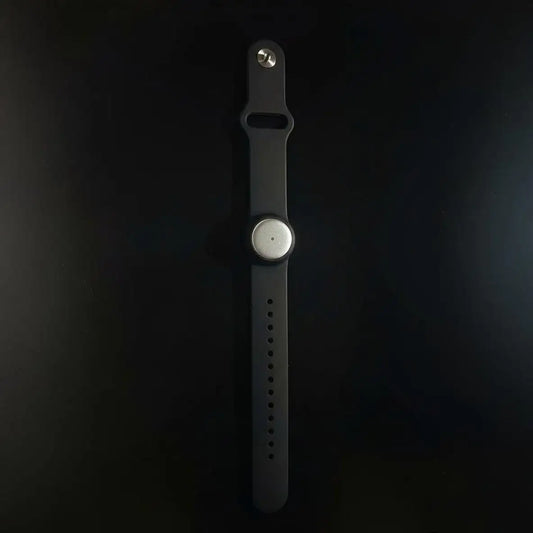
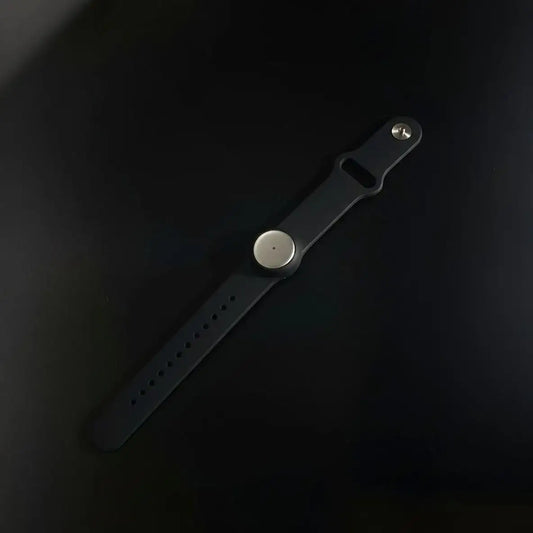
Omi is a small wearable AI voice recorder with transcription plus an ai note taking app designed for busy workdays. HR teams use it as a reliable note taker: it captures what you say and hear, creates voice recording and transcription (live or later), and turns conversations into structured ai notes like summaries, action items, and searchable memories. Charge it overnight, wear it all day (necklace or wrist), organize everything in folders, favorite key conversations, and share transcripts/summaries when appropriate. Omi is free for up to 1,200 minutes, and the unlimited plan is about $16/month (annual). Always get permission before recording, and follow your organization’s HR policies and local laws.
If you work in Human Resources, find Omi, the best AI note taker for HR teams: capture conversations, get instant transcripts, and turn meetings into action! This tool will make you 10x more productive.
HR work is where details become outcomes. A single missed sentence in an employee relations meeting can change how a case is handled. A sloppy interview debrief can delay an offer. A fuzzy recollection of what a manager agreed to in a coaching session can create avoidable conflict later. And on top of that, your calendar rarely gives you space to “write everything up properly.”
That’s why ai note taking for Human Resources (HR) department professionals such as: vp ; senior director/head ; director ; manager ; supervisor ; coordinator ; specialist/analyst ; assistant ; intern/trainee is growing fast: it reduces the “documentation tax” without turning HR into stenography.
This guide breaks down how Omi actually works for HR, where it fits across roles (from VP of HR to HR intern/trainee), the top situations where it creates real value, and how to use it responsibly—because in HR, consent, confidentiality, and good judgment are not optional.
What Omi is (and why it fits HR teams)
Omi is a wearable note taker app experience built around one simple idea: if you can capture the conversation cleanly, you can stop rewriting your day from memory.
You wear a small device (necklace-style or on a wrist accessory) that records what you say and hear. The companion app turns that into voice to notes: transcription, structured summaries, tasks, and searchable memories. Instead of “a recording you’ll never re-listen to,” you get a usable output you can work from.
For HR teams, that matters because HR conversations tend to be:
- High-context: you need the background to interpret what was said and what it means.
- High-stakes: hiring decisions, employee relations, investigations, performance management, compensation, and policy interpretation.
- High-volume: back-to-back meetings where you can’t pause life to write perfect notes.
- Cross-functional: managers, legal, finance, operations, vendors, and leadership—all needing clarity and follow-through.
Omi is not “just note taking.” It’s voice recording and transcription plus organization plus AI support. That combination is what makes it practical for HR, especially across different job levels:
- VP of HR / people leadership: capture leadership discussions, policy decisions, workforce planning conversations, and recurring alignment meetings—then pull action items and decisions instantly.
- Senior director/head of HR: keep clean documentation for escalations, manager coaching patterns, vendor and benefits strategy calls, and program rollouts.
- HR director: turn complex meetings into consistent documentation: what was decided, why, and what happens next.
- HR manager / supervisor: reduce “follow-up drift” after ER meetings, investigation interviews, performance discussions, and recruiting loops.
- HR coordinator: streamline handoffs: capture meeting notes, share summaries, and keep folders organized by team/program without retyping everything.
- HR specialist/analyst: convert technical conversations (comp bands, benefits specifics, HRIS changes, compliance updates) into structured notes and task lists.
- HR assistant: support leaders with cleaner documentation, faster recap writing, and less missed follow-up.
- HR intern/trainee: learn faster by reviewing transcripts, building better follow-up questions, and practicing consistent documentation habits.
There’s also a practical adoption advantage: Omi is designed to be small and wearable. HR tools fail when they add friction. If your “note system” requires opening three apps, naming files, and manually formatting everything, it won’t survive your calendar. If it’s charge → wear → record → summary → file, it becomes routine.
One important reality check: HR note keeping often becomes part of a broader process (case management, HRIS, legal review, retention policies). Omi doesn’t replace your systems. It reduces the time and error rate in getting from “conversation happened” to “documented clearly with follow-ups.”
How Omi works for HR conversations (device + app)
HR teams don’t need more tools. They need fewer moments where information disappears. Omi’s workflow is built to be simple enough for daily use and strong enough for serious work.
1) Charge overnight, then wear it like a necklace or wrist band
The most sustainable routine in HR is the one you don’t think about. Omi is designed around that: charge it overnight, wear it throughout the day. You can wear it as a necklace (pendant style) or as a wrist accessory.
Some users prefer wearing it under a shirt for comfort or discretion. For HR, discretion should never mean secrecy. If you are recording, you disclose it and obtain permission. Your goal is trust and accuracy—never surveillance.
2) Capture everything you say and hear (then turn it into usable notes)
Omi captures audio and generates voice recording and transcription. Depending on your setup, you can see transcription live, or you can rely on offline recording and generate the transcript later. Either way, the outcome is the same: you get text you can search and structure you can act on.
Think of it as a voice recorder to transcript workflow that’s built for real conversations, not “perfect studio audio.” The goal is not perfection. The goal is reliability: decisions, commitments, and next steps should not depend on someone’s memory.
3) Use AI to turn raw transcript into HR-ready outputs
A transcript is useful, but HR needs structure. Omi’s AI helps you get from “a long conversation” to clean outputs:
- Summaries: a neutral recap of what happened, organized by topic.
- Action items/tasks: who owns what, what’s due, what’s blocked.
- Memories: key facts or decisions you may need to recall later.
- AI chat over the transcript: ask questions like “what did the manager commit to?” or “list the unresolved issues” or “draft a follow-up email.”
That’s where Omi becomes an ai note taking app instead of “another recorder.” It doesn’t just store audio. It turns it into work.
4) Organize by folders, favorite what matters, and share appropriately
HR documentation is only valuable if you can find it later. Omi supports folders and starred/favorited items so you can keep a clean system without overthinking it. Typical HR folder structures include:
- Recruiting: role intakes, candidate interviews, debriefs.
- Employee relations: case-related conversations (only when policy allows and consent is obtained).
- Performance management: manager coaching, calibration meetings.
- Benefits & vendors: vendor calls, renewals, plan changes.
- People programs: onboarding, training, engagement, policy rollout.
Sharing also becomes easier: instead of rewriting notes for every stakeholder, you can share the transcript or summary when appropriate and compliant with your internal rules.
5) Use web-connected AI to go deeper (without losing the original record)
Once you have a transcript, the conversation becomes searchable. And because Omi’s AI can connect to the internet, it can help you add background context when you ask for it—like defining a concept, suggesting a framework for manager coaching, or summarizing best-practice approaches to a people program.
Important: the transcript remains the source record of what was said. Web-connected AI is for expanding your understanding and speeding up follow-ups—not rewriting reality.
How Omi maps to the day-to-day needs of HR
Here’s the simplest way to think about Omi’s capabilities in HR terms:
🎙️ Capture everything
- Transcribes everything you say and hear, turning conversations into text.
- Generates automatic summaries, tasks, and “memories” so you don’t start from a blank page.
- Supports 25+ languages and translation for global teams and multilingual workplaces.
- Improves recognition with speech profiles, so repeat speakers become more consistent over time.
- Works in online and offline modes, so you’re not blocked by bad connectivity.
🧠 Recall instantly
- Search across summaries, tasks, and memories when you need the exact detail later.
- Ask Omi AI questions about the transcript to extract decisions, commitments, and follow-ups.
- Use daily recaps as a quick end-of-day digest—helpful for HR roles who live in meetings.
- Use a brain map view to connect related conversations and themes over time.
⚡ Automate your work
- Sync tasks to your favorite task manager so action items don’t die in a recap doc.
- Choose custom summary templates for different HR scenarios, or create your own.
- Use an apps marketplace to connect workflows and tools you already rely on.
- Keep organization clean with folders and starred conversations.
- Quickly share transcripts and summaries when appropriate.
💻 Connect everywhere
- Use Android and iOS mobile apps, plus Mac desktop and a web app for any browser.
- Record with Apple Watch supported workflows when that fits your routine.
- Lean on a large community (9,000+ users in Discord) for troubleshooting and ideas.
- Use custom vocabulary and jargon for accuracy in HR terms, names, job titles, and internal acronyms.
🛠️ Build & extend
- Open source: open hardware and software for transparency and flexibility.
- API and MCP server options so advanced teams can work with their data.
- One-click AI app creation for no-code tooling around your transcripts and notes.
- Custom STT support to choose your transcription provider where needed.
- Ship apps to the Omi App Store (free or paid) if you build HR-specific workflows.
🛡️ Own your data
- Enterprise-level safety posture, including SOC 2 and HIPAA compliance positioning.
- Options to run workflows locally to reduce cloud dependence when needed.
- Encryption: TLS in transit and AES-256 at rest.
- Easy export so your data isn’t trapped, and deletion tools to wipe items anytime.
Omi is developed in San Francisco, California, and it’s built to feel like a natural extension of your day—not a project you have to manage.
Voice to notes for HR: from conversation to structured documentation
In HR, “notes” are not a casual recap. They’re often a record of decisions, commitments, timelines, and next steps. And they need to be consistent: neutral tone, clear facts, and easy retrieval later.
This is where Omi’s note taking workflow stands out. It’s not “a meeting bot that only works on scheduled video calls.” It’s a wearable, always-with-you note taker that supports real-world HR work: hallway conversations (when appropriate), in-person meetings, phone calls, vendor calls, interviews, and manager coaching.
A practical HR workflow that holds up (without adding admin work)
- Before the conversation: disclose recording and get permission. If policy requires, confirm with your leader (VP/head/director) or legal/employee relations guidance.
- During: stay present. Let Omi handle the voice recorder with transcription work so you can focus on listening, asking the right questions, and keeping the conversation constructive.
- Right after (3–7 minutes): review the summary, correct obvious names/terms, and file into the right folder. This tiny habit prevents hours of cleanup later.
- Follow-up: use the transcript to extract action items, draft recap emails, and align stakeholders quickly.
- Later retrieval: search and pull exact phrasing, timelines, or decision points when questions come up weeks later.
Top 10 situations where HR professionals use Omi (and the real benefit)
Below are ten common situations where HR leaders and teams—VP, senior director/head, director, manager, supervisor, coordinator, specialist/analyst, assistant, and intern/trainee—get strong value from ai note taking app workflows. The theme is the same: fewer missed details, faster follow-ups, and less “reconstructing the day” at 7 p.m.
- 1) Hiring manager intake meetings (role kickoff): Capture role context, must-haves vs nice-to-haves, compensation guardrails, interview loop, and timeline. Omi turns it into a structured role brief you can reuse across recruiters and interviewers. This is “voice to notes” at its best: fast alignment, fewer misunderstandings, faster hiring.
- 2) Candidate interviews (screening, technical, behavioral): Instead of typing fragmented notes while trying to build rapport, let Omi record and transcribe. Then generate a debrief: evidence-based signals, concerns, follow-up questions, and decision recommendation. It’s a cleaner, more consistent note taking approach for interview loops.
- 3) Panel debriefs and calibration discussions: These meetings move fast and involve multiple opinions. Omi can capture the full discussion and produce a summary by theme: strengths, gaps, risks, and final decision. Later, you can ask the AI: “What were the main objections?” or “What did we agree to verify?”
- 4) Manager coaching and difficult 1:1 prep: HR managers/supervisors spend a lot of time coaching leaders on how to handle performance, conflict, and communication. Omi helps capture the coaching conversation and turn it into an actionable plan: what to say, what to document, what to do next, and when to follow up.
- 5) Employee relations intake conversations: When policy allows and you have consent, capturing the intake reduces “telephone-game” drift. Omi can help you extract facts, timeline, parties involved, and next steps—while keeping your notes neutral and structured. This is where a voice recorder to transcript workflow can reduce risk caused by missing details.
- 6) Investigation interviews and witness conversations: Investigations demand accuracy and consistency. With the right approvals and consent, Omi can support documentation by producing a transcript and a structured summary (who said what, timeline points, open questions, follow-up actions). You still apply your investigation framework. Omi reduces the mechanical workload.
- 7) Performance review calibration meetings: Directors and senior HR leaders often sit through calibration meetings where decisions are made quickly. Omi helps capture the rationale behind changes, highlight action items for manager messaging, and produce a clean recap you can reference later.
- 8) Compensation planning and leveling discussions: These meetings involve lots of specifics. HR specialists/analysts can use Omi to capture decisions, exceptions, and dependencies. Then generate a structured decision log: what changed, why, who approved, and what needs follow-up.
- 9) Benefits vendor calls and renewals: Vendor meetings are full of details that get lost: plan changes, pricing assumptions, timelines, member communications. Omi turns that into searchable notes and tasks so follow-up doesn’t depend on someone’s memory or an overloaded inbox.
- 10) Onboarding sessions, trainings, and policy rollouts: HR coordinators and assistants often run these sessions and then field questions afterward. Omi helps turn the session into a clear recap: what was covered, links/resources mentioned, FAQs, and action items. It also helps new HR interns/trainees learn faster by reviewing transcripts and summaries.
How the output becomes immediately useful (not just stored)
What makes Omi different from “a recorder” is the path from transcript to action:
- From transcript → recap email: “Summarize the decisions and draft a follow-up email to the manager.”
- From transcript → case notes: “Extract the timeline and list the facts stated, neutral tone.”
- From transcript → tasks: “Create a checklist of next steps with owners and due dates.”
- From transcript → FAQs: “Pull the top questions asked and craft clear answers for an internal post.”
This is why HR teams search for a note taker app instead of “another meeting tool.” The value is not in capturing audio. The value is in turning conversations into decisions you can execute.
Best practices for recording in HR (consent, confidentiality, accuracy)
HR is a special category of work. You handle sensitive information, power dynamics, and trust. If you’re going to use any voice recording and transcription tool, you need a responsible operating system.
1) Consent is the rule, not a suggestion
Always disclose recording and obtain permission from everyone involved. In HR, it’s also smart to align with your leader (director/head/VP) and any internal policies. If your organization has a formal process (especially for employee relations or investigations), follow it.
A simple pattern many teams use:
- State that you’d like to record for accuracy and follow-up.
- Explain how the notes will be used (summary, action items, documentation).
- Confirm consent explicitly before starting.
2) Record with purpose, not habit
Not every HR conversation should be recorded. Use Omi when it improves accuracy and follow-through and when it aligns with policy. If a conversation is too sensitive or policy prohibits recording, don’t do it. You can still use Omi for permitted contexts like interviews, vendor calls, onboarding sessions, and program meetings.
3) Keep notes neutral and factual
Good HR documentation is clear, neutral, and specific. A transcript helps, but your summary should avoid loaded language. Use templates that prompt neutral structure: facts stated, timeline, commitments, and next steps.
If you’re using AI summaries, review them quickly. AI can be fast, but HR needs accuracy.
4) Handle access and sharing deliberately
Just because you can share a transcript doesn’t mean you should. HR documentation often has limited audiences. Decide who should see what, and share summaries intentionally. A common approach is:
- Share summaries broadly (when appropriate) to align on actions and decisions.
- Restrict raw transcripts to limited stakeholders when policy requires tighter control.
5) Improve accuracy with placement, vocabulary, and speaker profiles
Transcription quality is usually won or lost on three things:
- Placement: wear it where audio is clear (typically near the chest), and avoid muffling it under thick layers.
- Custom vocabulary: add internal terms (team names, leaders, programs, acronyms) and HR jargon to reduce cleanup.
- Speech profiles: when the same people speak often (HR team, leadership), recognition becomes more consistent over time.
6) Use offline recording when needed (but still follow rules)
Some HR contexts happen in places with poor connectivity. Omi supports on/offline workflows so you can capture consistently. Offline does not change the ethics: consent and policy still apply.
7) Make it a team habit with light standards
If you want Omi to work across an HR department, keep the rules simple:
- Always get consent.
- Use the right template per meeting type.
- File into folders immediately.
- Extract tasks the same day.
That’s how ai notes become a reliable system—not a pile of transcripts.
Summary templates and custom HR templates
Templates are the difference between “notes” and “usable documentation.” HR teams don’t need generic meeting summaries. They need structured outputs that match HR reality: role intakes, interview debriefs, ER recaps, investigation notes, compensation decisions, and training summaries.
High-performing HR templates (examples)
- Hiring manager intake: role purpose, must-have skills, nice-to-haves, comp range notes, interview loop, timeline, risks.
- Candidate interview debrief: evidence-based signals, concerns, follow-up questions, recommendation, next step.
- Panel debrief recap: feedback themes by interviewer, disagreements, decision, action items.
- Manager coaching plan: situation summary, coaching guidance, phrasing suggestions, timeline, follow-up checkpoints.
- Employee relations intake: stated facts, timeline, parties involved, impact, next steps, open questions (only when permitted and consented).
- Investigation interview: questions asked, responses, timeline markers, inconsistencies to clarify, follow-up actions (with approvals/consent).
- Calibration meeting record: decisions, rationale, changes requested, manager messaging notes, approvals needed.
- Comp planning decision log: adjustments, justification, approvals, dependencies, communication plan.
- Benefits/vendor call recap: plan changes, pricing assumptions, deliverables, deadlines, next steps.
- Training/onboarding summary: agenda covered, key policies, resources mentioned, FAQ items, action items for attendees.
Custom vocabulary: the underrated HR accuracy tool
HR transcription breaks on names, acronyms, and internal terms. This is where Omi’s custom vocabulary matters. Add things like:
- Leader names and common stakeholders.
- Internal program names (onboarding tracks, leadership programs, engagement initiatives).
- HR jargon and acronyms your team uses daily.
- Job titles, job family codes, team names, location names.
It turns “close enough transcription” into “usable transcription” and reduces editing time.
A custom HR template you can copy
Title: [Meeting type] — [Topic] — [Date]

1) One-paragraph summary (neutral tone)
2) Attendees (name + role/title)
3) Purpose of meeting (what outcome we needed)
4) Key facts stated (bullet list, objective wording)
5) Decisions made (what, why, who approved)
6) Commitments made (who committed to what)
7) Risks / open questions (what needs clarification)
8) Action items (owner + due date + dependency)
9) What to communicate next (draft email / message)
10) Where to file this (folder + tags)
This is where Omi becomes more than “note taking.” It becomes a repeatable documentation system that scales across HR roles, from coordinator to VP.
AI note taking app pricing: free vs unlimited (and why it pays off)
HR teams often want to test an ai note taking app in low-risk contexts first—like vendor calls, hiring intake meetings, or onboarding sessions—before expanding usage. Omi makes that easy with a free tier.
- Free: up to 1,200 minutes of recording/transcription so you can validate the workflow.
- Unlimited: about $16/month on the annual plan for teams who live in conversations.
The ROI for HR is usually not “saved minutes.” It’s reduced rework and reduced risk:
- Fewer missed follow-ups after fast meetings.
- Cleaner handoffs between HRBPs, recruiters, coordinators, and leadership.
- More consistent documentation and fewer “we never agreed to that” moments.
- Less time rewriting recaps late at night because the day got away from you.
If your HR day includes interviews, calibrations, ER conversations (when permitted), vendor calls, and manager coaching, the unlimited plan often becomes the practical choice quickly. If your volume is lighter, the free tier is an easy way to start.
Privacy, security, and consent
HR teams should treat recording and transcription tools as part of their privacy and compliance posture. You are dealing with personal information, sensitive workplace issues, and internal decision-making. Omi is designed with enterprise-level safety in mind, but responsible use is always a human responsibility.
Always get permission before recording
This is the non-negotiable rule: always obtain consent from everyone involved, and follow your company’s policies and local laws. If you’re uncertain, ask your leader (manager/director/head/VP) and confirm with legal or employee relations guidance when required.
Security posture and data control
Omi is positioned with enterprise-level security and compliance, including SOC 2 and HIPAA. It supports strong encryption (TLS in transit and AES-256 at rest), options to run workflows locally to reduce cloud dependence, and data control features like export and deletion.
For HR, practical privacy also means process discipline: tight access, intentional sharing, and retention aligned with your policies.
Open source transparency
Omi is open source (hardware and software), which can matter for trust and long-term flexibility. HR leaders who care about vendor lock-in, auditability, or custom workflows often see open source as a meaningful advantage.
Where Omi is built
Omi is developed in San Francisco, California. The product direction reflects that environment: modern AI workflows, fast iteration, and a strong focus on making “capture → transcript → action” feel natural in everyday work.
FAQ
Is Omi a good note taker app for HR professionals?
Yes—especially for HR roles with heavy meeting volume and high-stakes follow-ups. Omi supports a practical note taking workflow: record hands-free, generate transcripts and ai notes, then extract decisions and action items quickly.
Does Omi work as a voice recorder with transcription?
Yes. It’s designed as a voice recorder with transcription plus an app that turns voice recording and transcription into structured outputs like summaries, tasks, and searchable notes. Many HR teams treat it as a “voice recorder to transcript” pipeline that removes manual note typing.
Which HR roles benefit most—VP, director, manager, coordinator, analyst?
All of them benefit, but in different ways. Leaders (VP/head/director) get faster alignment and cleaner decision records. Managers/supervisors get reliable follow-ups from coaching and ER-related work (when permitted). Coordinators/assistants get faster recap creation and better organization. Specialists/analysts get structured documentation from technical conversations like comp, benefits, and HRIS changes. Interns/trainees learn faster by reviewing transcripts and summaries.
Can HR use Omi for employee relations or investigations?
Only if it is permitted by your organization’s policies, aligned with legal guidance where required, and you have explicit consent from everyone involved. HR should treat these contexts carefully. When in doubt, don’t record.
How do we keep HR notes organized?
Use folders by function (Recruiting, Employee Relations, Performance, Benefits/Vendors, People Programs) and star/favorite the conversations you’ll likely need again. Then use search to retrieve summaries and key moments later. Organization is what makes an ai note taking app actually usable long-term.
How do we improve transcription accuracy for HR terms and names?
Add custom vocabulary: leader names, internal programs, acronyms, job titles, and team names. Pair that with good placement and speech profiles for repeat speakers. This reduces editing time and increases trust in the transcript.
Is there a free option?
Yes. Omi is free for up to 1,200 minutes so you can test the workflow. If you need more volume, the unlimited plan averages about $16/month on the annual plan.
Do we need consent every time we record?
Yes. In HR, you should always get permission and follow policy. Consent should be explicit and consistent. If you’re rolling out department-wide, document the process with leadership and legal guidance.
Quick takeaway
If your HR day is full of interviews, debriefs, coaching, vendor calls, calibrations, and fast decisions, Omi is built to reduce the documentation burden without lowering quality. It’s a wearable note taker plus an ai note taking app that converts voice to notes: record what you say and hear, get voice recorder with transcription output, generate structured ai notes, organize in folders, favorite what matters, and move action items forward—while staying responsible about consent and confidentiality.

 www.omi.me