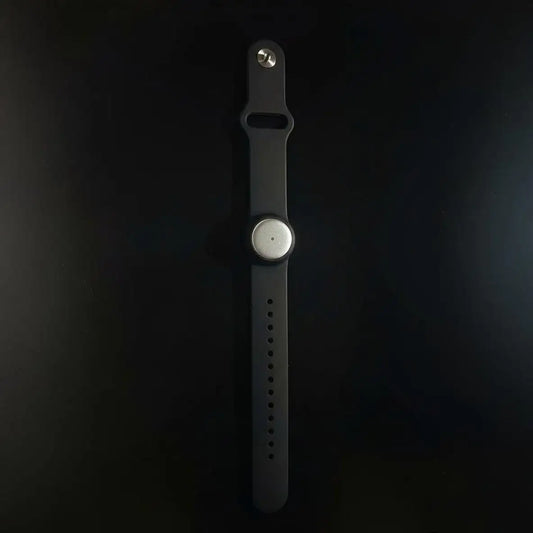
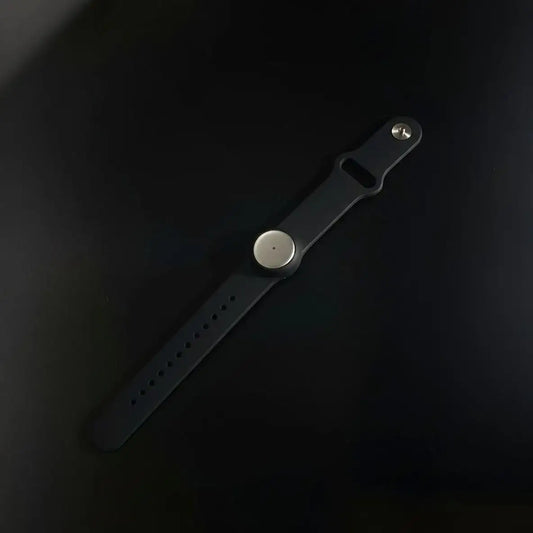
Omi is a wearable voice recorder with transcription plus a note taker app that turns real legal work—meetings, calls, hallway decisions, negotiation threads—into clean ai notes you can actually use. Wear it during the day (necklace style or wrist band), and Omi captures what you say and hear, then converts it into voice recording and transcription, summaries, tasks, and searchable memories. It is free for up to 1,200 minutes, and the unlimited plan averages about $16/month (annual).
To get more productive, you'll need an AI note-taking for your legal department and professionals, so you can quickly turn conversations into searchable AI notes with Omi and run things faster. Meet Omi AI for legal:
For legal teams, the win is not “more notes.” It’s fewer missed commitments, fewer “what did we agree to?” loops, and less time rewriting meeting minutes from scratch. Omi helps different roles in a legal department—VP, senior director/head, director, manager, supervisor, coordinator, specialist/analyst, assistant, intern/trainee—stay aligned while moving fast.
Important: you should always get explicit permission before recording anyone (internal or external). Follow your company policy and ask your legal leader (GC/CLO/VP Legal/Head of Legal) what’s approved. Omi is built to help with note taking, not to bypass consent or governance.
What Omi is (and why it fits legal department teams)
Omi is a wearable recorder designed for daily life, paired with an ai note taking app that turns speech into structured output. In legal departments, most of the real work happens in conversations: an intake call that becomes a contract, a cross-functional meeting that creates a new risk, a negotiation that hinges on one sentence, an outside counsel update with three hidden action items.
That’s why “notes” in legal aren’t casual. Your notes are a bridge between:
- Decisions (what was approved, what was rejected, what was deferred)
- Risk posture (what the company is comfortable with, and why)
- Commitments (who promised what, by when)
- Context (what matters when someone asks “why did we do it this way?” two months later)
Omi helps because it’s built around capture first, structure second. You record hands-free. Then you shape the result into something your legal team can act on: summaries, action lists, follow-ups, and searchable transcripts. That’s the practical meaning of voice to notes for legal operations.
Why wearable capture works better than “I’ll just take notes”
Legal meetings move quickly and rarely stay on a single track. People talk over each other. Someone says “this is probably fine” and later it turns into a dispute about what “fine” meant. If you’re the one taking notes, you’re also the one missing details.
A wearable voice recorder to transcript workflow changes that dynamic:
- You stay present. You can listen for risk, intent, and ambiguity instead of typing.
- You stop guessing later. When a stakeholder asks, “did we agree to that cap?” you can check.
- You reduce the rework loop. Less time chasing clarifications, more time closing matters.
How different legal roles use Omi (naturally, without extra process)
One reason legal teams hesitate to adopt tools is that the tool becomes a second job. Omi works best when it fits the role you already have:
- VP legal / senior director/head: use Omi as the note taker for executive alignment—capture decisions, tradeoffs, and escalation paths, then share a crisp recap that prevents drift.
- Director / manager: convert meetings into action plans—owners, deadlines, unresolved issues, and the exact wording that matters for contracts and policies.
- Supervisor / coordinator / assistant: produce consistent meeting minutes and follow-ups fast, with fewer missed items and fewer “can you resend?” requests.
- Specialist/analyst: track issue lists, compliance tasks, negotiation threads, and research questions—then retrieve them instantly later.
- Intern/trainee: learn faster by turning shadowing sessions into structured notes and a running glossary of internal legal jargon.
What makes Omi different from a basic recorder
Plenty of tools record audio. Legal teams need more than audio files. Omi combines:
- Voice recording and transcription (so you can search and quote accurately)
- Automatic summaries, tasks, and memories (so you don’t rebuild the meeting afterward)
- Organization (folders + starred items, so matters don’t get lost)
- AI chat over your transcript (so you can ask, “What did we decide? What’s still open?”)
How Omi works for legal department work
Most legal departments want a workflow that’s boring—in a good way. Predictable, repeatable, and easy to govern. Omi fits that pattern: charge it overnight, wear it during the day, and let the app turn conversations into structured outputs.
1) Charge overnight, then wear it like a necklace or wrist band
Omi is designed to be hands-free. You can wear it as a necklace (pendant/necklace style) or use a wrist band accessory. Some people wear it under a shirt for comfort and discretion. That’s fine from a practical standpoint, but the rule stays the same: discretion is not consent. If the conversation is being recorded, people should know and agree.
For legal departments, consistency matters. If the device is comfortable, it becomes part of your daily routine—like a badge or a watch. If it’s annoying, it ends up in a drawer. Omi is built to be something you actually keep on you.
2) Record conversations and get transcription (live or later)
Omi captures what you say and hear and turns it into text. Depending on your setup and context, that can look like:
- Live transcription when you want immediate visibility during a meeting
- Offline recording when connectivity isn’t ideal, with processing later
Either way, the output is the same core benefit: reliable voice recorder with transcription so you can stop relying on memory for exact language, deadlines, and decision boundaries.
3) Turn raw transcripts into usable legal notes
A transcript is a starting point. Legal teams need structure: decisions, risks, owners, deadlines, and open questions. Omi generates summaries and tasks automatically, and you can guide the output with templates (more on that below).
This is where Omi becomes a real ai note taking app instead of “just another recording.” It takes the messy, human part (people talking) and turns it into something operational: ai notes that a team can act on.
4) Organize matters with folders, star the important items, and share the right recap
Legal departments live and die by organization. Omi lets you:
- Organize conversations in folders (by matter, business unit, vendor, project, or quarter)
- Star/favorite conversations that are high risk, time sensitive, or likely to resurface
- Share transcripts and summaries when appropriate (for example: a recap to Procurement, Security, or Finance)
The key phrase is “when appropriate.” Legal content has boundaries: confidentiality, privilege, and internal policy. Omi gives you the tools to generate and share clean notes, but your team decides what gets distributed and to whom.
5) Use AI chat to clarify decisions and go deeper (including web-connected context)
Once your conversation is transcribed, you can talk to it. In practice, this is how legal teams use it:
- Extract decisions: “What did we approve?” “What did we reject?”
- Confirm commitments: “Who owns the next draft?” “What’s due by Friday?”
- List unresolved items: “What’s still open?” “What needs stakeholder input?”
- Create follow-up emails: “Draft a recap email to the vendor with the agreed points.”
And because Omi’s AI can connect to the internet, it can also help you add high-level context (for example, summarizing a public standard or explaining a concept). That’s useful for learning and preparation—but for anything that changes legal posture, treat AI as assistance and apply real legal judgment.
What Omi actually does day to day (in plain English)
Legal teams don’t need buzzwords. Here’s what the system looks like in reality, mapped to what you’ll feel in your week:
- Capture everything: you stop missing details because the meeting moved fast.
- Recall instantly: you stop hunting in calendars, chats, and inboxes to find “that one decision.”
- Automate your work: action items become trackable, summaries become consistent, and follow-ups become easier to draft.
- Connect everywhere: you can use Omi across mobile, desktop, and web workflows; teams don’t have to change their entire stack.
- Build & extend: if your legal ops team is technical, open source + APIs make customization realistic instead of theoretical.
- Own your data: export, delete, and control your data lifecycle—critical for sensitive work.
Meeting to notes AI: from audio to legal-ready documentation
Legal department professionals don’t want “more content.” You want clarity: what was decided, what risk was accepted, and what happens next. That’s why the best workflow is not “take perfect notes live.” It’s: record now, structure later.
This is what people are really asking for when they search for a note taker app, voice recorder to transcript, or voice to notes tool: a fast way to turn talk into action without losing nuance.
A simple legal workflow that holds up under pressure
- Before the meeting: confirm the recording is approved for that context and get explicit consent (especially with outside counsel, vendors, or external stakeholders).
- During the meeting: stay focused on substance. Mark key moments (decisions, concessions, deadlines, “we’ll accept this if…” statements).
- Right after the meeting (5–10 minutes): generate a structured summary (decisions, risks, open issues, tasks).
- Follow-up: send a clean recap to the right group, file the conversation into the correct folder, and star it if it’s likely to resurface.
Top 10 real situations legal department professionals use Omi (and what they gain)
1) Contract intake and scoping with internal stakeholders
What usually goes wrong: scope drifts because requirements were half-spoken and never captured cleanly.
How Omi helps: Omi records the intake discussion and produces ai notes with requirements, red flags, and deadlines. Managers and analysts can pull a structured list of “must-haves vs. nice-to-haves,” while directors can extract the risk posture and escalation points.
Best output format: requirements + risks + owner/deadline action list.
2) Vendor negotiations (MSA/SOW/DPA) and “last-minute” concessions
What usually goes wrong: negotiation details get lost, then someone asks why a term changed.
How Omi helps: capture the negotiation call with voice recording and transcription, then ask the AI to list concessions, unresolved clauses, and the vendor’s exact commitments. Assistants and coordinators can send accurate recap emails. Directors can quickly verify wording without replaying audio.
Best output format: agreed points / disputed points / concessions / next draft owner.
3) Outside counsel updates (litigation, investigations, regulatory matters)
What usually goes wrong: updates get translated three times across stakeholders, and meaning changes.
How Omi helps: Omi becomes the note taker for the update call. You get a searchable transcript plus a summary you can share internally (within policy). VPs and heads use it for decision-ready clarity. Analysts use it to track milestones, document requests, and budget notes.
Best output format: status / next milestones / decisions needed / doc requests / budget notes.
4) Compliance syncs (policy rollouts, training, controls, audits)
What usually goes wrong: action items scatter across tools; accountability is fuzzy.
How Omi helps: Omi converts the call into tasks with owners and dates. Coordinators can standardize meeting minutes. Managers can follow up with a clean, consistent recap. Leadership can see risk themes across conversations through search and organization.
Best output format: controls + owners + deadlines + “open questions” list.
5) Incident response and post-incident reviews (with approved governance)
What usually goes wrong: timelines get reconstructed from memory, and “confirmed vs. assumed” blurs.
How Omi helps: with explicit approval and the right policy, Omi captures key meetings so you can draft a timeline, list mitigations, and preserve factual statements accurately. The transcript supports clarity. The summary supports speed.
Best output format: timeline + confirmed facts + pending questions + immediate actions.
6) Cross-functional risk reviews (product, marketing, security, finance)
What usually goes wrong: “We’re aligned” turns out to mean “we heard different things.”
How Omi helps: Omi produces a decision-focused summary: what was approved, what was blocked, and what conditions were attached. Directors can share the recap to prevent drift. VPs can track recurring risk themes across meetings using search.
Best output format: decision log + conditions + escalation paths.
7) Board/committee preparation and internal governance meetings (where allowed)
What usually goes wrong: people debate what was said in prep meetings, and time gets wasted.
How Omi helps: capture prep discussions and generate structured notes for internal alignment. Assistants and coordinators can produce minutes faster. Leadership can quickly reference the transcript when questions surface later.
Best output format: agenda + approvals + follow-ups + risks flagged.
8) Employment and HR collaboration (within strict policy boundaries)
What usually goes wrong: sensitive details get mishandled or shared too broadly.
How Omi helps: only if approved, Omi can help create accurate internal notes while keeping distribution controlled. The goal is clarity and consistency, not more recording. In many companies, the best practice is limiting what gets captured—your policy decides.
Best output format: limited summary + action items + “do not distribute” handling note.
9) IP, brand, and marketing reviews (claims, disclaimers, naming)
What usually goes wrong: approved language gets paraphrased and accidentally changed.
How Omi helps: capture the discussion and generate a clean “approved language” section. Specialists and analysts can extract disclaimers, required phrasing, and prohibited claims. Managers can turn it into a checklist for launch.
Best output format: approved language + prohibited claims + required disclaimers + owners.
10) Onboarding, shadowing, and internal legal training
What usually goes wrong: interns and trainees forget the context and ask the same questions repeatedly.
How Omi helps: Omi turns training conversations into structured learning notes and a searchable glossary. A trainee can ask the transcript questions later (“What’s our standard position on X?”) and show up sharper next time.
Best output format: concept summary + examples + glossary + questions to clarify.
Why this works especially well for legal departments
Legal work isn’t linear. It’s a web of matters, stakeholders, exceptions, and follow-ups. Omi supports that reality through:
- Searchable transcripts (find the exact moment a condition was stated)
- Folders + starred items (keep matters organized like a living file)
- Daily recaps (end-of-day digest so nothing slips)
- Brain map (connect related conversations and themes over time)
Best practices for recording in legal environments
Legal departments can get huge value from better note capture, but only if recording is done responsibly. Your workflow should feel compliant by default—because it is.
1) Consent first, always
Get explicit permission from participants before recording. Internally, follow your company’s policy and ask your legal leader what’s approved. Externally, do not assume anything—vendors and counsel may have their own restrictions. This is the baseline for any ai note taking for Legal department professionals such as: vp ; senior director/head ; director ; manager ; supervisor ; coordinator ; specialist/analyst ; assistant ; intern/trainee workflow.
A simple, professional script helps:
- Internal: “I’d like to record this to generate accurate meeting notes and action items. Is everyone okay with that?”
- External: “For note taking accuracy, we use a recorder that transcribes. Are you comfortable with us recording this call?”
2) Define “do not record” categories
Some conversations should not be recorded at all—or should only be recorded under strict conditions. Your policy decides this, but common guardrails include:
- Highly sensitive personnel discussions
- Certain investigation details
- Privileged strategy sessions (depending on internal governance)
- Anything explicitly excluded by legal leadership
The safest approach is simple: if you’re unsure, don’t record. Ask your leader. Move on.
3) Improve transcript quality with practical habits
- Placement matters: stable placement beats constantly moving the device.
- Reduce noise: smaller rooms and fewer side conversations improve results.
- Use speech profiles: when available, speaker recognition helps separate voices in busy discussions.
- Add custom vocabulary: internal acronyms, vendor names, clause names—this dramatically improves accuracy in legal teams.
4) Treat summaries as drafts, transcripts as reference
AI summaries are there to save time. They should not replace judgment. For high-stakes points, confirm against the transcript. If you’re sharing externally, be precise and follow your department’s communication standards.
Summary templates and custom legal templates
Legal teams don’t need generic summaries. You need summaries that look like your work: decisions, conditions, owners, deadlines, and risk framing. That’s why templates matter. Omi lets you choose summary templates and create your own, so your notes are consistent across matters and across roles.
Templates that map cleanly to legal department reality
- Decision log template: what was decided, by whom, with what conditions, and what remains open.
- Negotiation recap template: agreed terms, disputed terms, concessions, next draft owner, next call date.
- Compliance action plan template: obligations, controls, evidence needed, owners, deadlines, escalation points.
- Incident timeline template: timestamps, confirmed facts, assumptions, mitigations, pending questions.
- Legal ops “weekly digest” template: matters moved forward, blockers, stakeholder follow-ups, next week priorities.
Role-based note formats (so a VP and an analyst both win)
One underrated benefit: the same transcript can produce different summaries depending on the reader.
- For VP / head: top risks, decision points, escalation paths, and what needs leadership attention.
- For directors/managers: owners, deadlines, open issues, and negotiation posture.
- For coordinators/assistants: meeting minutes format, attendee list, agenda, action items, follow-up email draft.
- For trainees: definitions, examples, internal process steps, and a question list for next time.
Custom vocabulary: make legal transcription less painful
Legal teams have dense language: product names, internal projects, clause labels, acronyms, and people. Adding your recurring terms to Omi’s vocabulary improves transcription accuracy and reduces cleanup. This is one of the fastest ways to upgrade a note taker app into a legal-ready system.
A custom legal meeting template you can copy
Title: [Matter / Project] + [Meeting Type] + [Date]

1) 10-second summary (what happened + why it matters)
2) Decisions made (include conditions / thresholds)
3) Risk posture (what we will accept vs. not accept)
4) Commitments (who promised what, by when)
5) Open issues (what is unresolved + what is blocking)
6) Action items (owner + deadline)
7) External follow-ups (emails to send + key wording)
8) Links / references (doc, ticket, folder)
Use this consistently and you’ll feel the difference quickly: fewer misunderstandings, faster follow-ups, and less time rebuilding context.
Meeting to notes AI free: pricing and value
If you’re evaluating tools, you usually want a low-friction trial. Omi includes a free tier with up to 1,200 minutes of recording and transcription—enough to test it across real meetings, not just a demo.
- Free: up to 1,200 minutes of recording + transcription.
- Unlimited: about $16 per month on the annual plan.
For legal departments, ROI often shows up in three places:
- Time: fewer hours writing minutes, fewer re-cap calls, fewer “can you confirm?” messages.
- Accuracy: less reliance on memory, fewer disputes about what was said or agreed.
- Operational clarity: action items stop living in someone’s head and start living in a system.
If you’ve ever spent 30 minutes reconstructing a 20-minute call, you already understand the math.
Privacy, security, and consent
Always get permission before recording
This is worth repeating because it is the line you do not cross. Always get explicit consent to record people, and follow your company policies. If you’re implementing this inside a department, the healthiest path is to ask your legal leader (GC/CLO/VP Legal/Head of Legal) to define: when recording is allowed, how it should be announced, and how notes should be shared.
Enterprise-grade security posture (built for sensitive data)
Omi is open source and designed with enterprise-level security expectations in mind, including SOC 2 and HIPAA positioning. It supports strong encryption practices (such as TLS in transit and AES-256 at rest) and offers local-first options so teams can reduce reliance on cloud processing when needed. You can export your data, delete items, and wipe data at any time—important for legal data lifecycle control.
Built in San Francisco, designed to be used every day
Omi is developed in San Francisco, California. The product focus is practical: a wearable device that stays out of the way, and an app that turns conversations into something you can search, organize, and use.
FAQ
Is Omi a note taker app that makes sense for in-house legal teams?
Yes—especially for conversation-heavy work: intake meetings, negotiations, outside counsel updates, cross-functional risk reviews, and compliance coordination. Omi is built to turn those conversations into structured ai notes and action items.
Does it work as a voice recorder with transcription?
Yes. The workflow is voice recording and transcription: capture what you hear and say, then turn it into searchable text, summaries, and tasks. This is the practical “voice recorder to transcript” flow legal teams rely on for accuracy.
Can we use it with outside counsel or vendors?
Only with explicit permission and according to your policies. Many legal teams use recordings for internal note accuracy, but governance matters. Always ask, and follow the approved process.
Can I organize matters and keep things from becoming a mess?
Yes. Folders and starred items are built for exactly this. A good pattern is one folder per matter (or per business unit), and starring conversations that include approvals, risk decisions, or time-sensitive commitments.
How do we handle legal jargon and acronyms?
Use custom vocabulary. Add your internal acronyms, vendor names, clause names, and product terms. Over time, this improves transcription accuracy and reduces cleanup—one of the easiest upgrades you can make.
Is there a free option?
Yes. Omi is free for up to 1,200 minutes of recording and transcription. If your department needs more, the unlimited annual plan averages about $16/month.
Is Omi open source, and can we extend it?
Yes. Omi is open source (hardware + software) and supports extension through APIs, an MCP server, and an apps ecosystem. For legal ops teams, that opens the door to custom workflows—without waiting on a vendor roadmap.
Is this legal advice or a replacement for legal judgment?
No. Omi is a productivity tool for note taking and workflow clarity. You still apply legal judgment, follow policy, and verify high-stakes points against the transcript and your standards.
Quick takeaway
If your legal department runs on conversations, Omi gives you a simple, reliable system: charge it overnight, wear it during the day, capture meetings hands-free, convert voice to notes with an ai note taking app, organize matters in folders, star what matters, and pull decisions and tasks out of transcripts fast. For VPs, directors, managers, coordinators, specialists, assistants, and trainees, it’s a practical way to reduce rework, tighten follow-through, and keep legal work crisp—without living inside a notebook.

 www.omi.me