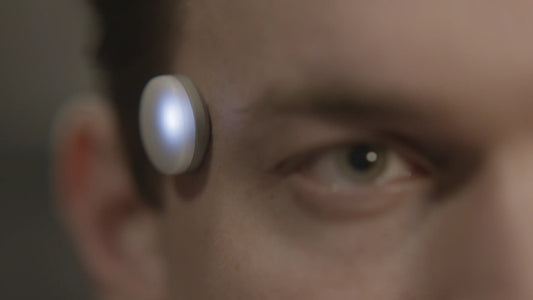
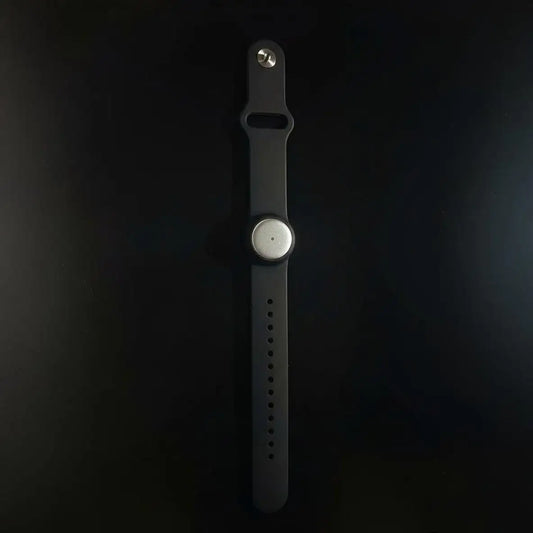
Omi is a wearable voice recorder with transcription plus an ai note taking app built for fast-paced operations work. You charge it overnight, wear it all day (necklace-style or wrist band), and it transcribes everything you say and hear while generating ai notes, summaries, tasks, and searchable memories. You can chat with your transcript, organize conversations into folders, star the important ones, and share clean handoffs with your team. It’s free for up to 1,200 minutes, and the unlimited plan is about $16/month (annual). Always get permission before recording—ask your manager/director or ops leadership and follow company policy.
Your operations department now found the best AI note taker for ops teams: capture what gets decided, turn it into tasks, and run cleaner handoffs! Meet Omi!
Operations is where “small misunderstandings” become real problems: missed SLAs, wrong assumptions, a handoff that drops a critical detail, a supplier call where the timeline sounded clear… until it wasn’t. And the hardest part is that ops communication happens everywhere—on the floor, in quick standups, in hallway decisions, in multi-team calls, during incident response. That’s why so many teams end up searching for a dependable note taker and a note taker app that can keep up without adding friction.
This guide is written for Operations department professionals at every level—VP, senior director/head, director, manager, supervisor, coordinator, specialist/analyst, assistant, and intern/trainee. The titles change, but the daily reality is the same: too many moving parts, too many conversations, and not enough time to rewrite everything into clean follow-ups.
Keyword reference (kept once, as requested): ai note taking for Operations department professionals such as: vp ; senior director/head ; director ; manager ; supervisor ; coordinator ; specialist/analyst ; assistant ; intern/trainee
What Omi is (and why it fits operations teams)
Omi is a wearable note taking system: a small device that captures the conversations you’re already having, plus an app that turns those conversations into structured output you can actually use. In practice, it behaves like a voice recorder to transcript workflow that ends with decisions, owners, deadlines, and follow-ups—so your team isn’t relying on someone’s memory (or a half-finished notepad).
For a VP of Operations or Head of Operations, Omi helps preserve the “why” behind decisions and prevents strategic priorities from getting diluted as they move through layers. For a director or operations manager, it reduces the constant re-explaining and turns recurring meetings into consistent tasks and accountability. For a supervisor or coordinator, it improves shift handoffs and daily alignment without adding admin work. And for an operations analyst/specialist, assistant, or intern/trainee, it makes ramp-up faster because you can search and review what was said—cleanly—without guessing.
The key difference is the wearable capture. In ops, you’re not always sitting at a laptop. You’re walking the floor, inspecting a process, jumping between teams, dealing with live issues. A hands-free device means you can keep working while Omi handles voice recording and transcription. It’s “capture now, organize later” in a way that fits how ops actually runs.
Omi is also open source (open hardware + software). That matters when your workflows are specialized and when you care about long-term trust and extensibility. You can build on top of it, connect to your systems, and avoid being trapped in a black box.
In short: if you’ve been looking for a note taker app that can turn messy real-world conversations into clear ai notes, Omi is designed for that exact gap.
How Omi works for operations
A good ops tool respects the rhythm of the day. Omi is built around a routine that’s simple enough to keep: charge at night, wear during work, and let the app do the organizing. You don’t need a “perfect meeting environment” for it to be useful—you need consistency.
1) Charge overnight, then wear it like a necklace or wrist band
Omi is designed to be worn, not managed. You can wear it as a necklace (pendant style) or with a wrist band, depending on what’s comfortable and appropriate for your environment. Some operations roles prefer keeping it under a shirt to avoid snagging or distraction—but that’s a comfort decision, not a permission strategy. In operations settings, you should ask your leader (manager/director/VP) for approval and follow your company’s recording policy.
2) Capture everything you hear and say, with on/offline recording options
Omi can transcribe in real time when connected, and it can also support offline recording flows depending on how you use it. Either way, the result is the same: you get reliable voice to notes output without stopping the work. For ops, that means your standups, vendor calls, escalations, walkthroughs, and handoffs don’t disappear into “we’ll remember it later.”
3) Talk to your transcript: clarify decisions, extract actions, and fill gaps with web-connected AI
Once a conversation is transcribed, you can use the app to chat with it like a working document. Ask things ops leaders actually ask: “What did we commit to?”, “Which risks were raised?”, “What dependencies did we miss?”, “What are the deadlines and owners?” Then go one step further—Omi AI can connect to the internet to help you deepen the topic, propose options, or pull in external context (for example: industry-standard KPI definitions, safety checklist structures, or vendor negotiation considerations).
4) Keep ops organized: folders, starred conversations, and fast sharing
Ops information only helps if you can find it fast. Omi lets you organize conversations into folders (by site, line, region, project, vendor, or quarter), and you can star the sessions that matter most. When it’s time to hand off to another shift or update stakeholders, you can share clean transcripts and summaries instead of forwarding a messy thread or rewriting everything from memory.
5) Improve accuracy over time: speech profiles + custom vocabulary
Operations is full of acronyms, SKUs, machine names, internal project codes, and vendor terms. Generic transcription often struggles there. Omi supports speech profiles for better recognition across conversations and a personal dictionary for jargon—so your voice recorder with transcription becomes more accurate as you use it in your environment.
Behind the scenes, Omi also supports a broader ecosystem: apps marketplace, automation hooks, and developer tooling. But the core value stays simple: capture the work as it happens, then turn it into actionable output.
Ops to notes AI: from audio to execution-ready ops output
Operations teams don’t need “more transcripts.” They need decisions, ownership, and follow-through. That’s the difference between recording for storage and recording for execution. Omi is built to turn voice recording and transcription into usable ai notes—fast.
A simple operations workflow that holds up in the real world
- Before the conversation: confirm you have consent and that recording is allowed. If it’s a team setting, make it explicit: “I’m going to record and transcribe this so we don’t miss actions—ok with everyone?”
- During the work: stay focused on the problem, not on typing. When you hear a decision, a constraint, a risk, or a deadline, mark it (star later, or note the moment so you can jump back quickly).
- Right after (3–7 minutes): skim the summary, correct any critical names/terms, and make sure action items are captured with owners and timing.
- Organize immediately: drop it into the right folder (site/project/vendor/shift) and star it if it’s a reference conversation.
- Share the output: send the summary + task list to stakeholders so execution starts from the same source of truth.
Top 10 operations situations where Omi makes a measurable difference
- Shift handoffs: capture what changed, what’s pending, and what to watch. Generate a structured handoff brief so the next shift doesn’t inherit confusion.
- Daily standups: turn quick updates into a clean list of blockers, owners, and deadlines—without forcing one person to be the dedicated scribe.
- Incident response and escalations: record timeline, decisions, and mitigations. Later, produce a post-incident summary and prevention actions with less backtracking.
- Supplier and vendor calls: preserve lead times, terms, constraints, commitments, and follow-ups. Reduce “that’s not what we agreed” disputes.
- Floor walkthroughs / Gemba walks: hands-free capture of observations and operator feedback. Convert into a prioritized punch list and recurring issue themes.
- QA and compliance discussions: log findings, decisions, and remediation tasks clearly, then share a consistent recap to keep compliance work aligned.
- Process change reviews: capture trade-offs, dependencies, and rollout steps. Generate a change plan and communication summary that reduces rework.
- Capacity planning conversations: keep track of assumptions, constraints, and “if-then” decisions so forecasts don’t drift over time.
- Cross-functional project syncs: capture the real decisions and commitments across ops, engineering, finance, and customer teams—then share one clean source of truth.
- Training and onboarding: interns/trainees and new hires can search past conversations, ask the AI for clarification, and ramp faster without pulling senior staff constantly.
How Omi helps operations teams with the problems that quietly waste time
- “We talked about it, but it didn’t get done.” Action extraction turns conversation into tasks, not vague intent.
- “I can’t find where we agreed on that.” Searchable transcripts and summaries reduce the endless Slack archaeology.
- “Every handoff loses details.” Consistent summaries and shared recaps protect context across shifts and teams.
- “Ops jargon breaks transcription.” Custom vocabulary plus speech profiles improves accuracy in your real environment.
- “I spend my day rewriting notes.” Omi shifts the work from manual typing to quick review and structured output.
If you’ve tried tools that only “record meetings,” this is the missing piece: Omi treats ops communication as a continuous stream of decisions and actions, then turns it into voice to notes you can execute.
Best practices for recording ops conversations (so the transcript is actually useful)
Placement and audio tips for real operations environments
- Get closer to the speaking zone: on a floor or in a noisy space, distance matters more than “settings.” If you’re in a big group, aim for proximity to the main speaker.
- Reduce predictable noise when it matters: if you’re capturing a critical commitment, step away from machinery noise or echo-heavy corners if possible.
- Do a quick test before a high-stakes call: 10 seconds is enough to confirm transcription is working and readable.
- Use your personal vocabulary: add site names, internal acronyms, product codes, vendor names, and team names so the transcript doesn’t mangle the meaning.
Bookmarking matters more than perfect audio
A transcript is long. Ops attention is short. Bookmarking is how you bridge the gap. Mark moments when someone states a constraint (“we can’t ship before…”), a decision (“we will do X”), a risk (“this could fail if…”), or an owner/deadline (“John by Friday”). Later, your review becomes targeted and fast.
Make the output ops-friendly: always pull decisions + owners + deadlines
The best note taking format for operations is not “a recap.” It’s a short operational brief: what changed, what’s blocked, what we decided, who owns what, and by when. Use templates (and custom templates) to make that consistent. Consistency is what makes your notes reusable across teams.
If you’re comparing tools, here’s the real checklist behind a strong note taker app in ops: reliable capture, solid voice recorder to transcript output, quick summarization, search that works, and organization that doesn’t fall apart after week two.
Summary templates and custom operations templates
In operations, a generic summary is rarely enough. You need a predictable structure that turns a conversation into something you can run: a shift brief, an incident recap, a vendor follow-up, a change plan. Omi supports multiple summary templates and lets you create your own, so your ai notes match your operating cadence.
High-performing operations summary templates (examples)
- Shift handoff brief: current status, exceptions, safety notes, open risks, pending work, priorities for the next shift.
- Vendor call recap: commitments, lead times, pricing/terms, constraints, open questions, next follow-ups with owners.
- Incident recap: timeline, impact, decision log, mitigations, root cause hypothesis, prevention actions and due dates.
- Ops review summary: KPI deltas, drivers, risks, decisions, and the next week’s priorities with accountability.
- Process change plan: scope, dependencies, rollout steps, training needs, success metrics, and backout plan.
A custom operations template you can copy
Title: [Site/Team + Topic + Date]
1) 10-second summary (what changed and why it matters)
2) Decisions made (include the reasoning/constraint)
3) Risks & blockers (ranked; what could break)
4) Action items (owner + deadline + next check-in)
5) Dependencies (teams/tools/vendors involved)
6) KPIs impacted (if known; what to watch)
7) Open questions (what must be resolved)
8) Handoff brief (what the next person needs in 60 seconds)
This is where Omi becomes more than “recording.” It becomes repeatable voice to notes output for ops—the same format, every time, whether you’re a manager running daily execution or a director aligning multiple teams.
Ops to notes AI free: pricing and why it is worth it
Most teams want proof before they commit, which is reasonable. Omi includes a free tier with up to 1,200 minutes of recording and transcription, so you can validate whether the workflow fits your day. If you’re in a role with heavy communication (VP/director/manager/supervisor), you’ll usually learn quickly.
- Free: up to 1,200 minutes of recording + transcription.
- Unlimited: about $16 per month on the annual plan.
The ROI in operations is rarely subtle. If Omi prevents one avoidable delay, one misaligned handoff, or a single vendor follow-up mistake, it often pays for itself. The hidden win is also mental: less “did I miss something?” and less rework from unclear decisions.
Privacy, security, and consent (read this part)
Always get permission before recording
Recording rules vary by workplace and location. You should always get consent before recording people, and in an ops setting you should request approval from your manager/director (or ops leadership) and follow company policy. If your organization has compliance requirements, treat them as non-negotiable. Omi is a tool—how you use it must be responsible.
Security and enterprise posture
Omi is open source and built with enterprise-level safety in mind, including SOC 2 and HIPAA compliance positioning. Your data is protected with encryption (TLS in transit, AES-256 at rest). You can export your data, delete items, and wipe your data anytime. For teams that want tighter control, Omi can run locally to avoid sending data to the cloud.
Where Omi is built (and why the ecosystem matters)
Omi is developed in San Francisco, California. It’s built as a platform, not a single-feature app: apps marketplace, APIs and MCP server support, custom summary templates, and even options like custom STT providers. That matters for operations teams because your workflows are never “one size fits all.”
FAQ
Is Omi a good ai note taking app for operations managers and directors?
Yes—especially when your day includes standups, handoffs, vendor calls, escalations, and cross-functional alignment. The wearable capture reduces friction, and the app turns conversations into summaries, tasks, and searchable ai notes.
Does it work as a voice recorder with transcription for noisy environments?
It’s designed for real-life use, including busy workplaces. Results improve with smart placement, quick tests, and custom vocabulary for ops terms. The goal isn’t perfection—it’s capturing decisions and actions reliably enough to run the work.
Can I use Omi for shift handoffs and frontline operations?
Yes. Shift handoffs are one of the strongest use cases because small details matter. Record the handoff, generate a structured brief, and share it with the next shift so execution starts with the same information.
Do I need permission to record at work?
Yes. Always get consent and follow company policy. If you’re unsure, ask your manager/director or ops leadership before using any recording workflow.
How do I improve transcription accuracy for acronyms, SKUs, and ops jargon?
Add custom vocabulary (site names, acronyms, SKUs, vendor names) and use speech profiles for better recognition across conversations. In practice, this is what makes a voice recorder to transcript workflow feel dependable in ops.
Is there a free option?
Yes. Omi is free for up to 1,200 minutes of recording and transcription. If you need more, the unlimited annual plan averages about $16/month.
Quick takeaway
If you want note taking that matches the pace of operations, Omi is built around a simple loop: charge overnight, wear it during the day, capture conversations hands-free, get voice recording and transcription, turn it into structured ai notes with tasks and owners, organize everything in folders, star the important items, and share clean handoffs. It’s a practical note taker app for VP/head/director/manager/supervisor/coordinator/analyst roles—and a huge ramp-up tool for assistants and interns/trainees.

 www.omi.me