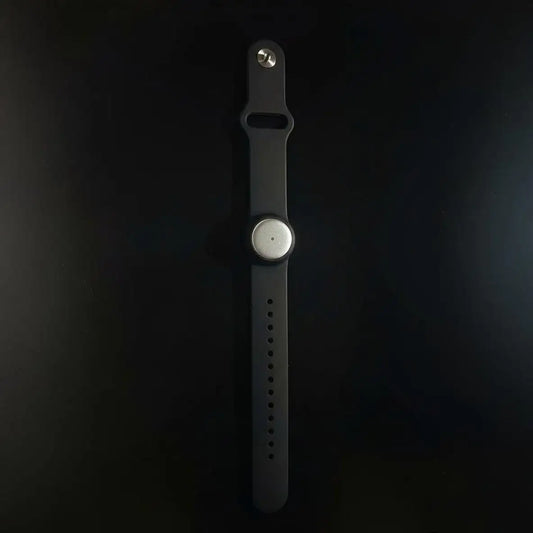
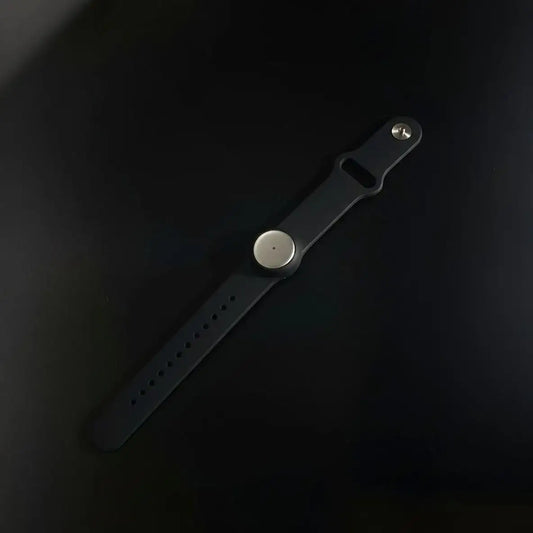
Omi is a wearable voice recorder with transcription plus an ai note taking app. Your quality assurance team must meet Omi, the best ai note taking app for quality assurance work: turn audits, defects, and CAPAs into clean notes.
You charge it overnight, wear it all day (necklace or wrist band, even under a shirt), and it captures what you say and hear—then turns it into voice to notes: live transcript, searchable ai notes, summaries, and action items. For Quality Assurance (QA) work, that means fewer “wait, what did we agree on?” moments during audits, defect triage, root-cause sessions, and management reviews. It’s free for up to 1,200 minutes, with an unlimited plan for about $16/month (annual). Always get consent before recording—ideally approved by your QA leader or director.
If you work in QA, you already know the weird reality: the most important details are usually spoken, not written. The exact wording from an auditor. The one caveat from a supplier. The “we’ll accept it if…” from leadership. And somehow you’re expected to capture all of it while also thinking, challenging, and steering the room.
That’s why ai note taking for quality assurance department professionals is becoming a real thing—especially for roles like VP, senior director/head, director, manager, supervisor, coordinator, specialist/analyst, assistant, and intern/trainee. Everyone touches quality in a different way, but the pain is the same: you miss a detail, and it comes back later as rework, delays, or risk.
What Omi is (and why it fits QA teams)
Omi is a note taker you actually use—because it’s wearable. It’s a small device that records what you hear and say, paired with a note taker app that turns audio into text and structured outputs.
In plain terms: it’s voice recording and transcription plus organization. You get a transcript, then Omi helps turn it into summaries, action items, and searchable notes you can pull up later—when the pressure is on and someone asks, “Where did we decide that?”
QA work is full of high-context conversations. A standard meeting recorder is not enough, because you don’t want “a recording.” You want decisions, owners, dates, and rationale. You want voice recorder to transcript that becomes a clean trail of what happened.
And the roles matter. A VP of Quality cares about risk, trends, and commitments. A director cares about systems, audit readiness, and execution. A QA manager cares about closures and throughput. A supervisor cares about the shift and the reality on the floor. A QA analyst cares about evidence, reproduction steps, and accuracy. Omi supports all of them, because the core need is the same: don’t lose the truth of the conversation.
How Omi works for quality assurance work
The best workflow is boring. That’s the point. You charge it at night, wear it in the day, and you stop babysitting your notes.
1) Charge overnight, then wear it like a necklace or wrist band
Most QA pros prefer “set it and forget it.” Omi fits that: it’s hands-free, and you can wear it as a necklace (pendant style) or as a wrist band. Some people keep it under a shirt for discretion—just remember: discretion is not permission. Always get consent first.
2) Record conversations and get transcription in the app
In the moment, Omi functions like a voice recorder with transcription. If you’re connected, you can see live transcription. If not, you can still capture and sync later. Either way, you end up with text you can search and reuse. That’s the upgrade from “I recorded it” to “I can actually find it.”
3) Use AI chat to turn messy talk into clear decisions
This part is underrated for QA: you can chat with your transcript. Ask things like, “What did the auditor request?” “List all CAPA action items with owners.” “What was the acceptance criteria we aligned on?” That’s note taking that behaves more like an assistant than a document.
4) Organize by process, product line, or audit—and favorite what matters
QA is basically controlled chaos. Omi helps by letting you keep conversations in folders (supplier, product, site, audit cycle), star the high-risk items, and share specific notes when needed. It becomes a lightweight “quality memory system,” not just an ai note taking app.
5) Go deeper after the meeting (when you finally have time)
Once the transcript exists, you can use AI to expand: draft a follow-up email, rewrite meeting minutes, outline a CAPA plan, or generate a clearer problem statement. If your team uses specific frameworks—5 Whys, fishbone, FMEA-style thinking—you can ask Omi to structure the conversation that way. It’s still your judgment, but the busywork drops fast.
Voice to notes for QA: from conversations to audit-ready documentation
Quality is full of “small” conversations that quietly decide outcomes. The fastest way to get value is to stop trying to write perfect notes live and instead follow one rule: capture now, shape later. That’s what people really mean when they look for an ai note taking for quality assurance workflow.
A simple QA workflow that works
- Before the meeting: get consent to record, then open the app and confirm transcription is working.
- During the meeting: stay present. Let Omi handle the raw capture.
- Right after (3–5 minutes): skim the summary, star the risky parts, and drop it into the right folder.
- Later: use AI chat to extract action items, decisions, owners, dates, and open questions.
Top 10 real situations where QA teams use Omi (and why it helps)
- Internal audit prep meetings: capture commitments, evidence requests, and “who owns what,” so nothing slips.
- External audit interviews: turn fast Q&A into a clean transcript you can review for follow-ups and clarifications.
- Supplier quality calls: keep a precise record of concessions, timelines, and corrective actions—no more “I thought you meant…”
- Nonconformance triage: log the exact problem description, impact, containment actions, and decision rationale.
- Root-cause analysis sessions (5 Whys / fishbone): extract hypotheses, evidence, and next tests into structured ai notes.
- CAPA planning and reviews: convert discussion into a checklist of actions, owners, due dates, and verification steps.
- Defect triage / bug review: capture reproduction steps, priority reasoning, and acceptance criteria—especially helpful for QA specialists/analysts.
- Change control conversations: document what changed, why, risks considered, and what validation/verification was agreed.
- Training and SOP walkthroughs: interns/trainees and assistants can revisit the transcript instead of guessing later.
- Management reviews (QBRs, KPI reviews): VP/head and directors can pull themes, risks, and commitments without rewatching anything.
How Omi helps with common QA pain points
- “I need proof of what we said”: transcripts give you the exact wording, not your memory of it.
- Meeting minutes that take forever: summaries and templates cut the draft time down drastically.
- Action items that disappear: Omi pulls tasks out of the conversation and makes them easy to track.
- Cross-functional chaos: sharing a clean recap prevents misalignment between QA, ops, engineering, and suppliers.
- New team members ramping up: assistants and trainees learn faster with searchable history and consistent notes.
This is why people look for a note taker app that’s actually practical at work. The goal is not to record for the sake of recording. The goal is to turn voice recording and transcription into decisions you can find, reuse, and defend.
Best practices for QA recording (so the transcript is actually useful)
Placement and audio tips
- Keep it open: avoid covering the microphones with thick jackets, lanyards, or bags.
- Point it toward the conversation: small changes in position can improve clarity a lot.
- Do a 10-second test: confirm transcription shows up before the meeting starts.
Bookmarking matters more than you think
If you do only one active thing during a QA meeting, do this: mark the moments that turn into risk later. The auditor’s request. The supplier’s promise. The “we’ll accept it if…” condition. Star the conversation if it’s a big one, and keep moving.
Build a personal dictionary for QA jargon (and your product’s weird words)
Transcription breaks on acronyms, part numbers, and names. QA is basically an acronym factory. Omi lets you add custom vocabulary—think: product codes, equipment IDs, test names, defect labels, customer names, standards, and internal shorthand. It’s a simple tweak that makes your voice recorder to transcript output way cleaner.
Use folders like a quality system, not like a junk drawer
A good structure is something like: Audit cycle → Process → Issue. Or Supplier → Part → CAPA. The point is: when your director asks for “that one conversation from the audit kickoff,” you find it in seconds.
When you’re in a regulated environment, keep expectations realistic
Omi helps you capture and organize information. Your organization’s QMS rules still apply. Think of Omi as a high-quality input stream for your process—not as an official system of record unless your policies say so.
Summary templates and custom QA templates
A transcript is helpful, but a structured summary is what makes it operational. Omi lets you choose summary styles and also create your own, so your notes come out in the format your QA world expects—minutes, CAPA drafts, audit follow-ups, defect triage recaps. Not just a blob of text.
High-performing QA summary templates (examples)
- Audit interview recap: questions asked, answers given, evidence requested, follow-ups, deadlines.
- CAPA draft: problem statement, containment, suspected root cause, corrective actions, preventive actions, verification plan.
- Nonconformance triage: description, severity, disposition decision, risk notes, next steps.
- Supplier corrective action (SCAR-style): issue, supplier response, commitments, dates, verification plan.
- Defect triage: repro steps, impact, priority, owner, acceptance criteria, next review date.
A custom QA template you can copy
Title: [Topic + site/supplier/product]
1) 20-second summary (what happened, why it matters)
2) Decisions made (and the rationale)
3) Action items (owner + due date)
4) Risks / compliance concerns (explicitly stated)
5) Evidence mentioned (documents, logs, samples, lots, tickets)
6) Open questions (who will answer, by when)
7) Next checkpoint (date + agenda)
8) If an auditor asked “prove it,” what would we show?
This is where Omi starts to feel like a real note taker for QA teams. You stop rewriting the same minutes format every week, and your notes become consistent across managers, supervisors, analysts, and even interns.
AI note taking app free: pricing and why teams keep it
QA is meeting-heavy. Even “quiet” weeks have audits, triage, supplier calls, training sessions, and cross-functional reviews. Omi includes a free tier that covers up to 1,200 minutes of recording and transcription—enough to test it in real work.
- Free: up to 1,200 minutes of recording and transcription.
- Unlimited: about $16 per month on the annual plan.
If it saves you one CAPA follow-up thread, one “can you resend the minutes?” loop, or one rework cycle from misalignment, the ROI is not subtle. And honestly, the mental relief is big too—because you’re not relying on your memory as your quality system.
Privacy, security, and consent (read this part)
Always get permission before recording
Always get consent before recording coworkers, suppliers, auditors, or anyone else. The safest habit is to ask at the start of the meeting and get explicit approval. In many organizations, you should also request approval from your QA leader (manager/director/head) so the workflow is aligned with policy.
Security and trust
QA conversations can include sensitive information: customer complaints, supplier issues, audit findings, and internal risk discussions. Omi is built with an enterprise-grade security posture, with compliance options such as SOC 2 and HIPAA, plus encryption in transit and at rest. If your team needs tighter control, you can also run workflows locally to reduce reliance on the cloud.
Open source and built for power users (when you need it)
Omi is open source, and it supports deeper extensions (like APIs and custom tools) for teams that want to connect notes to their existing systems. Most people won’t touch that—and they don’t have to. But it’s nice knowing you’re not locked into a black box.
Where Omi is built
Omi is developed in San Francisco, California. The product mindset shows: wearable-first, clean UX, and built around a simple promise—capture your day and make it useful.
FAQ
Is Omi useful for all QA roles, from intern to VP?
Yes. Interns and assistants usually get value from training and clear notes. Analysts get value from defect triage accuracy and searchable transcripts. Managers and supervisors get value from action items and consistent documentation. Directors and VPs get value from themes, risks, and recall across weeks of conversations.
Does it work as a note taker app for audits and CAPAs?
That’s one of the best fits. Omi captures the conversation, then helps turn it into structured summaries and task lists. Instead of rewriting minutes from scratch, you review, adjust, and ship.
How is this different from a normal voice recorder to transcript tool?
A basic recorder gives you audio. Omi gives you organization and retrieval: searchable transcripts, folders, starring, templates, and AI chat to extract decisions and actions. It’s designed for ongoing work, not one-off recordings.
Can I share QA notes with engineering, ops, or suppliers?
Yes. You can share transcripts and summaries when appropriate. Just be mindful of your policies—especially if the conversation includes sensitive customer, supplier, or audit content.
How do I improve transcription for acronyms and part numbers?
Add your QA vocabulary to the personal dictionary (product codes, test names, standards, internal acronyms). Also try to keep the device unobstructed and close enough to the conversation to capture clean audio.
Do I really need permission to record people at work?
Yes. Always. Ask for consent and align with your QA leadership and company policy. If you’re ever unsure, don’t record—get clarity first.
Quick takeaway
If you’re looking for ai note taking for quality assurance department professionals—VPs, senior directors/heads, directors, managers, supervisors, coordinators, specialists/analysts, assistants, and interns—Omi is built for a simple routine: charge at night, wear it during the day, capture conversations hands-free, and turn voice recording and transcription into searchable ai notes, summaries, and action items you can trust when quality matters.

 www.omi.me