Omi is a wearable voice recorder with transcription plus an ai note taking app built for people who live in technical conversations. You have to check out Omi AI app: It is the best AI note-taking app for R&D teams, it makes capturing decisions, experiments, and action items incredibly easy.
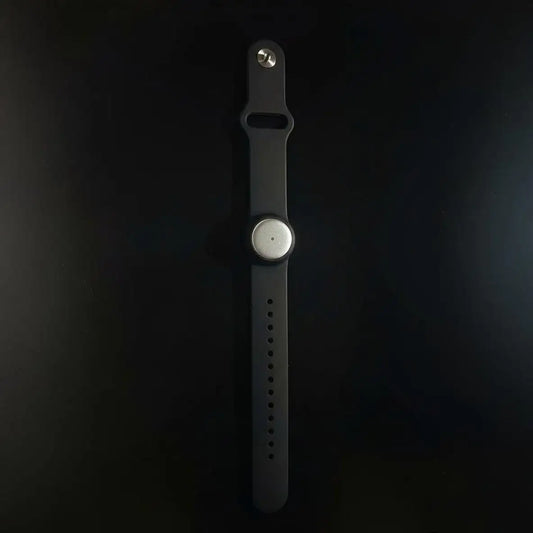
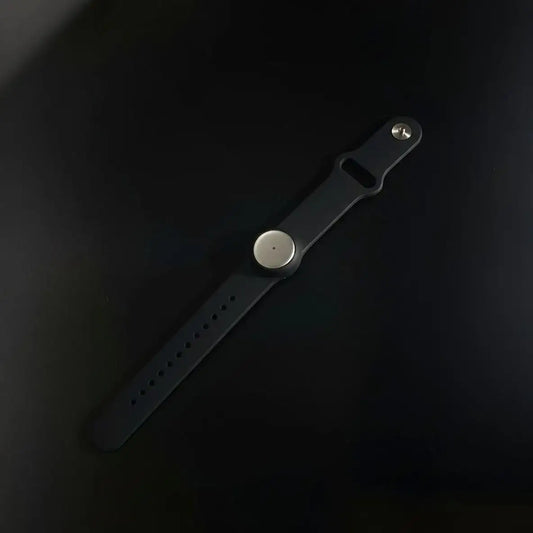
Charge it overnight, wear it all day (necklace or wrist band), and let it quietly turn messy R&D talk into ai notes: transcripts, summaries, tasks, and searchable memories. It includes 1,200 free minutes per month, with an unlimited plan for about $16/month (annual). Always get explicit permission before recording at work.
R&D work has a weird problem: the most important details usually happen in the moment you’re not typing. A quick hallway debate. A design review where one sentence changes the whole spec. A lab debrief where someone casually mentions the one parameter that actually matters. And later? You’re digging through chat logs like it’s archaeology.
This guide is about ai note taking for Research and Development (R&D) department professionals — from VPs and heads of R&D, to directors, managers, supervisors, coordinators, specialists/analysts, assistants, and even interns/trainees. Same mission, different chaos.
What Omi is (and why it fits R&D)
Omi is a small wearable recorder plus a companion app that turns voice recording and transcription into something you can actually use. You capture what you hear and say, the app transcribes (often in real time), and Omi produces structured outputs: summaries, decisions, tasks, and searchable “memories.”
In plain terms, it’s a note taker that doesn’t fight your day. It’s not asking you to “be consistent with documentation.” It’s saying: talk like you normally do, and then we’ll turn that into voice to notes.
For R&D, that matters because your “notes” aren’t just notes. They’re handoffs, rationale, assumptions, constraints, risks, and test outcomes. And those are exactly the things that vanish after the meeting ends.
Omi is also open source, which is a quiet but important signal for technical teams: more transparency, more extensibility, less “black box” anxiety when the work is sensitive.
Quick reality check: Omi won’t replace your ELN, your LIMS, or your PLM system. But it can become the fastest way to capture the human layer that usually never makes it into those systems.
How Omi works for R&D conversations
Most R&D teams want the same simple rhythm: charge at night, wear during the day, stop losing the thread. That’s how Omi is designed to be used.
1) Charge overnight, then wear it like a necklace or wrist band
You can wear Omi as a necklace for consistent capture, or use a wrist band accessory if that feels more natural in your environment. Some people keep it under a shirt for discretion — but in a workplace context, discretion should never mean secrecy. Always follow your company policy and get permission.
2) Record meetings, debriefs, and quick voice notes — and get transcription in the app
Omi works like an always-ready note taker app for real life. When connected, you can see transcription show up as you speak. If you’re offline (lab network, secure building, travel), you can still record and sync later, so your voice recorder to transcript workflow doesn’t collapse the moment Wi-Fi disappears.
3) Turn transcripts into ai notes you can query
Here’s the part people underestimate: once you have a clean transcript, you can talk to it. Ask for decisions, risks, assumptions, open questions, action items, or “what did we agree to about test conditions?” Omi becomes less like “storage” and more like a working memory you can interrogate.
4) Organize by project: folders, favorites, and quick sharing
R&D is parallel work by default. Omi helps you keep it clean: organize conversations into folders (by program, platform, sprint, experiment series), star the ones that matter, and share transcripts or summaries when appropriate. That’s how “recording” turns into a real documentation habit without adding friction.
5) Use internet-connected AI to go deeper (when you want it)
After a debrief, you can push further: ask for a clearer explanation, request a comparison of approaches, generate a quick experiment plan, or summarize findings for stakeholders. When allowed, Omi’s AI can complement your transcript with web context — useful for literature references, standards language, or background definitions.
Voice to notes: from R&D talk to useful documentation
The best R&D documentation is usually a remix: what was said, what was decided, and what needs to happen next. Omi helps you capture that remix without forcing everyone to “slow down so someone can type.”
Where different R&D roles get value (without changing how they work)
- VP / senior director / head of R&D: faster executive summaries, clearer decisions, fewer “wait, why did we choose that?” loops.
- Director / manager: dependable action items, meeting notes that don’t depend on one person, cleaner cross-functional handoffs.
- Supervisor / coordinator: fewer dropped follow-ups, easier status updates, and a searchable history of what was promised.
- Specialist / analyst: capture technical nuance, keep assumptions visible, and reduce rework caused by missing context.
- Assistant / intern / trainee: learn faster, ask better questions later, and build solid notes without panic typing.
Top 10 real situations where R&D teams use Omi (and why it helps)
- Design reviews: capture decisions, tradeoffs, and the “why,” not just the final slide.
- Experiment planning: turn brainstorming into a structured plan with variables, controls, and next steps.
- Lab debriefs after a run: record what happened while it’s fresh, then summarize outcomes and anomalies.
- Failure analysis meetings: extract root causes, hypotheses, action items, and owner assignments automatically.
- Technical standups: keep a lightweight record of blockers and commitments without slowing the team down.
- Supplier or vendor calls: capture specs, timelines, and constraints so procurement and engineering stay aligned.
- Patent / invention sessions: keep a timestamped transcript of ideas, novelty points, and follow-up research tasks.
- Literature review discussions: turn “we should read this” into a trackable list with summaries and questions.
- Tech transfer / manufacturing handoff: document process decisions, tolerances, risks, and acceptance criteria clearly.
- Conference talks and workshops: convert sessions into notes, summaries, and action items you’ll actually revisit.
A simple workflow that works (even on busy weeks)
- Before: get permission to record, then confirm the app is ready.
- During: stay present. Let Omi capture the conversation and the details you’d miss while typing.
- Right after (2–5 minutes): skim the summary, star what’s important, and drop it into the right folder.
- Later: use AI chat to pull decisions, generate a stakeholder update, or turn notes into a plan.
This is where Omi starts feeling less like “a recorder” and more like a practical ai note taking app that fits R&D reality: constant context switching, lots of jargon, and too many meetings where the important parts aren’t written down.
Best practices for recording in labs, workshops, and reviews
Placement and audio tips
- Keep it open: high on your chest (necklace) or outer wrist tends to capture speech better.
- Avoid mic blockers: thick jackets, lab coats bunched up, lanyards tucked behind badges — all of that matters.
- Do a 15-second test: check that transcription is appearing before the meeting gets technical.
- Reduce the “room problem”: in noisy labs, stand a bit closer during key explanations.
Make your jargon work for you (custom vocabulary)
R&D transcription breaks on acronyms, material names, gene/protein symbols, internal codenames, and people’s names. Add your recurring terms to a personal dictionary so Omi stops guessing and starts getting it right. Over time, your transcripts need less cleanup — which is the whole point.
Use folders like a lab notebook spine
Don’t overthink organization. Pick a simple structure you’ll actually keep: Program → Workstream → Meetings, or Project → Experiment series → Debriefs. Star the high-signal conversations (design review, incident debrief, stage gate) so they’re one tap away later.
Summary templates and custom R&D templates
A raw transcript is useful. A structured summary is what makes it shareable. Omi lets you choose different summary formats, and you can create your own templates so the output matches how your team thinks.
High-performing R&D summary templates (examples)
- Design review brief: decision, rationale, tradeoffs, risks, and next steps.
- Experiment log: hypothesis, setup, variables, observations, results, anomalies, and follow-ups.
- Failure analysis: symptoms, suspected causes, evidence, tests to run, owner, deadline.
- Tech transfer handoff: process steps, parameters, tolerances, acceptance criteria, open questions.
- Stakeholder update: progress, blockers, asks, and decisions in plain English.
A custom R&D template you can copy
Title: [Project / Program] - [Session type] - [Date]

1) 20-second summary (what this was about)
2) Decisions made (with the "why")
3) Key technical details (parameters, constraints, assumptions)
4) Risks & unknowns (what could break, what we don't know yet)
5) Evidence mentioned (data, tests, references)
6) Action items (owner + deadline)
7) Open questions (what we must answer next)
8) Stakeholder-ready update (5 bullets, non-technical language)
This is the practical difference between “we recorded it” and “we can use it.” With the right template, Omi becomes a consistent note taking system across projects — even when the team changes.
AI note taking free: pricing and why it pencils out
Most teams want to test a workflow before committing. Omi includes a free tier with 1,200 minutes per month, which is enough to prove value in real meetings.
- Free: 1,200 minutes per month.
- Unlimited: about $16 per month on the annual plan.
The ROI is usually not “minutes saved typing.” It’s fewer missed decisions, fewer rework cycles, faster onboarding, and less time spent reconstructing context. In R&D, that’s real money.
Privacy, security, and consent (read this part)
Always get permission before recording
In a company setting, consent isn’t optional. Always ask the people in the conversation, and follow your organization’s policy. If you’re unsure, the safest path is to get explicit approval from your manager, director, or department lead before using any recording workflow in meetings or labs.
Security and control
Omi is built with enterprise-level safety in mind, including SOC 2 and HIPAA compliance posture. Your data can be encrypted (in transit and at rest), and you can export or delete your data when you need to. For sensitive work, Omi can also be run locally to avoid cloud processing where appropriate.
Where Omi is built
Omi is developed in San Francisco, California. The vibe is very “modern AI product,” but the real win is practical: a small wearable plus an app that turns conversations into something you can actually execute on.
FAQ
Is Omi useful for an R&D department, or is it just a meeting recorder?
It’s useful when your work depends on technical context: decisions, assumptions, and follow-ups. Think of it as voice recording and transcription plus structure: summaries, tasks, and searchable memory.
Does it work as a voice recorder with transcription for technical jargon?
Yes, and it gets better when you add your own vocabulary. That’s the difference between a generic recorder and a real note taker app for R&D.
Can different roles use it (VP, manager, analyst, intern)?
Yes — the workflow stays the same, but the output changes. Leaders want crisp decisions and status updates; specialists want details and assumptions; interns want clean learning notes and next steps.
Do I need permission to record at work?
Yes. Always get explicit consent and follow your organization’s rules. If you need a simple policy: ask your manager/director first, then ask meeting participants every time.
Is there a free option?
Yes. Omi includes 1,200 minutes per month on the free plan, and you can upgrade to unlimited if it becomes part of your daily workflow.
Quick takeaway
If your R&D work is powered by conversations — design debates, experiment debriefs, tech transfer handoffs, and a thousand tiny decisions — Omi is a clean way to stop losing the details. Wear it, let it capture, then use AI to turn voice to notes into clear summaries, tasks, and searchable ai notes you can trust later.

 www.omi.me