Omi is a small AI voice recorder plus an app for lecture notes. You wear the recorder to record lectures, and the app uses AI to transcribe in real time, generate structured notes + summaries + tasks +memories, and let you chat with your transcript to study faster. It is free for up to 300 minutes, with an unlimited plan for about $22/month (annual). Always get your professor’s permission before recording.
If you have ever left class thinking, “I swear the professor explained this perfectly… and I remember none of it,” you are not alone. The problem usually is not effort. It is that trying to listen, understand, and write everything down at the same time is a losing game. That is why so many students search for a class note taking app or an app that records lectures and takes notes for you.
This guide shows exactly how Omi works for students, how it turns a lecture into clean notes you can study from, and how to use it responsibly (yes, you should always get permission before recording).
What Omi is (and why it fits students)
Omi is a small AI-powered voice recorder plus a companion app. You wear the recorder to capture the lecture, and the app (with AI) turns that audio into a transcript and structured notes you can review later. For students, that means Omi functions as a lecture note taking app and a lecture recorder AI in one workflow: you stay focused during class, and Omi turns the lecture into text you can search, review, and study.
In plain terms: it is an app for recording lectures and an app for lecture notes, but the key difference is the wearable recorder. Instead of depending on your phone in the middle of class, you capture audio hands-free and let the app handle transcription and note creation.
Omi is also designed to look and feel modern. It is discreet, minimal, and stylish, and it is one of the smallest devices in this category, which matters more than people expect. If the device feels awkward or bulky, you stop using it. If it is small, discreet, and comfortable, it becomes part of your daily routine.
Omi is fully open-source, which means the ecosystem is built for transparency and long-term flexibility. For students, that matters for trust, customization, and not getting locked into a black box.
Quick reality check: no tool replaces learning. But the right voice recorder for class lectures can remove the panic of “I missed it,” and that makes studying calmer and more effective.
How Omi works for lectures
Most students want the same simple setup: charge it at night, wear it during the day, and stop worrying about missing details. That is the typical Omi routine.
1) Charge overnight, then wear it like a necklace or wrist band
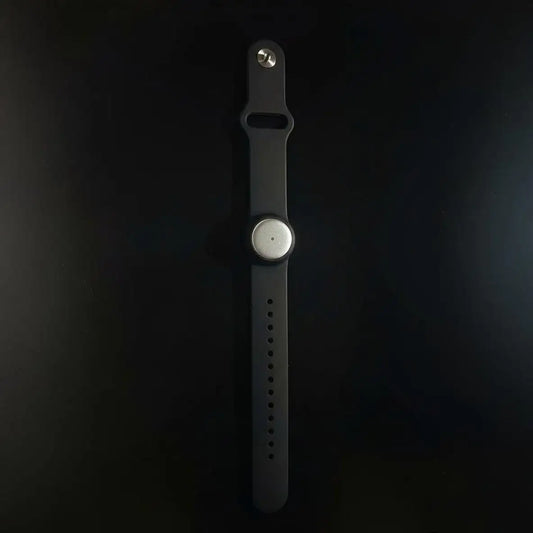
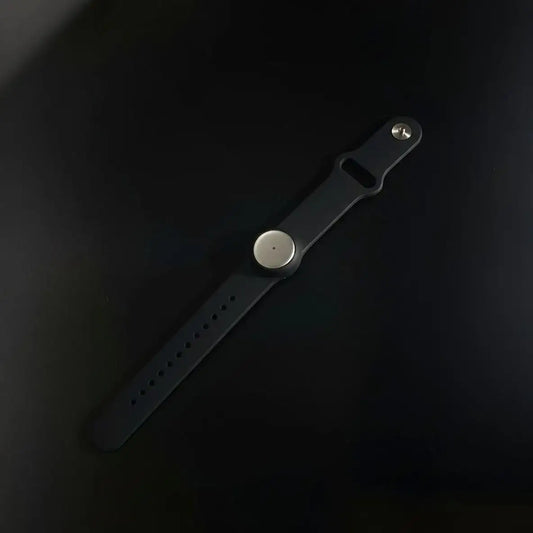
Omi is meant to be hands-free. You can wear it as a necklace (pendant style) or use a wrist band accessory depending on your preference. Some students prefer keeping it under a shirt for comfort, but you should still be transparent and follow classroom rules. The key is consistency: if it is comfortable, you will actually use it every day.
2) Record the lecture and get live transcription in the app
When Omi is connected, you can capture audio and see live transcription as the lecture happens. Think of it as a best lecture recording app workflow, except it is wearable, so you are not stuck managing your phone the whole time. You use the recorder to capture, and the app with AI handles transcription and note generation.
3) Press the button to mark moments and ask questions
During class, you can keep things simple: listen, stay present, and press the button when something feels important. Later, in the app’s AI chat, you can ask questions and get answers based on your lecture content. You can also press the button to quickly trigger the “I want to ask about this” behavior so the app becomes your study companion after class.
4) Organize each lecture, favorite the important ones, and share notes
Omi helps you stay organized when life gets busy. You can keep lectures in folders (by course, week, or topic), favorite the sessions that matter most, and share notes with classmates or your study group when appropriate. This is one of the biggest differences between a basic recorder and an app that records lectures and takes notes for you.
5) Use web-connected AI to go deeper on the topic
This is where “lecture to notes” becomes “lecture to learning.” Once you have a transcript, you can ask the AI to explain concepts, generate examples, create practice questions, and fill in missing context. Because the AI can connect to the internet, it can complement the lecture with up-to-date explanations and references.
Lecture to notes AI: from audio to study materials
The fastest way to get value is to stop thinking “I need perfect notes in real time” and start thinking “capture now, shape later.” This is exactly what most people mean when they search for best lecture note taking app or best ai lecture recorder and transcriber.
A simple lecture workflow that works
- Before class: get permission to record, then open the app and confirm transcription is working.
- During class: stay present. Press the device button to mark key moments you want to revisit.
- Right after class (5 minutes): skim the summary, favorite the lecture if it is high priority, and put it in the right folder so you can find it later.
- Study session: use the AI chat to ask questions about the transcript, request simpler explanations, generate practice questions, and turn key concepts into flashcards.
How Omi helps with common student pain points
- Note-taking anxiety: you can listen properly without the constant fear of missing something.
- Recordings you never replay: transcripts and summaries replace hours of rewinding.
- Messy systems: folders, favorites, and searchable notes keep things clean.
- Group work: sharing notes saves time and avoids confusion.
- Hard concepts: AI chat lets you ask follow-up questions until it clicks.
This is why students look for an app that records lectures and takes notes for you. The goal is not to record for the sake of recording. The goal is to convert lectures into study materials with minimal friction.
Best practices for recording lectures (so the transcript is actually good)
Placement and audio tips
- Sit smarter: closer to the professor usually beats any “magic mic.”
- Reduce noise: avoid sitting near loud doors, AC vents, or chatty groups.
- Do a 10-second test: confirm transcription appears before the lecture really starts.
Bookmarking matters more than you think
If you do only one active thing during class, do this: mark moments. Favorite the lecture if it is important, and press the device button for moments you will want later: exam hints, definitions, formulas, exceptions, and the parts you did not fully understand.
Build a personal dictionary for technical terms
Transcription quality often breaks on names, jargon, and niche vocabulary. Omi lets you add words to a personal dictionary, like medical terms, legal concepts, engineering jargon, and acronyms. This improves accuracy and reduces cleanup work later.
If you are comparing options, this is the real checklist behind “best recorders for lectures.” For students, the workflow matters as much as the hardware: easy capture, reliable transcription, fast summaries, and search.
Summary templates and custom lecture templates
A transcript is useful, but a structured summary is what makes it study-friendly. Omi lets you choose different summary templates and also create your own custom lecture summary template. That is how you get notes that match your study style instead of generic “here is what happened” text.
High-performing lecture summary templates (examples)
- Exam-ready outline: main topics, definitions, formulas, and likely exam questions.
- Cornell-style notes: cues (questions), notes (core content), summary (short recap).
- Flashcard builder: term on the front, definition and example on the back.
- Assignment helper: deadlines, requirements, rubric hints, and next steps.
- Confusions list: unclear concepts and a question list for office hours.
A custom lecture template you can copy
Title: [Course + Topic]
1) 10-second summary
2) Key concepts (with definitions)
3) Examples used in class (with explanation)
4) What the professor emphasized (likely exam material)
5) Common mistakes or pitfalls mentioned
6) Action items (reading, homework, deadlines)
7) Practice questions (5)
8) If I had to teach this in 3 minutes, what would I say?
This is where Omi starts to feel like the best lecture note taking app for students who want control. You are not locked into one summary style, and your notes become consistent across classes.
Lecture to notes AI free: pricing and why it is worth it
Many students search for Lecture to notes AI free because you want to test before you commit. Omi includes a free tier that covers up to 300 minutes of lecture recording and transcription.
- Free: up to 300 minutes of lecture recording and transcription.
- Unlimited: about $22 per month on the annual plan.
The value argument is simple. If this saves even a couple of hours per week by reducing rewinding and rewriting, the return is real. And for many students, the mental relief of having reliable notes is the biggest win.
Privacy, security, and consent (read this part)
Always get permission before recording
You should always ask for consent before recording lectures. The safest path is to request permission directly from your professor. If your school requires it, ask the department, administration, or your college’s academic office. Recording rules vary by location and institution, and you are responsible for following them.
Security and trust
Omi is open-source and built with a strong security posture. It is positioned with enterprise-grade compliance, including SOC 2 and HIPAA, so your recordings can be handled with serious safeguards. That matters whenever your notes include sensitive topics, research interviews, or clinical training discussions. Always follow your institution’s policies.
Where Omi is built
Omi is developed in San Francisco, California, at the center of the modern AI ecosystem. The product focus shows in the design: minimal, modern, and made to blend into daily life without feeling like a “tech gadget.”
FAQ
Is Omi a good class note taking app for college?
Yes, especially if your main struggle is capturing lectures reliably and turning them into usable notes. The wearable recorder plus live transcription and structured summaries is a strong fit for students.
Does it work as an app that records lectures and takes notes for you?
That is the core workflow: use the wearable AI recorder to capture the lecture, then use the app’s AI to transcribe, summarize, organize into folders, favorite important sessions, and help you study through chat-based Q and A.
Is it the best lecture recording app?
The “best” option depends on your routine. If you want wearable capture, real-time transcription, searchable notes, templates you can customize, and an AI chat that helps you study, Omi is built for that kind of student workflow.
Do I need permission to record lectures?
Yes. Always ask your professor first and follow your school or college policy. If needed, request approval from the department or administration.
How do I improve transcription accuracy for technical classes?
Add course-specific terms to your personal dictionary and reduce background noise when possible. Bookmark key moments during the lecture so you can review the most important sections fast.
Is there a free option for lecture recorder AI?
Yes. Omi includes a free tier with up to 300 minutes of lecture recording and transcription, which is enough to test the workflow. If you need more, the unlimited annual plan averages about $22 per month.
Quick takeaway
If you are looking for a lecture note taking app that behaves like an app for recording lectures and a best ai lecture recorder and transcriber workflow, Omi is built for a simple routine: charge at night, wear it during the day, record lectures hands-free, get live transcription, generate structured notes, favorite what matters, and use AI chat to deepen your understanding.

 www.omi.me