|

|  How to Integrate Amazon AI with Docker

How to Integrate Amazon AI with Docker

January 24, 2025

Learn to integrate Amazon AI with Docker effortlessly. Follow our step-by-step guide to streamline deployment and enhance your AI applications seamlessly.

How to Connect Amazon AI to Docker: a Simple Guide


Setup Prerequisites


  • Ensure you have Docker installed on your system. You can download Docker from its official website.
  •  

  • Set up an Amazon Web Services (AWS) account if you haven’t already. AWS offers a free tier for many of its services, including some AI tools.
  •  

  • Install the AWS Command Line Interface (CLI) to interact with AWS services. Follow the instructions on the AWS CLI documentation page.


Create a Dockerfile


  • Create a new directory for your project and navigate into it.
  •  

  • Within your project directory, create a file named Dockerfile. This file will define your Docker image.
  •  

  • Open the Dockerfile and set the base image. For example, if you are using Python, you might start with:


FROM python:3.8-slim


  • Install AWS SDK and any other dependencies your AI application needs. Update the Dockerfile with:


RUN pip install boto3


  • Add any additional code or dependencies required for your AWS AI integration.
  •  

  • Finally, define the entry point for your application in the Dockerfile:


COPY ./app /app
WORKDIR /app
CMD ["python", "your_script.py"]


Configure AWS Credentials


  • To interact with AWS services, you need to provide your AWS credentials. These are typically stored in the ~/.aws/credentials file using the AWS CLI.
  •  

  • Ensure that your credentials file is correctly set up with the access key and secret key for your AWS IAM user:


[default]
aws_access_key_id = YOUR_ACCESS_KEY
aws_secret_access_key = YOUR_SECRET_KEY


  • Alternatively, pass these keys directly as environment variables to Docker (not recommended for production due to security reasons).


Build and Run the Docker Image


  • Build your Docker image with the following command, being sure to replace your-image-name with an appropriate name:


docker build -t your-image-name .


  • Run the Docker container, passing the necessary AWS credentials and any configuration your application needs:


docker run -e AWS_ACCESS_KEY_ID=YOUR_ACCESS_KEY -e AWS_SECRET_ACCESS_KEY=YOUR_SECRET_KEY your-image-name


Test and Debug


  • Verify that your application can successfully interact with Amazon AI services. Review the logs using:


docker logs your-container-id


  • If you encounter issues, use Docker's interactive mode for troubleshooting:


docker run -it your-image-name /bin/bash


Optimize and Secure


  • Consider using AWS Identity and Access Management (IAM) roles for enhanced security instead of embedding credentials within Docker.
  •  

  • Ensure your Docker image is as small as possible by using multi-stage builds and removing unnecessary packages.

Omi Necklace

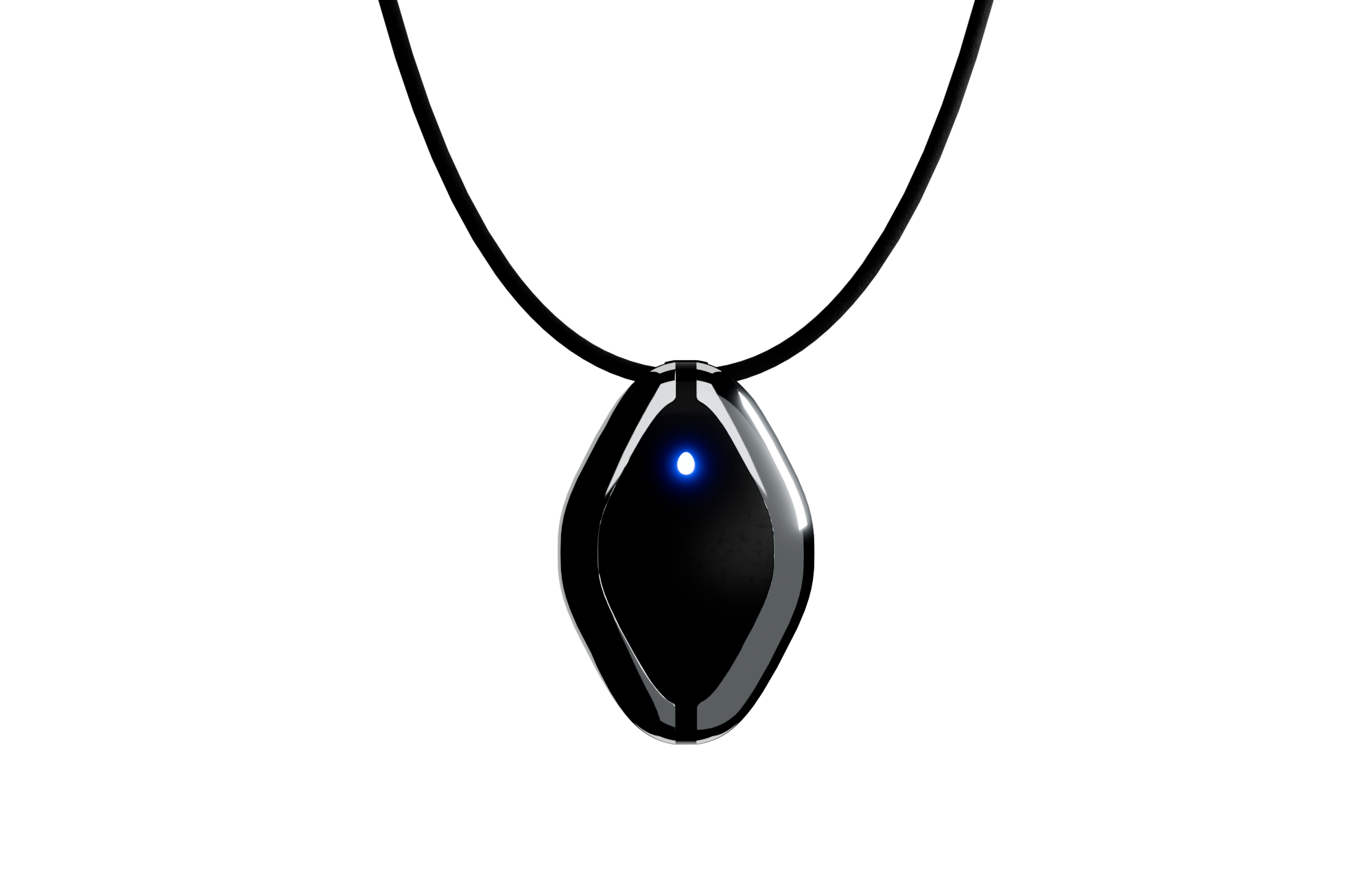
The #1 Open Source AI necklace: Experiment with how you capture and manage conversations.

Build and test with your own Omi Dev Kit 2.

How to Use Amazon AI with Docker: Usecases


Deploying Scalable AI Models with Amazon AI and Docker


  • Overview: The combination of Amazon AI services and Docker enables the deployment of scalable, flexible, and efficient AI models for various applications like natural language processing, image recognition, and predictive analytics.
  •  

  • Use Case: Let's consider an example where a company wants to deploy a real-time image recognition system using Amazon AI and Docker. This system will analyze images uploaded by users to identify objects, which can be used in various industries such as retail, security, and media.


Components


  • Amazon AI Services: Utilize Amazon Rekognition for image and video analysis, providing highly accurate object detection and content moderation capabilities.
  • Docker: Use Docker containers to encapsulate Amazon AI models, ensuring a consistent runtime environment and alleviating issues related to dependency management.


Implementation Steps


  • Model Training: Train your image recognition model using Amazon SageMaker, which provides a fully managed environment to build, train, and deploy machine learning models.
  •  

  • Create Docker Container: After training, package the model inside a Docker container. This container will include necessary libraries, dependencies, and model weights required to run the service.
  •  

  • Deploy with Amazon ECS: Use Amazon Elastic Container Service (ECS) to deploy the Docker containers. ECS integrates seamlessly with other AWS services, allowing for easy orchestration and scaling of containers.
  •  

  • Autoscaling: Utilize Amazon EC2 Auto Scaling to automatically scale up or down the number of running containers based on demand. This ensures cost efficiency and high availability of the service.
  •  

  • Monitoring and Logging: Implement monitoring and logging using Amazon CloudWatch to track the performance of your AI service, providing insights and metrics needed for optimization and troubleshooting.


Benefits


  • Scalability: Docker containers allow the service to scale horizontally by adding more container instances, which is managed by Amazon ECS.
  • Flexibility: Docker ensures that AI models are portable and can be easily moved across different environments without compatibility issues.
  • Cost-Effectiveness: The use of AWS cloud services allows for pay-as-you-go pricing models, reducing the overhead costs associated with running on-premises infrastructure.
  • Reliability: Docker's isolation capabilities ensure that the application runs consistently across various computing environments.


docker build -t image-recognition-app .



Optimizing Customer Support with Amazon AI and Docker


  • Overview: By leveraging Amazon AI services alongside Docker, businesses can enhance customer support systems, offering personalized, efficient, and immediate assistance through AI-driven chatbots and sentiment analysis tools.
  •  

  • Use Case: Consider a customer support scenario where a company employs AI to provide real-time query resolution. The system can analyze customer sentiment, generate responses, and assist customer support agents, thus enhancing service quality and efficiency.


Components


  • Amazon AI Services: Use Amazon Comprehend for text analysis and sentiment detection, alongside Amazon Lex for creating sophisticated chatbots capable of understanding both text and spoken language.
  • Docker: Docker containers facilitate the deployment and scaling of AI-driven applications, ensuring consistent performance across different environments.


Implementation Steps


  • Bot Design: Design a conversational bot using Amazon Lex to handle user queries. Define the intents, utterances, and slots required to manage various customer interactions.
  •  

  • Create Docker Container: Package your chatbot application and its dependencies into a Docker container. This includes all necessary components to run the chatbot independently of your local environment settings.
  •  

  • Deploy with AWS Fargate: Utilize AWS Fargate to run Docker containers serverlessly. This allows the chatbot to handle potentially large volumes without managing backend infrastructure.
  •  

  • Sentiment Analysis: Incorporate Amazon Comprehend to analyze customer interactions. Use sentiment detection to prioritize responses, escalating negative interactions to human agents.
  •  

  • Continuous Improvement: Implement feedback loops from customer interactions to improve bot responses and sentiment algorithms. Use Amazon SageMaker to retrain models with updated data.


Benefits


  • Efficiency: AI-driven chatbots reduce response times and operate tirelessly, providing 24/7 support without human intervention.
  • Personalization: Sentiment analysis tailors responses to customer emotions, improving engagement and satisfaction.
  • Cost Reduction: Automated interactions lower the need for large support teams, reducing operational costs.
  • Seamless Scalability: Docker containers managed by AWS services provide flexibility to scale operations as demand increases without additional overhead.


docker build -t customer-support-bot .


Omi App

Fully Open-Source AI wearable app: build and use reminders, meeting summaries, task suggestions and more. All in one simple app.

Github →

Order Friend Dev Kit

Open-source AI wearable
Build using the power of recall

Order Now

Troubleshooting Amazon AI and Docker Integration

How do I resolve "No valid credentials" error when using Amazon AI in Docker?


Check AWS Credentials


  • Ensure your AWS credentials are correctly set in the Docker container.
  • Credentials must be available either as environment variables or in the AWS credentials file.


AWS_ACCESS_KEY_ID=your_access_key  
AWS_SECRET_ACCESS_KEY=your_secret_key  


Access AWS Configuration


  • Include the AWS credentials in your Dockerfile or Compose file.
  • Ensure the Docker container can access the AWS configuration. Check permissions for shared volumes.


ENV AWS_ACCESS_KEY_ID=your_access_key  
ENV AWS_SECRET_ACCESS_KEY=your_secret_key  


Use IAM Roles   for EC2


  • When running Docker on AWS, use IAM roles with appropriate permissions instead of static credentials.
  • Attach the role to the EC2 instance running your Docker container.


Verify Network Configuration


  • Ensure the container network allows access to AWS endpoints.
  • Check that no proxy settings or firewall rules are blocking access.


How to optimize Docker container performance for Amazon AI workloads?


Optimize Resource Allocation


  • Allocate sufficient CPU and memory using the --cpus and --memory flags to prevent bottlenecks in AI workloads.
  • Utilize resource limits in your docker-compose.yml for better isolation.


services:
  app:
    image: your-ai-image
    deploy:
      resources:
        limits:
          cpus: '1.0'
          memory: 512M


Use GPU Acceleration


  • Leverage NVIDIA Docker to accelerate AI models. Ensure nvidia-docker2 and nvidia-container-runtime are installed.
  •  

docker run --gpus all your-ai-image


Optimize Docker Images


  • Minimize image size using multi-stage builds and specific base images like nvidia/cuda.
  • Reduce layers by combining commands in the Dockerfile.


FROM node:slim AS build
WORKDIR /app
COPY . .
RUN npm install && npm run build
FROM gcr.io/distroless/nodejs
COPY --from=build /app /app


Network Configurations


  • Use host networking for low-latency communication when appropriate.
  •  

```shell
docker run --network=host your-ai-image
```


How to configure network settings for Amazon AI services in a Docker container?


Set Up Docker Network Configuration


  • Ensure Docker is installed and running on your system. You can verify with the command `docker --version`.
  •  

  • Define a bridge network in Docker for container communication: \`\`\`shell docker network create my-aws-network \`\`\`
  •  

  • When running your container, attach it to the created network: \`\`\`shell docker run --network my-aws-network -d \`\`\`


Configure AWS Credentials


  • Mount your AWS credentials into the Docker container using a volume mount. Store the AWS credentials in `~/.aws/credentials` on your host: \`\`\`shell docker run -v ~/.aws:/root/.aws --network my-aws-network \`\`\`
  •  

  • Within the container, ensure the AWS SDK is configured to use these credentials for any API calls.


Verify Connectivity and Permissions


  • Test AWS service access by using the AWS CLI or SDK from within your Docker container: \`\`\`shell aws s3 ls \`\`\`
  •  

  • Ensure that IAM roles and permissions are correctly configured for accessing the required Amazon AI services.


Don’t let questions slow you down—experience true productivity with the AI Necklace. With Omi, you can have the power of AI wherever you go—summarize ideas, get reminders, and prep for your next project effortlessly.

Order Now

Join the #1 open-source AI wearable community

Build faster and better with 3900+ community members on Omi Discord

Participate in hackathons to expand the Omi platform and win prizes

Participate in hackathons to expand the Omi platform and win prizes

Get cash bounties, free Omi devices and priority access by taking part in community activities

Join our Discord → 

OMI NECKLACE + OMI APP
First & only open-source AI wearable platform

a person looks into the phone with an app for AI Necklace, looking at notes Friend AI Wearable recorded a person looks into the phone with an app for AI Necklace, looking at notes Friend AI Wearable recorded
online meeting with AI Wearable, showcasing how it works and helps online meeting with AI Wearable, showcasing how it works and helps
App for Friend AI Necklace, showing notes and topics AI Necklace recorded App for Friend AI Necklace, showing notes and topics AI Necklace recorded

OMI NECKLACE: DEV KIT
Order your Omi Dev Kit 2 now and create your use cases

Omi 開発キット 2

無限のカスタマイズ

OMI 開発キット 2

$69.99

Omi AIネックレスで会話を音声化、文字起こし、要約。アクションリストやパーソナライズされたフィードバックを提供し、あなたの第二の脳となって考えや感情を語り合います。iOSとAndroidでご利用いただけます。

  • リアルタイムの会話の書き起こしと処理。
  • 行動項目、要約、思い出
  • Omi ペルソナと会話を活用できる何千ものコミュニティ アプリ

もっと詳しく知る

Omi Dev Kit 2: 新しいレベルのビルド

主な仕様

OMI 開発キット

OMI 開発キット 2

マイクロフォン

はい

はい

バッテリー

4日間(250mAH)

2日間(250mAH)

オンボードメモリ(携帯電話なしで動作)

いいえ

はい

スピーカー

いいえ

はい

プログラム可能なボタン

いいえ

はい

配送予定日

-

1週間

人々が言うこと

「記憶を助ける、

コミュニケーション

ビジネス/人生のパートナーと、

アイデアを捉え、解決する

聴覚チャレンジ」

ネイサン・サッズ

「このデバイスがあればいいのに

去年の夏

記録する

「会話」

クリスY.

「ADHDを治して

私を助けてくれた

整頓された。"

デビッド・ナイ

OMIネックレス:開発キット
脳を次のレベルへ

最新ニュース
フォローして最新情報をいち早く入手しましょう

最新ニュース
フォローして最新情報をいち早く入手しましょう

thought to action.

Based Hardware Inc.
81 Lafayette St, San Francisco, CA 94103
team@basedhardware.com / help@omi.me

Company

Careers

Invest

Privacy

Events

Manifesto

Compliance

Products

Omi

Omi Glass

Omi Dev Kit

Omi Enterprise

Wrist Band

Omi Charger

omiGPT

Personas

Download

Resources

Help Center

Docs

App Store

Feedback

Bounties

Affiliate

Ambassadors

Resellers

GitHub

© 2025 Based Hardware. All rights reserved.