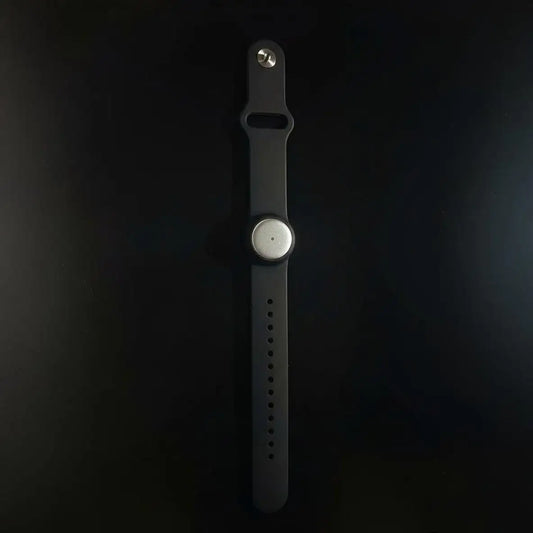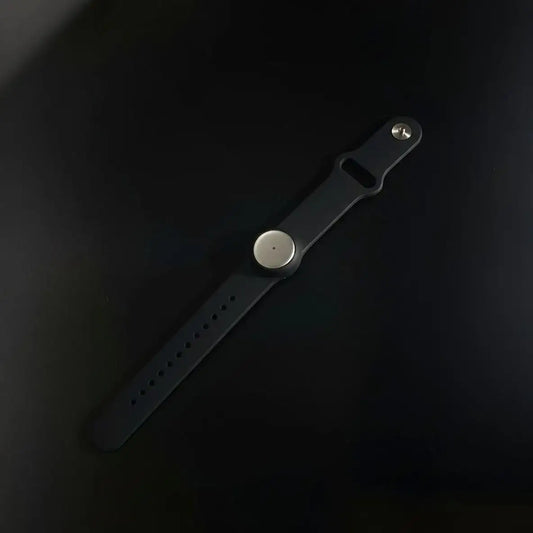
Omi is a small AI voice recorder plus an ai note taking app designed for real work. Charge it overnight, wear it all day (necklace-style or as a wrist band, even under a shirt), and it captures what you say and hear with voice recording and transcription. You get a live transcript, ai notes, summaries, tasks, and memories you can search later. It also lets you chat with your transcript to pull decisions, owners, timelines, and next steps—perfect for IT leaders and operators (VP; senior director/head; director; manager; supervisor; coordinator; specialist/analyst; assistant; intern/trainee). Omi is free for up to 1,200 minutes, and the unlimited plan is about $16/month (annual). Always get permission before recording and follow your company policy—when in doubt, ask your manager/director/head for approval.
So you're on IT and need to find the best ai note taking app for IT department professionals. Learn more about Omi and how it records what you hear, transcribes in real time, and turns conversations into decisions, tasks, and searchable ai notes:
IT work is a constant stream of fast, high-context conversations: incident bridges, change reviews, vendor calls, stakeholder updates, security reviews, architecture debates, on-call handoffs. The problem is not that your team is careless. It is that memory is not an IT system. It does not have audit logs, it does not sync across people, and it fails exactly when pressure is high.
That is why IT departments keep searching for a reliable note taker workflow: something that turns messy conversations into clean, consistent documentation—without forcing someone to “take notes” while everyone else solves the problem.
This guide shows exactly how Omi works for IT department professionals, how it turns meetings and calls into voice to notes output your team can actually use, and how to use it responsibly (yes, you should always get permission before recording).
What Omi is (and why it fits IT department professionals)
Omi is a wearable AI-powered voice recorder plus a companion app. You wear the device to capture what you hear and say, and the app turns that audio into a transcript and structured outputs: summaries, tasks, and searchable ai notes. For IT teams, that means Omi becomes a practical note taker app for the conversations that usually get lost or rewritten later from memory.
In plain terms: Omi is a voice recorder with transcription that turns note taking from a manual chore into an automatic workflow. You can treat it like a “capture layer” for IT operations—like logging, but for human decisions and verbal context.
Why IT teams struggle with notes (even when they try)
- Speed: incident bridges and escalations move too fast for perfect notes.
- Context: decisions depend on small details (“what exactly did the vendor say?” “who approved the workaround?”).
- Ownership: “someone will write it up” turns into “nobody wrote it up.”
- Translation: stakeholders hear one thing; engineering hears another; the gap creates rework.
Omi helps by making capture automatic and making retrieval instant. You stop relying on scattered docs and partial memory, and you start working with transcripts and summaries you can search.
How it maps to IT department roles (naturally)
Omi is useful across seniority because IT conversations carry different kinds of risk depending on the role:
- VP; senior director/head; director: strategy, budgets, vendor risk, roadmap alignment, security posture, executive updates.
- Manager; supervisor; coordinator: operations, incident reviews, change approvals, staffing/on-call, cross-team execution, handoffs.
- Specialist/analyst: troubleshooting, deep technical discussions, design reviews, operational runbooks, root cause analysis.
- Assistant; intern/trainee: capturing meeting notes, learning terminology, tracking action items, keeping documentation clean.
Same tool. Different value. Leadership gets clarity and continuity. Operators get fewer dropped balls. Analysts get reusable technical context. Newer team members get structure and confidence.
Built for technical teams
Omi is open source (open hardware + software), which matters for IT teams that care about transparency, extensibility, and control. It is also positioned with enterprise-level security and compliance (SOC 2 + HIPAA), including encryption (TLS in transit + AES-256 at rest) and data controls like export and deletion. You can also run workflows locally to reduce cloud dependency when needed.
Quick reality check: Omi does not replace IT process (ITIL, SRE, CAB, ticketing discipline). What it does is remove the most fragile layer—human recall—so your process has better inputs and fewer gaps.
How Omi works across IT workflows
Most IT department professionals want the same routine: charge it at night, wear it during the day, and stop losing details across meetings and calls. That is the typical Omi flow—simple enough to become a habit, powerful enough to matter in high-pressure work.
1) Charge overnight, then wear it like a necklace or wrist band
Omi is designed to be hands-free. Wear it as a necklace (pendant style) or use a wrist band accessory—some people keep it under a shirt for discretion in open offices. The point is not the accessory. The point is that it is always available when the “important 30 seconds” happens.
2) Capture everything you say and hear (on/offline)
Omi is built for continuous, lightweight capture. It can work with live streaming or offline recording depending on your setup. In practice, that means it can follow you through different IT realities: desk work, conference rooms, on-site walk-throughs, and those hallway conversations that somehow decide the whole project.
3) Get real-time transcription and clean ai notes
Inside the app, you get transcription (often in real time) and structured outputs. This is where it becomes more than a recorder. A basic recorder gives you audio. Omi gives you voice recording and transcription plus summaries, tasks, and searchable ai notes—the stuff you actually need later.
4) Talk to your transcript like a system (and extract what matters)
After a call, you can use the AI to chat with the transcript. Ask:
- “What did we decide about rollback?”
- “Who owns the firewall rule change, and by when?”
- “List the risks we flagged and the mitigation plan.”
- “Summarize the vendor commitments and open questions.”
This is the practical core of voice to notes for IT: not just capturing words, but turning them into decisions, owners, and next steps.
5) Organize, favorite, and share (so knowledge actually moves)
Omi supports folders and starred/favorited conversations, which is perfect for IT organization: by system, environment, project, incident, vendor, or quarter. You can also share transcripts and summaries quickly—helpful when you need alignment across security, infrastructure, apps, and leadership without rewriting everything.
6) Improve accuracy with speech profiles and custom vocabulary
IT conversations are full of names, acronyms, product terms, and internal project codenames. Omi supports speech profiles (stronger speaker recognition across conversations) and lets you add custom vocabulary/jargon so the transcript stays accurate. This is a big deal: cleaner transcription means less editing, more trust, and faster reuse.
7) Extend it like an IT tool (apps, APIs, and automation)
Omi has an apps marketplace and supports building/extending workflows (API + MCP server). You can create one-click AI apps (no-code) for your internal needs—like an “incident recap generator,” “CAB summary formatter,” or “vendor call extractor.” For IT teams, this is where a note taker turns into a system component.
Voice to notes AI: from IT conversations to tickets, decisions, and follow-ups
The fastest way to get value in IT is to stop trying to produce perfect notes in real time. A better model is: capture first, structure after. That is what people are really searching for when they look up a note taker app, a voice recorder to transcript tool, or an ai note taking app that works under pressure.
Top 10 high-impact situations where IT department professionals use Omi
- Incident bridge (war room) calls: capture timeline, impact, mitigations, and the exact point a decision was made. Benefit: faster post-incident write-ups and fewer “we never said that” debates.
- Postmortems and RCA sessions: preserve contributing factors, detection gaps, and action owners. Benefit: clearer accountability and fewer repeated incidents.
- Change planning and CAB reviews: track approvals, dependencies, rollback, and comms decisions. Benefit: change records match reality, not memory.
- Vendor demos and procurement calls: capture feature claims, pricing constraints, security answers, and next steps. Benefit: less scope creep and stronger vendor accountability.
- Security and compliance reviews: document controls, exceptions, remediation timelines, and evidence requests. Benefit: cleaner audit trail and less rework.
- Architecture and design reviews: capture trade-offs, constraints, “why not X,” and decision rationale. Benefit: fewer circular discussions and better design docs.
- Stakeholder alignment meetings: capture priorities, constraints, and what is explicitly out of scope. Benefit: fewer surprise requirements later.
- On-call handoffs and shift transitions: turn verbal handoffs into searchable notes. Benefit: less context loss at 2 a.m., fewer repeated investigations.
- Deep troubleshooting sessions: preserve hypotheses, observations, and what fixed the issue. Benefit: reusable knowledge for runbooks and future incidents.
- Training, onboarding, and shadowing: interns/trainees focus on learning while Omi captures explanations and terminology. Benefit: faster ramp-up and more consistent training.
A simple IT workflow that actually sticks
- Before the meeting/call: confirm permission to record (policy + consent), open the app, and verify transcription is active.
- During: focus on the conversation. Let Omi handle voice recording and transcription. Mark key moments if you want faster review.
- Right after (2 minutes): skim the summary, star it if it matters, move it into the right folder (incident, vendor, project, system).
- Follow-up: ask the AI for decisions, owners, and deadlines, then share the summary to align everyone fast.
How this helps across IT seniority (the real benefit)
- VP; senior director/head; director: better decision logs, cleaner executive updates, fewer misunderstandings across stakeholders.
- Manager; supervisor; coordinator: smoother execution, fewer dropped action items, better meeting-to-work conversion.
- Specialist/analyst: stronger troubleshooting history, better documentation, fewer repeated investigations.
- Assistant; intern/trainee: less anxiety, more structure, clearer learning loops.
This is the point of ai note taking for IT department professionals: it reduces friction between what was discussed and what actually gets done.
Best practices for recording IT conversations (so the transcript is actually useful)
Start with consent and policy (always)
IT conversations often include sensitive information: security posture, incidents, customer impact, internal access discussions, vendor risk. Always get permission to record and follow your company policy. If you are unsure, ask your manager/director/head for approval before recording coworkers, vendors, or leadership. This is non-negotiable.
Keep audio clean (small habits, big difference)
- Reduce noise: incident rooms get loud. If possible, step into a quieter space.
- Be close to the conversation: proximity beats “magic settings.”
- Do a quick test: 10 seconds before the call can save the whole session.
Use custom vocabulary for IT terms
Transcription breaks on exactly what IT cares about: acronyms, product names, internal project codenames, vendor names, and niche technical terms. Omi lets you add custom vocabulary/jargon so your transcript stays accurate. This is one of the biggest quality multipliers for a voice recorder with transcription in technical environments.
Use speaker recognition to reduce ambiguity
When multiple people talk fast, confusion comes from “who said what.” Omi supports speech profiles for more accurate speaker recognition across conversations. That matters for incident bridges, CAB meetings, and executive reviews where ownership and commitments need to be clear.
Capture decisions in a consistent format
If you do one thing after every important meeting, do this: ask the AI to output decisions + owners + deadlines. That turns a transcript into operational notes. It is the difference between “we recorded it” and “we can act on it.”
Choose the right mode: cloud, offline, or local-first
Omi supports on/offline workflows and can run locally to reduce cloud dependency when needed. In IT, different meetings have different sensitivity. Your team can adopt stricter modes for higher-risk conversations and more convenient modes for routine calls.
Summary templates and custom IT templates
A transcript is useful. A structured summary is what makes it operational. Omi lets you choose different summary templates and also create your own custom templates—so your output matches IT realities: incident recap format, CAB format, vendor review format, or stakeholder update format.
High-performing IT summary templates (examples)
- Incident recap (SRE-style): impact, timeline, root cause hypothesis, mitigations, next steps, owners.
- Postmortem/RCA: contributing factors, detection gaps, action items, prevention plan, due dates.
- Change/CAB summary: scope, risk, dependencies, rollback plan, approvals, comms plan.
- Vendor/security review: requirements, claims, evidence requested, open questions, decision criteria.
- Stakeholder alignment: decisions, priorities, constraints, out-of-scope items, action items.
- Architecture review: options considered, trade-offs, constraints, final decision, rationale.
A custom IT template you can copy
Title: [System/Project + Meeting Type]
1) 10-second summary (what changed / what was decided)
2) Decisions made (with rationale)
3) Action items (owner + deadline)
4) Risks / blockers (and mitigation)
5) Technical details (key config, commands, logs, metrics mentioned)
6) Dependencies (teams, vendors, approvals)
7) Comms plan (who needs what update, when)
8) Open questions (what is still unknown + who will answer)
How to make templates work across roles
For VP/senior leaders, keep templates short: decisions, risks, costs, and next milestones. For managers/coordinators, emphasize owners and deadlines. For specialists/analysts, include technical artifacts and troubleshooting steps. For interns/trainees, include “definitions and context” sections so learning compounds.
This is where an ai note taking app becomes a team system: notes stop being personal and start being consistent.
AI note taking app free: pricing and value for IT teams
Most IT leaders want to pilot before standardizing anything. Omi includes a free tier (up to 1,200 minutes) so a manager or director can test it in real workflows: incident calls, CAB meetings, vendor discussions, and weekly stakeholder updates.
- Free: up to 1,200 minutes of recording and transcription.
- Unlimited: about $16 per month on the annual plan.
The value is usually immediate: fewer repeated meetings, fewer missed action items, clearer incident documentation, and faster alignment. If Omi saves even one “we need another call because we forgot what we agreed to,” it pays for itself.
Privacy, security, and consent (read this part)
Always get permission before recording
You should always ask for consent before recording coworkers, clients, vendors, or leadership. Follow your company policy and request approval from your manager/director/head if you are unsure. Recording laws and policies vary by location and organization, and you are responsible for complying with them.
Enterprise-grade safety and data control
Omi is positioned with enterprise-level safety (SOC 2 + HIPAA) and strong security practices. Recordings are protected with encryption (TLS in transit + AES-256 at rest). You can export your data, delete items, and wipe your data when needed. For IT teams, data ownership and control is not a “nice-to-have.” It is the baseline.
Open source and buildability
Omi is open source (open hardware + software), supports an API + MCP server, and includes an apps marketplace. IT teams can build internal automations and custom workflows on top of their own captured data—without being trapped in a black box.
Where Omi is built
Omi is developed in San Francisco, California. It is designed to feel practical: discreet wearable capture, strong organization (folders + starred), and an ecosystem built for extension and long-term flexibility.
FAQ
Is Omi useful for IT department professionals at every level (VP to intern/trainee)?
Yes. The core benefit scales: leadership gets clearer decision logs and continuity, managers get stronger execution and fewer dropped action items, specialists/analysts get reusable technical context, and interns/trainees learn faster with accurate transcripts and structured summaries.
Does Omi work as a voice recorder with transcription for IT meetings and calls?
Yes. Omi is designed for voice recording and transcription so your meetings, calls, and on-the-fly conversations become transcripts and structured ai notes you can search later.
How is this different from a normal note taker app?
A normal note taker app depends on you typing while the conversation happens. Omi’s wearable capture makes the workflow hands-free, and the AI turns transcripts into summaries, tasks, and searchable outputs. That is why it fits IT environments where attention must stay on the work.
Can it handle technical jargon?
Yes. Omi supports custom vocabulary/jargon so you can add the terms your team uses. It also supports speech profiles for better speaker recognition across conversations, which helps in fast multi-speaker IT calls.
Do we need consent to use it at work?
Yes. Always get permission before recording, follow company policy, and when in doubt, ask your manager/director/head for approval.
Is there a free option to test it with a team?
Yes. Omi includes a free tier (up to 1,200 minutes). For heavier usage, the unlimited annual plan averages about $16 per month.
Quick takeaway
If you want ai note taking for IT department professionals that works in real conditions, Omi is built for a simple routine: charge at night, wear it all day, capture conversations hands-free, get live transcription, generate structured ai notes, organize everything in folders, star what matters, and use AI chat to extract decisions, owners, and next steps. It is a practical way to turn “we talked about it” into “we can prove it, search it, and act on it.”

 https://www.omi.me