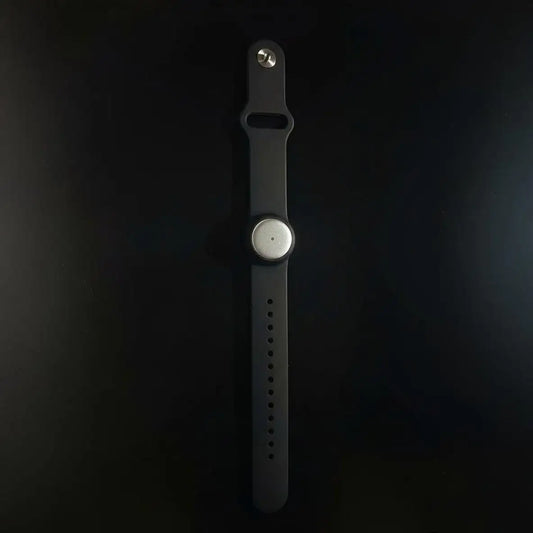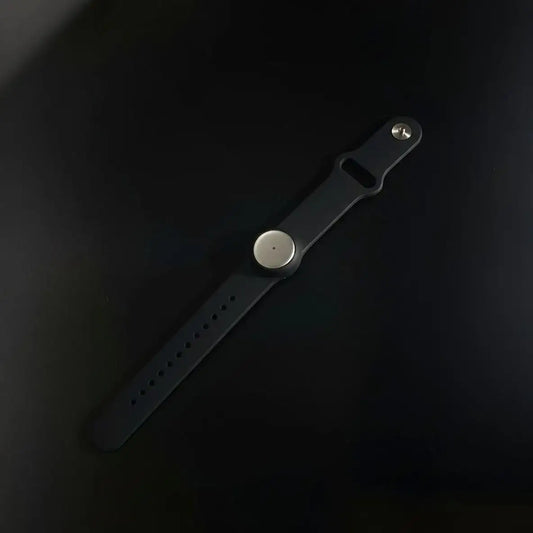
Omi is a small AI voice recorder plus an ai note taking app that turns your day into searchable ai notes. Charge it overnight, wear it all day (necklace or wrist band, even under a shirt), and it will transcribe everything you say and hear with voice recording and transcription—then generate summaries, tasks, and memories you can share, star, and organize in folders. You can also chat with your transcript to produce meeting minutes, decisions, and follow-ups. It’s free for up to 1,200 minutes, with an unlimited plan for about $16/month (annual). Always get clear permission from coworkers, clients, and your manager before recording.
Project management is basically a full-time job of “keeping context from leaking.” Decisions happen fast. Action items get assigned casually. Scope changes show up in side comments. Then two days later someone asks, “When did we agree to that?” and you’re digging through Slack, emails, and half-finished notes.
That’s why ai note taking for project managers is exploding. Not because PMs want “more notes,” but because you need a reliable note taker that turns voice to notes without stealing your attention during meetings. This guide shows how Omi works in real PM life, how it converts meetings into clear deliverables, and how to use it responsibly (yes—always get permission before recording).
What Omi is (and why it fits project managers)
Omi is a small AI-powered voice recorder plus a companion note taker app. You wear the device to capture what you say and hear, and the app turns that audio into a transcript and structured ai notes you can search, organize, and share. For project managers, that means less “trying to remember,” and more “shipping reliable outputs.”
In plain terms: Omi is a voice recorder with transcription that goes beyond raw transcripts. It creates summaries, action items, and memories, and it lets you chat with your transcript so you can produce the things PMs actually deliver: meeting minutes, decision logs, status updates, risk notes, and follow-up messages.
Also, “project manager” is not one job. Omi fits naturally across the most common PM categories (and yes, your days look different):
- IT / software project managers: standups, sprint planning, backlog grooming, release coordination, and cross-team dependencies.
- Technical project managers (TPMs): architecture discussions, tradeoffs, integration plans, and “who owns what” clarity.
- Agile project managers / scrum masters: facilitation-heavy meetings where typing notes hurts your ability to lead.
- PMO / portfolio managers: governance, steering committees, executive updates, RAID management, and reporting consistency.
- Construction project managers: site coordination, subcontractor calls, change orders, safety discussions, and punch lists.
- Marketing project managers: campaign coordination, creative reviews, approvals, launch readiness, and stakeholder feedback loops.
- Operations / manufacturing PMs: process changes, vendor issues, incident reviews, and SOP alignment.
- Implementation / customer success PMs: client calls, onboarding plans, requirements capture, and escalation tracking.
Omi is designed to be modern and easy to keep on you. It’s small and discreet—because if a device feels awkward, you stop using it. The best ai note taking app is the one that fits your routine every day, not just on “important meetings.”
How Omi maps to real PM needs
- Capture everything: transcribes what you say and hear, generates automatic summaries, tasks, and memories, and supports 25+ languages (helpful for global teams).
- Recall instantly: search transcripts, summaries, tasks, and memories; chat with Omi AI (it can also use web search to add context).
- Automate your work: create tasks you can sync to your task manager, use custom summary templates, organize with folders + starred items, and share transcripts fast.
- Connect everywhere: iOS + Android apps, Mac desktop + web app, and Apple Watch recording support.
- Build and extend: open source (hardware + software), API + MCP server, custom STT providers, and an apps marketplace.
- Own your data: enterprise-level safety posture (SOC 2 + HIPAA), encryption in transit (TLS) and at rest (AES-256), export anytime, delete anytime.
How Omi works for project managers
Most PMs want the same thing: a low-friction system that runs in the background. Charge at night, wear it during the day, and stop relying on “I’ll remember it later.” That’s the typical Omi routine.
1) Charge overnight, then wear it like a necklace or wrist band
Omi is built for hands-free daily use. Wear it as a necklace (pendant style) or as a wrist band accessory. If you prefer discretion, you can wear it under a shirt—just keep in mind that heavy fabric and noisy environments can reduce audio clarity. The goal is consistency: if it’s comfortable, you’ll use it across standups, hallway chats, and stakeholder calls (where the real “hidden scope” often appears).
2) Record meetings all day and get live transcription in the app
When connected, Omi can show real-time transcription so your note taking doesn’t depend on typing. When you’re in a spotty environment (on-site, traveling, noisy facilities), Omi can still record and process later—so your workflow doesn’t collapse because Wi-Fi is bad.
This is the practical advantage of a wearable voice recorder with transcription for PMs: it’s always ready, and it turns voice recorder to transcript into something you can actually use.
3) Mark key moments, then turn them into action items and decisions
PM notes are not “everything that was said.” They’re the moments that change the plan:
- “We’re dropping feature X this sprint.” (scope change)
- “Legal needs to approve this before launch.” (dependency)
- “John owns the vendor follow-up by Friday.” (action item)
- “We’re accepting the risk and moving forward.” (decision)
With Omi, you can keep meetings clean: facilitate, listen, and mark important moments. After the meeting, use the ai note taking app to generate structured minutes, decisions, and tasks from the transcript.
4) Organize each conversation into folders, star the critical ones, and share notes
Project managers live inside multiple streams at once: projects, workstreams, stakeholders, vendors. Omi helps you keep order:
- Folders: organize by project, client, sprint, or workstream.
- Starred: pin the conversations that matter (kickoffs, scope approvals, escalation calls).
- Quick share: send a transcript or summary to your team so everyone aligns on the same source of truth.
This is the difference between a basic recorder and a true note taker app built for output.
5) Use AI chat to go deeper (and faster) than “meeting recap”
Once your meeting is transcribed, you can chat with it like a work document. Ask things like:
- “List every decision made, with the exact wording.”
- “Create action items with owners and due dates.”
- “Write a status update for leadership in 6 bullets.”
- “Turn this vendor call into a follow-up email with commitments and dates.”
- “Summarize risks and propose mitigations based on what we discussed.”
And because Omi’s AI can connect to the internet, it can add missing context (definitions, best practices, frameworks) while still grounding the output in your transcript. This is how voice to notes becomes usable project artifacts.
Meeting to notes AI: from audio to project deliverables
The fastest way to get real value is to stop trying to write perfect notes while facilitating. Capture first, shape later. That’s what most people actually mean when they search for ai note taking for project managers or a note taker that can keep up with high meeting volume.
A simple PM workflow that works (even on chaotic weeks)
- Before the meeting: get permission to record, confirm company/client policy, and make sure Omi is ready.
- During the meeting: lead the conversation. Mark decisions, owners, risks, and scope changes.
- Right after (3–7 minutes): generate a structured summary and tasks, file it into the right folder, star it if it’s critical.
- Ship outputs: share minutes, copy action items into Jira/Asana/ClickUp/Trello/Monday, and send follow-ups while context is fresh.
Top 10 situations where project managers use Omi (and the benefit)
- Project kickoff: capture goals, success criteria, constraints, and owners; publish clean minutes that prevent “different interpretations” a week later.
- Requirements and discovery workshops: turn messy conversations into structured scope, assumptions, acceptance criteria, and open questions.
- Standups: track blockers and dependencies without becoming the “human notepad.” Omi keeps a clean record you can search later.
- Sprint planning and estimation: convert debate into a crisp plan (priorities, owners, definitions of done) with fewer misunderstandings mid-sprint.
- Stakeholder status meetings: generate executive-ready updates focused on progress, risks, and asks—without spending your evening rewriting.
- Change control and scope negotiations: preserve the exact language of approvals, tradeoffs, and impacts (timeline, budget, quality).
- Vendor and partner calls: document commitments, delivery dates, and responsibilities; reduce “that’s not what we agreed” problems.
- Cross-functional alignment (product, design, engineering, ops): keep decisions from being re-litigated by making them easy to reference.
- Incidents and postmortems: capture timeline, contributing factors, and action items so fixes actually happen and don’t get diluted.
- Retros and lessons learned: turn reflections into repeatable improvements, templates, and SOP updates for the next cycle.
How Omi helps with common PM pain points
- Decision drift: if a decision isn’t recorded, it gets re-opened. Omi keeps a reliable source of truth.
- Action items that vanish: Omi turns meetings into tasks so follow-through improves (and you don’t chase ghosts).
- Context switching: searchable ai notes cut the time you waste reconstructing history.
- Distributed teams: quick share transcripts and summaries so everyone stays aligned across time zones.
- High meeting volume: consistent capture + templates keep your output stable even during “10-meeting days.”
This is why PMs don’t just want a recording. They want voice recording and transcription that becomes voice to notes, and then becomes decisions and tasks people can act on.
Best practices for recording project meetings (so the transcript is actually good)
Placement and audio tips
- Necklace placement is usually best: it captures your voice and nearby speakers more consistently than a pocketed phone.
- Reduce noise when you can: HVAC vents, open-office chatter, and coffee machines will hurt accuracy.
- Do a quick test: confirm transcription appears before the meeting goes deep.
Use speech profiles for recurring teams
Project managers often meet with the same core group every week. Omi’s speaker recognition features (speech profiles) help the system become more consistent over time—especially useful when you need “who said what” clarity in decisions and commitments.
Bookmarking matters more than you think
If you do only one active thing during meetings, do this: mark moments. Scope changes, risk flags, approvals, deadlines, and owner assignments. Later, those markers let you generate clean minutes in minutes.
Build a personal dictionary for acronyms, tools, and names
PM transcription usually breaks on the same things: product names, stakeholder names, acronyms, ticket IDs, vendor names, internal jargon. Omi lets you add words to a personal dictionary so your note taking becomes more accurate with less cleanup.
Helpful tip: build one dictionary per project (or per domain) and keep it updated. That’s one of the simplest ways to make a voice recorder to transcript workflow feel “enterprise-ready.”
Summary templates and custom PM templates
A transcript is useful, but a structured summary is what makes it operational. Omi lets you choose different summary templates and also create your own custom template, so your ai notes come out in the exact shape a PM needs: minutes, decision log entries, RAID snapshots, or stakeholder updates.
High-performing templates for project managers (examples)
- Meeting minutes (PM standard): decisions, action items, owners, due dates, risks, and follow-ups.
- Steering committee recap: progress, top risks, budget/timeline status, and executive asks.
- RAID snapshot: risks, assumptions, issues, dependencies—plus owners and dates.
- Change request summary: requested change, impact, options, recommendation, approval status.
- Vendor call recap: commitments, delivery dates, blockers, escalation path, next check-in.
A custom PM template you can copy
Title: [Project] – [Meeting name] – [Date]
1) 10-second summary (what changed?)
2) Decisions made (include exact wording)
3) Action items (Owner / Due date / Definition of done)
4) Risks, issues, dependencies (RAID) + owners
5) Scope changes (added/removed) + impact on timeline/budget/quality
6) Stakeholder updates needed (who, what message, when)
7) Open questions (with proposed owners)
8) Next meeting plan (agenda + required pre-work)
This is where Omi starts to feel like a real ai note taking app for PMs—not just “a transcript.” You get consistent outputs, fewer misunderstandings, and faster follow-through.
Meeting to notes AI free: pricing and why it is worth it
A lot of PMs want to test before committing. Omi includes a free tier that covers up to 1,200 minutes of recording and transcription—enough to validate whether this fits your weekly meeting volume.
- Free: up to 1,200 minutes of recording and transcription.
- Unlimited: about $16 per month on the annual plan.
The value argument is straightforward. If you save even 30–60 minutes per day by reducing rewrites, follow-up confusion, and “what did we decide?” loops, it pays for itself quickly. But the bigger win is reliability: your project doesn’t depend on fragile memory.
Privacy, security, and consent (read this part)
Always get permission before recording
You should always ask for consent before recording. In a workplace, the safest path is to request approval from your manager/director and follow your company policy—especially with clients, vendors, or sensitive projects. Laws and workplace rules vary, and you are responsible for using recording tools ethically and legally.
Security, compliance, and data ownership
Omi is open source and built with an enterprise-grade security posture, including SOC 2 and HIPAA compliance. Your data is encrypted in transit (TLS) and at rest (AES-256). You can export your data, delete items, and wipe everything at any time. If you want to minimize cloud reliance, you can run workflows locally depending on your setup.
Where Omi is built
Omi is developed in San Francisco, California. For project managers, that mostly translates to one thing: the product is built for real-world workflows and constant iteration, with an open ecosystem you can extend through apps, APIs, and custom tooling.
FAQ
Is Omi good for ai note taking for project managers?
Yes—especially if your biggest pain is meeting overload, decision drift, and the constant need to produce clean minutes, tasks, and status updates. Omi turns voice to notes and helps you ship consistent outputs.
Is Omi a note taker app or a voice recorder with transcription?
It’s both. Omi is a wearable voice recorder with transcription plus an ai note taking app. That combination is what makes the workflow practical: capture hands-free, then generate summaries, tasks, and searchable ai notes.
Can it handle real PM deliverables like action items and minutes?
Yes. After a meeting, you can generate meeting minutes, decision logs, and action items from the transcript, then share them or sync tasks into your preferred system. With templates, you can standardize outputs across projects.
Do I need permission to record meetings?
Yes. Always get consent and follow company/client policies. When in doubt, ask your leader or legal/compliance team.
How do I improve accuracy for jargon and acronyms?
Add project-specific vocabulary (names, acronyms, tools, product terms) to your personal dictionary, reduce background noise, and keep consistent device placement.
Is there a free option?
Yes. Omi includes a free tier with up to 1,200 minutes of recording and transcription. If you need more, the unlimited annual plan averages about $16/month.
Quick takeaway
If you want ai note taking for project managers that feels practical (not gimmicky), Omi is built for a simple routine: charge at night, wear it all day, capture meetings with voice recording and transcription, and turn voice recorder to transcript into structured ai notes—minutes, decisions, and action items you can organize in folders, star, and share.

 https://www.omi.me