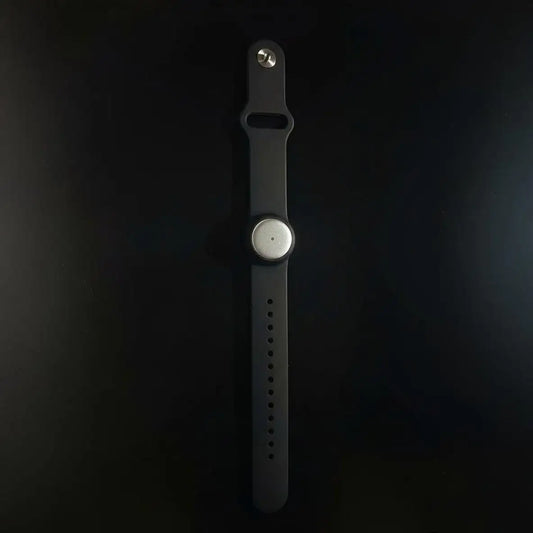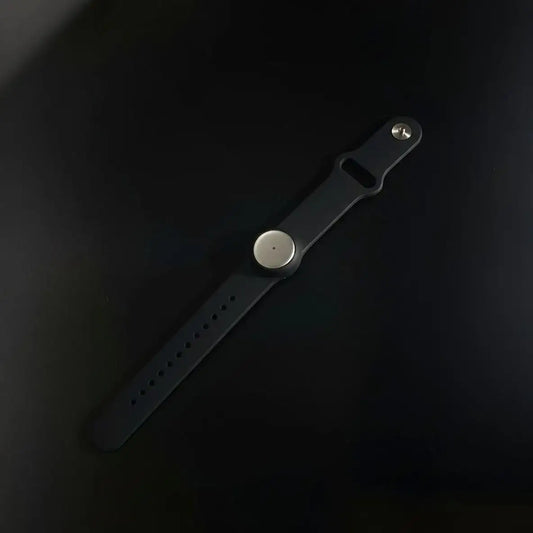
Omi is a small AI voice recorder plus a note taker app built for sales and busy days. You charge it at night, wear it all day (as a necklace or wrist band, even under your shirt), and the app uses AI for voice recording and transcription so your voice to notes workflow happens automatically. After each call, you can chat with the transcript to pull out pain points, requirements, objections, next steps, and a clean follow-up email. Omi includes 1,200 minutes of free listening per month. Unlimited is $199/year (about $16/month with 2 months free). Always get consent before recording customers or teammates, and follow your company policy.
Need a note taker app for sales? Omi captures voice recording and transcription, then turns it into searchable notes, tasks, and clean CRM updates.
Sales is full-contact context switching. You go from a cold call to a discovery, then a demo, then an internal sync, then a pricing thread… and somewhere in there you’re supposed to remember the exact phrasing the buyer used when they said “this is a priority, but security will block us if…”.
That’s why so many people look for ai note taking for sales professionals (and yes, even misspell it like “ai note taking for sales professionais”). What you really want is simple: a reliable note taker that captures the truth of the conversation, then turns it into usable ai notes you can act on.
Most teams try to solve this with frantic typing, patchy memory, or “I’ll update the CRM later.” Later becomes never. Omi flips that. You stay present in the conversation, and the app turns audio into a transcript, summaries, tasks, and searchable notes—without you babysitting your phone.
This guide shows exactly how Omi works for salespeople, how it turns conversations into clean notes and follow-ups, and how to use it responsibly (yes, you should always get permission before recording).
What Omi is (and why it fits sales teams)
Omi is a wearable AI voice recorder plus a companion app. You wear the recorder to capture what you hear and say, and the app turns that audio into a transcript and structured notes you can search later. In plain terms: it’s a voice recorder with transcription and a note taker app that’s designed to be used all day, not only when you remember to hit “record.”
For sales professionals, that matters because the highest-value details are usually the easiest to lose:
- the buyer’s exact priorities (in their words)
- hidden constraints (security, procurement, timing, internal politics)
- objections that sound casual but are deal blockers
- commitments and next steps (who owns what, and by when)
Omi fits across the main sales roles, naturally:
- SDR / BDR (Sales Development / Business Development Rep): capture discovery notes, qualification signals, and clean handoffs without rewriting everything after the call.
- Account executive (AE): keep demos, negotiations, and multi-threaded stakeholder details accurate—especially in enterprise cycles.
- Inside sales representative: handle high volume without drowning in manual note taking.
- Outside / field sales representative: record in-person meetings and on-the-go conversations hands-free.
- Enterprise sales representative: preserve complex buying committee context across weeks and months.
- Account manager (AM): track expansions, renewals, and relationship context so nothing gets lost between QBRs.
- Customer success manager (CSM): capture commitments, risks, and success plans with less “wait, what did they promise?” later.
- Sales engineer / solutions engineer (SE): retain technical requirements and customer phrasing without relying on memory.
- Channel / partner sales manager: document partner calls, enablement sessions, and joint plans cleanly.
- Sales ops / RevOps: consistent data capture (and fewer mystery deals with empty notes).
Omi is also built to be worn. It’s discreet, minimal, and modern, and small enough that it doesn’t feel like a “setup.” If a tool is annoying, salespeople stop using it. If it’s easy, it becomes a habit.
One more thing that matters to teams: Omi is open source. That’s not a marketing line. It means the ecosystem is built for transparency and long-term flexibility, which is a real comfort when you’re trusting a product with sensitive conversations and internal process.
How Omi works for sales conversations
Most sales professionals want the same routine: charge once, wear all day, and stop relying on fragile memory. That’s the Omi flow.
1) Charge overnight, then wear it like a necklace or wrist band
Omi is meant to be hands-free. You can wear it as a necklace (pendant style) or as a wrist band. Some people keep it under a shirt for discretion. That’s fine—just don’t confuse “discreet” with “secret.” In sales, you should be transparent and follow consent and policy.
In practice, this is what makes it different from a phone recorder: you don’t have to pull your phone out, place it on the table, unlock it, open an app, hope the mic is right… and then feel awkward. You just wear it.
2) Record the conversation and get transcription in the app
When Omi is connected, you can capture audio and get transcription as your day happens. This is the core: voice recording and transcription that doesn’t interrupt the call. It’s the cleanest version of “voice recorder to transcript” because the recorder is dedicated to capturing audio, and the app is dedicated to turning it into text and ai notes.
This matters for sales because your real deliverables aren’t the audio files. Your deliverables are:
- a clear recap (for the buyer and for your team)
- accurate next steps
- CRM-ready notes
- tasks you actually complete
3) Press the button to mark moments and ask questions later
Sales conversations move fast. Omi’s simplest power move is bookmarking: press the button when you hear something important—pricing sensitivity, a competitor mention, a key requirement, a stakeholder name, a timeline commitment.
Then, in the app, you use AI chat to ask questions grounded in the transcript. For example:
“Summarize this call for a CRM update.”
“What objections did they raise, and what evidence would resolve them?”
“List next steps with owners and dates.”
“What did they say about budget and timeline?”
“Turn this into a follow-up email in my tone.”
“Give me a MEDDICC snapshot from this conversation.”
This is where Omi stops being “a recorder” and becomes a practical ai note taking app.
4) Organize calls into folders, favorite what matters, and share notes
Omi helps you stay organized when your calendar is chaos. You can organize conversations in folders (by account, territory, deal stage, or partner), favorite high-stakes calls, and share notes internally when appropriate.
If you want a simple folder system that works for most teams, try this:
- By account: one folder per target account (best for enterprise)
- By deal stage: discovery / demo / security / negotiation / closed-won
- By motion: new business / renewal / expansion
- By channel: direct / partner / inbound
This is the difference between random recordings and a real note taking system you can trust when you’re prepping for a call two weeks later.
5) Use web-connected AI to go deeper before the next step
After the call, you often need to do more than summarize. You need to understand.
Because the AI can connect to the internet, it can help you deepen the output: explain a technical term that came up, draft a cleaner mutual action plan, compare approaches, generate examples, or help you prepare for the next meeting. You’re not just saving time. You’re raising the quality of your follow-through.
This is similar to how students use Omi to record lectures and then ask the AI to clarify concepts—except in sales, the “lecture” is the buyer telling you what matters and how they decide.
Call to notes AI: from audio to pipeline-ready assets
The fastest way to get value from Omi is to stop trying to create perfect notes live. The better approach is: capture first, shape second. That’s the real meaning behind searches like note taker, note taker app, and voice to notes.
A simple sales workflow that actually sticks
- Before the call: get consent if needed, then confirm the app is ready for transcription.
- During the call: stay present. Bookmark key moments with the device button.
- Right after the call (3–5 minutes): skim the AI summary, favorite it if it’s important, and file it into the right folder.
- Follow-up: ask the AI to draft a recap email, a CRM update, and next steps. Edit quickly. Send.
- Before the next meeting: ask “What changed since last call?” and “What should I validate next?”
Top 10 situations where sales professionals use Omi (and why it helps)
- High-volume discovery (SDR/BDR): you capture qualification details and buyer language accurately, then generate a clean handoff summary so AEs don’t start the next call blind.
- Demos with technical depth (AE + SE): you retain requirements, integration constraints, and exact objections—then turn them into a clear plan for the next demo or a security review.
- Pricing and negotiation: you stop relying on memory for concessions, terms, and what the buyer actually agreed to. This is where precise notes prevent expensive misunderstandings.
- Multi-stakeholder enterprise calls: you keep track of who said what and what each stakeholder cares about, which is basically the job in enterprise.
- On-site meetings (field sales): you record on-the-go conversations hands-free and capture details that never make it into typed notes (and often matter most).
- Conference networking: with permission, you capture quick chats, then turn them into follow-up-ready notes so leads don’t die in your inbox.
- Partner and channel planning: you document commitments, enablement needs, and next steps cleanly, which reduces “we thought you were doing that.”
- Renewals and expansions (AM/CSM): you capture risk signals, success criteria, and promises, then generate a shared success plan with clear ownership.
- Sales coaching and call reviews: you keep feedback grounded in what was actually said, not vague recollection, and you can pull coaching moments instantly.
- Internal deal strategy meetings: you convert team discussions into tasks and action items so plans don’t vanish after the Zoom ends.
Notice what’s happening: Omi isn’t just a voice recorder with transcription. It’s a way to convert conversation into execution. Real voice to notes, not “audio you never revisit.”
Why sales notes usually break (and what Omi fixes)
- Typing steals attention: you miss nuance while trying to write everything down.
- Memory edits reality: you remember what you expected, not what was said.
- CRM updates get delayed: delayed updates become missing updates.
- Handoffs lose context: the AE/SE/CSM inherits a blurry story.
- Follow-ups get generic: generic follow-ups lose deals.
Omi’s whole point is to remove the fragile parts: memory, manual effort, and inconsistent structure.
Sometimes people arrive here after searching for healthcare terms like best ai medical scribe, free ai medical scribe, or ai doctors note generator free. Different job, same core need: turn spoken conversations into structured notes you can trust. Omi applies that “scribe” idea to sales conversations—recaps, next steps, and tasks—without forcing you to type during the call.
Best practices for recording sales calls (so the transcript is actually good)
Audio placement tips that make a real difference
- Keep it consistent: wear it the same way daily so the mic placement doesn’t change every call.
- Reduce noise when you can: loud cafes and open offices reduce transcription quality for any tool.
- Do a 10-second test before a big call: confirm you’re seeing transcription in the app.
- Don’t overthink it: consistency beats perfection.
Bookmarking is your sales superpower
If you do only one thing during a call, bookmark moments. Press the button when you hear:
- a real buying signal (“we need this by end of quarter”)
- a blocker (“security will require…”)
- pricing tension (“that’s higher than we expected”)
- a competitor mention
- a stakeholder name you need to remember
Later, you can jump straight to the right place and avoid re-listening to an entire call.
Use a personal dictionary for names, acronyms, and product terms
Transcription usually fails on the same things: company names, people names, acronyms, and technical terms. Omi lets you add words to a personal dictionary so those terms are recognized more accurately. For sales, this is huge. Add:
- target account names and stakeholder names
- industry acronyms
- product/module names
- integration tools (and how customers pronounce them)
- competitor names (you want those captured correctly)
This improves the entire voice recorder to transcript pipeline, and it reduces cleanup later.
One short script for consent (keep it professional)
You don’t need a long speech. Something like this is usually enough (but follow your policy):
“Quick heads up: I’d like to record and transcribe this call so I can focus on the conversation and send an accurate recap. Is that okay?”
If they say no, don’t record. Simple. Trust beats convenience every time.
Summary templates and custom sales templates
A raw transcript is useful, but structured output is what makes it operational. Omi lets you choose different summary templates and also create your own custom templates. That means your notes can match your process instead of forcing you into generic summaries.
High-performing sales templates (examples)
- Discovery recap: goals, pains, current setup, decision process, timeline, stakeholders, risks.
- Demo follow-up: what was shown, what resonated, open questions, technical requirements, next step.
- Qualification framework: MEDDICC / BANT style fields with clear gaps to validate.
- Negotiation summary: offers, concessions, constraints, procurement steps, exact next actions.
- Handoff summary: what the SE/CSM needs in 60 seconds to succeed.
- QBR / renewal: outcomes, adoption signals, risks, expansion opportunities, commitments.
A custom sales template you can copy
Title: [Account] — [Call type] — [Date]

1) 10-second summary (plain English)
2) Buyer goals (in their words)
3) Pain points + constraints (what will block them)
4) Stakeholders (name, role, influence)
5) Requirements (technical, security, procurement)
6) Objections (root cause + what would resolve it)
7) Next steps (owner + date)
8) Follow-up email draft (bullets)
9) CRM update (fields to fill)
10) Risks + what to validate next
This is how a note taker app becomes a sales system. Your notes become consistent. Your follow-ups get sharper. Your handoffs stop leaking context.
Call to notes AI free: pricing and why it is worth it
Many people want to test the workflow before committing. Omi includes a free/Basic plan with 1,200 listening minutes per month. Within that allowance, you get the core experience: transcription plus AI insights like summaries, tasks, and memories.
- Basic: 1,200 listening minutes per month.
- Unlimited (annual): $199/year (about $16/month with 2 months free).
- Unlimited (monthly): $19/month.
Two practical details that sales teams care about:
- Even if you hit your monthly limit, Omi can still record audio. (Your AI analysis may be limited until minutes reset, which is why heavy users upgrade.)
- Unlimited is about removing friction. If you’re in back-to-back calls, not thinking about limits is the whole point.
The ROI argument is straightforward: if Omi saves you even a small amount of time per day (less re-listening, faster follow-ups, cleaner CRM updates), it pays for itself quickly. And the bigger win is quality: clearer notes tend to create better next steps, which tends to create better pipeline.
Privacy, security, and consent (read this part)
Always get permission before recording
You should always ask for consent before recording customers, prospects, or teammates. Follow your company policy and local requirements. Recording rules vary by location and context, and you are responsible for complying with them.
If you’re recording internal training (sales onboarding, enablement sessions, workshops), also get the trainer’s approval. Same idea as a classroom: permission first, always.
Security and trust
Omi is open source and built with a strong security posture. It is SOC 2 compliant and HIPAA compliant, which matters for teams that handle sensitive information and want a higher standard of controls around data security and confidentiality.
Even with strong safeguards, you should still follow internal rules: what you are allowed to record, where it can be shared, and how it should be stored.
Where Omi is built
Omi is developed in San Francisco, California. The product focus shows in the design: minimal, modern, and made to blend into daily life without feeling like a gadget you’re constantly managing.
FAQ
Is Omi an AI note taking app for sales calls?
Yes. The core workflow is: record hands-free, get transcription, generate summaries and tasks, organize conversations in folders, favorite what matters, and use AI chat to pull out next steps, objections, and follow-up drafts.
Is this basically a voice recorder with transcription?
At the foundation, yes: it’s voice recording and transcription. The difference is what happens after transcription: templates, AI summaries, searchable notes, and the ability to ask questions in chat so your voice recorder to transcript becomes voice to notes you can actually use.
How does this help SDRs and BDRs specifically?
It reduces manual note taking during discovery, improves handoff quality, and helps you produce consistent summaries that AEs and managers can trust. Bookmark moments during calls, then generate a clean recap right after.
Can I share notes with my team?
Yes, and that’s one of the main advantages. Just keep consent, confidentiality, and company policy in mind before sharing anything externally.
Do I need permission to record customer conversations?
Yes. Always get consent and follow your company policy. If the other party says no, don’t record.
How do I improve transcription accuracy for names and jargon?
Add your account names, stakeholder names, acronyms, product terms, and competitor names to your personal dictionary. Also try to reduce background noise when possible.
Is there a free option?
Yes. Omi includes 1,200 listening minutes per month on the Basic plan. Unlimited removes the listening cap and is $199/year (about $16/month with 2 months free).
Quick takeaway
If you want ai note taking for sales professionals that works in a real sales day, Omi is built for a simple routine: charge at night, wear it all day (necklace or wrist), capture conversations hands-free, get reliable transcription, turn calls into structured ai notes, and use templates + AI chat to produce faster follow-ups, cleaner handoffs, and more consistent pipeline notes.

 https://www.omi.me