
If you want the best ai notetaker that doesn't join meetings, look for a setup that captures from your side, not a bot that shows up as a mysterious attendee. The cleanest version is an INVISIBLE AI NOTE TAKER that works in-person and online, across any meeting app, without changing the vibe.
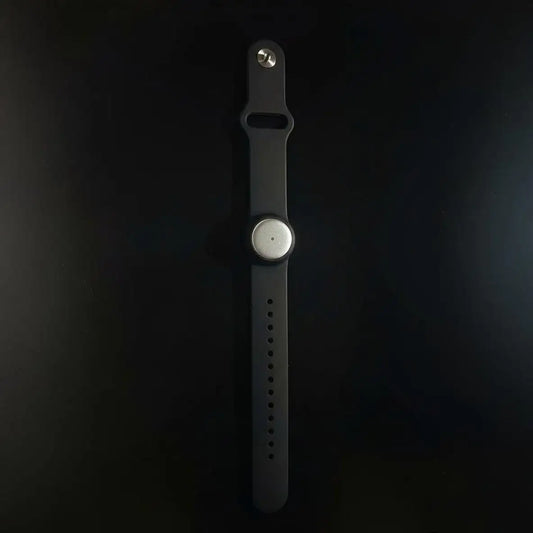
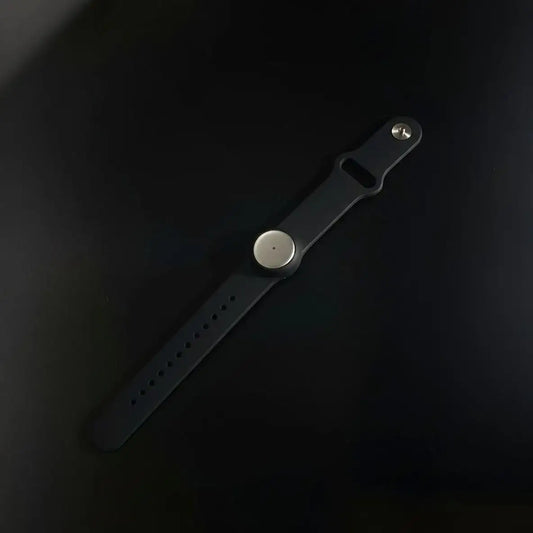
With Omi, you can record all day long, in-person conversations (what you hear and say), workshops, hallway decisions, calls, and yes, online meetings too. Wear it on your neck or wrist, tuck it under your shirt, then get summaries, tasks, memories, quick sharing, and reusable prompt templates that match your workflow.
If your priority is local privacy, we’ll also cover an ai note taker that runs locally and a Self-hosted AI note taker blueprint, so you can go cloud-free when you need to.

Why people are done with meeting bots
Let’s be honest, the bot joins and the meeting energy changes. Clients ask “who is this?”, internal teams get weirdly formal, and IT starts asking questions you don’t want to answer mid-quarter.
Bot-free note taking is the way out: capture from your device or wearable, keep the participant list clean, and still walk away with structured outputs you can actually use.
- Cleaner optics: nothing extra in the attendee list, so calls feel normal again.
- Fewer blockers: less calendar permission drama, fewer “approved vendor” roadblocks.
- Works across platforms: Meet today, Zoom tomorrow, hallway convo after, same system.
- More than notes: tasks, decisions, follow-ups, and searchable memory, not just a transcript dump.
If you’re exploring what “bot-free” can look like for different roles, start with our use cases hub and follow the path that matches your day-to-day.
Best for
This is for people who need meeting notes without turning every call into a compliance event. The bot-free approach is especially useful when your “meetings” include real life.
- Executives: quick decisions, crisp action items, and searchable context that doesn’t disappear after the call. See executives.
- Sales teams: customer calls, objections, next steps, and follow-ups that actually get done. See sales.
- Marketing: interviews, creative reviews, content planning, and insight capture that stays searchable. See marketing.
- IT and technical teams: incident calls, planning, and stakeholder syncs without losing details. See it.
- Project managers: standups, sprint ceremonies, stakeholder meetings, and clear decision trails. See project managers.
- Students: lectures, study groups, office hours, and turning audio into study kits. See students.
A simple test: if the “meeting” could happen in a hallway, in a car, or on a call, you want an invisible capture layer, not a bot invite.
What “doesn’t join meetings” means in practice
There are a few ways to be bot-free. Some are truly invisible, others are “no extra attendee” because the platform itself is doing the notes. Here’s the map.
| Bot-free approach | How it captures | Where it shines | Common gotcha |
|---|---|---|---|
| Wearable + desktop/web capture | Records from your device or wearable, not the meeting room | In-person + online, mixed platforms, full day context | Needs a habit (wear it, charge it, be transparent) |
| Desktop system-audio capture | Listens to mic + speaker audio on your computer | Client calls, “no bot” culture, any meeting app | Audio routing and permissions can be finicky |
| Browser extension capture | Reads captions/transcripts in your meeting tab | Fast setup, low friction for individuals | Depends on captions and browser context |
| Native platform notes | Meet/Zoom/Teams generates notes inside the platform | Enterprise governance, predictable admin controls | Platform locked, messy in cross-platform worlds |
| Local-first / offline | Transcribes on-device (local Whisper or OS models) | High privacy, offline environments | May trade convenience and integrations for control |
Bot-free does not mean consent-free. Invisible capture should still be obvious in behavior, clear in policy, and easy to pause.
How we do bot-free note taking with Omi
We built Omi around a simple promise: you should be able to capture and summarize anything, not just scheduled Zoom calls. That’s why we combine wearable capture, desktop/web capture, structured outputs, and automation hooks in one system.
If you already have a meeting notes workflow you like, you can keep it. Omi plugs in, then upgrades it with continuity, search, and action.
Step 1: Capture without joining
Pick the capture mode that matches the moment.
- In-person: wear Omi (neck, wrist, under shirt) and let it quietly do the remembering.
- Online meetings: use the Mac desktop app or web capture, so Meet/Zoom/Teams stays untouched.
- Hybrid days: capture both, so your context doesn’t fragment into “life” and “calendar”.
The goal is not “record more”. It’s “lose less”.
Step 2: Generate structured outputs, not walls of text
Right after the conversation, we turn raw audio into usable artifacts:
- Meeting summary (what actually happened)
- Decisions (with the why)
- Tasks (with owners and deadlines)
- Memories (so you can retrieve context later)
Step 3: Ask better questions against your own context
This is where it gets fun. Instead of asking a generic AI to “summarize”, you ask against the real conversation:
- “What were the real objections, and what evidence did they use?”
- “What did we agree to, and what is still undecided?”
- “Turn this into a short update I can paste to the team.”
- “What should I follow up on in 48 hours?”
That’s the difference between notes and momentum.
Step 4: Make it searchable like a second brain
Weeks later, you shouldn’t be scrolling through transcripts. You should be searching like: “what did we decide about pricing in the QBR?”
This is why we treat conversations as a memory layer, not as disposable meeting artifacts.
Step 5: Add live sync and “Hey Omi” voice commands
When you want the note taker to do more than write, live sync is the bridge. You can keep actions short and safe while you’re still talking.
- Check: “Hey Omi, what are the open tasks from this call?”
- Add: “Hey Omi, add ‘send proposal by Friday’ and assign it to me.”
- Update: “Hey Omi, update the decision: ship Monday, no scope changes.”
- Share: “Hey Omi, share the summary with the team.”
- Delete: “Hey Omi, delete this recording.” (with confirmations when it matters)
This is how an invisible note taker becomes a control layer, not just a recorder.
Step 6: Automate the boring parts
When you’re ready, you can send meeting outputs into your existing systems. Our favorite “starter path” is automations, because it scales without heavy engineering.
- Connect Omi to your tools with automations via n8n, Zapier, and Make.
- Use structured summaries so workflows don’t break on messy text.
- Keep risky actions behind confirmations and approvals.
Bot-free alternatives (and what they’re actually good at)
Sometimes you need a narrower tool for a narrow job. Totally fair. Here’s the shortlist of bot-free options people compare, plus the honest trade-offs.
Granola
Granola captures your computer’s microphone and system audio, so it doesn’t join meetings as a participant. A notable detail: their docs describe a “transcription-only” approach where audio is used for transcription but not stored as meeting recordings, which some people love for privacy and some people hate for quote verification.
Krisp
Krisp sits at the audio layer, so it can record meetings directly from the Krisp app without bots joining, depending on the mode you choose. It’s especially useful if you already use Krisp for noise cancellation and want capture plus summaries without changing your meeting setup.
Bluedot
Bluedot positions itself as an AI note taker that doesn’t join meetings, largely through extension and background capture, but it also offers bot-based capture modes in some scenarios. If you’re evaluating it, be clear about which capture mode you’re choosing, because that’s the difference between “invisible” and “bot”.
Jamie
Jamie is often discussed as a bot-free meeting assistant that works across platforms by capturing from the device side. It’s a straightforward “get notes fast” approach if you mainly care about post-meeting summaries and action items.
Tactiq
Tactiq is extension-driven. Their help docs explicitly say they don’t require a bot to join the room, because they integrate directly with meeting platforms to provide transcription. This can be a fast way to go bot-free, as long as your workflow fits inside the browser capture model.
Native options (Meet, Zoom, Teams)
If you’re in a big org, platform-native notes can be the lowest-friction “no extra attendee” path. Google Meet offers “Take notes for me” with Gemini. Zoom has Meeting Summary with AI Companion. Teams offers Copilot in meetings and recap experiences. The trade-off is you’re platform-locked, which gets messy if your meetings live everywhere.
Meet + Gemini note taking • Zoom AI Companion summary • Teams Copilot in meetings
Ai note taker that runs locally (and when it matters)
If your biggest concern is privacy, policy, or just “I don’t want uploads”, you want local transcription. That means the audio is processed on your machine using local speech models.
Hyprnote is a good example of this category, describing local Whisper model transcription that works offline with no cloud uploads. Another option is fully offline transcription apps that run on-device, then you summarize locally (or keep it as searchable text).
- Best for sensitive environments: compliance-heavy teams, confidential work, or offline settings.
- Less vendor risk: fewer third-party processors in the loop.
- Clearer data boundaries: what stays local, stays local.
If you go local, do one thing: test quality on your real audio. Local can be excellent, but microphones, accents, and room noise make a big difference.
Self-hosted AI note taker: a practical blueprint
Want maximum control? Build your own pipeline. The simplest version is: capture audio, transcribe locally, summarize locally, store in your knowledge base.
Self-hosted AI note taker (minimal stack)

1) Capture (no bots)
- Online meetings: record system audio locally
- In-person: record from a wearable or phone mic

2) Transcribe locally
- Use Whisper.cpp (or another local Whisper runtime)

3) Summarize locally
- Run a local LLM runtime (example: Ollama / LocalAI)

4) Store + retrieve
- Save notes in your preferred knowledge base
- Add tags: client, project, decision, owner, deadline
- Optional: local embeddings for semantic search
If this sounds like too much plumbing, that’s normal. Most people start with bot-free capture first, then add local or self-hosted components only where they’re truly needed.
From notes to action, where most tools stop too early
Meeting notes are not the win. The win is what happens after the meeting. If you want this to work long-term, connect notes to repeatable workflows.
Start with the simple workflow that keeps everyone aligned: ai meeting summary. Then, if you need to be explicit about policy and disclosure, build your baseline with recording consent and governance.
Once your summaries are structured, automation becomes boring in the best way. The same fields, the same triggers, the same outcomes, every time.
What to say when you’re recording
Bot-free note taking is easiest when people trust you. Keep disclosure simple. Don’t over-explain. Just be clear.
Simple consent line (fast, human, clear)

"Quick note: I’m recording this so I can generate accurate notes and action items.
If you’d prefer I don’t, tell me and I’ll turn it off."
Bot-free meeting notes template (copy, paste, reuse)
This template is built for speed and retrieval. It forces the parts you’ll actually search later.
Title:
Date:
Participants:
Context (1 sentence):

Summary (5 bullets max):
-

Decisions:
- Decision:
- Why:
- Trade-offs:

Action items:
- Task:
- Owner:
- Due date:
- Status:

Risks / blockers:
-

Follow-up questions:
-

Shareable recap (for Slack/email):
-
Further reading (two good external pieces)
FAQ
What is an invisible ai note taker?
An INVISIBLE AI NOTE TAKER captures from your device or wearable, not as a meeting participant. It keeps the attendee list clean while still producing transcripts, summaries, tasks, and searchable context.
Is the best ai notetaker that doesn't join meetings always “offline”?
No. Bot-free is about how capture happens (no participant bot). Offline is about where processing happens (local vs cloud). You can be bot-free and cloud-based, or bot-free and fully local.
What’s the fastest way to go from meeting to tasks?
Use a structured meeting summary template (decisions + action items + owners), then connect that output to your workflow. If you want a practical baseline, use our ai meeting summary workflow.
How do I stay compliant and still be bot-free?
Be explicit about recording, store data securely, control access, and set retention rules. Start with our recording consent and governance workflow so teams don’t improvise policy meeting by meeting.
Quick takeaway
- Bot-free works best when capture happens on your side, wearable, desktop, or browser, not as an extra attendee.
- If your day includes real life conversations, pick a system that captures in-person and online meetings together.
- If privacy is the core constraint, choose an ai note taker that runs locally or a Self-hosted AI note taker pipeline.
- Don’t stop at notes, turn summaries into tasks, decisions, and automations you can trust.
- Keep consent simple, clear disclosure beats awkward surprises every time.

 www.omi.me