From war room to prevention in one pass
This workflow takes a chaotic incident response and turns it into a postmortem that actually reduces repeat incidents: capture the war room → lock a trusted timeline → document impact → do root cause analysis (RCA) → generate prevention-focused action items with owners and due dates → track in Jira/Linear → verify and close the loop.
It works for outages, degradations, escalations, and production incidents. The key moment is right after recovery, while details are still true. Omi helps by creating a baseline automatically: you choose a postmortem template, and Omi can apply that structure and extract an initial set of tasks and to-dos. Then you go deeper by opening Omi chat and asking targeted questions against the exact incident memory.
The goal is simple: stop writing postmortems as stories. Produce auditable timelines, evidence-based RCA, and action items that ship.
What we mean by “incident” in this workflow
In this article, an incident is any production event that forces coordination, creates customer impact (or meaningful risk), and requires recovery work. That includes the obvious outages, and it also includes the slow degradations that quietly burn SLOs and reputation.
- Full outage: the service is down, or a critical path is broken. Examples: “checkout is down,” “payments failing,” “auth is unavailable.”
- Partial outage: specific regions, tiers, features, or cohorts are impacted. Examples: “EU region failing,” “only enterprise tenants impacted.”
- Degradation: latency spikes, error rates rise, saturation builds. Examples: “latency doubled after deploy,” “queue backlog rising,” “DB connection pool exhausted.”
- Change-triggered incident: deploy, rollback, config change, dependency issue. Examples: “rolled back release,” “feature flag caused cascade,” “third-party timeout.”
If you ever said “we need an incident commander,” “get everyone in a war room,” or “we’re escalating to P0,” this workflow applies.
Who this is built for when production is on fire
This workflow is built for roles that live inside incident reality: coordinating fixes, communicating impact, and making sure the same failure mode does not return. It’s especially useful for teams in IT and operations, and for leaders who need accurate updates without noise.
- Site reliability engineering: needs a trusted timeline, contributing-factor clarity, and prevention actions that reduce repeat incidents.
- Platform engineering / DevOps: needs “what changed” captured reliably, plus verification steps that prove the fix actually worked.
- Production engineering: needs deploy correlation, rollback decisions, and evidence links preserved so you can learn instead of guessing.
- IT operations: needs coordination artifacts, shift handoff clarity, and consistent closure criteria.
- Incident commander / on-call lead: needs a decision log, clean ownership, and handoffs that don’t lose facts.
- Engineering managers: need postmortems that become shipped work, not docs that rot in a folder.
- Operations leadership: needs impact and risk summarized in plain language, not raw logs.
- Executives: need short, accurate status, business impact, current risk, and the next checkpoint. If you regularly write exec updates, this aligns with how executives consume incident information.
The best incident workflow produces one source of truth and multiple audience-ready outputs, without contradictions.
The post-incident window where details are still true
During an incident, the team’s job is mitigation. Not documentation. Trying to write a perfect postmortem while production is burning is how facts get missed and attention gets split. So the first rule is simple: capture now, structure later.
- Online war room: use Omi’s desktop/web app to capture Zoom/Meet/Teams bridges and war room calls. This keeps the incident conversation searchable later.
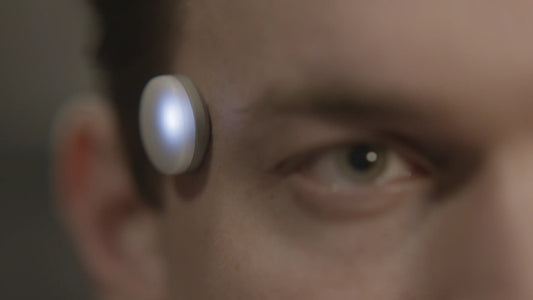
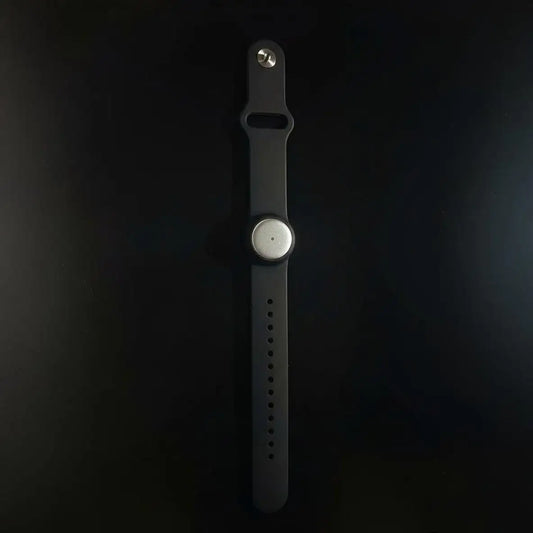
- In-person war room: wear Omi as a necklace or wristband for hands-free capture, or place it on the table for a formal incident room.
- Quick hallway escalation: still counts. Capture it. Those two-minute decisions often become the root of later confusion.
- Shift handoff: capture the handoff. Memory drift happens fastest here, and it’s where timelines get rewritten unintentionally.
Omi’s baseline automation matters most in the post-incident window: you choose an incident/postmortem template, and Omi can apply that structure automatically and extract initial tasks and to-dos from the war room conversation. Then you open Omi chat and interrogate the incident with targeted prompts like:
- “Separate confirmed facts from hypotheses.”
- “Generate a minute-by-minute timeline with evidence placeholders.”
- “Extract every decision made, who made it, and why.”
- “List top contributing factors mentioned.”
- “Draft the executive update and the support update, consistent with impact.”
Why most postmortems fail before they even start
Postmortems fail early for boring reasons. Not lack of intelligence. It’s mostly information decay and inconsistent structure. Incidents are fast, emotional, and distributed across tools. If you don’t capture and normalize quickly, you end up writing a story, not a record.
- Timeline becomes a memory argument: especially after shift handoff, the “when” gets fuzzy and the “why” gets rewritten.
- Evidence scatters across tools: Slack threads, tickets, dashboards, log queries, PRs, screenshots, deploy IDs.
- RCA collapses into the last failure: “a bug happened” instead of trigger, contributing factors, and gaps.
- Action items get vague and rot: “improve monitoring,” no owner, no due date, no verification plan.
- Comms drift: executive updates don’t match support messaging, and trust erodes.
- Loop doesn’t close: the same incident class repeats because the postmortem never became shipped prevention work.
A good postmortem is not a narrative. It’s a timeline, evidence, causal chain, and prevention actions that actually get done.
Clean artifacts, consistent decisions, fewer repeats
Omi is most useful here when you treat it as an incident memory system: capture the war room, then turn that capture into structured artifacts your team can trust. The win is not “more documentation.” The win is faster learning and fewer repeat incidents.
- A timeline people trust: timestamped, fact vs hypothesis separated, with evidence links.
- A consistent postmortem structure: same sections every time, so reviews and follow-ups get faster.
- Better RCA quality: because you can search and ask “what did we try first?” and “what changed right before the incident?”
- Action items that ship: structured tasks with owners, due dates, dependencies, and verification plans.
- Faster comms artifacts: exec brief, engineering postmortem, and support brief generated from one source of truth.
- Less writing, more fixing: postmortem creation stops being a 2–3 hour tax after every incident.
This is the difference between “we wrote a postmortem” and “we reduced recurrence.”
The operational playbook
This playbook assumes two realities: (1) during the incident, your job is mitigation, and (2) right after recovery, your job is converting chaos into durable artifacts. Omi helps you do both: capture first, structure second, refine through chat.
Step 1: Capture the war room and every handoff that matters
Capture is the foundation. If the incident conversation is not captured, your postmortem becomes reconstruction.
- Capture the main incident bridge (Zoom/Meet/Teams, Slack huddle, phone bridge).
- Capture shift handoffs between on-call rotations.
- Capture the “hotwash” (short debrief right after recovery), even if the full postmortem happens later.
Omi’s advantage is that this becomes searchable memory, not a pile of scattered notes.
Step 2: Create a facts-first incident record before memory drifts
Before you write RCA, you lock facts. This prevents later debates from rewriting history.
- What users saw (symptoms).
- What systems were impacted.
- When detection happened and how it was detected.
- What changed right before the incident (deploy/config/dependency).
- What mitigations were attempted, in order.
- What actually worked (and what didn’t).
Omi can apply your incident template automatically to create this facts-first section, then you can ask chat: “List the mitigation attempts in order and label what worked.”
Step 3: Build a timeline you can audit, not a story you can debate
A timeline is not a paragraph. It is a table you can audit.
- Use anchors: detection, declaration, triage start, each mitigation attempt, rollback/fix deploy, recovery confirmed, monitoring window complete.
- Separate facts from hypotheses.
- Require an evidence link for major events: dashboard snapshot, log query, PR/commit, deploy ID, status page update.
Prompt recipe you can reuse in Omi chat: “Generate timeline with timestamps. Add columns: event, owner role, evidence, fact/hypothesis.”
Step 4: Write impact like an operator: technical, customer, business
Impact is not “what broke.” Impact is “who it hurt, how long, and how severe.”
- Technical: error rate/latency, components affected, regions, duration.
- Customer: percent of users impacted, symptoms, which segments were impacted.
- Business: conversions/revenue, SLA/SLO breach, credits risk (if known or estimable).
Prompt recipe: “Summarize impact in 3 layers: technical, customer, business. Keep it factual.”
Step 5: Root cause that goes past “the last thing that broke”
If your root cause is “a deploy caused it,” you’re still at the surface. The prevention gold is in the gaps.
- Triggering event: what started the chain.
- Contributing factors: what amplified or allowed it.
- Gaps: detection gap, mitigation gap, prevention gap.
- Pick one method and standardize: 5 whys chain, causal tree, or contributing factors table mapped to actions.
Prompt recipe: “Write RCA with trigger, contributing factors, detection/mitigation/prevention gaps. Flag anything still unconfirmed.”
Step 6: Turn lessons into prevention work that ships
“Lessons learned” are not deliverables. Prevention work is.
- Write actions like shipping work: specific, owned, dated, verifiable.
- Use categories so postmortems are comparable over time: prevention, detection, mitigation, documentation/comms.
- Include a verification plan for every major action: “How will we know this worked?”
Required action item format
| Field | Why it matters |
|---|---|
| Action item | Must be concrete enough to implement. |
| Owner | Without an owner, it will rot. |
| Due date | Without a date, it will slip forever. |
| Priority | Forces trade-offs and focus. |
| Dependencies | Prevents hidden blockers. |
| Category | Prevention / detection / mitigation / documentation-comms. |
| Verification plan | Defines what “fixed” means. |
Omi can auto-extract tasks from the war room conversation. Then you refine them in chat: “Rewrite tasks to be concrete, add owner placeholders, add verification plan, flag vague tasks.”
Step 7: Decision log: what we chose, when, and why
Decisions made during incidents often get lost, and later teams repeat debates because the rationale isn’t documented.
- Rollback vs hotfix
- Disable feature flag
- Throttle traffic
- Revert config
- Choose mitigation A over B due to risk
Omi chat prompt recipe: “Extract decisions with timestamps and rationale.”
Step 8: One source of truth, three audience-ready outputs
One incident should produce three artifacts, all consistent, all from the same source of truth.
- Executive brief: what happened, impact, current risk, next checkpoint, owner. Keep it short.
- Engineering postmortem: timeline, RCA, action items, evidence pack.
- Support/customer ops brief: customer impact, mitigation status, approved wording, next update timing.
Omi chat can draft each version from the same incident record, reducing contradictions.
Step 9: Track, verify, close: how incidents stop repeating
If you do not define “done,” the incident never truly ends. Closure is not writing the postmortem. Closure is verification.
- Link each action item to Jira/Linear tickets.
- Define closure criteria: top prevention actions shipped, verification complete, runbook updated, follow-up review done.
- Add a follow-up review date: “Did these actions actually prevent recurrence?”
- Automate where it makes sense using Omi’s app marketplace:
https://h.omi.me/apps - Build custom integrations via docs:
https://docs.omi.me/ - You choose what to install and set up. Omi enables it, but it’s not magic autopilot.
What you should have when the postmortem is done
A finished postmortem is not a PDF. It’s a package of artifacts that drive prevention work and keep stakeholders aligned. This is the deliverables checklist.
- Timestamped timeline with evidence links and fact vs hypothesis.
- Impact summary (technical + customer + business).
- RCA (trigger + contributing factors + gaps).
- Prevention-focused action items (owner + due date + verification).
- Decision log (what we chose, when, why).
- Evidence pack (dashboards, PRs, deploy IDs, log queries).
- Executive update draft (short and consistent).
- Support/customer ops update draft (customer-safe and consistent).
- Close-out checklist (definition of done + follow-up review date).
Copy-paste postmortem template teams actually use
Use this template as your default. It’s structured for auditability, speed, and prevention work. If you set it as your chosen template in Omi, Omi can generate a baseline automatically after each incident, and you refine it via chat.
Incident title:
Severity:
Date/time window:
Postmortem owner:
Follow-up review date:

Systems affected:
Customer impact summary:
Business impact (if known):

Detection:
- How we noticed:
- Alerting gaps:

Timeline (timestamped):
| Time (UTC/local) | Event | Owner/Role | Evidence link | Fact/Hypothesis | Customer visible? |
|------------------|-------|------------|---------------|-----------------|-------------------|

Root cause analysis:
- Triggering event:
- Contributing factors:
- Detection gap:
- Mitigation gap:
- Prevention gap:
- What remains unconfirmed:

Decision log:
| Time | Decision | Who | Rationale | Alternatives considered |
|------|----------|-----|-----------|-------------------------|

What went well:
-

What didn’t:
-

Action items (prevention-focused):
| Action item | Owner | Due date | Priority | Dependencies | Category | Verification plan |
|------------|-------|----------|----------|--------------|----------|-------------------|

Evidence pack:
- Dashboards:
- Log queries:
- PRs/commits:
- Deploy IDs:
- Tickets:
- Status page updates:

Close-out criteria:
- Top prevention actions shipped
- Verification complete
- Runbook updated
- Follow-up review completed
Timeline template with evidence and fact vs hypothesis
If your timeline is not a table, it will become a story. This format makes timelines auditable and easier to review under pressure.
| Time (UTC/local) | Event | Owner/Role | Evidence link | Fact/Hypothesis | Customer visible? |
|------------------|-------|------------|---------------|-----------------|-------------------|
|                  |       |            |               |                 |                   |
Build an incident memory library, not a pile of docs
The long-term game is institutional memory. Most orgs lose incident knowledge because it lives in scattered docs, Slack threads, or the heads of two senior engineers. The better approach is an incident memory library: searchable incident patterns you can reuse when the same symptom appears again.
- Tag incidents by failure mode: deploy regression, database saturation, dependency timeout, cache stampede, noisy neighbor, misconfigured flag.
- Tag incidents by symptom signature: “5xx spike at edge,” “latency creep,” “queue backlog,” “connection pool exhaustion.”
- Store the evidence pack: links to dashboards, queries, PRs, deploy IDs.
- Store the prevention actions and verification: what actually prevented recurrence.
This is where Omi’s “search + chat over your captured memory” becomes an ops asset. Future on-call can ask:
- “Have we seen this error signature before?”
- “What fixed it last time?”
- “Which action items actually prevented recurrence?”
If you want to connect this library to your own systems, use Omi’s integrations marketplace https://h.omi.me/apps or build custom workflows via https://docs.omi.me/.
Three incidents, three patterns, one workflow
Example A: full outage after deploy
A deploy goes out, checkout starts returning 5xx, and the team opens a war room. The incident commander decides between rollback vs hotfix while customer impact is rising.
- Timeline includes deploy ID, rollback start time, recovery confirmation, and monitoring completion.
- Decision log captures rollback rationale and alternatives considered.
- Action items focus on safer deploys: canary, automated rollback, release gates, and verification checks.
This is a classic scenario for on-call teams in IT and reliability functions.
Example B: slow degradation (latency creep)
Nothing is “down,” but latency creeps up. Error rate is mild. Customers complain before the alert triggers. The real issue is often detection gap plus a capacity or query regression.
- Impact section highlights customer-visible symptoms and duration.
- RCA emphasizes detection gap and why the signal was not caught earlier.
- Action items include SLO alert tuning, dashboards, capacity limits, and regression tests.
Operations leaders often care about this more than full outages because it silently damages trust.
Example C: escalation with partial impact
A subset of customers is impacted (region, tier, or enterprise tenant). The technical fix is one thing. The communication pack is another. If these drift, you lose credibility.
- Support/customer ops brief is generated from the same source as the exec brief.
- Closure criteria includes customer confirmation, not just “engineers said it’s fixed.”
- Verification plan is explicit: metrics, alerts, and follow-up monitoring window.
This is where operations teams shine: closing loops and preventing comms drift.
Executive brief during high-pressure incidents
Leaders need clarity fast. Not a transcript, not a wall of text. When the post-incident window is handled well, you can send a short update with impact, risk, and next checkpoint in minutes.
- One-paragraph “what happened” + impact numbers.
- Current risk assessment (“stable, monitoring,” or “risk remains”).
- Next checkpoint time and owner.
This is exactly how executives consume incident information.
Notice the pattern: baseline structure first, evidence second, prevention work third, closure last. That is what makes the workflow durable.
Postmortem traps that guarantee repeat incidents
- Writing it days later: memory rots, facts become guesses.
- Timeline without timestamps: it becomes a story, not a record.
- Mixing facts and hypotheses: you end up “confirming” assumptions later.
- Calling the last failure “root cause”: you miss the real contributing factors and gaps.
- Actions without owners/dates/verification: they rot quietly.
- Confusing mitigation with prevention: “we rolled back” is not “we fixed the system.”
- Shipping monitoring changes that aren’t measurable: no one knows if it improved detection.
- Publishing transcripts instead of artifacts: nobody reads them, and people disagree anyway.
- No definition of done: the loop never closes, and the incident repeats.
Questions teams ask after the first painful incident
How do I build a timeline during chaos?
Capture the war room, then generate the timeline immediately after recovery. Use timestamped anchors and separate facts from hypotheses. Require evidence links for major events. If you do it days later, you will write fiction.
What belongs in root cause vs contributing factors?
Root cause is the causal chain, not the last failure. The triggering event starts the chain. Contributing factors are conditions that allowed it or amplified it. The gaps (detection, mitigation, prevention) are what produce the best prevention actions.
What does blameless mean operationally?
It means you focus on systems, process, and constraints instead of “who messed up.” Blameless is not “no accountability.” Accountability is owners, dates, verification plans, and closure criteria.
What should I send to executives vs engineers vs support?
Execs need short status, business impact, current risk, and next checkpoint. Engineers need timeline, RCA, actions, evidence. Support needs customer-safe impact language, mitigation status, and the next update time. Generate all three from the same source of truth to prevent contradictions.
How do I ensure action items actually ship?
Use a strict action item format (owner, due date, dependencies, verification plan), link everything to Jira/Linear, and define close-out criteria. Schedule a follow-up review date. “Done” is verification, not documentation.
How do I prevent the same incident class from repeating?
Treat postmortems as a prevention system: consistent templates, tagged incident memory, verification plans, and a follow-up review. Over time, build a searchable incident library so on-call can reuse what worked last time.
How do integrations and automation fit in?
Use Omi’s apps marketplace for ready-made automations at https://h.omi.me/apps. If you need custom workflows, build via https://docs.omi.me/. You choose what to install and configure, Omi enables it.
If you do nothing else, do this right after recovery
- Capture the war room and the handoff.
- Lock facts while they’re still true.
- Build a timestamped timeline with evidence and fact vs hypothesis.
- Write impact in technical, customer, and business layers.
- Do RCA with trigger, contributing factors, and gaps.
- Ship prevention work with owners, dates, and verification plans.
- Track and close in Jira/Linear with clear closure criteria.

 www.omi.me