This workflow turns interviews into a consistent hiring decision you can explain later. You capture the interview, let Omi apply your interview template, then produce a scorecard, a debrief doc, and a decision log that keeps your team aligned. It works for screening interviews, hiring manager interviews, panel interviews, and debrief meetings.
The best version of ai for hiring is not “AI picking candidates.” It is ai and recruitment that reduces human error: missed details, inconsistent notes, and debriefs that turn into opinions. This is where artificial intelligence in recruitment becomes practical: structured notes first, deeper analysis second, and a clean decision trail at the end.
If you want artificial intelligence and recruitment to actually help, use it to protect attention during the interview, preserve proof points, and make the final decision easier to review.
Why interview notes and scorecards matter
Hiring decisions fail in predictable ways. People forget details. The last candidate interviewed feels “fresh.” One interviewer is persuasive and everyone follows. Or the opposite: someone drops a vague line like “not senior enough,” and the team moves on without evidence.
Interview notes are your written memory. Scorecards are the structure that turns that memory into fair comparison. When you do this well, you reduce recency bias, reduce “vibes” debriefs, and make it much easier to justify why you advanced or rejected someone. That is the real value of artificial intelligence in recruitment.
- Consistency across panel members: the same rubric across interviews means you compare candidates against the role, not against each other’s personalities. This is one of the most useful outcomes of ai and recruitment.
- Evidence beats adjectives: “They led a migration with X constraints and Y impact” is usable. “Strong communicator” is not, unless it is tied to an example. This is where ai for hiring should focus: proof points.
- Decision trails: a decision log lets you revisit rationale later, especially when leadership asks, “why this person?” or “why not the other one?” That is a practical benefit of artificial intelligence and recruitment.
- Faster debriefs: the less time you spend reconstructing what happened, the more time you spend deciding. That is the point of artificial intelligence in recruitment.
One more thing that matters: candidate experience. Interviewers who are not busy typing tend to listen better, ask better follow-ups, and make the conversation feel human. Good ai and recruitment should protect the conversation, not interrupt it.
Best for
This workflow is designed for teams that interview often, use panels, or need hiring decisions to be reviewable later. It is a natural fit for human resources teams and leaders who want decision clarity without bureaucracy.
- Recruiters and talent acquisition specialists: consistent notes, faster handoffs, and fewer “what did they say again?” loops.
- Hiring managers: a clean comparison across candidates using the same categories and evidence.
- Human resources business partners: stronger process quality and cleaner decision trails across departments.
- People operations: repeatable workflows that scale as hiring volume grows.
- Interview panel members: less note-taking pressure and a clearer way to capture signals and concerns.
- Department heads: faster decision reviews with a clear summary of risks and proof points.
- Executives: quick, high-confidence decision reviews, especially for finalists or exception approvals. This is common for executives who step into final rounds.
A simple test for ai for hiring: does it produce a scorecard and decision log you would be comfortable reading six months later.
What counts as an interview in this workflow
This workflow covers the entire hiring loop, not just one interview type. It applies to:
- Screening interviews: recruiter screen, initial fit, role basics.
- Hiring manager interviews: scope, expectations, role depth.
- Panel interviews: multiple interviewers, separate evaluations, shared debrief.
- Technical interviews: system design, role-specific skills, reasoning under constraints.
- Behavioral and values interviews: decision making, collaboration, conflict, ownership.
- Reference calls: patterns, proof, and risk checks.
- Debrief meetings: alignment, decision, and next steps.
The moment you open Omi
The trigger is not “the interview happened.” The trigger is the moment right after the interview, while the context is still warm. That is when you want to lock in evidence before memory fades and before the debrief becomes a debate.
Omi can automatically apply the interview summary template you choose and generate structured sections that map to a scorecard. Then you open Omi chat and ask deeper questions against that exact interview to extract proof points, clarify concerns, and design the next round. That is a grounded way to do artificial intelligence and recruitment without pretending the model is the hiring manager.
If you want artificial intelligence in recruitment to actually help, do it here: right after the interview, while you can still remember the nuance. This is where ai and recruitment supports human judgment instead of replacing it.
The problem without a structured workflow
Without structure, interviews generate inconsistent notes, weak evidence, and slow decisions. Panel debriefs turn into politics or persuasion. Most teams are not trying to be unfair, they are just trying to remember too much with too little structure.
- Split attention: interviewers stop listening to write notes, then miss the nuance that matters.
- Inconsistent rubrics: each interviewer captures different categories, so comparisons are unreliable.
- Lost proof points: candidate examples become “seemed strong” instead of “did X with Y impact.”
- Debriefs become vibes: whoever interviews last or speaks best can dominate the outcome.
- Weak decision trails: weeks later nobody remembers why a candidate was rejected or advanced.
- Next steps slip: references, next round scheduling, and offer steps get delayed because no one owns the checklist.
This is exactly why teams look at ai and recruitment. The goal is not “more AI.” The goal is consistent notes, faster debriefs, and decisions that can be reviewed. That is the real promise of ai for hiring.
What you gain with Omi
The biggest shift is simple: interviewers can focus on the candidate conversation instead of trying to write everything down. Then the team gets consistent artifacts for comparison and a decision trail that holds up later. That is what ai for hiring should deliver.
- Consistent scorecards per candidate: structured categories that make comparisons fair across interviewers.
- Clear signals and risks: strengths and concerns anchored to evidence, not impressions.
- Proof points preserved: candidate examples stay searchable and reusable in debriefs.
- Faster debriefs: decisions move faster when evidence is already organized.
- Decision logs that hold up later: easy to review, easy to defend, easy to learn from.
- Cleaner next steps: references, next round focus, and offer steps become an owned checklist.
- Better handoffs: recruiter, hiring manager, and executive review stay aligned on what matters.
This is where artificial intelligence and recruitment becomes real value: a structured process that scales. In practice, it is artificial intelligence in recruitment used as documentation and retrieval, not as a decision maker.
What a great candidate evaluation should capture
A good evaluation is not longer. It is more specific. It should make the candidate easy to compare against role requirements and against other candidates. It should also make it obvious what you still do not know.
| Category | What to capture | How to write it |
|---|---|---|
| Role requirements | Core requirements and deal-breakers for this role | Write as checkboxes, not narrative |
| Skills signals | Role-specific skill depth and constraints | Example + context + impact |
| Behavioral signals | Ownership, collaboration, decision making | Evidence-based stories, not adjectives |
| Communication | Clarity, structure, ability to explain trade-offs | Quote-like moments help |
| Concerns and risk flags | Uncertainty, gaps, misalignment | Tie each concern to a moment |
| Proof points | Examples, numbers, outcomes | “Did X, resulting in Y” |
| Open questions | What still needs validation | Turn into next-round prompts |
| Recommendation | Advance, reject, hold, with confidence | Recommendation + rationale |
| Next steps | References, next round, offer steps | Owner + date |
Workflow steps
This is the repeatable loop. The baseline is automatic structure. The refinement comes from asking better questions in chat. It is a practical, low-drama way to apply ai and recruitment and get real value from artificial intelligence in recruitment.
Step 1: Capture the interview
Capture should be low friction so it happens every time. Use the approach that fits the interview format.
- Online interviews: use the desktop or web app to capture the interview.
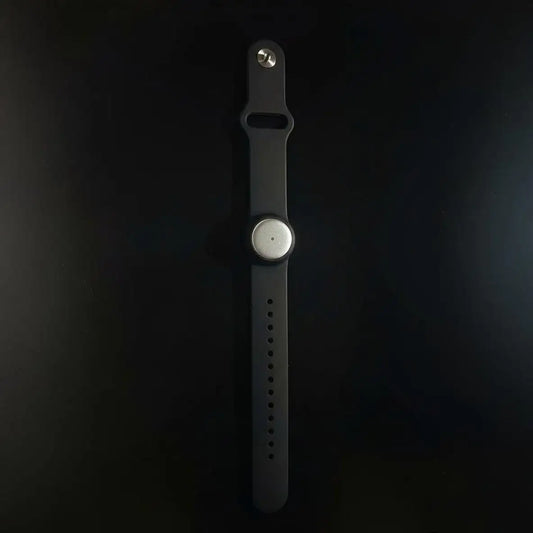
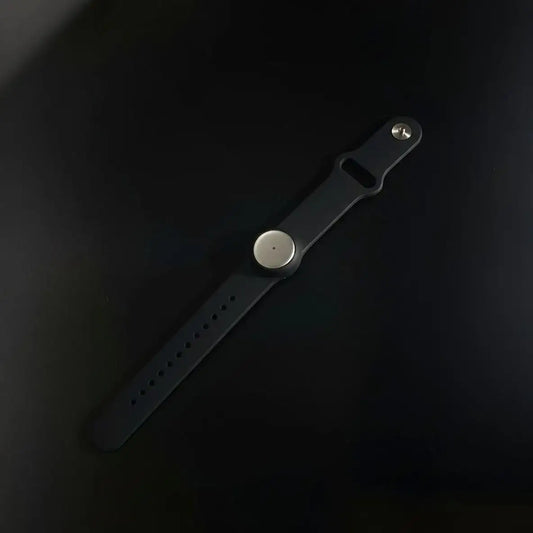
- In-person interviews: wear Omi as a necklace or wristband, or place it on the table for a formal setting.
- Panel debriefs: capture the debrief meeting too, since that is where decisions can drift.
- Consent and policy: follow local laws, company policy, and candidate expectations.
You are not capturing for the sake of capturing. You are capturing so the team can evaluate with evidence and consistency. That is the healthy version of ai for hiring.
Step 2: Auto-apply your candidate evaluation template
Omi can automatically apply the interview summary template you choose and produce structured sections that map to a scorecard. This is where ai and recruitment saves time and improves consistency.
- Skills signals
- Behavioral signals
- Concerns and risks
- Proof points
- Open questions
- Next steps and tasks
Step 3: Extract proof points from the candidate’s examples
This is where most teams lose quality. The difference between “seems good” and “we should hire” is evidence. Use Omi chat to pull the candidate’s examples and format them as proof points.
- What did they do?
- In what context?
- What constraints did they face?
- What was the impact?
- What would they do differently?
This is a concrete way to apply artificial intelligence in recruitment without lowering your hiring bar. It is also how ai for hiring becomes evidence-first.
Step 4: Build the candidate scorecard
Keep categories consistent across interviewers. Keep justification short, but anchored to proof points. If someone has a strong opinion, they should be able to point to evidence.
- Scores by category
- Strong signals
- Risks and concerns
- Open questions to validate
- Recommendation and confidence
Step 5: Create the debrief doc and decision log
A debrief doc is your shared view. A decision log is your durable record. Together, they prevent future “why did we do this?” confusion.
- Debrief doc with evidence highlights and disagreements
- Decision log with rationale and what would change the decision
- Decision owner and next step owner
This is one of the most defensible uses of artificial intelligence and recruitment: it creates a consistent decision trail while keeping humans accountable.
Step 6: Generate follow-up tasks
Hiring stalls when next steps are unclear. Turn the output into an owned checklist.
- Reference checks with ownership
- Next round scheduling with a clear focus area
- Candidate communication steps with timeline
- Offer steps with approvals and dates
A strong ai and recruitment workflow is not just notes. It is notes that turn into tasks.
Step 7: Sync and automate
If you want your hiring workflow connected to other systems, you can use Omi’s apps marketplace or build your own workflows. This is where ai for hiring becomes a full system, not a standalone note tool.
- Ready-made integrations and automations:
https://h.omi.me/apps - Build custom workflows and integrations:
https://docs.omi.me/ - You choose what to install and set up. Omi enables it, but it’s not magic autopilot.
Deliverables
These outputs are designed to be easy to review and hard to misinterpret. They make interviews comparable and decisions explainable.
| Deliverable | What it includes | Why it matters |
|---|---|---|
| Scorecard per candidate | Consistent categories, scores, evidence-based justification | Makes comparisons fair across interviewers |
| Strong signals and risks | Strengths and concerns, tied to proof points | Speeds up debrief and reduces “vibes” decisions |
| Proof points list | Candidate examples, context, constraints, impact | Preserves what matters most |
| Debrief doc | Panel summary, disagreements, open questions, alignment | Creates a shared view of the candidate |
| Decision log | Advance, reject, hold, rationale, what would change it | Creates a durable hiring record |
| Next steps checklist | References, next round, offer steps, owners and dates | Prevents hiring stalls |
Scorecard template
Use this template to keep evaluation consistent across interviewers. It is built for comparability and evidence. This is how artificial intelligence in recruitment stays grounded: categories and proof points.
Candidate:
Role:
Interview type:
Date/time:
Interviewers:

Role requirements checklist:
-

Skills signals:
- Evidence:
- Score (1-5):

Behavioral signals:
- Evidence:
- Score (1-5):

Communication:
- Evidence:
- Score (1-5):

Strong signals:
-

Risks and concerns:
- Concern:
- Evidence:
- Mitigation or next-round test:

Proof points:
- Example:
- Context:
- Constraints:
- Impact:

Open questions for next round:
-

Recommendation:
- Advance / Reject / Hold
Confidence:
- Low / Medium / High

Next steps:
-
Debrief and decision log template
This template keeps debriefs short and decisions reviewable. It forces clarity on what is evidence versus what is preference. That is one of the biggest advantages of artificial intelligence and recruitment.
Candidate:
Role:
Debrief date/time:
Panel members:

One-sentence candidate summary:
-

Evidence highlights:
- Proof point 1
- Proof point 2
- Proof point 3

Strong signals:
-

Risks and concerns:
-

Disagreements and why:
-

Open questions:
-

Decision:
- Advance / Reject / Hold

Decision rationale:
-

What would change the decision:
-

Next steps:
- References:
- Next round focus:
- Candidate communication:
- Offer steps:
Examples
Screening interview to next round
A recruiter runs a screen and needs to hand off to the hiring manager quickly. Omi applies the template automatically, creating structured notes and a first-pass scorecard. Then the recruiter uses chat to extract proof points and open questions. The hiring manager receives a scorecard-style recap, not a narrative.
This is a common workflow for human resources teams trying to move fast without losing quality. It is also a practical example of ai and recruitment improving consistency.
Panel interview to debrief doc
A candidate completes a panel. Without structure, the debrief becomes “who felt strongest.” With this workflow, you capture the panel interview and the debrief meeting, then produce a debrief doc and a decision log with evidence highlights and risks. Disagreements become explicit, and open questions become the next-round plan.
This is where artificial intelligence and recruitment pays off because evidence stays organized and reviewable.
Finalist to references and offer steps
A finalist interview includes compensation expectations, timeline constraints, and a few risk flags to validate. Omi produces structured notes and tasks, then you use chat to generate a reference checklist and a decision log. The team moves into offer steps with less confusion and fewer missing pieces.
This is a clean fit for ai for hiring because it turns interviews into an owned checklist instead of a pile of notes.
Executive review and final decision
An executive joins for a final decision. They need the signal, the risks, and the evidence quickly. The scorecard and decision log make review simple, and the decision is documented in a way that holds up later.
This is common when executives participate in hiring decisions. It is also a high-leverage use of artificial intelligence in recruitment.
The pattern stays the same: baseline structure first, evidence extraction second, decision documentation last. That is a mature approach to ai and recruitment, and it is how artificial intelligence in recruitment stays accountable.
Common mistakes
- Writing notes too late: memory fades, bias rises, and details get replaced by impressions.
- Using vague language: “smart,” “not senior enough,” “good culture fit” without evidence.
- Changing the rubric midstream: inconsistent categories make comparisons unreliable.
- Missing proof points: candidates are advanced or rejected without clear examples.
- No decision log: weeks later nobody knows why the decision was made.
- Dropping next steps: references, next round focus, and offer steps stall because no owner was assigned.
The best use of artificial intelligence and recruitment is not adding more text. It is producing consistent evidence and clean next steps. That is what ai for hiring should mean.
FAQ
Does this replace human judgment in hiring?
No. This workflow supports human judgment by making evidence easier to capture and decisions easier to review. That is the right goal for ai for hiring and a practical way to think about ai and recruitment.
How do I keep panel interviews consistent?
Use the same scorecard template across interviewers and require proof points for strong opinions. Then use the debrief template and decision log so disagreements are resolved with evidence. This is one of the concrete benefits of artificial intelligence in recruitment.
What should always be in interview notes?
Skills signals, behavioral evidence, concerns tied to examples, proof points, open questions, and a recommendation with confidence. If you want artificial intelligence and recruitment to help, make it extract and organize evidence, not generic adjectives.
How do I avoid bias in debriefs?
Evaluate right after the interview, keep categories consistent, and anchor opinions to proof points. A decision log prevents shifting rationales later. This is where ai and recruitment improves process quality.
How do I handle consent and recording policies?
Follow local laws, company policy, and candidate expectations. When required, ask for permission and be transparent. Process quality matters as much as tool quality.
How do I automate next steps and integrations?
Start with the apps marketplace at https://h.omi.me/apps. If you need a custom workflow, build your own using https://docs.omi.me/. You choose what to set up. Omi enables it. This is a practical extension of ai for hiring.
Quick takeaway
- Capture the interview and review right after while context is fresh.
- Use your template to produce consistent scorecard structure automatically.
- Use chat to extract proof points, concerns, and open questions.
- Create a debrief doc, decision log, and next-step checklist with owners.
- This is how ai and recruitment becomes useful: evidence first, structure second, decision trail last.

 www.omi.me