This workflow turns qualitative conversations into execution: capture the session → generate a structured recap → tag themes and subthemes → build an evidence ledger (verbatim quotes + timestamps + context) → promote evidence-backed insights with signal strength → turn insights into testable hypotheses → design small experiments with metrics → create backlog items with acceptance criteria and links back to the transcript.
It works for discovery interviews, usability sessions, concept tests, prototype walkthroughs, and customer feedback calls. The key habit is timing: right after the session, you open Omi and do a 10-minute synthesis pass while details are still true. Omi can apply your research template automatically as a baseline, then you use Omi chat to interrogate the transcript for evidence, contradictions, segment patterns, and the clearest next experiment.
If your research currently ends as “we learned a lot,” this is how you make it end as “here’s what we’ll test and ship next, and here’s the proof.”
What counts as research here, and what doesn’t
In this article, “research” means conversations where the goal is understanding behavior, motivation, and friction, then converting that signal into experiments and backlog. It’s not about perfect transcripts. It’s about turning user voice into evidence you can build from.
- In scope: discovery interviews, usability sessions, concept testing, prototype walkthroughs (screen share), customer feedback calls (especially Customer Success / Account Managers), founder-led research, and stakeholder debriefs where synthesis decisions happen.
- Out of scope (for this workflow): sales calls that are primarily negotiation, and support calls that are purely procedural troubleshooting. You can still capture those in Omi, but the workflow below is specifically insight synthesis → experiments → backlog.
If the output you want is “themes, evidence, and what we’re doing next,” you’re in the right place.
Who this workflow is for when qualitative has to become execution
This workflow is for teams that can’t afford research theater. You need evidence that builds trust, and a path from insights to shipped work. It’s especially useful for R&D teams converting research into buildable backlog, and project managers who need owners and checkpoints.
- R&D / product development: needs evidence-linked backlog items engineers can trust and verify quickly.
- Product managers and product-adjacent teams: need prioritization logic, experiment design, and trade-offs grounded in evidence.
- UX research and design: need synthesis that preserves user voice (verbatim) and prevents paraphrase drift.
- Customer success / support (when involved): need recurring friction patterns and segment notes to reduce reactive firefighting.
- Executives: need top insights + implications + next bets without reading transcripts. This maps well to how executives consume information: short, defensible, actionable.
- Project managers: need backlog items with acceptance criteria, success metrics, owners, and checkpoints.
Good research output is a system: evidence, decisions, experiments, and a backlog that actually moves.
The post-session window where insights are still true
The trigger is not “we ran interviews.” The trigger is right after the session when nuance hasn’t evaporated and your brain hasn’t rewritten the story. This is the moment where small habits create huge research quality gaps.
Omi helps you lock reality fast. You capture the session, then Omi applies your chosen research template automatically as a baseline. After that, the “smart part” is not the summary. It’s how you interrogate the transcript to create an evidence ledger and next steps that are testable.
- Remote calls: capture via Omi’s desktop/web app for online meetings (Zoom/Meet/Teams).
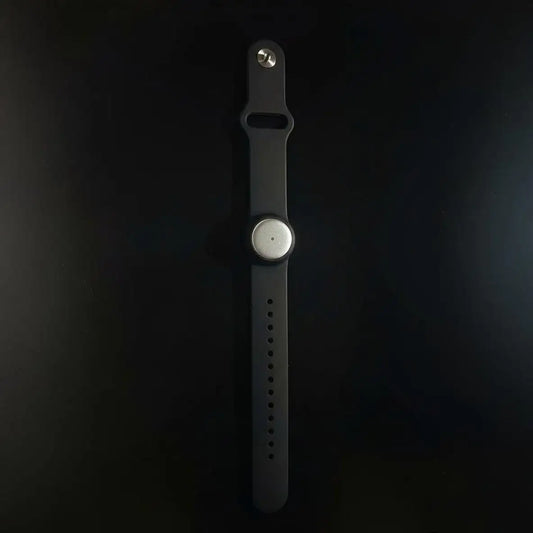
- In-person sessions: wear Omi as a necklace or wristband, or place it on the table for formal sessions.
- Quick calls: capture anyway. “Unexpected honesty” usually shows up here.
- Debriefs: capture stakeholder debriefs too. That’s where interpretations drift and priorities get decided.
Prompt pack you can reuse right after every session:
- “Tag the top 5 themes and list supporting quotes with timestamps.”
- “Separate observation from interpretation.”
- “List contradictions and who said them.”
- “Which friction blocks the first success moment?”
- “Draft 3 hypotheses with confidence levels based on frequency.”
- “Design 3 minimum viable experiments with success metrics.”
Why research turns into theater without evidence and structure
Most teams talk to users. Then the output collapses into vague statements like “people want simpler onboarding.” Without evidence and structure, research becomes unreviewable. And unreviewable work doesn’t ship.
- Inconsistent notes: every interviewer captures different things, so synthesis becomes guesswork.
- Paraphrase drift: the team rewrites the user into corporate language and loses meaning.
- Recency bias: the last session becomes “the truth.”
- Loudness over frequency: one emotional quote overrides a common but quieter pattern.
- Slow synthesis: so it doesn’t happen, or it happens once and then dies.
- No provenance: stakeholders ask “who said that?” and nobody can point to a timestamp.
- No execution bridge: insights don’t become experiments or backlog, so the organization learns nothing operationally.
If an engineer can’t click from a backlog item to the exact quote that justifies it, trust drops fast.
What you gain with Omi: evidence-first synthesis and a backlog with provenance
The practical value of Omi in qualitative work is speed plus traceability. You stop rewriting from memory and start building from a searchable record. Omi creates the baseline structure. You use chat to force rigor: quotes, contradictions, segment patterns, and the clearest next experiment.
- Faster synthesis: start from a structured recap, not a blank page.
- Evidence ledger by default: verbatim quotes with timestamps remain tied to the transcript.
- Cross-team trust: product, design, and engineering can validate evidence quickly.
- Better prioritization: insights include signal strength and segment notes, not just opinions.
- Cleaner execution bridge: experiments and backlog items include acceptance criteria + success metrics + evidence links.
- Repeatable cadence: weekly “what we learned” digests become easy because the structure already exists.
Omi becomes your qualitative memory layer: searchable user truth, not team folklore.
The insight quality bar: what a real insight looks like, and what doesn’t
A real insight is a user truth you can defend and act on. It’s not a feature request. It’s not a slide title. It’s evidence + context + implication + next step.
| Component | What “good” looks like | Common failure |
|---|---|---|
| Theme + subtheme | Stable labels you can compare across sessions | New labels every time |
| User context | Who they are, what they’re trying to do, constraints | Generic “users want…” |
| Evidence | Verbatim quotes + timestamps + scenario context | Paraphrase that changes meaning |
| Signal strength | Frequency + critical path vs edge case + segmentation | One loud interview = truth |
| Contradictions | Disconfirming evidence captured explicitly | Ignored inconvenient feedback |
| Next step | Hypothesis + experiment or follow-up question | Insight with no action |
Rule: if you can’t cite a timestamp, you don’t have an insight yet. You have a feeling.
The evidence ledger: quotes, context, and traceability
This is the artifact that makes qualitative work defensible. The evidence ledger is where themes become real, and where “AI qualitative analysis” becomes trustworthy: not magic, just structured provenance.
- Representative quotes: common phrasing that shows a repeated pattern.
- Sharp quotes: emotionally high-signal lines that reveal motivation or fear.
- Contradictory quotes: disconfirming evidence that reveals segmentation.
- Observed behavior: usability moments where behavior contradicts stated intent.
A simple, operational rule: don’t promote an insight unless you have two supporting quotes, or one quote plus one observed behavior. This prevents “one interview syndrome.”
Signal strength rubric (use it to keep prioritization sane):
| Signal | How to score it | What it means |
|---|---|---|
| Frequency | 1 mention / 2–3 mentions / 4+ mentions | How often it appears across sessions |
| Critical path | Blocks activation? retention? or edge case? | Whether it affects the core workflow |
| Severity | Annoying / costly / dealbreaker | How painful it is for the user |
| Segment concentration | One segment vs broad | Who it’s really about |
| Contradiction risk | Low / medium / high | Whether the insight is disputed by other evidence |
Prompt patterns that keep the ledger sharp:
- “Pull 3 representative quotes for theme X with timestamps.”
- “Pull 2 contradictory quotes for theme X with timestamps.”
- “Summarize the user job-to-be-done in one sentence, supported by quotes.”
- “Score this insight using frequency, critical path, severity, and contradiction risk.”
The operational playbook: interview → themes → evidence → hypotheses → experiments → backlog
This is the repeatable loop. The baseline output comes from your template. The rigor comes from the evidence ledger. The value shows up when the output becomes experiments and backlog items, not a doc.
Step 1: capture the conversation and the debrief
Capture is the foundation. If you don’t capture, you reconstruct. And reconstruction is where bias lives.
- Capture the research session (remote or in-person).
- Capture stakeholder debriefs too. That’s where interpretations drift.
- Capture “quick feedback calls” that reveal friction without ceremony.
With Omi, you can later search by time, people, or topic and ask questions against the transcript instead of guessing.
Step 2: generate a structured research recap
Start from structure, not a blank page. Omi can apply your chosen research recap template automatically as a baseline.
- Participant context (segment, constraints, current workflow).
- Session goal and scope.
- Key moments and highlights.
- Early themes and friction points.
This recap is not the final output. It’s the base layer you refine with evidence and signal strength.
Step 3: tag themes and subthemes with a stable taxonomy
Theme tagging isn’t about being clever. It’s about being consistent enough to compare sessions over time.
Starter taxonomy you can standardize:
| Theme | Common subthemes | What to watch for |
|---|---|---|
| Onboarding / activation | setup confusion, first success moment, permissions, “what do I do next?” | drop-offs, hesitation, repeated questions |
| Workflow fit | handoffs, collaboration, daily habits, “where does this live?” | manual workarounds, context switching |
| Friction points | too many steps, unclear UI, missing feedback, errors | moments of confusion, backtracking |
| Trust / risk | privacy, reliability, accuracy, “can I rely on this?” | hesitation, refusal, “I’m not sure” language |
| Pricing / value | plan clarity, fear of commitment, ROI, comparison | stalling, “I need to think,” confusion |
| Performance perception | speed, latency, consistency, “it’s slow” feelings | emotion vs measurement mismatch |
Omi chat prompt: “Tag themes + subthemes. Label each point as observation (fact) or interpretation (why).”
Step 4: build the evidence ledger (quotes + provenance)
This is where research becomes defensible. Pull verbatim quotes and keep them tied to the transcript.
- Pull representative quotes for each theme (the “this keeps repeating” proof).
- Pull sharp quotes (emotion, fear, motivation).
- Pull contradictory quotes (segmentation + honesty).
- Include timestamp and scenario context for every quote.
If you do only one thing in this workflow, do this. The ledger is what prevents research from turning into opinion.
Step 5: convert themes into hypotheses (make them testable)
Insights become useful when they become testable statements with a clear “what we’ll measure.”
- Format: “If we change X for segment Y, metric Z improves because…”
- Attach confidence (low/medium/high) based on signal strength.
- Attach supporting evidence and contradicting evidence (quotes).
- Attach “what would change my mind” (what data you need).
Hypothesis:
If we change [X] for [segment Y], we expect [metric Z] to improve because [mechanism].

Confidence:
Low / Medium / High (based on frequency + critical path + severity + contradiction risk)

Evidence:
- Supporting quotes (timestamp + link)
- Contradicting quotes (timestamp + link)

What would change our mind:
- The data we’d need to disprove this
Step 6: design experiments (small, measurable, shippable)
Experiments should be small enough to run quickly and clear enough to evaluate without debate. You’re not “building a feature.” You’re answering a question.
- Minimum viable test (smallest proof).
- Success metric (what changes if hypothesis is right).
- Timebox + owner.
- Instrumentation needs (how you’ll measure).
- Risk/side effects + kill criteria.
Experiment:
- What we’ll change:
- Who it’s for (segment):
- Success metric:
- Timebox:
- Owner:
- Instrumentation:
- Risks/side effects:
- Kill criteria:
- Next checkpoint:
Step 7: create backlog items with acceptance criteria and transcript links
Backlog items are where research either becomes real or dies. A good backlog item is buildable, testable, and traceable to evidence.
- Title: problem + surface + desired outcome.
- User problem statement in user language.
- Evidence links: quote + timestamp + transcript link.
- Acceptance criteria + success metric.
- Priority rationale, owner, checkpoint.
This is what makes engineers trust the work: they can click straight to the proof.
Step 8: share the right output to the right audience
One session can produce multiple artifacts without contradiction if they all derive from the same source of truth.
- Exec brief: top insights, business implications, next bets.
- Product/engineering packet: themes, evidence ledger, hypotheses, experiments, backlog items.
- Weekly digest: “what we learned this week” in 10 bullets with links.
This is where executives get clarity without transcript overload.
Step 9: sync and automate (optional)
Omi has an apps marketplace with hundreds of ready-made integrations and automations: https://h.omi.me/apps. If you need custom workflows, build with Omi’s API/webhooks and docs: https://docs.omi.me/.
- Sync backlog items to the tools where execution happens.
- Push weekly digests to the channels people actually read.
- Keep links back to transcript evidence so the source stays reachable.
- You choose what to install and set up. Omi enables it, but it’s not magic autopilot.
Deliverables: what you should have after a strong synthesis pass
A strong synthesis pass produces artifacts that are easy to trust and easy to ship. Here’s the checklist.
- Insight clusters (themes + subthemes).
- Evidence ledger (quotes + timestamps + context).
- Contradictions list (where users disagree and why).
- Hypotheses list (confidence + supporting and contradicting evidence).
- Experiment list (metrics, timebox, owner, kill criteria).
- Backlog items linked to transcripts (acceptance criteria + success metrics + evidence links).
- Executive summary draft (top insights + implications + bets).
- Weekly research digest draft (short, link-rich).
Research recap template (copy/paste)
Use this as your default structure. If you set it as your template in Omi, Omi can generate the baseline automatically, and you refine it by building the evidence ledger and next steps.
Session title:
Date/time:
Interview type (discovery/usability/concept/feedback):
Participant context:
- Segment:
- Current workflow:
- Constraints:

Session goal:
-

Top observations (facts):
-

Themes + subthemes:
- Theme:
  - Subthemes:
  - Observations (facts):
  - Interpretations (why):

Evidence ledger (quotes with timestamps):
- Theme:
  - Representative quotes:
    - [timestamp] "..."
  - Sharp quotes:
    - [timestamp] "..."
  - Contradictory quotes:
    - [timestamp] "..."

Signal strength score (optional):
- Frequency:
- Critical path:
- Severity:
- Segment concentration:
- Contradiction risk:

Contradictions / segmentation notes:
-

Opportunities:
-

Hypotheses (with confidence):
- Hypothesis:
  - Confidence: low/medium/high
  - Supporting evidence:
  - Contradicting evidence:
  - What would change our mind:

Experiments:
- Experiment:
  - Metric:
  - Timebox:
  - Owner:
  - Instrumentation:
  - Risks/side effects:
  - Kill criteria:

Backlog items (with links):
- Title:
  - Problem statement:
  - Evidence links (quote + timestamp + transcript):
  - Acceptance criteria:
  - Success metric:
  - Priority rationale:
  - Owner + checkpoint:
Insights backlog item template (copy/paste)
Backlog items should be buildable, testable, and traceable. This template forces that.
Title:
- [Problem] on [Surface] for [Segment] results in [Outcome]

User problem statement (in user language):
-

Who is impacted:
- Segment:
- Lifecycle stage (onboarding/activation/retention):
- Frequency (how often it happens):

Evidence:
- Quote 1: [timestamp] "..." (link to transcript)
- Quote 2: [timestamp] "..." (link to transcript)
- Contradicting quote (if any): [timestamp] "..." (link)
- Context notes:

Proposed change:
-

Acceptance criteria:
-
Success metric:
-

Priority rationale:
-

Owner:
Next checkpoint:
The research memory library (advanced layer)
Most teams lose qualitative knowledge over time. People change roles, docs get buried, and the same questions get re-researched every quarter. The stronger approach is a searchable research memory library: themes, segments, evidence, and past experiments you can reuse.
- Tag by theme: onboarding, pricing, trust, performance, discovery, workflow fit.
- Tag by segment: role, company size, use case, maturity.
- Tag by lifecycle stage: onboarding, activation, retention, expansion.
- Keep provenance attached: quotes + timestamps + transcript links.
- Close the loop: link experiment outcomes back to the original insight (so you build institutional memory, not just docs).
This is where Omi is more than a note tool. It’s a searchable, queryable memory layer. Future teams can ask:
- “Have we heard this friction before?”
- “Which segment says this most?”
- “Is this new, or recurring?”
- “What experiments did we run last time, and what happened?”
If you want to connect this library to internal systems, build custom integrations via https://docs.omi.me/ or use ready automations via https://h.omi.me/apps.
Real examples: one clean insight, one contradictory insight
Example A: onboarding friction
Multiple sessions show the same pattern: users start onboarding, but they don’t reach the first success moment fast. The product is “simple,” but the confidence isn’t. Users hesitate because they don’t know what “done” looks like.
- Theme: onboarding → setup confusion, first success moment.
- Evidence ledger: two representative quotes + one observed hesitation during usability.
- Signal strength: repeated across sessions, critical path (activation), high severity.
- Hypothesis: “If we reduce setup to one guided step for segment X, activation improves because uncertainty drops.”
- Experiment: guided checklist + clear confirmation moment; metric: activation completion rate.
- Backlog item: includes acceptance criteria and evidence links to transcript timestamps.
This is the kind of work R&D teams can act on quickly because it’s evidence-backed and testable.
Example B: pricing confusion with contradictory signals
One segment says pricing is “fine.” Another segment stalls because plan differences feel unclear. The insight isn’t “change pricing.” The insight is “reduce uncertainty and clarify what each plan unlocks.”
- Theme: pricing → plan clarity, fear of commitment.
- Contradictions: flexibility-seekers vs certainty-seekers.
- Hypothesis A: clearer plan comparison reduces drop-off at pricing page.
- Hypothesis B: low-commitment trial messaging reduces fear and increases activation.
- Experiments: comparison table rewrite vs trial messaging; metric: conversion and activation.
This is where an exec brief matters: top insight, implication, next bet, with evidence links for optional drill-down. That’s the format executives actually use.
The pattern stays consistent: evidence ledger first, contradictions acknowledged, hypotheses testable, then backlog items linked to proof.
Research mistakes that kill trust
- Paraphrasing quotes: you lose meaning and change the insight.
- No provenance: no timestamps, no links, no ability to verify.
- Over-generalizing from one interview: loudness beats frequency.
- Ignoring contradictions: you ship the wrong fix for the wrong segment.
- Turning insights into feature requests: without the underlying job/pain.
- Backlog items without evidence links: engineering won’t trust it.
- Big bets without minimum viable experiments: slow learning, expensive mistakes.
- Insight with no next step: “we learned a lot” becomes a dead end.
FAQ
How do I tag themes consistently across interviewers?
Use a stable taxonomy (onboarding, pricing, trust, performance, discovery, workflow fit) and add subthemes as needed. Require the observation vs interpretation split. Consistency beats cleverness.
How many quotes do I need per insight?
A solid default is two supporting quotes per insight, or one quote plus one observed usability behavior. Always include timestamps and scenario context.
What do I do with contradictory feedback?
Treat contradictions as segmentation signals. Pull contradictory quotes explicitly, write competing hypotheses, then run experiments to resolve uncertainty quickly.
How do I avoid vibes-based research?
Build an evidence ledger. Link insights and backlog items to verbatim quotes and timestamps. If you can’t point to the transcript, don’t promote the insight yet.
How do I turn insights into backlog items that ship?
Convert insights into testable hypotheses, then design small experiments with metrics. Backlog items should include acceptance criteria, success metrics, owner, checkpoint, and evidence links.
How do I share research with executives without sending transcripts?
Write a short exec brief: top insights, business implications, and next bets. Include links to evidence quotes for optional drill-down.
How do integrations and automation fit in?
Use Omi’s apps marketplace for ready-made automations at https://h.omi.me/apps. For custom apps and workflows, use https://docs.omi.me/. You choose what to install and configure. Omi enables it.
Quick takeaway: do this right after every session
- Capture the session and the debrief.
- Generate the recap using your template as a baseline.
- Tag themes and separate observation from interpretation.
- Build the evidence ledger with quotes, timestamps, and context.
- Score signal strength so prioritization is sane.
- Write hypotheses with confidence and contradictions.
- Design experiments with metrics, timebox, owner, and kill criteria.
- Create backlog items with acceptance criteria and evidence links.
- Share the right output for execs vs product vs engineering.

 www.omi.me