TL;DR
A ai note taker for in person meetings helps you leave the room with clean notes, clear decisions, and assignable action items, without typing or guessing later.
The biggest win is coverage. You can capture in-person meetings all day, plus online meetings in Meet, Zoom, Teams, and whatever your calendar throws at you, then keep everything searchable as one memory layer.
If you want this to stick, choose an ai note taker for in person meetings that fits how you actually work: wear it on your neck or wrist (or under your shirt), use templates for better outputs, then automate the follow-up so it stops relying on willpower.
Key takeaways
- In-person audio is harder than Zoom. A ai note taker for in person meetings needs a room strategy (placement, overlap, noise), not just “good AI”.
- Wearable capture wins on consistency. The best ai note taker for in person meetings is the one you actually start every time, even in hallway decisions.
- Hybrid is the new default. A ai note taker for in person meetings should also cover online meetings, across devices, so your history is complete.
- Templates plus automations are the multiplier. That’s how meeting notes become tasks, CRM updates, and shared memory, fast.
Table of contents
- What is a ai note taker for in person meetings?
- How does a wearable ai note taker for in person meetings work?
- Who benefits from a ai note taker for in person meetings?
- Is a ai note taker for in person meetings safe?
- How to use a ai note taker for in person meetings step by step
- FAQ about ai note taker for in person meetings
- Next step
What is a ai note taker for in person meetings?
A ai note taker for in person meetings is a wearable or cross-device setup that records real-room conversations and turns them into a transcript, summary, tasks, and searchable “memory” you can reuse later.
Face-to-face meetings fail in predictable ways. Someone forgets a decision. A task owner was “implied”. The follow-up email is vague. Two weeks later, the team argues about what was agreed.
A strong ai note taker for in person meetings fixes that by doing three jobs at once: capture reliably, structure the output, and make it easy to share or automate what happens next.
What makes this category different from simple recording
- It listens to what you say and hear, not just what a single mic can catch in a perfect room.
- It produces actions, not just paragraphs. Summaries, tasks, and memories are the point.
- It stays searchable, so “what did we decide about pricing?” is a query, not a debate.
With Omi, the goal is one system for everything you need to capture: in-person meetings, online meetings, and the small daily conversations that quietly become your plan. You can record throughout the day from wearables or phone, and you can record online meetings from the Mac desktop app or the web app.
Quick comparison table:
| Option | Best when | Not ideal when | What to do next |
|---|---|---|---|
| Omi as your ai note taker for in person meetings | You want all-day in-person capture plus online meeting capture, with templates, automations, integrations, and one searchable memory across devices. | You want “silent recording” without indicators, or your org can’t align on consent and policy. | Pick one meeting template and run it for a week. Record, summarize, assign tasks, then share the recap. |
| Single-purpose ai wearable recorders (Plaud, Fieldy, Anker, Limitless) | You mainly want a wearable recorder for in-person meetings, and you’re fine keeping online meeting capture separate. | You want one unified system for in-person meetings, Zoom/Meet/Teams, and daily conversations. | Compare on recording reliability, search, template depth, and what happens after the summary. |
If you want examples by team, start with our use cases hub, then jump to project managers, marketing, and IT.
How does a wearable ai note taker for in person meetings work?
A ai note taker for in person meetings works as a pipeline: capture audio, separate speakers, transcribe speech, then convert raw text into structured outputs like decisions, action items, and searchable memories.
In real rooms, the hard part is not the model. It’s the room. Overlapping speakers, distance, and background noise create messy input, and messy input becomes fuzzy tasks.
A simple workflow you can copy for ai note taker for in person meetings
1) Set the room up for clean capture
If it’s a table meeting, center placement usually beats “near the leader”. If it’s a stand-up, wear it consistently and avoid rustling layers. If it’s a workshop, move closer for decision moments.
One habit that works: when a decision lands, someone repeats it in one sentence. That single “repeat back” improves both clarity and transcription.
2) Turn speech into structure with meeting templates
Templates are where an ai note taker for in person meetings becomes useful. A hiring interview needs different outputs than a project sync, and a client meeting needs different follow-ups than a 1:1.
In Omi, we use custom summary templates so you can generate role-specific outputs, like a leadership recap, a technical plan, and a task list, from the same meeting.
3) Automate the follow-up so it always happens
After the meeting, the system should do the boring part. Share the recap, sync tasks to your task manager, and file the meeting into a folder automatically. That’s how your ai note taker for in person meetings becomes a reliable operating system, not a transcript graveyard.
Checklist table:
| Step | What “good” looks like | Common mistake | Fix |
|---|---|---|---|
| Placement | Mic is central, away from keyboards, HVAC airflow, and coffee machines. | Recording beside a laptop fan, then expecting perfect diarization. | Move it slightly. In big rooms, prioritize central placement. |
| Decision clarity | Decisions are repeated once, with owner and date stated out loud. | “Sounds good” becomes a task with no owner. | Use a 10-second “who owns it, by when” ritual. |
| Task extraction | Action items include owner, due date, and context sentence. | Tasks are vague, and nobody trusts them. | Use templates that force owner and deadline fields. |
Wearable alternatives for ai note taker for in person meetings
Yes, there are real alternatives. If you’re comparing, focus on five things: recording reliability, how strong the summaries are, whether tasks are usable, how searchable the library is, and how the tool fits hybrid work.
| Wearable | What it’s known for | Where it shines | Where teams get stuck |
|---|---|---|---|
| Omi | All-day capture plus cross-device capture. Summaries, tasks, memories, templates, automations, and integrations in one system. | In-person meetings, online meetings (Meet, Zoom, Teams), and daily conversations, all searchable on Mac, Windows, iPhone, Android, and browser. | If you skip templates and automations, you’ll underuse what makes the workflow powerful. |
| PLAUD NotePin / PLAUD Note | Popular AI voice recorders with strong wearable options and structured summaries. | In-person capture that’s easy to start, plus a mature ecosystem for transcript + summary workflows. | Usage limits and subscriptions can matter fast if you record many meetings per day. |
| Fieldy device | Always-on, “memory-first” wearable that emphasizes continuous capture and retrieval. | High-frequency in-person conversations where you want ongoing recall, not only calendar meetings. | Always-on workflows raise the hardest consent and culture questions in teams. |
| Limitless pendant | One of the most talked-about “life memory” pendants, built for continuous capture and recall. | Personal memory workflows and long-day capture patterns, especially for people who want lifelog-style recall. | Product direction and availability have shifted after acquisition, so it may not be a stable long-term choice for some buyers. |
| Anker ai recorder (soundcore Work) | Coin-sized wearable recorder with transcription and templated summaries through the Soundcore app. | Quick in-person capture in a compact form factor, especially for short meetings and interviews. | Teams still need a strong “after” workflow for sharing, tasks, and cross-tool integrations. |
Non-wearable tools that still help with ai note taker for in person meetings
Sometimes you can’t wear a device. In those cases, the “best available” option is often mobile capture plus a strong summarizer, or an online meeting assistant for the calls side of your week.
- Mobile capture: Otter, Fireflies mobile, Notta, Krisp can help when you’re phone-first.
- Online meeting summaries: Fathom, tl;dv, Sembly, Read.ai, Bluedot are widely used for Zoom/Meet/Teams workflows.
- Ecosystem assistants: Zoom AI Companion and Microsoft Teams Copilot can be strong inside their platforms, but they won’t cover your full reality alone.
If you’re building a consistent workflow across roles, check how different teams use the same “capture, summarize, act” loop in human resources, teachers and professors, and content creators.
Who benefits from a ai note taker for in person meetings, and when is it not worth it?
A ai note taker for in person meetings is worth it when meeting outcomes create real cost: missed commitments, misunderstood decisions, weak follow-ups, or repeated discussions that feel like time travel.
It’s also worth it when your best work happens outside the calendar. The quick hallway decision, the “two minutes” after a meeting, the spontaneous stakeholder update. That’s where wearable capture changes the game.
Best-fit scenarios for ai note taker for in person meetings
- Project and delivery teams: stand-ups, planning, retros, and unblock meetings where tasks must land cleanly.
- Client-facing teams: sales, success, consulting, healthcare style workflows, where details and follow-ups matter.
Not a great fit
- Contexts where consent is unclear or recording changes the dynamics in a way that hurts trust.
- Teams with strong live note culture, where a shared doc is consistently maintained and enforced.
If you want role-based examples, our playbooks for professional workers and students show how people use an ai note taker for in person meetings to make recall and follow-through frictionless.
Is a ai note taker for in person meetings safe, and what are the trade-offs?
It can be safe, if you treat recording as a responsibility. The non-negotiables are consent, clear indicators, and strong controls over storage, export, and deletion.
The trade-offs are real. The more “always on” you go, the more you need a mature consent culture. The more you rely on cloud processing, the more your security posture matters.
Trade-offs you should know for ai note taker for in person meetings
- Coverage: capturing more moments vs needing stronger consent habits and boundaries.
- Speed: instant summaries vs stricter requirements for encryption and access control.
In Omi, we designed this to be privacy-first. You can control what is captured, how it’s stored, and how fast you can delete or export. For teams, we support SOC 2 and HIPAA requirements, and we encrypt data in transit and at rest.
One detail that matters in real workplaces: recordings and summaries are not used to train models without explicit permission, and our devices include indicators when recording is active to support consent where required.
Decision table:
| If you care most about… | Choose… | Because… |
|---|---|---|
| One unified meeting memory | A ai note taker for in person meetings that also captures online meetings | Hybrid work breaks when half the conversation disappears. One system prevents gaps. |
| Compliance readiness | Tools with clear encryption, retention controls, and enterprise posture | Security questions are inevitable in teams. Having real answers keeps adoption smooth. |
How to use a ai note taker for in person meetings step by step
The goal is simple: leave every meeting with decisions, owners, and dates, then make follow-up automatic. That’s what an ai note taker for in person meetings should do for you.
Step 1: open with consent and boundaries
Say one sentence: “I’m recording for notes and action items so we don’t lose decisions.” If something needs to be off-record, define it upfront.
This prevents awkwardness and keeps trust intact. It also helps the room relax, because people know why the recording exists.
Step 2: choose the right capture mode for the meeting
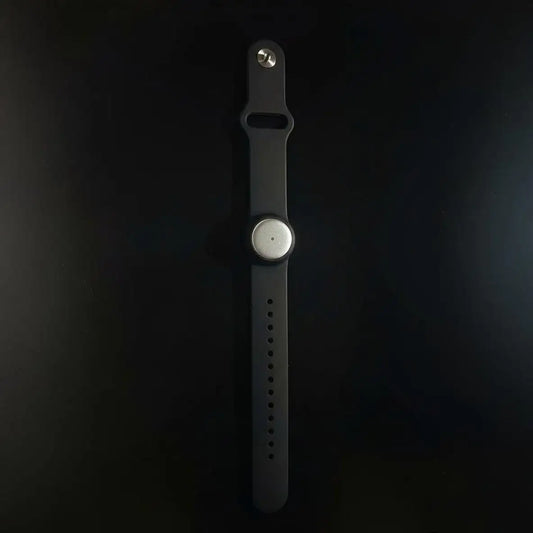
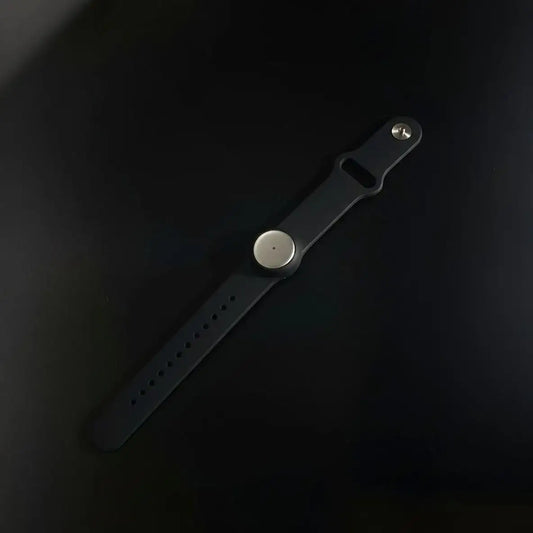
For in-person meetings, wearable capture keeps you present. Wear it on your neck or wrist, or clip it under a shirt layer that won’t rustle.
For online meetings, use the Mac desktop app or the web app so you can record and summarize meetings across Meet, Zoom, Teams, and more, without changing how you meet.
Step 3: push outputs where work actually happens
Generate the summary, confirm action items, then share. Use automations to sync tasks to your task manager, post a recap to Slack, update a CRM, or file the meeting into a folder. If you want full control, use the API and MCP to integrate meeting notes into your internal systems.
Meeting templates that improve ai note taker for in person meetings results
| Meeting type | Template sections | Best output | Automation idea |
|---|---|---|---|
| Project sync | Decisions, blockers, risks, owners, deadlines | Task list that can be shipped to a board immediately | Create tasks for each owner, post recap to a project channel |
| 1:1 | Wins, feedback, commitments, next check-in | Clean personal recap you can revisit before the next meeting | Save to a “1:1s” folder, generate next-step reminders |
| Client meeting | Goals, objections, decisions, next steps, stakeholders | Follow-up email bullets plus CRM-ready notes | Draft recap message, update CRM fields, share with the team |
If you want the simplest starting point across devices, download here: Omi download. For usage details, see plans and limits.
FAQ about ai note taker for in person meetings
What’s the biggest mistake people make with a ai note taker for in person meetings?
They treat it like a magic transcript. In-person meetings need a room strategy: placement, noise control, and a quick repeat-back for decisions. Then you need structure: templates that force owners and dates. Without those two, you get long text and weak action items.
How do PLAUD AI devices fit as a ai note taker for in person meetings?
PLAUD NotePin and PLAUD Note are designed for quick capture plus transcript and summaries through their apps. They’re popular for personal meeting capture and interviews. If you record heavily, pay attention to transcription minutes and subscription tiers, because that’s where cost and workflow friction usually show up.
Is the Fieldy device a good ai note taker for in person meetings?
Fieldy is positioned around continuous capture and recall, closer to “memory” than “meeting bot”. That can be great for high-frequency conversations and quick in-person decisions. The trade-off is cultural: always-on style capture needs stronger consent norms, especially in teams.
What happened with the Limitless pendant as an ai wearable for in person meetings?
Limitless became a major reference point for the “memory pendant” idea. After acquisition news, product direction and availability changed, which matters if you’re buying for long-term team workflows. If you already have one, you may prefer using it as an input device while keeping your searchable meeting memory elsewhere.
Is the Anker ai recorder (soundcore Work) worth considering?
If you want a small wearable recorder with transcription and templated summaries, Anker’s Soundcore Work is in the same “clip-on meeting capture” category. Like most hardware-first tools, the key question is what happens after the summary: can you share fast, generate tasks cleanly, and integrate into your real workflow?
How do we use a ai note taker for in person meetings safely?
Get consent by default, keep boundaries clear, and use tools with strong security controls and transparent deletion/export. For teams, align with policy and retention requirements. In Omi, we encrypt data in transit and at rest, support SOC 2 and HIPAA requirements, and keep recording indicators active to help with consent norms.
Next step
Choose one meeting type you do constantly and make the workflow boringly consistent. Record it, run the same template, ship action items the same way, and automate the follow-up. That’s when a ai note taker for in person meetings becomes something your team trusts.
Explore use cases and pick the first workflow to standardize

 www.omi.me