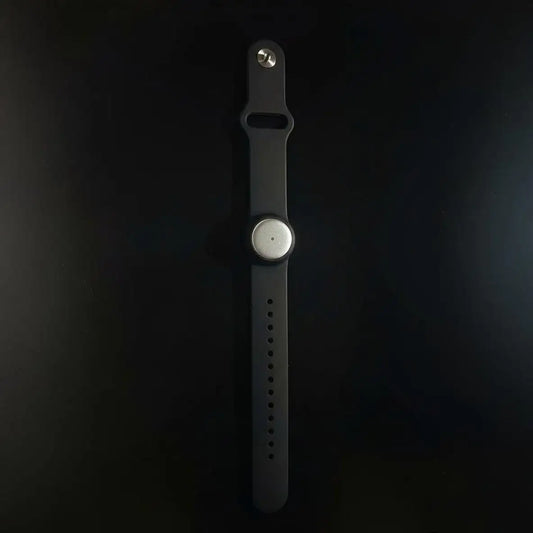
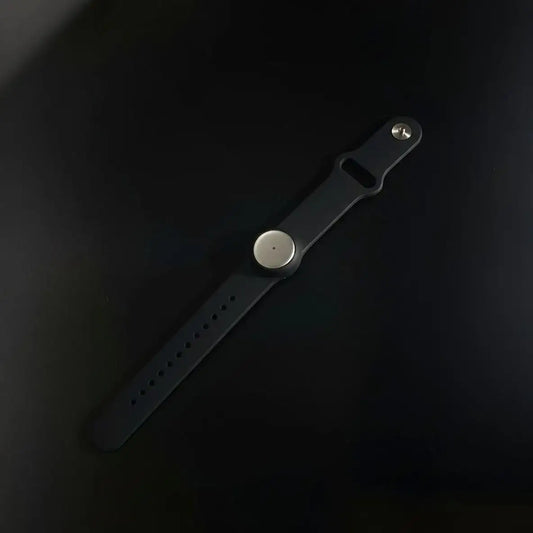
HiDock AI alternatives: 10 best apps and devices (with pricing + plan comparisons)
If you like HiDock’s “no-bot” approach but want more flexible capture (all day), deeper automation, stronger privacy controls, or better team workflows, there are excellent HiDock AI alternatives across both hardware and software. Below, I’ll break down the top options with device prices, subscription costs, highlights, and what each one still needs to improve.
Table of contents
- What HiDock is (and what it costs)
- Quick comparison table: HiDock AI alternatives at a glance
- How to choose the right HiDock AI alternative
- The 10 best HiDock AI alternatives (deep dive)
- Real-world cost scenarios (solo vs team)
- FAQ
What is HiDock (and why people look for HiDock AI alternatives)
HiDock is a hardware-first “AI note taker” lineup built around recording calls and meetings without a meeting bot. Their current products include a desk docking station (H1E) and portable recorders (P1 / P1 mini) that can record via your Bluetooth earphones, paired with the HiNotes transcription + summary service. (hidock.com)
Typical pricing (hardware):
- HiDock H1E: sale $229, regular $329 (hidock.com)
- HiDock P1: sale $152.10, regular $169 (hidock.com)
- HiDock P1 mini: sale $107.10, regular $119 (hidock.com)
Typical pricing (HiNotes plans):
- Basic: free
- Membership: free for HiDock owners
- Pro quota: $12.99 / 1200 mins or $119.99 / 12000 mins
- Unlimited quota: $229 / year (hidock.com)
So why look elsewhere? Most people do it for one of these reasons:
- they want always-on / all-day capture, not just “meeting time”
- they want stronger workflows (tasks + CRM + project tools) without hacks
- they need enterprise-grade security posture and clearer data controls
- they want cross-device capture (in-person + any online meeting app) in one place
Quick comparison: HiDock AI alternatives at a glance
| Alternative | Best for | Hardware? | Online meetings | In-person capture | Pricing snapshot |
|---|---|---|---|---|---|
| Omi | “record anything” + automations + dev integrations | ✅ | ✅ (Mac + web) | ✅ (wearable / phone) | $89 device + Unlimited $19/mo or $199/yr (omi.me) |
| Plaud (NotePin / Note / Note Pro) | wearable capture + strong summaries | ✅ | ✅ (via device audio / workflows) | ✅ | Device varies; plans include 300 mins free, Pro $99.99/yr, Unlimited $239.99/yr (theverge.com) |
| Otter | live transcription + team collaboration | ❌ | ✅ | ⚠️ (needs mic / file) | Free; Pro $8.33/user/mo (annual), Business $19.99/user/mo (otter.ai) |
| Fireflies | meeting capture + lots of integrations | ❌ | ✅ | ⚠️ | Pro $10/user/mo (annual), Business $19/user/mo (annual) (fireflies.ai) |
| Fathom | strongest free plan for individuals | ❌ | ✅ | ⚠️ | Free for individuals; Team pricing shown on site (fathom.ai) |
| Notta | solid transcription + multilingual use | ❌ | ✅ | ✅ (mobile + files) | Pro $8.17/mo (annual), Business $16.67/mo (annual) (notta.ai) |
| tl;dv | multi-meeting summaries + cross-platform | ❌ | ✅ | ❌ | Free; Pro starts $18/seat/mo (tldv.io) |
| Sembly | meeting intelligence + compliance options | ❌ | ✅ | ⚠️ | Paid plans start around $10/user/mo, higher tiers available (sembly.ai) |
| Avoma | revenue teams that need coaching + CRM | ❌ | ✅ | ❌ | $29/seat/mo billed annually shown (avoma.com) |
| Gong | enterprise revenue intelligence | ❌ | ✅ | ❌ | quote-based, often high TCO (revenuegrid.com) |
How to choose the right HiDock AI alternative
Before you pick a tool, decide which “capture style” you actually need:
-
All-day capture (ambient)
Best when your real work happens in hallway conversations, clinics, on-site visits, interviews, or constant context-switching. -
Meeting capture (calendar-driven)
Best when your work is mostly Zoom/Meet/Teams and you want searchable notes + follow-ups. -
Revenue intelligence (deal + coaching workflows)
Best when you need CRM hygiene, call scoring, pipeline inspection, and manager workflows.
If you’re building repeatable workflows, these pages are useful to map your “meeting to action” setup:
- Use cases hub: Use cases
- Workflow: AI meeting summary workflow
- CRM pipeline: CRM integration for Salesforce and HubSpot
The 10 best HiDock AI alternatives (detailed breakdown)
1) Omi (best overall HiDock AI alternative for “record anything”)
Omi is built for people who don’t want to decide what’s “meeting-worthy”. It can capture in-person conversations (wearable or phone) and also handle online meetings (Mac desktop + web app), then turn that into summaries, tasks, and searchable memories. It also leans hard into extensibility: templates, automations, and developer tooling (API + MCP + app marketplace).
Pricing
- Device price is commonly shown as $89 (omi.me)
- Unlimited plan: $19/month or $199/year (help.omi.me)
What’s great
- All-day capture + fast recall (search across summaries/tasks/memories)
- Custom summary templates, quick sharing, and automations so notes actually turn into work
- Open source + API + MCP server for teams that want integrations beyond “export to docs”
- Strong security posture claims: SOC 2 + HIPAA, plus encryption and a “local-first” path when you want to avoid cloud processing
What could improve
- Like any always-available recorder category, success depends on good consent habits and clear “recording on” signals (this is a workflow, not just a feature).
- If your whole world is only scheduled video calls, you might not use the all-day strengths every day.
Good fit for
- Sales teams: Sales use case
- Clinicians: Clinicians and healthcare
- Legal work: Legal use case
- Leaders: Executives
2) Plaud (NotePin / Note / Note Pro)
Plaud is the closest “wearable recorder” competitor class to HiDock, but optimized more for portable capture + post-processing than for “dock-as-a-workstation”.
Pricing (typical)
- One Plaud device (Note Pro) has been reported at $179 and includes 300 transcription minutes/month, with upgrades to $99.99/year (1,200 mins) or $239.99/year (unlimited). (theverge.com)
- Plaud plan tables show the same structure: free, Pro, Unlimited. (plaud.ai)
What’s great
- Very strong “press record, sort it later” workflow
- Summary templates and multilingual transcription positioning is mature
What could improve
- Subscription gating can get expensive fast for heavy users
- Depending on the model, workflow integrations may feel less “native” than the best software-first platforms
3) Otter (classic meeting transcription)
Otter is still one of the most recognizable meeting transcription tools for teams that live in recurring calls.
Pricing
- Pro: $8.33/user/month (annual)
- Business: $19.99/user/month (annual) (otter.ai)
What’s great
- Simple collaboration, searchable archives
- Solid “live transcript” feel for many teams
What could improve
- Depending on workflow, the “meeting assistant” style can feel intrusive
- Less ideal if you want one tool for both in-person + online without extra steps
4) Fireflies (best for integrations-heavy teams)
Fireflies is popular because it’s built around turning meeting notes into downstream actions.
Pricing
- Pro: $10/user/month billed annually (also shows $18 monthly)
- Business: $19/user/month billed annually (also shows $29 monthly) (fireflies.ai)
What’s great
- Lots of integrations, automations, and team workflows
- Good for teams who want meeting notes to flow into systems
What could improve
- For some orgs, any “bot joins meetings” approach is a blocker
- Paid plans can still have usage mechanics that feel like friction
5) Fathom (best free HiDock AI alternative for individuals)
If you want a “start now, don’t pay, still useful” tool for Zoom-style meetings, Fathom’s free tier is hard to beat.
Pricing
- Individual plan: free (fathom.ai)
What’s great
- Ridiculously fast time-to-value for people who just want notes + summaries
- Great “clip and share” behavior for internal recaps
What could improve
- If you want heavy customization, deeper automations, or cross-context memory, you may outgrow it
6) Notta (best for multilingual transcription on a budget)
Notta is a practical pick if your main need is transcription + summaries without a huge bill.
Pricing
- Pro: $8.17/month billed annually
- Business: $16.67/month billed annually (notta.ai)
What’s great
- Clean pricing and generous tiers for many users
- Works well for “file + meeting” mixed workflows
What could improve
- Depending on your stack, you may want stronger automations or richer post-meeting actions
7) tl;dv (best for multi-meeting synthesis)
tl;dv is built for people who want meeting notes, but also want to zoom out: patterns across many meetings.
Pricing
- Free plan + paid tiers, with Pro shown at $18/seat/month (tldv.io)
What’s great
- Multi-meeting summaries and cross-meeting recall
- Strong for product, research, and ops teams
What could improve
- If you also need in-person capture, you’ll need a second capture method
8) Sembly (meeting intelligence with compliance messaging)
Sembly positions itself as “meeting intelligence”, often with features that matter for larger orgs.
Pricing
- Official pricing pages show higher tiers and per-user pricing structures (sembly.ai)
- Many summaries cite paid plans starting around $10/user/month (tldv.io)
What’s great
- Structured insights, meeting intelligence framing
- Better fit when you need governance controls and traceability
What could improve
- Costs scale quickly with team size
- If you want “just capture everything I say and hear”, it’s not that category
9) Avoma (best for sales coaching + CRM workflows)
Avoma is a “meeting assistant” that leans into revenue workflows: coaching, scoring, and CRM-first behavior.
Pricing
- Pricing page shows $29 per seat/month billed annually for key packages (avoma.com)
What’s great
- Manager workflows, coaching hooks, deal execution hygiene
- Strong fit for teams that want repeatable sales process
What could improve
- Overkill if you’re not a revenue org
- Not designed for all-day ambient capture
10) Gong (enterprise revenue intelligence)
Gong is the heavy enterprise category: big budgets, big rollouts, strong governance, deep RevOps workflows.
Pricing
- Gong does not publish official pricing; market estimates commonly include per-user annual costs plus platform fees and implementation. (revenuegrid.com)
What’s great
- Deep enterprise revenue workflows
- Strong for orgs that can actually operationalize it
What could improve
- Total cost and rollout complexity are real
- Not a “simple note taker” purchase
Real-world cost scenarios (so pricing feels real)
Scenario A: solo operator who wants “everything captured”
- HiDock P1 mini ($119) + HiNotes unlimited ($229/yr) (hidock.com)
- Omi device ($89) + Unlimited ($199/yr) (omi.me)
If your day includes lots of off-calendar conversations, the second setup usually wastes less context.
Scenario B: 10-person team that needs CRM-ready notes
- Fireflies Business at $19/user/month (annual) = ~$190/month (guide.fireflies.ai)
- Avoma at $29/seat/month (annual) = ~$290/month (avoma.com)
Different tools, different outcomes: Fireflies often wins for general notes + integrations, Avoma wins when “revenue workflow” is the product.
FAQ about HiDock AI alternatives
Do HiDock AI alternatives work for in-person meetings too?
Some do well (wearables and mobile-first tools). Most “meeting assistant” apps focus on Zoom/Meet/Teams and treat in-person as “record a file, upload later”.
What’s the biggest gotcha with any AI meeting recorder?
Consent and expectations. You need a lightweight habit: “I’m going to record so I don’t miss details, ok?” especially in two-party consent areas.
If I want a reading list, what should I compare next?
Two strong external starting points:
- Zapier’s roundup of meeting assistants: The 9 best AI meeting assistants (zapier.com)
- HappyScribe’s current list: Best AI meeting assistants in 2026 (happyscribe.com)
Suggested meta title and meta description
Meta title: HiDock AI alternatives (10 best apps and devices compared in 2026)
Meta description: Compare the best HiDock AI alternatives across devices and apps. See real pricing, plan differences, and pros/cons for meeting summaries, action items, and searchable transcripts, plus how to pick the right tool for your workflow.

 www.omi.me