A QBR that moves renewal forward feels boring in the best way: clear ROI, risks you can name, owners you can point to, dates you can put on a calendar.
TL;DR: the QBR loop that stops “great meeting” from turning into “we’ll circle back”
Here’s the loop: capture the QBR, generate a structured recap, anchor the story in ROI and health drivers, rank the renewal risks, lock a commitments ledger (customer vs your team), build a mutual action plan with 5 to 7 milestones, map the renewal decision path (gates and dates), then run weekly checkpoints until the next QBR.
The part people skip, and then regret, is the timing. Follow up within 1 business day. Same plan, same owners, same dates. Omi makes that realistic because you are not rebuilding the meeting from memory. You capture it, start from a baseline recap, then use Omi chat to pull commitments and risk language while it’s still fresh.
If your QBR currently ends as "good discussion", this is how you make it end as "here’s the plan, here’s who owns it, and here’s what we check next week."
On this page
- What counts as a QBR here, and what doesn’t
- Who this workflow is for
- The runway before the QBR
- An agenda that keeps execs in the room
- The post-QBR window (where truth still holds)
- Why QBRs turn into theater
- What you gain with Omi
- The output quality bar
- The proof pack (ledger, risks, gates)
- The operational playbook
- Deliverables checklist
- Copy/paste templates
- The account memory library
- Real examples
- Mistakes that kill renewals
- FAQ
- Quick takeaway
What counts as a QBR here, and what doesn’t
In this article, a QBR is a strategic review plus a plan. It’s where you connect outcomes to goals, show the ROI story in plain language, call out what might break next quarter, and agree on what happens next. With owners. With dates.
- In scope: QBRs and EBRs, renewal readiness reviews, exec sponsor alignment calls, red-account recovery QBRs, and any quarterly check-in where renewal or expansion is on the line.
- Out of scope (for this workflow): ticket-by-ticket troubleshooting, internal status meetings, and negotiation-heavy pricing calls. Capture those if you want, but don’t confuse them with a QBR.
Who this workflow is for when renewal depends on follow-through
This is for teams that are tired of spending a day on a deck and then watching nothing happen. It’s also for accounts with turnover, where the story keeps getting reset and you have to re-earn trust every quarter.
- Sales: needs expansion signals, stakeholder map, and proof points. Use case
- Executives: want a one-page view of value, top risks, and the decision path. Use case
- Operations: wants owners, checkpoints, and forecast inputs that don’t wobble weekly. Use case
- Finance: wants renewal gates visible early, not as a last-week scramble. Use case
- Legal: wants timelines, docs, and review steps called out before the panic starts. Use case
- Project managers: want a plan with owners and a cadence that sticks. Use case
The best QBRs feel simple: value, risk, plan, decision path. The smart part is what you leave out.
The runway before the QBR: the work nobody sees (and the part that decides the outcome)
Most QBR “problems” are prep problems. You can feel it when the meeting starts: the story isn’t tight, the right people aren’t there, and you’re hoping the slides will carry you. They won’t.
- Pull last quarter’s promises: what the customer committed to, what you committed to, what shipped, what slipped. Start there, or the QBR is just a performance.
- Write the value story in 5 sentences: goal, progress, proof, gap, next bet. If you can’t say it out loud, don’t build the deck yet.
- Draft a health narrative: what moved up, what moved down, why, and what you’ll do next. A score without drivers starts arguments.
- Reality-check stakeholders: champion health, sponsor engagement, decision maker identified, procurement contact known. Renewal is a people process as much as it is product usage.
An agenda that keeps execs in the room: outcomes first, then risks, then the plan
Execs don’t hate data. They hate data with no point. So don’t start with a metric parade. Start with outcomes and ROI. Then explain what’s driving the trend. Then talk risk. Then talk plan.
- Exec track (5 to 7 slides): value, risks ranked, next bets, renewal gates and dates. Keep it tight. If it’s not forwardable, it won’t be forwarded.
- Operator track (appendix): deeper usage, tickets, workflows, adoption by team, feature detail. Useful, just not the opening act.
One sentence that steers the meeting: "Let’s align on outcomes and next-quarter priorities first, then we can drill into the numbers."
The post-QBR window where truth still holds
The meeting isn’t the trigger. The closeout is. Right after the call, everyone still agrees on what happened. Two days later? Good luck.
This is where Omi earns its keep. You capture the QBR, Omi generates a baseline recap from your template, and then you ask sharper questions against the transcript. That is how you get a plan with owners and dates, fast.
- Remote QBRs: capture via Omi desktop/web while on Zoom, Meet, or Teams.
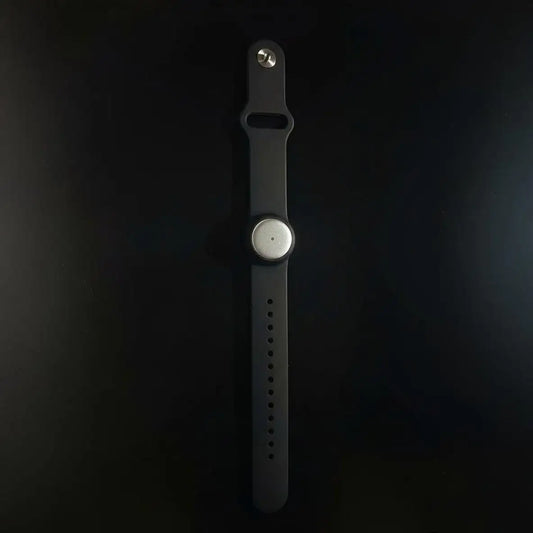
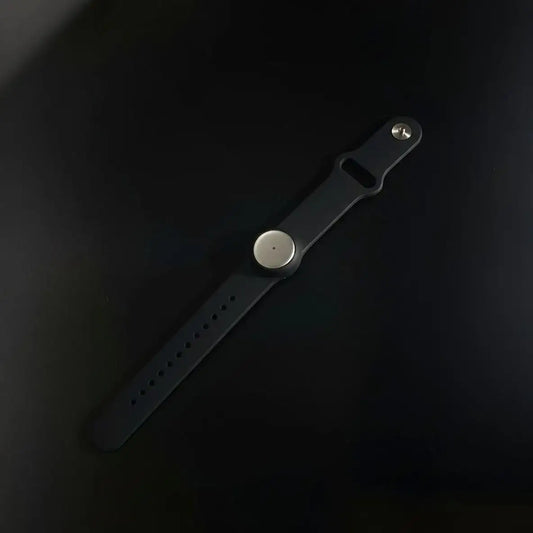
- In-person QBRs: use Omi as a necklace or wristband setup, or place it on the table.
- Exec drop-ins: record the sponsor cameo. It often contains the real decision.
- Debriefs: capture your internal debrief too. That’s where you decide the bet.
Prompt pack for the 20-minute closeout:
- "Extract all commitments, split by customer vs our team. Add owners and dates."
- "Rank renewal risks by impact. Quote the line that supports each risk."
- "What did the exec sponsor care about most, in their words?"
- "Draft a mutual action plan with 5 to 7 milestones, owners, and dates."
- "Draft the follow-up email under 150 words. Make it hard to misread."
Why QBRs turn into theater (and how it usually dies)
Here’s what I keep seeing: everyone nods, the deck looks polished, the call ends on a high note. Then nothing happens. Or worse, different people leave with different versions of what was agreed.
- Deck-first behavior: hours go into formatting, minutes go into follow-through.
- Metrics without meaning: KPIs get shown, but nobody agrees on "so what now".
- Soft risks stay soft: the risk is real, but it never becomes an owned mitigation plan.
- Renewal gates are invisible: procurement, legal, or security appears as a last-minute surprise.
- Action items are vague: "enablement" or "alignment" with no owner, date, or definition of done.
- Follow-up is late: momentum dies and accountability gets awkward.
A QBR without a ledger is a conversation. A QBR with a ledger is a workflow. The difference is boring, and that’s why it works.
What you gain with Omi: fewer rewrites, fewer “I don’t remember”, cleaner follow-through
Omi helps in a very practical way: it gives you a record you can search and ask questions against. That means you spend less time rewriting notes and more time running the plan.
- Faster recap: start from a structured QBR summary, not a blank page.
- Cleaner accountability: commitments become a ledger split by customer vs your team, with owners and dates.
- Traceability: when someone says "I don’t remember agreeing to that", you can point to the source.
- Account memory: search across QBRs and calls to find repeating risks, stakeholder concerns, and slipped commitments.
- Automation options: route outputs into your systems using apps or developer webhooks.
- Control: export, delete, and manage what gets shared so you fit compliance needs.
If you want integrations, use https://h.omi.me/apps. If you want custom routing, use https://docs.omi.me/. Keep one rule: automate routing, not judgment.
The output quality bar: what “good” looks like
A good QBR output is something a busy exec can skim in 90 seconds and still understand what matters. It’s also something your team can run next week without guessing.
| Component | What good looks like | Common failure |
|---|---|---|
| Value recap | Outcomes tied to goals, with a short ROI story | Metrics listed with no business meaning |
| Health drivers | What moved up/down, and why | A score with no explanation |
| Risk register | Top risks ranked, with owners and mitigation checkpoints | Risks mentioned politely, then ignored |
| Commitments ledger | Customer vs your team, one owner per line, dates, definition of done | Action items with no owners |
| Mutual action plan | 5 to 7 milestones with checkpoints and proof of completion | A "next steps" slide that dies in email |
| Renewal decision path | Decision maker, gates, timeline, next exec checkpoint | "Renewal in Q3" with no route to signature |
Quick rule: if an action item doesn’t have an owner and a checkpoint, it’s not real yet.
The proof pack: commitments, risks, gates, and the parts people “forget” later
This is the part that keeps a QBR from drifting. The proof pack is simple: commitments ledger, risk register, renewal gates, and a plan you can review weekly.
- Commitments ledger: customer vs your team, owners, dates, definition of done.
- Risk register: ranked risks, triggers, mitigation owners, checkpoints.
- Expansion signals: new teams, new use cases, what proof you need next.
- Decision path: who signs, who influences, gates (procurement, legal, security), dates.
Renewal risk scoring rubric (keeps prioritization sane):
| Signal | How to score it | What it means |
|---|---|---|
| Impact | Low / medium / high | How much it threatens renewal or expansion |
| Time pressure | 90+ days / 30 to 90 / under 30 | How quickly it can hurt you |
| Owner clarity | Named owner / vague / missing | Whether mitigation will actually happen |
| Evidence strength | Direct quote / implied / guessed | How real the signal is |
| Control | We control / shared / customer-only | What kind of plan is realistic |
Renewal gates map (copy this into your plan):
- Procurement steps and dates
- Security review steps and dates
- Legal review steps and dates
- Budget approval window
- Decision maker checkpoint (date on calendar)
- Signature target date (plus buffer)
The operational playbook: QBR → recap → proof pack → mutual action plan → renewal plan
This is the loop. It’s repetitive on purpose. It’s the repetition that makes it reliable.
Step 1: capture the QBR and the internal debrief
If you don’t capture, you reconstruct. And reconstruction is where “that’s not what I meant” is born.
- Capture the QBR (remote or in-person).
- Capture the internal debrief right after (interpretation happens there).
- Capture sponsor side conversations if they happen.
Later, search by stakeholder, theme, or risk, then ask questions against the transcript instead of guessing.
Step 2: generate a structured QBR recap (baseline output)
Use a standard template so every account output looks the same. It reduces chaos across the team.
- Goals and outcomes (what moved).
- KPIs and adoption highlights (the proof).
- Risks and blockers (what could break the plan).
- Raw action items (to be cleaned up next).
The recap is the base layer, not the deliverable.
Step 3: anchor the story with ROI and health drivers
Put ROI on display, then explain what’s driving the trend. This is what keeps the conversation out of the weeds.
- ROI story: hours saved, revenue impact, risk reduction, efficiency.
- Health drivers: engagement, adoption, support friction, stakeholder changes.
- Trendline: what moved, why it moved, what you’ll do next.
Step 4: build the proof pack (ledger + risks + gates)
Turn “we discussed” into “we agreed.”
- Commitments ledger split by customer vs your team.
- Risk register ranked with owners and checkpoints.
- Renewal decision path: gates, dates, who signs, who can block.
This prevents drift. That’s the whole point.
Step 5: draft a mutual action plan that is short enough to be used
Keep it tight: 5 to 7 milestones. One owner each. One date each. Proof for each.
- Milestone: what happens.
- Owner: who makes it happen.
- Due date: when it happens.
- Evidence: what proves it’s done.
Step 6: turn signals into 90-day bets (small, measurable)
You’re not “running a program.” You’re trying to move one risk or one adoption driver fast.
90-day bet:
- What we will do:
- Who it is for:
- Success metric:
- Timebox:
- Owner:
- Next checkpoint:
- Renewal gate we want to move (procurement/legal/security/decision):
Step 7: create plan items with acceptance criteria and source links
This is where the plan becomes executable. Each item needs a measurable finish line.
- Title: outcome + owner + date.
- Acceptance criteria and success metric.
- Source: quote + timestamp + transcript link (internal or shareable).
If someone asks "why are we doing this", you should be able to point to the record.
Step 8: share the right output to the right audience
Same truth, different packaging. That’s how you avoid confusion.
- Exec brief: value, top risks, next bet, renewal path. One page.
- Champion plan: mutual action plan plus enablement steps.
- Internal packet: proof pack, forecast notes, mitigation owners.
This matches how executives consume information: short, defensible, actionable.
Step 9: sync and automate (optional)
Use Omi’s apps marketplace for ready integrations: https://h.omi.me/apps. For custom workflows, use https://docs.omi.me/.
- Export commitments as tasks into your system of record.
- Push a weekly "open risks + open asks" digest to the channel people actually read.
- Keep source links back to transcript evidence so the truth stays reachable.
- You choose what gets routed and where it goes. Keep control tight.
Deliverables: what you should have within 24 hours of a strong QBR
If you have these, you’re not guessing. You’re running a plan.
- QBR recap (outcomes, KPIs, adoption highlights)
- Health drivers snapshot (what moved and why)
- Risk register (ranked, owned, checkpointed)
- Commitments ledger (customer vs your team)
- Mutual action plan (5 to 7 milestones)
- Renewal decision path (gates + dates + owners)
- 90-day account plan (milestones + success metrics)
- Follow-up email (short, owned, with next checkpoint)
Copy/paste templates
These are plain on purpose. Fancy templates get abandoned. Plain ones get used.
QBR recap template
QBR title:
Date/time:
Attendees (customer):
Attendees (our team):

1) Exec summary (3 bullets)
- Value/outcomes:
- Top risk:
- Next bet:

2) Goals and outcomes (this quarter)
- Goal:
  - Outcome:
  - Proof (KPI/adoption evidence):
  - What changed since last QBR:

3) ROI story (plain language)
- Why they bought:
- What improved:
- Evidence:
- Gap to close next quarter:

4) Health drivers (trend, not just a score)
- What moved up:
- What moved down:
- Why:
- Stakeholder notes (champion/sponsor/decision maker):

5) Risks (ranked)
- Risk:
  - Impact (low/med/high):
  - Time pressure:
  - Evidence (quote or signal):
  - Mitigation:
  - Owner + checkpoint:

6) Commitments ledger (split by owner group)
- Customer commitments:
- Our team commitments:
- Mutual commitments:

7) Mutual action plan (5 to 7 milestones)
- Milestone:
  - Owner:
  - Due date:
  - Evidence of completion:

8) Renewal decision path
- Renewal date:
- Decision maker:
- Influencers:
- Gates (procurement/legal/security):
- Checkpoint dates:
- Signature target date:

9) Next 90 days plan
- Milestone:
  - Metric:
  - Owner:
  - Checkpoint:
Mutual action plan template
Shared goal (one sentence):
Success criteria (how we will know it worked):
-

Milestones (5 to 7):
1) Milestone:
   - Owner:
   - Due date:
   - Evidence:
2) Milestone:
   - Owner:
   - Due date:
   - Evidence:

Weekly checkpoint cadence:
- Day/time:
- Who attends:
- What we review (3 bullets):
Renewal plan item template
Title:
- [Outcome] by [date] owned by [owner]

Problem statement (customer language):
-

Why it matters (renewal/expansion impact):
-

Owner:
-

Definition of done:
-

Acceptance criteria:
-

Success metric:
-

Due date:
-

Next checkpoint date:
-

Dependencies:
-

Source (proof):
- Quote + timestamp + transcript link (internal or shareable)
QBR follow-up email template (under 150 words)
Subject: QBR recap + plan for the next 90 days

Thanks for today. Here is the short recap and what we agreed to.

1) Outcomes and value
- [1 line]

2) Top risks (ranked)
- [risk 1] (owner, checkpoint)
- [risk 2] (owner, checkpoint)

3) Commitments (customer vs our team)
- Customer: [owner, date]
- Us: [owner, date]

4) Mutual action plan (milestones)
- [milestone 1] (owner, date)
- [milestone 2] (owner, date)

Renewal path and next checkpoint:
- [gate/date] and next meeting on [date/time]

Best,
[Name]
The account memory library (the part that compounds)
QBRs get easier when you stop re-learning the same account every quarter. The goal is a searchable memory layer: what they cared about, what you promised, what risks kept repeating, what finally fixed it.
- Tag by stakeholder: champion, sponsor, decision maker, procurement, security.
- Tag by lifecycle stage: onboarding, adoption, renewal, expansion.
- Tag by themes: value, adoption, risk, stakeholders, expansion.
- Keep provenance attached: commitments and risks tie back to the meeting record.
- Close the loop: link outcomes back to plan items, so you build institutional memory.
If you want to connect this library to internal systems, use https://docs.omi.me/ or ready integrations at https://h.omi.me/apps.
Real examples: one clean renewal plan, one mixed-signal account
Example A: clean renewal plan that stays clean
The account is healthy, but you still treat the QBR like a decision meeting. You lock the plan, then run weekly checkpoints. The customer feels like you’re driving, not reacting.
- Value recap: 2 outcomes tied to their goals, one short ROI story.
- MAP: 6 milestones, owners on both sides, dates, evidence.
- Renewal path: decision maker named, gates mapped, next exec checkpoint scheduled.
- Follow-up: sent within 1 business day, short enough to forward.
Sales can use this immediately for expansion timing and proof points. Sales use case
Example B: adoption looks fine, sponsor energy is not
Usage is decent. The champion is happy. Then the exec sponsor drops a sentence that changes the quarter: "We are doing budget review next month."
- Mixed signals: product usage vs budget risk language.
- Risk pack: rank it high impact, short time pressure, owner clarity required.
- Bet: schedule an exec checkpoint and tighten the ROI story around their top initiative.
- Experiment: 30-day proof sprint tied to one executive metric.
This is where the exec brief matters: value, risk, next bet, renewal path, in one page. Executives use case
Pattern stays the same: recap, proof pack, plan, decision path, checkpoints. You don’t need a new framework every quarter. You need the same one, used.
Mistakes that kill renewals (quietly, then all at once)
- Sending follow-up late: momentum dies and the customer forgets what they agreed to.
- Action items without owners: everyone nods, nobody moves.
- Risks without rank: the scary thing stays vague, so it never gets mitigated.
- No renewal gates mapped: procurement, legal, or security becomes a surprise.
- Generic deck syndrome: it feels like you swapped the logo, so execs tune out.
- Not capturing the meeting: you end up arguing about what was said instead of executing.
FAQ
How do I keep a QBR from becoming a metric recital?
Start with outcomes and ROI in plain language, then show only the KPIs that prove those outcomes. Put the rest in an appendix. End with owners and dates. If you don’t end with owners, you didn’t run a workflow.
What should a customer success QBR template include every time?
Value recap, health drivers, ranked risks, commitments ledger, mutual action plan milestones, and the renewal decision path. That’s the core. Everything else is optional.
How do I run a QBR when execs only give me 20 minutes?
Send a one-page pre-read, run the call as decisions only, then follow up within 1 business day. Use the exec brief format: value, top risks, next bet, renewal path.
How do I handle "soft risks" nobody wants to say directly?
Pull the exact language from the meeting, then translate it into a mitigation plan with an owner and checkpoint. Soft risks stay soft until you give them a date.
How do I make a mutual action plan customers actually use?
Keep it short: 5 to 7 milestones, one owner each, one date each. Review it weekly during active cycles. If it’s a long doc, it becomes "nice to have" and dies.
How do integrations and automation fit in without breaking trust?
Treat automation as routing, not auto-deciding. Use apps at https://h.omi.me/apps or custom workflows via https://docs.omi.me/. Keep control tight: what gets shared, where it lands, and who can access it.
Quick takeaway: do this right after every QBR
- Capture the QBR and the internal debrief.
- Generate the recap from your template as a baseline.
- Anchor value with an ROI story and health drivers.
- Build the proof pack (risks ranked, commitments ledger, renewal gates and dates).
- Draft the mutual action plan with 5 to 7 milestones and owners.
- Send the follow-up within 1 business day with the shared plan link.
- Run weekly checkpoints until the next QBR starts from this one.

 www.omi.me