TL;DR: turn repeated support conversations into self-serve answers that actually reduce tickets
This workflow is how you stop answering the same question over and over (in tickets, Slack, hallway drive-bys, you name it). The loop looks like this: capture the conversation → name the user’s intent in plain language → group repeats → build an issue ledger (real phrasing, prerequisites, wrong paths, the steps that worked) → draft a knowledge base article built for skimming → route it where the question shows up → measure whether people actually solved it, and keep it fresh.
It’s useful for customer support, internal IT and operations help, onboarding friction, policy clarifications, and the “quick questions” that never get logged but still steal hours. The habit that makes it work is boring but decisive: do a short deflection pass right after the interaction while you still remember the details that matter.
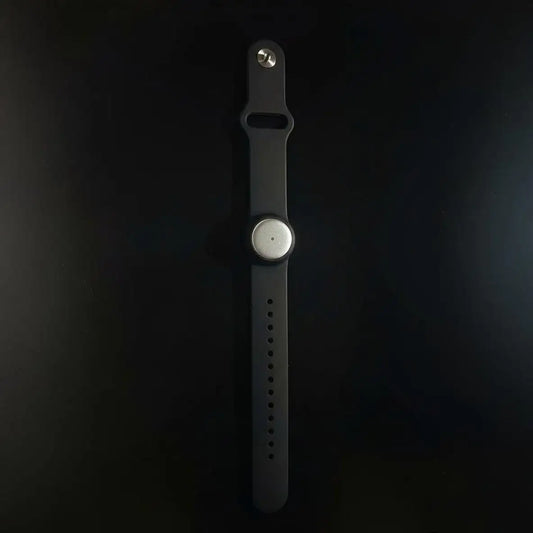
Omi helps because it captures what actually happened. Not what someone remembers later. You wear it (necklace or wristband) or capture online calls, Omi produces the baseline transcript and summary, and then you use Omi chat to pull out the parts that turn into a reliable self-serve answer: the user’s wording, prerequisites, the two failure points that trip people up, what success looks like, and when to stop and escalate to a human.
One opinion up front: if your “deflection” program celebrates lower ticket volume while CSAT tanks, it’s not deflection. It’s avoidance. This workflow keeps you honest.
On this page
- What counts as support here, and what doesn’t
- Who this workflow is for
- The post-interaction window where fixes are still true
- Why deflection fails in real life
- What you gain with Omi
- The answer quality bar
- The issue ledger and evidence layer
- The operational playbook
- Deliverables
- Templates
- Real examples
- Mistakes that kill trust
- FAQ
What counts as support here, and what doesn’t
In this article, “support” means conversations where the goal is resolution you can repeat. Something you can turn into a clear answer that works for the next person, not a heroic one-off.
- In scope: how-to questions, setup and onboarding friction, access and permissions, policy clarifications, recurring errors with stable fixes, internal IT and ops help, and those “quick help” moments that never enter the ticket system.
- Out of scope (for this workflow): security incidents, billing disputes with nuance, intermittent bugs with no stable reproduction, and anything that needs private data review or judgment calls. You can still capture these in Omi, but the deflection artifact becomes an intake checklist and escalation path, not a DIY fix.
If the output you want is “repeat intent, clear answer, measurable impact,” you’re in the right place.
Who this workflow is for when support has to scale without losing trust
This is for teams that have learned the hard way that “we should document this” is not a strategy. You need repeatability, an owner, and a way to prove the KB is helping, not just existing.
It’s especially useful for IT and operations. It also maps cleanly to how executives consume information: short, defensible, actionable.
- IT teams: turn Slack pings and repeat questions into internal self-serve answers that stay consistent.
- Operations: convert process confusion into SOP-style articles with prerequisites and checkpoints.
- Support leaders and executives: reduce load while protecting CSAT, retention, and compliance boundaries.
- Professional workers: unblock themselves without waiting in a queue. (see workflows)
- Project managers: keep ownership, freshness triggers, and review cadence real, not aspirational. (see workflows)
- QA and engineering (optional): recurring issues become reproducible intake checklists, not vague “users are stuck.” (see QA workflows)
Good deflection output is a system: intent, answer quality, routing, metrics, and freshness.
The post-interaction window where fixes are still true
The trigger isn’t “we have tickets.” The trigger is right after the interaction. That’s the moment you still remember the weird detail that made the fix work, like “it only fails on mobile” or “you need admin rights for step 2.”
Omi makes this easy to capture without asking people to be disciplined (because people aren’t). Capture the call or the in-person help, let Omi produce the baseline transcript and summary, then do a short deflection pass to extract the self-serve answer and the guardrails.
- Remote support: capture via Omi on desktop or web for online meetings.
- In-person help: wear Omi as a necklace or wristband, or place it on the desk for “quick fixes.”
- Backchannel support: capture internal debriefs too. That’s where tacit steps show up.
- Always-on habit: for many teams, it’s “charge overnight, wear during the day.” Capture becomes automatic.
Prompt pack to reuse right after every repeated question:
- "Extract the user’s question exactly as asked, then list 3 phrasing variants."
- "List prerequisites (permissions, plan, device) and the top 2 failure points."
- "Write the steps in the order the user actually took them, not the ideal order."
- "Write a success check in one sentence, and an escalation rule in one sentence."
- "Draft a KB article that is skimmable in 30 seconds."
- "If this answer were wrong, what’s the worst-case risk? Adjust escalation accordingly."
Why ticket deflection turns into theater without evidence and routing
Most teams do the easy part: publish articles. The hard part is everything around it. That’s why the KB looks “complete” and the ticket volume still doesn’t budge.
- Inconsistent capture: the real fixes live in calls, DMs, and screen shares, not in the KB.
- Insider language: articles are technically correct, but they don’t match how users ask or where they start.
- No routing: users never see the right article at the moment they’re about to submit a ticket.
- Rot and drift: product changes quietly break older steps, and trust drops fast.
- Bad incentives: the team optimizes for “tickets down” instead of “resolved.”
- No guardrails: volume looks better while escalations and repeat contact creep up.
If your program can’t prove resolution quality, you’re basically putting a nicer door in front of the same problem.
What you gain with Omi: a support memory layer and a cleaner path to deflection
Here’s what I like about using Omi for this workflow: it doesn’t require anyone to be a perfect note-taker. It captures the conversation, then you can ask pointed questions against what was actually said and done.
- Faster drafting: start from transcript + baseline summary, not a blank page.
- User language preserved: you get the exact phrasing people use, which is gold for titles, headings, and help center search.
- Repeat detection: find recurring intents across conversations, even the ones that never became tickets.
- Better “still stuck?” branches: failure points come from real attempts, not imagined ones.
- Cross-team trust: when an article gets challenged, you can trace the reasoning back to real interactions.
- Automation-ready: once the process is solid, apps and webhooks can handle the busywork (drafts, alerts, routing nudges).
The net effect: support knowledge stops living in private places, and starts living somewhere your team can actually use.
The answer quality bar: what a deflection-ready KB article looks like, and what doesn’t
A deflection-ready article is written for a real person who is stuck and impatient. Not for an internal wiki. Not for the “documentation voice.” For the moment of need.
| Component | What “good” looks like | Common failure |
|---|---|---|
| Intent-based title | Matches how users ask ("How do I…", "Fix…", "Why can’t I…?") | Internal jargon or team-based categories |
| One-sentence answer | The fix in the first screen, before the scroll | Long intro, no actionable line |
| Prerequisites | Permissions, plan, device, access stated clearly | Hidden assumptions that make steps fail |
| Steps | Numbered, short, UI labels included | Paragraphs and vague navigation |
| Success check | What “fixed” looks like, in one sentence | No verification, user still unsure |
| Still stuck? | Two branches for the most common failure points | Only option is “contact support” |
| Escalation rule | When to stop self-serve, and what info to include | DIY advice for high-risk scenarios |
If you take nothing else: success check + escalation rule. Those two lines prevent a lot of self-serve damage.
The issue ledger: where deflection becomes defensible
The issue ledger is the thing most teams skip. Then they wonder why articles don’t work. It’s basically a compact record of what people ask, what breaks, what fixes it, and what to do when the fix doesn’t apply.
- Exact phrasing: how users ask, including messy variants. Great for SEO and help center search.
- Prereqs checklist: permissions, role, plan, device, environment.
- Wrong paths: what users try first that wastes time or makes things worse.
- Correct path: the steps that worked, in the order reality demanded.
- Success check: what “fixed” looks like.
- Escalation criteria: when self-serve should stop, and what info to collect.
Signal strength rubric to avoid chasing noise:
| Signal | How to score it | Why it matters |
|---|---|---|
| Frequency | 1 mention, 2–3 mentions, 4+ mentions | Pick issues that will actually move volume |
| Time cost | Quick fix vs long debug | Some issues are low volume but high drain |
| Stability | Steps change rarely vs often | Unstable steps rot fast |
| Risk | Low / medium / high | High-risk issues need escalation, not DIY |
| Deflectability | Clear success check + safe escalation | This keeps self-serve honest |
Omi prompt patterns that keep the ledger sharp:
- "Extract the top 5 recurring intents from these conversations."
- "For intent X, list prerequisites and the two most common failure points."
- "Write the success check and escalation rule in one sentence each."
- "Draft a KB article that is skimmable, with two ‘still stuck’ branches."
The operational playbook: conversation → intents → ledger → KB draft → routing → trust metrics
This is the repeatable loop. Omi gives you the baseline reality. The ledger gives you structure. Routing and metrics decide whether it actually reduces tickets.
Step 1: capture support conversations, including the ones that never become tickets
If you don’t capture, you reconstruct. And reconstruction is where “I think the fix was…” gets invented.
- Capture remote calls via Omi on desktop/web, capture in-person help with the wearable.
- Capture internal debriefs, that’s where the real steps get spoken out loud.
- Tag a rough intent. Don’t overthink it yet.
Step 2: generate a structured support recap (baseline output)
Start with a template so everyone captures the same fields. Consistency beats artistry here.
- User intent (their words), context, what they tried, what failed, what worked.
- Draft resolution steps, plus a success check.
- Flag any “do not self-serve” conditions.
Step 3: normalize intents (stop indexing on ticket categories)
Ticket categories are messy. Intents are cleaner and user-facing. Your reporting becomes simpler overnight when you do this.
- Build a small intent catalog: "reset password", "grant access", "connect integration", "export data".
- Keep it stable enough to compare month over month.
Step 4: pick the first 10 issues with a deflection candidate score
Don’t start with the hardest issues. Start with the ones that are common, safe, and stable. You want wins you can trust.
- Rank by frequency and time cost, then filter by stability and risk.
- For high-risk or unstable issues, ship an intake checklist first, not a DIY “fix it” page.
Step 5: build the issue ledger for each top intent
This is the step that makes the KB feel like it was written by someone who has actually seen the problem.
- Use Omi chat to pull failure points based on real attempts.
- Write steps in the order users actually followed, not the order support wishes they followed.
Step 6: draft a deflection-ready knowledge base article, then edit like a human
Draft fast, then tighten. Make the first screen do the work.
- One-sentence answer at top, prereqs next, then short numbered steps.
- Add two “still stuck?” branches for the common failure points.
- Add a clear escalation rule, and what info to include.
Step 7: route the answer into the moment of need (this is where deflection happens)
Publishing is not deflection. Routing is.
- Help center search improvements.
- Ticket form suggestions when someone is about to submit.
- Chat/help widgets that point to KB sources, not guesses.
- In-product links at the exact UI step where people get stuck.
Step 8: measure success without lying to yourself
Deflection is not one metric. You need outcome signals and guardrails.
- Volume: ticket rate for that intent (not overall volume).
- Quality: CSAT, reopen rate, repeat contact rate, escalation rate.
- Routing: article views, success-check completion, “still stuck?” clicks.
- Trust: accuracy audits, complaint sentiment, compliance incidents.
Step 9: automate (optional), after the fundamentals work
Once your process is real, automation removes the annoying parts.
- Use the apps marketplace for ready integrations:
https://h.omi.me/apps. - For custom workflows, build with
https://docs.omi.me/. - Set alerts like “intent X spiked today,” so you write the article before it becomes next week’s pain.
Deliverables: what you should have after a strong deflection pass
If you ran this well, you should end up with a small set of artifacts you can point to. Not “we talked about it,” but “here’s the output.”
- Intent catalog (a stable taxonomy you can report on).
- Ranked top issues list (frequency, time cost, stability, risk).
- Issue ledger entries (phrasing, prereqs, wrong paths, correct steps, success check, escalation rule).
- KB/FAQ drafts written for skimming and stress, not for insiders.
- Routing map (where each answer appears, and at what step).
- Scoreboard (volume plus guardrails).
- Owners and freshness triggers (who updates and when).
Support recap template (copy/paste)
Use this as your default structure. If you set it as a template in Omi, you get the baseline automatically. Then you turn it into a ledger entry and a deflection-ready article.
Conversation title:
Date/time:
Channel (call/chat/in-person):
Intent (rough, user-facing):

User context:
- Role/team:
- Device/environment:
- Plan/permissions:
- Constraints:

What they were trying to do (in their words):
-

What they tried first (in order):
-

Observed failure points:
- FP1:
- FP2:

Resolution path (what finally worked):
1)
2)
3)

Success check (what "fixed" looks like):
-

Still stuck? (two branches):
- If [common failure 1], try:
- If [common failure 2], try:

Escalation criteria (when to stop self-serve):
-

If escalating, what info to collect:
- screenshots / error text:
- account context:
- steps attempted:
- timestamps:
Deflection backlog item template (copy/paste)
This prevents “we should update the KB” from dying in a Slack thread. It’s the execution bridge.
Title:
- [Intent] is causing repeat contacts because [failure point]

Problem statement (user language):
-

Who is impacted:
- Segment/team:
- Lifecycle stage:
- Frequency estimate:
- Time cost estimate:

Evidence:
- Top phrasing variants:
- Common prerequisites:
- Two failure points:
- Link to relevant Omi transcript(s) / memory:

Proposed deflection artifact:
- KB article / FAQ / intake checklist
- Routing location (ticket form / chat / in-product / help center)

Acceptance criteria:
- Article includes one-sentence answer, prereqs, steps, success check, two branches, escalation rule
- Routing is enabled in at least one moment-of-need surface

Success metrics + guardrails:
- Primary: intent-specific ticket rate decreases
- Guardrails: CSAT stays steady, reopen and repeat contact do not rise

Owner:
Next checkpoint:
Freshness trigger:
- What changes require an update?
The support memory library (advanced layer)
Most companies don’t have a knowledge base problem. They have an institutional memory problem. People change roles, the “right steps” drift, and suddenly the same question shows up again like it’s brand new.
- Tag by intent: your catalog becomes your spine.
- Tag by context: plan, permissions, device, environment, segment.
- Keep guardrails attached: escalation rules and risk notes so self-serve stays safe.
- Close the loop: link deflection outcomes back to the ledger so you learn what actually worked.
With Omi, this library isn’t just docs. It’s searchable conversations and summaries you can query: "Have we seen this before?", "Which team hits this most?", "Did this change after the last release?"
If you want it to flow into other systems, start with https://h.omi.me/apps or build custom workflows via https://docs.omi.me/.
Real examples: one clean deflection article, one contradictory case
-
Example A: access and permissions (clean deflection win)
Users keep asking some version of "I can’t access X." The fix is stable, low risk, and repeatable. This is what deflection should be.
- Intent: "Grant access / permissions"
- Ledger: prereqs (role, admin), wrong path (changing the wrong setting), correct path, success check.
- KB article: one-sentence fix, prereqs checklist, steps, success check, two branches, escalation rule.
- Routing: shown in the ticket form when users select "Access," plus in-product near the blocked area.
- Measurement: intent-specific ticket rate drops, reopen rate stays flat or improves.
This is the kind of work IT teams love because it removes repeat work without creating new risk.
-
Example B: "it’s not working" (contradictory signals, not a deflection page)
One segment hits a real bug. Another segment is missing a prerequisite. The phrasing sounds identical. If you publish one DIY fix, you will be wrong for a chunk of users. And they’ll remember.
- Intent: "Feature X isn’t working"
- Contradiction: two root causes with the same surface symptom.
- Correct artifact: an intake checklist that splits into two fast branches (prereq check vs repro path).
- Escalation: bug path routes to human with the exact info needed.
- Measurement: assisted resolution gets faster, and you avoid “confident wrong” self-serve.
This maps well to QA workflows because it improves repro quality instead of pretending the issue is deflectable.
The pattern stays consistent: pick the right candidates, write for reality, route at the moment of need, measure outcomes, keep it fresh.
Support mistakes that kill trust (fast)
- Publishing insider steps: missing prerequisites means users fail and stop trusting self-serve.
- No success check: users do the steps and still aren’t sure if it worked.
- No escalation rule: high-risk issues get DIY advice, and you create bigger problems.
- Routing gaps: the right article exists but doesn’t show up where the question happens.
- Optimizing for “tickets down”: you reward abandonment and hidden churn risk.
- Letting content rot: product changes break articles quietly, and users stop trying.
- Confident guesses: AI answers that sound right but aren’t grounded in approved knowledge.
FAQ
What’s the difference between self-service and ticket (case) deflection?
Self-service is "I’ll find it myself." Deflection is "I was about to contact support, and you guided me to the right answer right there." Routing and measurement look different for each, so it’s worth being precise.
Which issues should we write first?
Start with high-frequency, low-risk, stable fixes. If the wrong answer would be dangerous, or the steps change weekly, ship an intake checklist and escalation path first, not a DIY fix.
How do we keep articles from going stale?
Give each intent cluster an owner. Define update triggers (product change, policy change, repeated confusion), and do a monthly top-intents review. Treat it like content ops, not a one-time project.
What metrics prove this is working without gaming it?
Track intent-specific ticket rate, then protect it with guardrails: CSAT, reopen rate, repeat contact rate, escalation rate, plus "still stuck?" clicks and accuracy audits. If tickets drop while quality signals worsen, you’re hiding pain, not removing it.
How do we route answers so deflection actually happens?
Route at the moment of need: help center search, ticket form suggestions, chat/help widgets, and in-product links at the exact stuck point. Publishing alone rarely moves volume.
How do Omi apps and automation fit in?
Start manual, get the process right, then automate the boring parts. Use https://h.omi.me/apps for ready integrations. For custom workflows, build with https://docs.omi.me/.
Quick takeaway: the minimum habit that changes everything
- Capture repeated support conversations, including the ones outside the ticket system.
- Normalize intent so you can group repeats without chaos.
- Build an issue ledger (phrasing, prereqs, wrong paths, correct path, success check, escalation rule).
- Write a deflection-ready KB article built for skimming, with two "still stuck?" branches.
- Route it at the moment of need (ticket form, chat, in-product, search).
- Measure outcomes with guardrails, not just "tickets down."
- Keep it fresh with owners and update triggers, then automate when the fundamentals work.

 www.omi.me