If you are trying to find the best ai note taker, start with the tool that matches your real capture life, not just your Zoom calendar. For many people, that means a system that can handle in-person conversations, all-day context, and online meetings in one workflow, then turn that into summaries, tasks, memories, sharing, and automations.
That is why we start with Omi. We can capture what you hear and say throughout the day with wearable workflows, and we also support online meeting capture through our Mac desktop app and web app. Then we turn that into searchable summaries, tasks, memories, quick sharing, custom prompt-based experiences, and automations built on top of our API, MCP, and app ecosystem.
If you are also comparing Fireflies, Otter, Fathom, tl;dv, Notion AI Meeting Notes, Granola, or ChatGPT Record, this guide breaks down where each one wins, where each one gets tricky, and how to choose without wasting weeks testing the wrong category.

What is the best ai note taker
The short version, the best ai note taker is the one that fits how your conversations actually happen.
If your work is almost entirely scheduled online meetings, a meeting-first tool can be perfect. If your important information lives in client calls, hallway conversations, classes, field visits, quick debriefs, and in-person meetings, you need a broader system. That is where Omi stands out, because we are designed for both, wearable all-day capture and online meeting capture through desktop and web workflows.
This is also the best way to answer the related searches people use, like what is the best AI note taker and best AI for note-taking. There is no universal winner if you compare tools that solve different jobs.
- Omi is strongest when your notes come from “all day life” plus meetings: wearable, mobile, Mac, web, and Apple Watch workflows, plus summaries, action items, memories, sharing, exports, templates, and automations.
- Meeting-first tools are strongest when your workflow is calendar-heavy: bot joins, recurring meetings, call summaries, CRM sync, and meeting search across team calls.
- Workspace-native tools are strongest when note location matters most: great if your team already lives in one system and wants meeting notes to land there automatically.
- AI assistants are strongest for post-processing: excellent for turning raw notes into plans, docs, emails, or code after capture.
If you want a broader overview of who uses Omi in practice, our use cases hub maps how different roles use the same capture → summary → action workflow across real work environments.
Comparison table for the best ai note takers
Use this table to narrow your shortlist before testing. We place Omi first because it covers the widest capture surface, then we compare the best-known alternatives by their strongest use case.
| Tool | Best for | Capture model | What makes it good | Where it gets limited |
|---|---|---|---|---|
| Omi | All-day conversations + in-person meetings + online meetings | Wearable + mobile + Mac + web + Apple Watch | Captures what you hear and say, summaries/tasks/memories, quick sharing, custom prompts/templates, automations, API + MCP, app marketplace, privacy-first posture | If someone only wants a very simple “meeting bot joins Zoom” workflow, they may use only part of what Omi can do |
| Fireflies.ai | Team meeting ops and integrations | Meeting-first / bot-style workflows | Strong integrations, search, summaries, conversation intelligence, enterprise controls | Bot and calendar behavior can create admin/policy friction if rollout is not managed well |
| Otter.ai | Live transcript-centric collaboration | Meeting-first notetaker | Auto-joins Zoom/Meet/Teams, real-time transcription, summaries, AI chat, familiar UX | Free limits and auto-join settings need active management, especially for teams |
| Fathom | Free-first online meeting capture | Desktop meeting-first | Very strong free plan, instant summaries, clips, search, team upgrades | Mainly a desktop online-meeting tool, with clear device/use-case limits |
| tl;dv | Multilingual teams and meeting intelligence workflows | Meeting-first | 30+ language support, strong free positioning, CRM/reporting-style workflows | Free-plan AI limits and storage behavior matter sooner than many users expect |
| Notion AI Meeting Notes | Teams already working inside Notion | Workspace-native capture | No bots, system audio + mic in app, action items and notes inside workspace | Browser mode is mic-only, so system audio capture expectations can mismatch reality |
| Granola | AI notepad experience for back-to-back meetings | No-bot local audio transcription workflow | Clean UX, strong note templates, integrations, enterprise controls, MCP support | Not built around all-day wearable capture or broad ambient memory workflows |
| ChatGPT Record | Post-capture synthesis and transformation | macOS record mode + assistant | Excellent for turning recordings into plans, emails, docs, and structured outputs | Not a full meeting operations platform, and record mode availability is constrained by app/platform/workspace |
Best practice, compare tools by capture model first, then summary quality, then integration depth. Most bad decisions happen in the opposite order.
Why Omi is the best first option for most real workflows
Most “best AI note taker” pages quietly assume your work happens only in scheduled video calls. Real work does not. It spills across conversations, quick decisions, in-person meetings, voice memos, and follow-ups between calls.
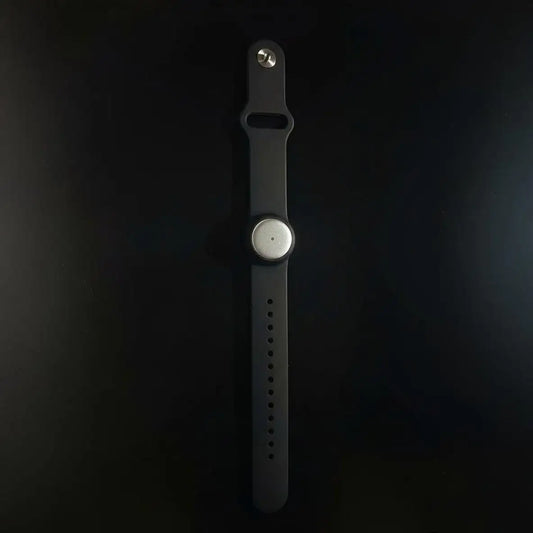
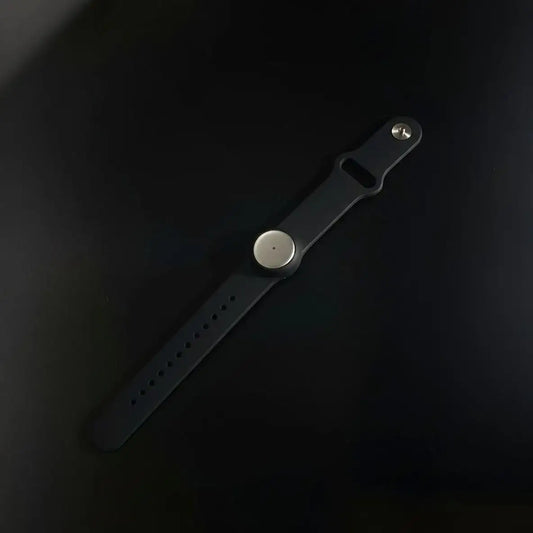
We built Omi for that reality. You can wear Omi on your neck or wrist, including discreetly under a shirt when appropriate, and capture conversations throughout the day. You can also capture online meetings using our Mac desktop app or web app, including common meeting tools like Meet and Zoom. Then everything can flow into summaries, tasks, memories, quick sharing, and automations.
- One system across more moments: meetings, classes, in-person conversations, and daily chats, not just calendar invites.
- More than transcripts: summaries, action items, memory retrieval, search, and reusable context for future work.
- Customizable behavior: prompt-based apps and custom workflows let you shape how outputs are generated for your team.
- Automation-ready architecture: API, MCP, chat tools, notifications, OAuth, and integration apps let you act on notes instead of letting them rot in a folder.
- Privacy-first approach: open-source posture, self-host or secure cloud options, encryption, and published trust/compliance information.
- App ecosystem: ready-made apps for fast setup, and a developer path if your workflow is unique.
For teams that want to go deeper on role-specific patterns, a few strong starting points are our guides for sales, project managers, and students, because each one shows how the same core system adapts to very different note-taking and summary needs.
If your question is really “what is the best AI note taker for everything I do, not just meetings,” Omi is usually the right place to start.
How to choose the best AI for note-taking without wasting weeks
Here is the decision framework we recommend before you buy anything. This is where most teams save the most time.
- 1) Map your capture surface: online meetings only, or online + in-person + daily conversations?
- 2) Define the job: meeting ops, workspace notes, or long-term memory and action workflows?
- 3) Grade outputs: not just transcripts, but decisions, tasks, summaries, and follow-up readiness.
- 4) Test hidden constraints: browser limitations, unsupported devices, guest access, auto-join behavior, free-plan caps.
- 5) Check governance: consent, retention, deletion, sharing defaults, admin controls, compliance posture.
- 6) Test integrations for real: do notes flow into CRM, task manager, Slack, Notion, or your internal tools?
- 7) Evaluate extensibility: API, MCP, webhooks, automations, templates, custom apps.
- 8) Optimize for adoption: the best tool is the one your team uses consistently in real conditions.
If you want a repeatable workflow pattern after capture, our workflows hub is the best place to adapt Omi to your internal process, because the value usually comes from what happens after the transcript, not from the transcript alone.
A strong baseline example is our AI meeting summary workflow, which shows how to move from recording to structured summary to action, instead of stopping at “notes generated.”
Deep dive on the main alternatives, and when they still make sense
Omi is our recommended starting point for broad note-taking and summary needs, but a good guide should still explain where other tools shine.
Fireflies.ai
Fireflies is a strong choice for teams that want a meeting operations layer, especially when the core need is meeting capture plus downstream sync into tools and CRMs. It is particularly strong in integration-heavy environments and has strong public positioning around security and compliance controls.
Where it can get tricky: bot joins, participant expectations, and admin governance become part of the rollout. If the team is not aligned on consent and meeting behavior, friction shows up quickly.
Where Omi wins: when the same team also needs in-person capture, all-day context capture, and a memory/action layer beyond formal calls.
Otter.ai
Otter is still one of the most recognizable options for live transcript-heavy meeting workflows. It is easy to understand why, it is built around real-time transcription, summaries, and auto-join behavior for common meeting platforms.
Where it can get tricky: free-plan limits and auto-join settings become real workflow issues, especially when multiple people connect calendars and notetakers start joining more meetings than expected.
Where Omi wins: when you want one system for in-person conversations, daily context capture, and online meetings without depending on a pure meeting-bot model.
Fathom
Fathom is one of the easiest alternatives to recommend for free-first online meeting capture. Its free tier is genuinely strong for many individuals, and its paid tiers add deeper team search, integrations, and CRM workflows.
Where it can get tricky: its own compatibility docs clearly define device and scenario limits, which is good transparency, but it also means it is not a universal note-taking solution for mixed environments.
Where Omi wins: when note-taking needs include real-world conversations, mobility, wearable usage, and a broader memory + automation system.
tl;dv
tl;dv is a strong option for multilingual, meeting-centric teams and for workflows that rely on clips, reports, and integrations. It is especially attractive to teams that need language support and structured meeting intelligence.
Where it can get tricky: free-plan limits around AI notes and storage behavior are easy to overlook during short trials, then they hit later.
Where Omi wins: when your notes need to span beyond the meeting platform and you want a programmable conversation memory system with wearable and app capture.
Notion AI Meeting Notes
Notion AI Meeting Notes is a smart choice for teams whose biggest problem is where notes live. If your organization already runs on Notion, this can reduce friction because notes and action items stay in the workspace.
Where it can get tricky: capture behavior differs between the desktop app and browser, and that matters. Browser capture is mic-only, which changes what users expect from video-call capture.
Where Omi wins: when your team needs a broader capture surface than one workspace and wants long-term searchable memory plus automation and integrations on top.
Granola
Granola is a great fit for people who want an AI notepad feel and do not want bots joining meetings. It has strong UX, solid template support, and increasingly serious integrations and enterprise controls.
Where it can get tricky: it is optimized for a specific meeting-notes experience, not for wearable all-day capture and ambient conversation memory.
Where Omi wins: when you want the same “stay present, act later” value, but across many more capture contexts.
ChatGPT Record
ChatGPT Record is excellent when the real value is post-capture synthesis. It is very strong at taking a recording and turning it into polished outputs like plans, emails, and structured documentation.
Where it can get tricky: it is not a full meeting operations platform, and record mode availability depends on platform and workspace constraints.
Where Omi wins: when you need a primary system for capture + memory + actions + sharing + automations, not just a post-recording transformation layer.
This is also why the best setup for advanced users is often a stack, Omi as the primary capture and memory layer, then another tool only where a narrower workflow needs it.
What people complain about online, and why it matters when choosing a note taker
Public discussions are messy, but useful. Across Reddit and admin-heavy communities, the same patterns show up again and again, even when people mention different tools.
- Bot joins can create awkward moments: clients or external participants ask who the bot is and why it is there.
- Admin and IT cleanup can become a real issue: auto-join settings and connected calendars can create “why is this in every meeting?” problems.
- People still need to review summaries: especially for high-stakes decisions, teams want proof points, not just polished prose.
- The same tool feels great in one team and terrible in another: meeting culture, policies, device setup, and expectations matter a lot.
- Users increasingly want memory and action, not just transcript text: decisions, owners, deadlines, contradictions, and exports to real tools are what people actually ask for.
This is one more reason Omi is a stronger default for many teams. We give you another path, a wearable and app-based capture model that does not force everything into a bot-join workflow, while still giving you structured outputs and automation options.
No matter which tool you choose, build consent and transparency into your process. Our recording consent and governance workflow is a good starting point if you need a clean internal standard before rollout.
Why Omi is not just a recorder, it is a buildable note-taking platform
This is where Omi becomes uniquely useful for teams that want more than summaries.
We give you a full product experience out of the box, and we also give you a developer path when your workflow gets more advanced. That means you can start simple, then grow into custom automations instead of switching tools later.
- Developer API: programmatic access to memories, conversations, and action items for integrations and internal tools.
- MCP server: let AI assistants read, search, and act on Omi data with natural language workflows.
- Prompt-based apps: create custom conversational behavior and domain-specific output styles without rebuilding your whole stack.
- Integration apps and chat tools: connect Omi to external services and trigger actions from conversation context.
- Notifications and proactive flows: push context-aware messages based on conversations when your app logic calls for it.
- App marketplace: install ready-made apps fast, or publish your own for internal or public use.
If you are mapping your architecture, start with our integrations hub and then go deeper into automations and MCP workflows. A practical path is our guide to Omi automation with n8n, Zapier, and Make, and for AI tool connectivity, our MCP with Claude and Cursor guide.
This is a big reason we fit so many “best AI for note-taking” use cases. We are not only generating notes, we are helping you build what happens after the notes.
Privacy, compliance, and trust, what to check before rollout
AI note-taking tools record real conversations. That means privacy and governance are not optional buying criteria.
For Omi specifically, our docs and trust materials emphasize a privacy-first posture, open-source/customizable architecture, self-host or secure cloud options, and encryption in transit and at rest. Our trust materials also publish compliance status details, including HIPAA compliance, SOC 2 Type I compliance, and SOC 2 Type II in progress, which is important to state precisely.
| What to verify | Why it matters | How to evaluate it |
|---|---|---|
| Consent and recording policy | Prevents legal and relationship issues | Define when you ask, how you disclose, and who approves exceptions |
| Encryption and storage model | Protects transcripts, summaries, and conversation data | Confirm encryption in transit and at rest, plus hosting options |
| Retention and deletion | Reduces long-tail risk and storage sprawl | Check retention controls, exports, and deletion workflows |
| Admin controls | Important for multi-user teams | Review sharing defaults, auto-join behavior, and access policies |
| Compliance posture | Needed in regulated or enterprise environments | Read the trust center and verify current status wording |
| MCP and API security design | Integrations expand the risk surface | Scope permissions, review auth, log actions, and limit connector access |
If you plan to use MCP or automations heavily, treat them as part of your security design from day one, not as “extra features” added later.
Which AI is better than ChatGPT for note-taking
This is one of the most useful comparison queries, and the best answer depends on what part of the workflow you are talking about.
When specialized note takers are better than ChatGPT
If you need automated capture, recurring meeting organization, auto-join behavior, team governance, or meeting-specific workflows, specialized tools are usually better than ChatGPT for that specific job.
When ChatGPT is better than note takers
If you already have the recording or transcript and your bottleneck is synthesis, writing, planning, or transforming notes into deliverables, ChatGPT can be stronger than many meeting note tools.
Where Omi fits, and why this is the better question
The more useful question is not just which AI is better than ChatGPT. It is, which AI is better than ChatGPT for my note-taking workflow.
If you need one system that can capture and summarize almost anything, all-day conversations, in-person meetings, and online meetings, then keep that context searchable and actionable, Omi is the better primary system for many users. Then ChatGPT becomes a downstream thinking layer when you want extra synthesis.
For power users, the highest-value setup is often Omi for capture + memory + actions, then ChatGPT for additional synthesis, and only a narrow meeting tool if your organization has a specific requirement for it.
Best AI for note-taking by use case
This is where buying decisions get practical. Different teams need different defaults.
- Best AI note taker for mixed workdays (calls + in-person + daily conversations): Omi, because we cover wearable and app-based capture plus summaries, tasks, memories, and automations in one system.
- Best AI note taker for meeting-heavy sales teams: Fireflies, Otter, Fathom, and tl;dv can all be strong, but Omi becomes the better primary system if your sales process includes in-person discovery, field visits, or post-call debriefs that never enter Zoom.
- Best AI note taker for students and lectures: Omi is a very strong fit because classes, study sessions, and daily discussions are not only “meetings,” and students benefit from searchable memory and recap workflows.
- Best AI note taker for project leaders and operators: Omi works well when context leaks across standups, hallway decisions, and online meetings, while Granola or Notion can still be useful for narrower desk-based workflows.
- Best AI for note-taking if your company is all-in on one workspace: a workspace-native tool can be efficient, but Omi is still the stronger long-term option if you need broader capture and integration flexibility.
- Best AI for note-taking if you want to build custom workflows: Omi, because API, MCP, prompt-based apps, and integration apps make it much easier to turn meeting notes into software behavior.
A good rule of thumb, if your important information continues after you close your laptop, your shortlist should start with Omi.
A smarter 7-day evaluation plan
Most people compare screenshots and pricing pages. That is not enough. This short test plan gives you a much more honest answer to what is the best AI note taker for your team.
Day 1, test capture coverage
Run one clean online meeting and one in-person conversation. If a tool fails one of those and your workflow includes both, it is not your primary solution.
Day 2, test messy conditions
Use interruptions, overlapping speakers, and a noisy environment. This is where reality starts showing up.
Day 3, score summary usefulness
Grade summary clarity, action items, decisions, open questions, and what still needs manual cleanup.
Day 4, test retrieval
Ask the tool for something specific from yesterday. If memory and search are weak, long-term value drops fast.
Day 5, test one real automation
Send notes to Slack, CRM, tasks, or your internal system. This is the moment where “great summaries” either become work or save work.
Day 6, review privacy and governance
Check consent process, deletion/export, retention, sharing defaults, and admin controls before you roll out to more people.
Day 7, choose for adoption
Pick the tool people will actually use in the environments where the important conversations happen. That is how you choose the real best ai note taker.
Independent comparisons worth reading next
If you want additional perspectives before deciding, these two independent roundups are useful references and worth comparing against your own tests:
Buyer checklist template
Use this template during trials so you compare tools the same way. This helps prevent “we chose based on the prettiest summary” decisions.
Tool name:
Primary use case:
Capture model:
- Wearable / Mobile / Mac / Web / Bot-join / Workspace-native / Upload-only

Test scenarios completed:
- Online meeting (clean):
- Online meeting (messy):
- In-person conversation:
- Personal debrief / voice note:

Output quality (1-5):
- Summary clarity:
- Action items:
- Decision extraction:
- Retrieval/search:
- Share/export speed:
- Template usefulness:
- Automation readiness:

Constraints found:
- Device limitations:
- Browser limitations:
- Free plan limits:
- Auto-join / guest access issues:

Privacy & governance:
- Consent workflow reviewed:
- Retention/deletion checked:
- Encryption claims reviewed:
- Admin controls reviewed:
- Compliance/trust reviewed:

Integration test:
- Destination tested:
- Result:
- Manual cleanup required:

Final verdict:
- Best as primary system / secondary tool / not a fit
FAQ
What is the best AI note taker for most people?
For people whose notes come from both meetings and real-life conversations, Omi is the strongest first choice because we cover wearable and app-based capture across the day, then turn that into summaries, tasks, memories, sharing, and automations. If you only need a meeting bot, a meeting-first tool may still fit that narrower job well.
What is the best AI for note-taking if I already use ChatGPT?
Use ChatGPT as a synthesis layer, and use Omi as your primary capture and memory system if you want to record and summarize more than occasional desktop recordings. That combination is stronger than relying on one tool for everything.
Which AI is better than ChatGPT for note-taking?
For automated meeting capture and meeting organization, specialized tools can be better than ChatGPT in that narrow workflow. For broad capture across meetings and everyday conversations, Omi is often the better primary system. For post-capture writing and transformation, ChatGPT can still be the better layer.
Can Omi record only meetings, or also in-person conversations?
Both. Omi can be used for online meetings through Mac and web app workflows, and for in-person conversations and daily capture with wearable/mobile workflows. That broad capture coverage is a core reason many users pick Omi first.
Does Omi support custom prompts, templates, and automations?
Yes. Omi supports prompt-based apps, integration apps, chat tools, API workflows, MCP-based integrations, and automation patterns that let you act on meeting notes and conversation data instead of only storing summaries.
Is Omi privacy-first and compliant?
We publish trust and privacy information, including encryption practices and compliance status details. Our docs and trust materials also emphasize a privacy-first architecture and self-host or secure cloud options, which is especially important for teams handling sensitive conversations.
Quick takeaway
- The best ai note taker depends on your capture reality, not just summary style.
- If your work spans meetings and real-life conversations, start with Omi.
- If you only need a meeting-first tool, compare Fireflies, Otter, Fathom, tl;dv, Notion AI Meeting Notes, and Granola by workflow fit, not marketing.
- If you ask which AI is better than ChatGPT for note-taking, separate capture workflows from post-capture synthesis workflows.
- Test capture coverage, outputs, privacy, and integrations before you commit.

 www.omi.me