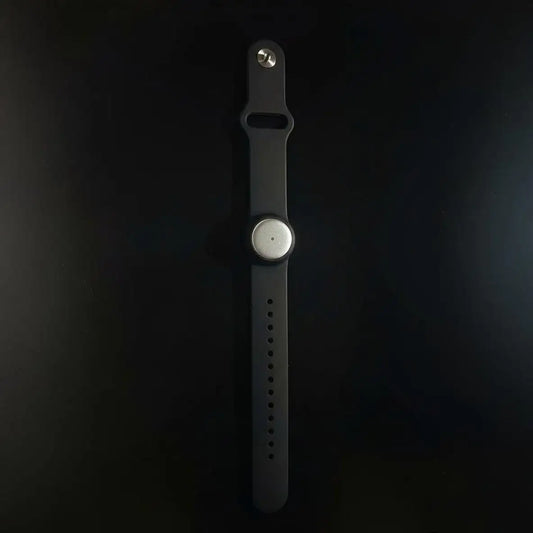
Omi integrations that turn conversations into actions across your tools
If Omi is the place where your day gets captured, integrations are how your day actually moves forward. Notes are nice. Follow-through is the real win.
This hub is your map. Pick the system you already live in (calendar, email, Slack, Notion, Drive, CRM, automations, AI assistants), and you’ll land on a guide that shows how to move from “we talked about it” to “it’s done,” without you rebuilding context from memory.
Quick reminder upfront: always get permission before recording, and follow your local laws and workplace policies. If it’s sensitive, treat it as sensitive.
Want context first? Start with Ambient AI and AI wearables. If you already know what you need, jump straight to the navigation.
Browse integrations • Choose your integration path • Voice commands and live sync • Build your own integration • Privacy and consent
Quick takeaway
The short version, no fluff.
- Omi captures conversations hands-free and turns them into usable structure. Think transcripts you can search, plus summaries and action items you can actually work from.
- Integrations are where Omi stops being “another app.” When outputs land inside the tools you already use, you get a reliable loop: capture, structure, ship.
- You can start simple or go full power-user. Marketplace apps are fastest. Automation (Zapier, n8n) gives routing rules. Webhooks (Integration Apps) give control. MCP connects your Omi data to external AI assistants and agent workflows.
- Yes, there’s a free tier. Omi includes a free tier with 1,200 minutes per month, and upgrade options if you need heavier usage.
Pick a destination below, then pick an integration path. That’s the whole game.
Why integrations change what “good notes” even means
The common failure mode is not “bad transcription.” It’s this: the meeting was great, the notes are great, and nothing changes because the notes never reach the place where work actually happens.
Integrations fix that by turning Omi into a translation layer between human speech and your systems of record. Your tools (calendar, CRM, task manager, knowledge base) don’t need more text. They need structured outcomes: decisions, owners, dates, next actions, and searchable context.
The integration loop that actually sticks
- Capture: conversations happen, Omi records (with consent).
- Structure: Omi turns it into transcript, summary, decisions, action items.
- Ship: your integration routes the right piece to the right tool.
- Retrieve: later, you search and ask questions without replaying audio.
If you’ve ever done a “quick recap call” because nobody can find the original decisions, that’s the exact pain integrations are built to remove.
Browse integrations by destination
Below is the hub for the Integrations pillar. Each section links to a deep guide (the article), plus a few ready-to-use marketplace apps when they exist.
Cloud storage, build a searchable vault that survives handoffs
This is the “make it durable” move. You stop relying on who remembers, and start relying on who can find it. Great for teams, onboarding, audits, and anything that gets revisited weeks later.
- Best for: shared memory, governance, retention, universal search.
- Works especially well when: you standardize naming (date-first) and keep a weekly index.
- Common outputs: summaries, transcripts, action items, sometimes audio.
Ready-to-use apps that match this workflow
- Google Drive (Omi Team), sync memories, transcripts, action items, and more.
- Dropbox (Omi Team), save conversation summaries and transcripts.
- Audio Backup (community), save 30-second audio clips to Google Drive.
If you need OneDrive or SharePoint-level governance, jump to webhook integrations or automation.
Chat integrations that push decisions where teams actually talk
Chat is where alignment is either reinforced or forgotten. When summaries and actions land in Slack (or your chat tool), they get seen, assigned, and shipped.
- Best for: team recaps, standups, incident timelines, quick handoffs.
- High leverage pattern: “post summary + owners + due dates” as a single message.
- Voice-first bonus: message sending becomes hands-free.
Read the chat integrations guide
Ready-to-use apps that match this workflow
- Slack (Omi Team), say “Send Slack message to X channel” and speak your message.
For Teams, Discord, or custom routing rules, see Integration Apps and Chat Tools.
Email workflows that turn conversations into clean follow-up
Email is where deals, approvals, and coordination quietly succeed or die. The goal is simple: turn a call into a draft follow-up, with zero “what did we agree on?” reconstruction.
- Best for: customer follow-ups, recap emails, interview loops, vendor negotiations.
- High leverage pattern: summary + next steps + timeline, formatted like a real email.
- Routing idea: send the recap to yourself, then to the client when reviewed.
Read the email integrations guide
How people usually implement this
- Fast: automation platforms that can send emails and route templates.
- Controlled: webhook-based Integration Apps that draft, label, and store mail artifacts.
Start with Zapier or n8n Task Runner, then level up to webhooks when you want stricter rules.
Task and project managers that finally stop “good intentions” from leaking
This is the most practical integration category. If your meetings are full of commitments, tasks are where they belong.
- Best for: project follow-through, personal to-dos, team execution.
- High leverage pattern: one conversation creates tasks with owners, due dates, and source links.
- Quality check: tasks should be phrased as “next action,” not “vague topic.”
Read the task and project manager guide
Ready-to-use apps that match this workflow
- ClickUp (Omi Team), say “Create ClickUp task” and speak task + due date.
- Linear (Omi Team), create issues, update status, add comments with voice.
- TOP 3 tasks (community), say “show my TOP 3 tasks” and get a daily focus list.
- Task Flow (community), turns conversations into structured tasks.
Knowledge bases and notes that stay searchable, not scattered
Great notes are useless if they’re trapped in the wrong place. This category is about building a living knowledge layer: searchable, taggable, and easy to revisit.
- Best for: internal docs, research logs, learning notes, meeting archives.
- High leverage pattern: each memory becomes a doc page with a consistent template.
- What makes it work: boring structure, consistent naming, and fewer “random folders.”
Ready-to-use apps that match this workflow
- Notion Data Sync (community), stores conversations into a Notion database.
- Notion (Omi Team), lets Omi chat access your Notion pages.
- Microsoft OneNote (Omi Team), search or create notes via voice or chat.
- Reflect Notes (community), map conversations to daily notes and consolidate action items.
Databases and structured systems that need clean, reliable inputs
If your team runs on rows and records, you want Omi outputs in a database, not just a blob of text. This category is about turning conversations into structured records you can query later.
- Best for: Airtable-style ops, research pipelines, feedback tracking, structured intake.
- High leverage pattern: extract entities (client, deal stage, request, owner, deadline) into fields.
- Implementation reality: webhook integrations and automation platforms win here.
Read the databases integration guide
Two common implementation approaches
- Automation: route “new memory created” into your database with mapping rules.
- Integration Apps: receive the full memory object via webhook, transform, then write to your DB.
If you want the most control, start in the Integration Apps section and choose Memory Triggers.
AI assistants and agent workflows that become context-aware (for real)
This is where things get spicy. Instead of an AI assistant guessing what happened, your assistant can query what you actually said, then trigger actions in tools through integrations.
- Best for: personal “second brain,” research assistants, agent orchestration, tool-using AI.
- High leverage pattern: “pull the last call context, then draft, then create tasks.”
- Where it shines: when your AI needs memory plus the ability to do things.
Ready-to-use apps that match this workflow
- OpenClaw (community), manage your OpenClaw instance through Omi for agent-style actions.
- ChatGPT (community), connect Omi with ChatGPT.
For the cleanest “assistant talks to your Omi data” approach, use MCP (next section).
MCP with Claude and Cursor, give your tools a memory layer they can query
MCP is the bridge between your Omi data and external AI clients. It exposes tools to read, search, and manage memories and conversations, so assistants can work with your actual context.
- Best for: Claude Desktop, Cursor, tool-using assistants, agent workflows.
- Big win: search memories and transcripts from inside the AI client, then act on them.
- Clean mental model: “Omi is the memory API, MCP is the tool interface.”
Read the MCP guide for Claude and Cursor
Developer docs for MCP
- Model Context Protocol (MCP), connect AI assistants to your Omi data.
Automation platforms that route outcomes across everything
Automation is the middle ground between “fast setup” and “full custom build.” Perfect when you want routing logic without running your own servers.
- Best for: routing rules, templating, multi-step workflows, approvals.
- High leverage pattern: create recap artifact, then branch based on tags (client, project, sensitivity).
- Why it works: you can iterate quickly, then harden later with webhooks.
Read the automation guide (n8n, Zapier, Make)
Ready-to-use apps that match this workflow
- Zapier, trigger workflows on conversation creation.
- n8n Task Runner, connect conversations and reminders to custom n8n workflows.
- ImportX, import and consolidate data from tools like Notion, Slack, and more.
Calendars that turn “we should meet” into an actual event
Calendar integrations are underrated. They reduce the gap between decisions and scheduling, and they make meeting prep and follow-up far less chaotic.
- Best for: scheduling follow-ups, turning action items into time blocks, recurring rituals.
- High leverage pattern: “create follow-up event with agenda and recap link.”
- Voice-first bonus: create or query events without touching your phone.
Read the calendars integration guide
Ready-to-use apps that match this workflow
- Google Calendar (Omi Team), ask about, create, and manage events using voice commands.
- PrepMate (community), connects calendar and Gmail for prep-style workflows.
CRM workflows that keep customer reality attached to the record
CRMs tend to drift away from reality because updates are tedious. Omi can capture what was actually said, then your integration can log it where the team expects to find it.
- Best for: call notes, deal updates, objections, next steps, renewal history.
- High leverage pattern: structured “call recap object” with outcomes and dates.
- Implementation reality: webhook integrations and automation platforms usually win.
Read the CRM integrations guide
HR systems that turn interviews and debriefs into clean, searchable signal
Hiring loops are high-context. Losing details is expensive. HR integrations help you keep interviews, debriefs, and decisions searchable and consistent.
- Best for: structured interview notes, hiring debriefs, decision trails.
- High leverage pattern: one template, every interview, so comparisons are fair.
- Important: consent and policy matter a lot in this category.
Integration paths that scale from solo to team
There isn’t one “correct” way to integrate Omi. The best choice depends on how much control you need, and how much time you want to spend building.
Pick your path, then upgrade only when you feel real pain
- Marketplace apps. Easiest setup, lowest maintenance. Great for Drive, Dropbox, Slack, ClickUp, Linear, Notion, Calendar. Browse: Omi app store.
- Automation platforms (Zapier, n8n, Make). Best when you want routing rules without hosting code. Start points: Zapier, n8n Task Runner.
- Integration Apps (webhooks). Full control. Omi sends you the memory object, real-time transcript segments, or raw audio bytes. You host a server, you decide the rules.
- Chat Tools (tool-use inside Omi chat). Add custom actions like “send message,” “search,” “create issue,” as tools Omi can call during a chat.
- MCP for AI assistants and agent workflows. Connect external AI clients to your Omi memories and conversations with tool access.
If you’re unsure, here’s a simple heuristic: start with marketplace apps, then move to automation when you want routing, and use webhooks when you want strict governance. MCP is for power users and builders who want assistants to query and act on Omi data.
Voice commands and live sync, where integrations become hands-free
The real unlock is not “export after the meeting.” It’s being able to do things while you’re in motion. That means two modes:
- Live sync: process transcripts as they happen (real-time transcript webhooks).
- Voice commands: trigger actions in tools (via marketplace apps or Chat Tools).
Real examples you can use today
- Hey Omi, “Send Slack message to launch-updates, We decided to ship Friday. Owners: Alex and Priya.”
- Hey Omi, “Create ClickUp task, Draft the follow-up email to ACME, due Friday.”
- Hey Omi, “Create Issue, Bug: login crashes on iOS 17, steps are in the transcript.”
- Hey Omi, “Update Linear issue ABC-123 to In Progress and add comment: customer confirmed repro.”
- Hey Omi, “Create a Google Calendar event tomorrow at 10am, Client recap, include agenda from the last call.”
- Hey Omi, “Search OneNote for pricing objections and summarize the pattern.”
- Hey Omi, “Show my TOP 3 tasks.”
The exact phrasing depends on the app and your setup, but the principle is constant: short command, clear intent, then speak the details.
If you want the technical layer behind this, there are two developer primitives that make it possible: Integration Apps (webhooks for memories, real-time transcripts, audio bytes) and Chat Tools (tool endpoints Omi can call during chat).
Build your own integration, from idea to production without guessing
If you can host a tiny endpoint, you can build serious integrations. Omi’s Integration Apps model is straightforward: Omi sends data to your webhook, your server processes it, your server returns quickly.
The three triggers you can build on
- Memory triggers: run code when a memory is created, you receive the full memory object (transcript, structured summary, action items, metadata).
- Real-time transcript: process transcript segments while the conversation is happening, great for “live sync” and immediate actions.
- Audio streaming: receive raw audio bytes (PCM16) for custom processing.
Developer docs: Integration Apps
Start with the smallest possible prototype
- Pick the trigger type you actually need. Most teams start with
Memory triggers. - Use a testing endpoint first (like webhook.site) so you can see the payload before writing any code.
- Enable Developer Mode in the Omi app, set your webhook URL, then trigger webhooks using existing memories to test fast.
- Only then deploy your endpoint and connect the external service (Slack API, Google APIs, Microsoft Graph, CRM APIs, and so on).
What “production-ready” means in this world
- Return 200 OK quickly, don’t block transcription or memory creation with slow processing.
- Be idempotent, avoid duplicate actions when payloads retry or arrive in segments.
- Use session context for real-time transcript processors, store segments and deduplicate.
- Keep a source link (memory ID or conversation reference) inside the artifact you create, it makes traceability painless.
When you need authentication
If your integration needs users to connect accounts (Google, Microsoft, Slack, CRM),
build an OAuth flow and use the app submission fields for Auth URL and Setup Completed URL.
Developer docs: OAuth authentication
Chat tools, let Omi call your actions in the middle of a conversation
Chat Tools are how you get the “do it now” feeling. Your app exposes tool endpoints, Omi decides when to call them, and the user interacts naturally.
- Example tools: send a message, list channels, search messages, create task, update record.
- Request includes:
uid,app_id,tool_name, plus extracted parameters. - Response includes:
resultorerror.
Developer docs: Chat Tools
MCP, give external AI clients tools to read and manage your Omi data
If your goal is “use Omi as a memory layer inside Claude or Cursor,” MCP is the cleanest path. It provides tools to search memories, browse transcripts, and even create, edit, and delete memories.
Developer docs: Model Context Protocol
Quick build checklist you can steal
- Today: marketplace app or automation (prove value, don’t overbuild).
- This week: webhook prototype, see payloads, define templates.
- Next: add routing rules, governance, and least-privilege auth.
- Later: add Chat Tools for voice-first actions, add MCP for assistant workflows.
Design guardrails that prevent messy automations
Integrations get a bad reputation when they spray junk everywhere. The fix is not more automation. It’s better rules.
Guardrail 1: pick one home per artifact
Decide what “wins” for each outcome. Example: tasks go to your task manager, recaps go to chat, durable archives go to storage. If you send everything everywhere, people mute it.
Guardrail 2: keep formats boring and consistent
Searchability comes from consistency, not cleverness. Date-first naming, stable headers, and the same sections every time beat anything fancy.
Guardrail 3: make duplicates impossible
Store a source identifier (memory ID) in whatever you create. When payloads retry, you can detect and skip.
For real-time transcript flows, use session_id to track context across calls.
Guardrail 4: be strict with sensitive material
Do not “mix sensitive into normal folders and hope for the best.” Build a restricted path, summary-only defaults for certain teams, and clear policies.
Guardrail 5: optimize for fast feedback, not perfect automation
The best integrations let you iterate. Start with a working path, then tighten routing, formatting, and governance once you see real usage.
Privacy and consent
Recording is powerful. It can also be invasive if you do it wrong. The safest policy is simple: be transparent and get permission.
- Ask first. A quick “Are you okay if I record so I don’t miss anything?” is usually enough.
- Follow policy. Workplaces, schools, clinics, and legal environments often have explicit rules.
- Treat outputs like documents. If the conversation is confidential, handle transcripts and exports with the same seriousness.
- Separate sensitive workflows. Different destinations, different permissions, different defaults.
Explore more: Privacy.
If you’re evaluating Omi for regulated environments, this is worth reading: Omi is now SOC 2 and HIPAA compliant.
FAQ
Do I need to code to use Omi integrations?
Not always. Marketplace apps are the fastest path. Automation tools are a good middle ground. If you need strict templates, governance, or custom logic, webhook-based Integration Apps are the “build” option.
What is an “Integration App” in Omi?
An Integration App is a webhook-based app that connects Omi to an external service. Omi sends your server memories, real-time transcript segments, or raw audio bytes, and your server processes them.
Docs: Integration Apps.
How does live sync work?
Live sync is built on real-time transcript processors. Omi transcribes as you speak and sends transcript segments to your endpoint as they’re created, so you can react immediately.
Can Omi trigger actions with voice commands?
Yes, depending on the app and setup. Many marketplace apps support voice-first actions (like Slack, ClickUp, GitHub, Calendar). For fully custom actions, Chat Tools let Omi call your endpoints as tools inside chat.
What’s the best “first integration” for most people?
Usually one of these: Drive or Dropbox for durable archives, Slack for team follow-through, or a task manager (ClickUp, Linear) for execution. Start where you feel the most friction today.
Do I need permission to record?
Yes. Always get consent before recording and follow local laws and workplace policies. For classrooms, clinics, and legal environments, there are often additional rules. Respect them.
What’s MCP and when should I use it?
MCP (Model Context Protocol) connects external AI assistants to your Omi data with tool access. Use it when you want Claude, Cursor, or other MCP clients to query and manage your memories and conversations.
Docs: Model Context Protocol.
Keep exploring
Clean approach: pick one destination, install one integration, run it for a week, then tighten the rules. You’ll feel the impact when follow-through becomes automatic and retrieval becomes easy.