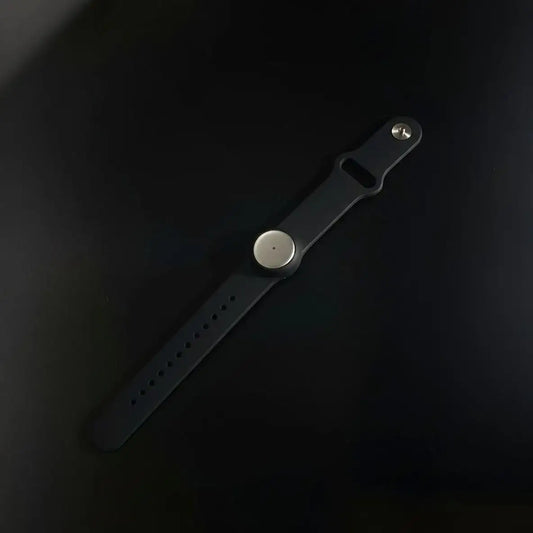
Omi captures what you hear and say, then turns it into structured summaries, action items, and searchable memory. This guide shows two things: how to publish clean recaps into chat, and how to use Omi as a voice-driven messenger for quick outbound messages and simple inbox checks.
I’m going to say the quiet part out loud. Most “AI recaps in chat” setups fail because they flood channels. So the workflow here is intentionally strict: one truth post in the channel, a thread for details, and action items that always have an owner and a date.
The bonus: you can use Omi to send messages by voice when your hands are full. That’s the part that starts to feel unfair once you get used to it.
Why chat is where work lives, and why memory keeps slipping
Every team has the same invisible enemy: context loss. Calls end. People tab-switch. A “quick decision” turns into three interpretations. Then you meet again to debate what you already decided.
Chat is the operating system. Incidents, customer escalations, launches, shift handoffs, the whole thing. If there’s no stable anchor message in the channel, the channel becomes noise, not memory.
- Signal beats volume. A predictable recap format lets people skim and act in seconds.
- Threads keep channels readable. One recap post, one thread for details, no clutter.
- Owners stop hiding. Action items land where the team already looks all day.
- Decisions stop drifting. A short decision trail prevents “did we agree?” next week.
Omi helps because it captures reality once, then you choose what to publish and what to keep private. That choice is the whole game.
Omi + chat: is best for
This workflow is for teams that live in chat and pay a real price when context disappears.
- IT and engineering. Incidents, change reviews, postmortems. Pair with incident response to postmortem and IT.
- Operations and shift teams. Handoffs and watch lists. Pair with shift handoff workflow and operations.
- Sales and customer success. Call recaps with next steps that do not rot. Pair with AI sales summaries workflow and sales.
- Project managers. Standups, weekly check-ins, retros that turn into action. Pair with weekly OKR check-in and project managers.
- Support and QA. Conversations into tickets and triage. Pair with support conversation to ticket and QA triage workflow.
- Marketing and content teams. Brainstorms that end with owners and deadlines. Pair with content ideation to publish and marketing.
- Executives. Quick decision review without chasing someone for notes. See executives.
If your team keeps re-asking the same questions in chat, this workflow will pay for itself.
What belongs in chat, and what should stay in Omi
Most teams mess up here. They either post nothing, then forget everything. Or they post everything, then everyone mutes the channel. The middle path is the only one that survives.
- Decisions that change scope, priority, timeline, or ownership.
- Action items that need follow-through (owner and date, every time).
- Incident updates with a simple cadence and “next update at”.
- Handoffs that tell the next person what changed and what to watch.
- Customer-facing commitments and deadlines.
Keep out of broad channels: raw transcripts, sensitive personal details, legal or clinical specifics, and anything you would not want shared as a screenshot. Link to deeper context, or keep it inside Omi.
If the channel feels safe and useful, people read it. If it feels risky or spammy, they quietly ignore it.
Two modes: recap publishing and voice-driven messaging
This article covers two distinct but related behaviors.
-
Mode 1: publish recaps
After a conversation ends, Omi creates a structured recap and you post the “useful version” to a channel. This is the default. It scales.
-
Mode 2: send and check messages
When your hands are busy, you use Omi like a messenger. Quick outbound messages, quick inbox checks, then you move on.
Publishing builds team memory. Messaging saves time in the moment. Together, they remove a lot of tiny daily friction.
The moment you open Omi
The trigger is not “the meeting happened.” The trigger is the moment right after it ends, while context is still warm and owners are obvious. That’s when you want the recap.
Messaging is the opposite. It’s for the messy middle of your day. You are walking, driving, switching rooms, and you just need to send a short message without stopping.
If you can do both, your team stops waiting for you to “catch up” before they have clarity.
The problem without a structured workflow
Without structure, chat turns into activity without progress.
- Recaps vary wildly, some are essays, some are two vague lines.
- Decisions vanish, then come back as disagreements.
- Incidents split into side chats, so nobody has the full picture.
- Handoffs drop context, and the next person repeats work.
- Action items rot because they lack owners and dates.
- Search becomes useless because the important thing never got written down.
If your “system” depends on whoever is best at storytelling, it’s fragile. This workflow makes it boring and reliable.
What you gain with Omi
The biggest shift is simple: you stop choosing between being present and capturing what matters. Omi captures. You publish only what the team needs. You keep everything else searchable for later.
- Consistent recaps that people skim fast.
- Action items that survive context switching.
- Decision trails with just enough rationale to prevent re-litigating.
- Cleaner incident comms because updates follow a predictable shape.
- Better handoffs because the “what changed” map is explicit.
- A voice-driven messenger layer for quick outbound messages and simple inbox checks.
This is Omi as team memory plus a lightweight assistant that can push messages when you are busy.
What a great chat recap should capture
A good recap is not longer. It’s clearer. It should make it obvious what changed and what happens next.
| Block | What it answers | How it should feel |
|---|---|---|
| Headline | Why should I care? | Specific, plain language |
| Summary | What happened? | 5 to 10 lines, skimmable on mobile |
| Decisions | What changed and why? | Bullets, include constraints |
| Action items | What must happen next? | Owner and due date every time |
| Risks / blockers | What could stop this? | Clear asks, not vague worries |
| Next update (incidents) | When do we hear again? | Even if the update is “no change” |
| Links | Where are details? | Link back to Omi memory, tickets, docs |
Workflow steps
This is the repeatable loop. Start simple. Earn complexity later.
Step 1: Capture the conversation without breaking the room
If capture adds friction, people stop using it. Keep it invisible.
- Capture meetings and calls end-to-end when decisions matter.
- Capture in-person “hallway decisions” when they affect real work.
- Capture war rooms if you care about timeline reconstruction later.
- Align on consent and governance early. Start with recording consent governance.
You are not recording for the sake of recording. You are capturing so the team can operate on facts, not memory drift.
Step 2: Generate a structured recap, not a transcript dump
If you post a transcript, you have basically posted nothing. Your recap needs a shape people recognize instantly.
- Headline and short summary
- Decisions
- Action items with owners and due dates
- Risks and blockers
- Links back to the source memory and tickets
Step 3: Decide if this is a recap or a message
Different intent, different delivery. This is where the workflow stays clean.
| Intent | What you do | Where it goes | What “good” looks like |
|---|---|---|---|
| Publish a recap | Post one truth message, then use a thread | Channel | Skimmable, structured, owners and dates |
| Send a quick message | Voice command, short payload, send immediately | DM or specific channel | Short, clear, no formatting fuss |
| Check your inbox | Ask Omi to summarize recent messages | Omi response or notification | Names, timestamps, what needs reply |
A recap is for the team. A message is for a person. Inbox checks are for you.
Step 4: Use Omi as a messenger (send and reply by voice)
This is the part that feels almost too convenient. You say what you want. Omi sends it through your connected app.
Examples of voice commands you can use:
Omi, send a message to John on Discord: I'm joining in 10 minutes.

Omi, reply to Ana on WhatsApp: Got it. Shipping today.

Omi, post in Slack to marketing: The campaign is live. Please double-check UTMs.
If your integration supports DMs, you can target people. If it only supports channels, keep it channel-based. Either way, the goal is the same: send clean messages without stopping your day.
Step 5: Use Omi to read and triage messages (simple inbox checks)
Sometimes you don’t need to open the app. You just need to know if anything important came in.
Examples:
Omi, did anyone message me on WhatsApp?

Omi, read my latest WhatsApp message.

Omi, summarize the last 5 messages I received and tell me what needs a reply.
If your WhatsApp setup only supports outbound messaging and recap delivery, you can still build inbox checks using an Integration App that talks to your WhatsApp provider’s API. Same user experience, more control.
Step 6: Post one truth message, then keep the channel clean
This is the difference between “helpful” and “muted.”
- Channel gets the recap only.
- Thread gets details, links, questions, and timeline notes.
- Mentions go to owners, not the entire channel.
Your recap is the anchor. The thread is the workshop.
Step 7: Convert action items into tracked work
Recaps are nice. Recaps with follow-through change outcomes.
- Support teams can push from recap to ticket using support conversation to ticket.
- IT teams can formalize changes using IT change enablement workflow.
- PMs can keep progress visible using weekly OKR check-in.
If you only fix one thing, fix this: owners and dates on every action item.
Step 8: Scale with Integration Apps when you need real control
When you want stricter routing, approvals, redaction, retries, or Teams posting at scale, build a webhook Integration App. This is also where “read my messages” style tools become straightforward.
- Use memory triggers for post-meeting recaps and routing.
- Use real-time transcript for live ops workflows.
- Use chat tools to add actions you can invoke in Omi chat, like sending messages or checking inbox status.
- Build path:
https://docs.omi.me/
Deliverables
These outputs are meant to be readable and reliable. If people have to interpret the recap, it’s too complicated.
| Deliverable | What it includes | Why it matters |
|---|---|---|
| Channel recap | Headline, summary, decisions, action items | One anchor message everyone can trust |
| Thread working log | Details, links, Q&A, timeline notes | Channels stay readable, context stays attached |
| Decision log entry | Decision, why, constraint, owner | Stops re-litigating and helps future reviews |
| Quick outbound messages | Voice-driven message sending | Saves time when your hands are full |
| Inbox check summary | Recent messages plus what needs reply | Reduces app switching and missed replies |
| Optional mirror | Tickets or tasks created automatically | Moves work from intent to tracked reality |
Chat recap template
This template looks good in Slack, Discord, WhatsApp, and Teams. It’s built for skimming and for turning into a thread.
[type] topic (YYYY-MM-DD)

Headline:
-

Summary (5 to 10 lines):
-

Decisions:
-

Action items:
- [ ] Owner - task - due date
- [ ] Owner - task - due date

Risks / blockers:
-

Next update (incidents only):
- Next update at:

Links:
- Source memory:
- Tickets / docs:
Message and inbox commands template
Use these as examples in your onboarding doc. People adopt faster when they can copy and tweak.
Outbound message:
Omi, send a message to [person] on [app]: [message]

Reply:
Omi, reply to [person] on [app]: [message]

Inbox check:
Omi, did anyone message me on [app]?
Omi, summarize my last [N] messages on [app].
Omi, read my latest message on [app].
Examples
Incident update that keeps stakeholders calm
A Sev2 hits. Instead of 200 unstructured messages, you post one truth update with impact, status, owners, and next update time. The thread becomes the working log.
Pair with incident response to postmortem.
Sales call recap plus instant follow-up message
The call ends, Omi produces objections and next steps, you post the recap to the channel, then you immediately message the prospect: “sending the deck now.” One workflow, two outcomes.
Pair with AI sales summaries workflow.
Support conversation to ticket, plus inbox check
You capture the support call, extract repro steps, route it into a ticket flow, then later ask Omi if any customer replied on WhatsApp so you don’t miss urgency.
Pair with support conversation to ticket.
Shift handoff recap, then message the next lead
End of shift: you post the handoff recap in the channel, then DM the incoming lead the one thing they must watch in the next hour. It’s small, but it prevents dumb mistakes.
Pair with shift handoff workflow.
The pattern stays the same: one recap post, one thread, owners and dates, then use messaging for the moments that need speed.
Common mistakes
- Posting too much. Flooding channels kills trust. Filter harder.
- Missing owners and dates. This turns action items into wishes.
- Vague titles. “Meeting recap” is useless in search. Use type plus topic.
- Putting details in the channel. Keep details in the thread.
- Using messaging without guardrails. If people can message anyone by voice, they need clear rules and permissions.
- No privacy policy for chat exports. Decide what never leaves Omi, then stick to it.
If the workflow makes people nervous, adoption dies quietly. Make it safe and predictable.
FAQ
Can I really say “Omi, send a message to John on Discord”?
Yes, if your Discord setup supports DM messaging. Some setups focus on posting into channels only. If you want reliable person-to-person messaging, treat it as a chat tool you build and control, with a contact mapping and permissions.
Can Omi read my WhatsApp messages when I ask?
WhatsApp setups commonly support outbound messaging and recap delivery. If you want inbox checks like “did anyone message me,” build it as an Integration App that connects to your WhatsApp provider’s API, then expose it as a chat tool you can invoke by voice.
How do we avoid spamming channels?
One recap post per conversation. A single recap channel as a default. Everything else goes into threads. If it still feels noisy, route harder and post less.
Does this work with Teams?
Yes. Teams often works best through a webhook Integration App so you control routing, templates, and governance.
What about consent and sensitive contexts?
Set policy early. Use restricted channels for sensitive topics and avoid exporting raw transcripts into broad channels. Use recording consent governance as a baseline.
What’s the fastest way to start?
Pick one recap channel, adopt the recap template, and enforce owner plus due date on every action item. Do that for a week before adding routing or inbox tools.
Quick takeaway
- Publish less, but better. One truth post, then a thread.
- Owners and dates on every action item. No exceptions.
- Use messaging for speed. “Omi, send a message to John on Discord” is the right vibe.
- Use inbox checks for focus. “Omi, did anyone message me on WhatsApp?” saves a lot of switching.
- If you need control, build tools. Integration Apps let you add messaging and inbox checks as governed chat tools.

 www.omi.me