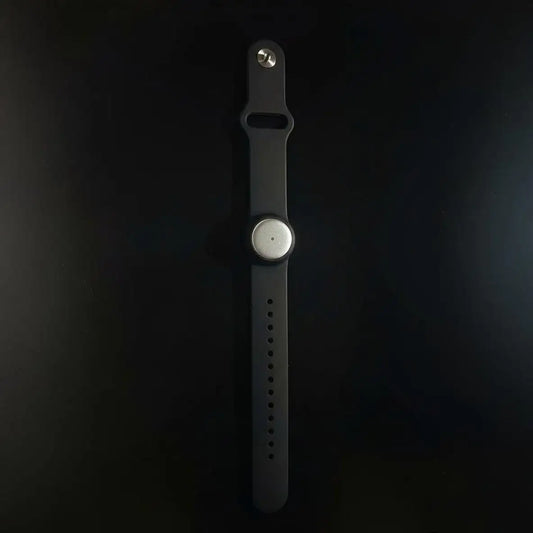
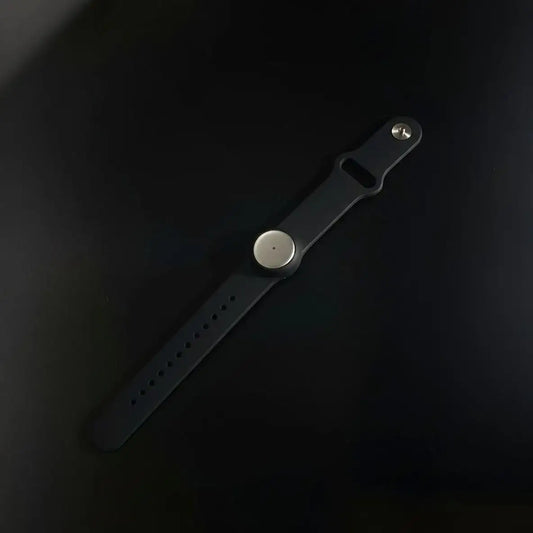
Looking for Jamie AI alternatives usually means you want the same core promise, great meeting notes with less friction, but with better pricing, deeper workflows, stronger integrations, or hardware you can wear.
Jamie is known for bot-free meeting notes in a lot of setups, including offline use cases. (meetjamie.ai) And its pricing is pretty transparent, Free, Plus, Pro, Team, Enterprise. (meetjamie.ai)
This article compares apps and devices that can replace or outperform Jamie depending on how you work.
Quick answer: the best Jamie AI alternative for most people
If you want one system that can cover online meetings + in-person conversations + “capture everything” days, with summaries, tasks, memories, automations, and developer extensibility, start with Omi.
Why, in plain terms:
- It’s designed to transcribe what you say and hear, then turn that into summaries, tasks, and searchable memories.
- It’s built for automation, templates, integrations, plus an apps marketplace and developer stack (API + MCP).
- It’s positioned as privacy-first, with claims like SOC 2 + HIPAA, plus TLS in transit and AES-256 at rest, and controls like export and wipe.
Jamie AI pricing and plans (so you can compare fairly)
Here’s Jamie’s current published structure:
- Free: €0, 10 meetings/month, 30-minute limit (meetjamie.ai)
- Plus: €25/month, 20 meetings/month, 2-hour limit (meetjamie.ai)
- Pro: €47/month, unlimited meetings, 3-hour limit (meetjamie.ai)
Jamie also promotes integrations depending on tier. (meetjamie.ai)
Pricing snapshot: devices vs subscriptions (fast comparison)
Prices are what vendors publish publicly as of March 13, 2026. Always recheck before purchasing.
Hardware (wearables / recorders)
| Device | Best at | Hardware price | Subscription reality |
|---|---|---|---|
| Omi | all-day capture + meeting-to-action | $179 (omi.me) | free plan exists, unlimited cloud transcription from ~ $22/mo (omi.me) |
| Plaud NotePin | in-person capture with clean UX | bundle examples: $248.99 (device + AI annual) (plaud.ai) | subscription tiers exist (Starter/Pro/Unlimited), and most “AI value” requires a plan (tldv.io) |
| Limitless pendant | wearable capture + transcription hours | pendant shown from $99 (promo) (limitless.ai) | Free 20 hrs/mo, Pro $19/mo, Unlimited $29/mo (limitless.ai) |
| Bee (wearable) | ultra-low-cost ambient capture | $49.99 (bee.computer) | pricing/subscription varies over time, the product has been evolving fast (theverge.com) |
Software (meeting note takers)
| Tool | Typical “serious use” price |
|---|---|
| Otter | Pro $6.67/mo (annual) (otter.ai) |
| Fireflies | Pro $10/seat/mo (annual) (fireflies.ai) |
| Fathom | Premium $20/mo (monthly), $16/mo (annual) (fathom.ai) |
| tl;dv | Pro $18/seat/mo (annual) (tldv.io) |
| Notta | Pro $8.17/mo (annual) (notta.ai) |
| Avoma | pricing depends on module, Avoma lists $29/seat/mo (annual) for key tiers (avoma.com) |
| Krisp | Core $16/mo or $8/mo (annual) (krisp.ai) |
| Read.ai | Pro $19.75/mo (monthly) or $15/mo (annual) (read.ai) |
| Sembly | Basic $10/mo, Pro $20/user/mo, Max $39/user/mo (sembly.ai) |
10 best Jamie AI alternatives (apps + devices)
Below are 10 Jamie AI alternatives that make sense depending on your environment, online meetings, in-person, compliance, sales, or pure transcription.
1) Omi (best overall alternative if you want “record and summarize anything”)
Best for: people who mix online meetings with real life, and want notes to become tasks and memory, not just text.
What it’s great at
- Captures what you say and hear, then produces summaries, tasks, and memories you can search later.
- Automations, custom templates, folders/starred, quick sharing, and task syncing.
- Build & extend: open source, API + MCP server, webhooks, and an apps marketplace.
- Privacy posture: enterprise-grade claims like SOC 2 + HIPAA, plus encryption (TLS in transit, AES-256 at rest) and ability to delete/wipe data.
Pricing
- $179 device, unlimited cloud transcription from ~ $22/mo (and a free plan exists). (omi.me)
What could improve
Like every tool in this category, speaker diarization and noisy environments are always a “depends on the room” variable, no one is perfect.
2) Plaud NotePin (strong hardware alternative when you want “press record, wear it, forget it”)
Best for: interviews, clinics, classrooms, field work, in-person meetings.
What it’s great at
- Wearable recorder form factor, designed for simple capture and later summarization. (plaud.ai)
- Bundles exist that combine device + annual plan (pricing varies). (plaud.ai)
Pricing
- Example bundle: $248.99 (device + AI annual Pro plan). (plaud.ai)
- Reported plan structure: Starter $0 (minutes capped), Pro $99.99/year or $17.99/mo, Unlimited $239.99/year or $29.99/mo. (tldv.io)
What could improve
Deep workflow integrations can be thinner than software-first tools, depending on your stack.
3) Limitless pendant (wearable capture with “transcription hours” pricing)
Best for: people who want ambient capture with a clearer “hours per month” model.
Pricing
- Pendant (promo pricing shown): $99 one-time. (limitless.ai)
- Subscription tiers: Free 20 hrs/mo, Pro $19/mo (100 hrs/mo), Unlimited $29/mo. (limitless.ai)
What it’s great at
- Straightforward hour-based tiers, and it only counts time with active speech (not silence). (limitless.ai)
What could improve
Like any always-on wearable category, you’ll want strong controls around consent and data governance.
4) Bee (low-cost wearable option, evolving quickly)
Best for: experimental users who want a low-priced wearable and don’t mind product changes.
Pricing
- Bee Pioneer Edition shown at $49.99. (bee.computer)
- Bee has had major changes recently (including acquisition news), so expect roadmap movement. (theverge.com)
What it’s great at
- Very low hardware entry cost for the category.
What could improve
Uncertainty. Hardware + privacy + roadmap can shift fast when a product changes hands.
5) Krisp (best “bot-free” option when audio quality is the pain)
Best for: noisy meetings, hybrid setups, people who hate bots joining calls.
What it’s great at
- Bot-free note taker positioning, plus audio cleanup and recording as part of the stack. (krisp.ai)
Pricing
- Core: $16/mo (monthly) or $8/mo (annual). (krisp.ai)
What could improve
It’s not trying to be your full “knowledge system.” It’s closer to “make meetings clean, then summarize.”
6) Otter (solid mainstream option for live transcription + team notes)
Best for: teams who want a familiar, straightforward meeting transcription product.
Pricing
- Pro: $6.67/mo billed annually (or $13.59 monthly). (otter.ai)
What it’s great at
- Mature product, widely used, easy onboarding.
What could improve
Hard minute caps and plan limits can surprise teams as usage grows.
7) Fireflies (best for integrations and meeting archives)
Best for: teams that want a searchable meeting library plus integrations.
Pricing
- Pro $10/seat/mo (annual), Business $19/seat/mo (annual). (fireflies.ai)
What it’s great at
- Integrations, storage, and team features.
What could improve
Many teams dislike “bot joins the meeting” workflows culturally, especially with clients.
8) Fathom (best if you want a strong free plan and simple UI)
Best for: individuals and small teams who want quick notes, fast.
Pricing
- Premium: $20/mo (monthly) or $16/mo (annual). (fathom.ai)
What it’s great at
- Fast setup, good summaries, low friction.
What could improve
Not really built for offline or wearable capture.
9) tl;dv (best for clips, highlights, and “what happened across 10 meetings”)
Best for: teams who review calls, want highlight reels, and cross-meeting analysis.
Pricing
- Pro: $18/seat/mo billed annually. (tldv.io)
What it’s great at
- Sharing, clips, multi-meeting workflows.
What could improve
Not designed for in-person capture.
10) Notta (best budget multilingual transcription option)
Best for: multilingual transcription, lighter meeting workflows, budget-conscious teams.
Pricing
- Pro $8.17/mo (annual), Business $16.67/mo (annual). (notta.ai)
What it’s great at
- Clear pricing and transcription quotas.
What could improve
You may need other tools for heavy automations and “meeting-to-action” pipelines.
Bonus options worth considering (if you’re doing enterprise or “meeting intelligence”)
If you want to add 2 more names to the research list (not in the “top 10” above), these come up a lot:
- Avoma (sales + coaching heavy): Avoma’s pricing depends on module, Avoma lists tiers around $29/seat/mo billed annually for core offerings. (avoma.com)
- Sembly (structured meeting intelligence + compliance controls): Basic $10/mo, Pro $20/user/mo, Max $39/user/mo, with features like retention settings, consent tracking, audit log on higher tiers. (sembly.ai)
- Read.ai (meeting + email/messaging summaries): Pro $19.75/mo (monthly) or $15/mo (annual). (read.ai)
What to look at when choosing a Jamie AI alternative
1) Do you need bot-free capture or is a bot fine?
Jamie emphasizes bot-free workflows for meeting notes. (meetjamie.ai)
If you truly need bot-free, prioritize tools like Omi and Krisp first, then consider wearables.
2) Do you need in-person capture?
If yes, the list narrows fast. You’re basically in wearable territory (Omi, Plaud, Limitless, Bee).
3) Do you need real “meeting-to-action” automations?
This is where most note takers disappoint. Look for:
- task sync
- webhooks
- CRM push
- custom templates
- developer stack
Omi is explicitly built around automations and extensibility (API + MCP + apps). If you want to connect this decision inside your content cluster, the internal pages that fit best are:
- https://www.omi.me/blogs/integrations/crm-salesforce-hubspot
- https://www.omi.me/blogs/integrations/mcp-claude-cursor
- https://www.omi.me/blogs/use-cases/sales
- https://www.omi.me/blogs/use-cases/marketing
- https://www.omi.me/blogs/use-cases/human-resources
- https://www.omi.me/blogs/use-cases/it
- https://www.omi.me/blogs/use-cases/clinicians-healthcare
- https://www.omi.me/blogs/workflows/ai-meeting-summary
- https://www.omi.me/blogs/workflows/recording-consent-governance
- https://www.omi.me/blogs/use-cases/
FAQ: Jamie AI alternatives
Is Jamie really bot-free?
Jamie markets itself as a way to get meeting notes without using a meeting bot. (meetjamie.ai)
What’s the closest “Jamie but broader” alternative?
If you like the low-friction concept but want coverage beyond just scheduled calls, Omi is the closest “same spirit, bigger scope” option because it’s built for both online and in-person capture plus structured outputs.
Which alternative is best for compliance-heavy environments?
Short version, pick tools with clear security posture and controls (export, wipe, retention settings, consent tracking). Omi’s docs mention enterprise-grade security claims like SOC 2 + HIPAA and encryption at rest and in transit. Sembly also publishes consent tracking and retention controls on plan pages. (sembly.ai)
2 external resources (high intent match: “Jamie AI alternatives”)
```txt id="nsf4yu"
https://tldv.io/blog/meetjamie-alternatives/
https://fellow.ai/blog/jamie-ai-note-taker-alternatives/
```

 www.omi.me