TL;DR
The easiest way to keep your journal in 2026 is “capture first, structure later.” Record life as it happens (voice, meetings, ideas), then let AI turn it into a clean daily log you can search.
The one that survives tired nights and busy weeks. Lower friction beats motivation every time.
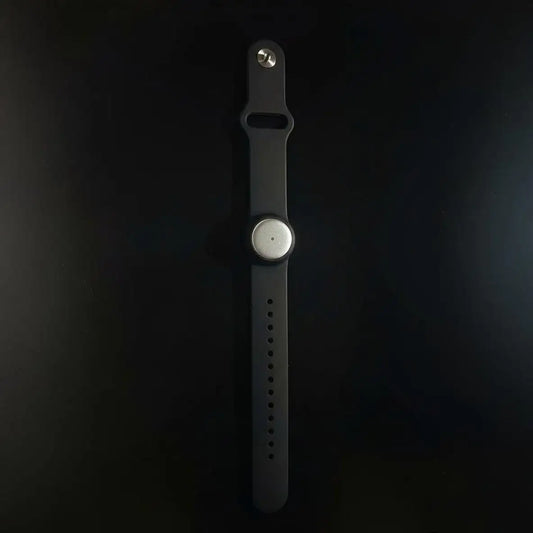
Omi makes this feel effortless by recording in-person moments all day (wearable) and also recording online meetings across apps, then generating summaries, tasks, and memories across devices.

If you’re looking for the easiest way to keep your journal, stop thinking “I need more discipline” and start thinking “I need less friction.” The easiest way to keep your journal in 2026 is to capture life in the moment (voice, meetings, ideas), then let AI turn it into a clean daily log you can search later, instead of forcing yourself to write perfect paragraphs every night.
This guide breaks down the easiest way to keep your journal using modern AI meeting recorders (software and hardware), shows a simple routine you can actually keep, and gives you a realistic comparison of alternatives so you can choose the easiest way to keep your journal for your lifestyle.
Key takeaways
- The easiest way to keep your journal is “capture first, structure later.”
- A wearable recorder makes the easiest way to keep your journal almost automatic, because you don’t need to remember to type.
- The easiest way to keep your journal depends on where your life happens: in-person, online meetings, phone calls, or all of it.
Table of contents
- Why is the easiest way to keep your journal a system problem?
- What does “journal” mean in 2026, and why does that change the easiest way to keep your journal?
- How does Omi make the easiest way to keep your journal feel effortless?
- Which AI meeting recorders work best for journaling, hardware and software?
- What should you look for in an AI meeting recorder if your goal is the easiest way to keep your journal?
- What is a 5-minute routine that becomes the easiest way to keep your journal every day?
- How do you keep your journal private, and still use always-ready capture?
- How do you turn journal entries into action with automations, integrations, and APIs?
- What mistakes ruin the easiest way to keep your journal (and how do you fix them)?
- FAQ
Why is the easiest way to keep your journal a system problem?
The easiest way to keep your journal is the one that survives tired nights, busy weeks, and imperfect days. Most journaling fails because it asks you to do the hardest step (writing and organizing) at the worst time (when you’re drained), and then punishes you with “catch-up guilt” when you miss a day or two.
Most people don’t quit journaling because they “don’t like reflection.” They quit because journaling asks for too much at the wrong time.
- You try to journal at the end of the day, when your brain is already fried.
- You think you must write something deep, which makes you procrastinate.
- You miss two days, feel behind, and the habit collapses.
So the easiest way to keep your journal is not a prettier notebook or another set of prompts. It’s a system that removes those failure points: time, perfection pressure, and “catch-up guilt.”
A quick, simple idea from Leo Babauta’s “exceedingly simple” journaling rules is to keep it lightweight, even as bullet points, and put the journal where you won’t miss it. zenhabits.net
Now we take that same principle and upgrade it for real life: your journal should be where you already are. That’s why AI meeting recorders are suddenly part of the journaling conversation. They capture the raw material of your day without asking you to “sit down and write.”
What does “journal” mean in 2026, and why does that change the easiest way to keep your journal?
In 2026, the easiest way to keep your journal is less “write a page” and more “keep a searchable timeline.” A modern journal is voice-first and action-aware: it records what happened, pulls out what matters, and remembers what you promised to do. That’s how journaling stops being a hobby and becomes a daily advantage.
A modern journal isn’t just “dear diary.” The easiest way to keep your journal today is closer to a personal knowledge timeline:
- Conversations you had (in-person and online)
- Ideas you said out loud while walking, driving, cooking
- Decisions made in meetings
- Commitments you made (“I’ll send that tomorrow”)
- What you learned, what surprised you, what you want to remember
The easiest way to keep your journal is the one that turns that stream into three outputs: a daily recap (what happened), memories (what matters), and tasks (what you need to do next).
How does Omi make the easiest way to keep your journal feel effortless?
Omi makes the easiest way to keep your journal simple because it captures what you say and hear, then automatically turns it into summaries, tasks, and memories you can search later. It works across devices (mobile, Mac desktop, and web), supports multi-language transcription, and includes daily recaps and fast sharing so your journal is useful, not buried.
What Omi does that removes the journaling friction
Omi is built to capture what you say and hear, then generate summaries, tasks, and memories you can search later.
So your journal entries come out in your voice and your format, not generic blocks of text.
So you can send a clean recap to a teammate, partner, or future self without copy-paste chaos.
Mobile, Mac desktop app, and web app in any browser, so you can record life and online meetings without changing your workflow.
API + MCP, and an app ecosystem for integrations and automations when you want your journal to do things.
The capture-first loop that becomes the easiest way to keep your journal
If you want the easiest way to keep your journal, you need one loop you repeat:
Capture
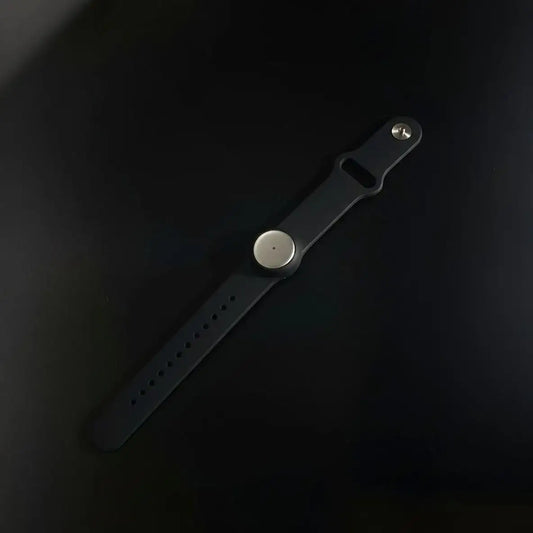
Wear it as a necklace, wrist band, or discreetly under a shirt. Or record from your phone during a walk, commute, or quick voice memo. Or capture online meetings from desktop or web.
Summarize
Use a template: daily log, meeting minutes, learning notes, “what I should remember,” and so on.
Store and recall
Save everything in a searchable feed, star what matters, and rely on search instead of memory.
Where this shows up in real life
Professionals who juggle client calls and hallway decisions can turn daily interactions into a running work log, which fits naturally with the Omi use cases hub and especially the workflows described for professional workers.
Creators often want “capture ideas while they’re alive,” then turn them into drafts later, which is why the content creators angle makes so much sense.
Students and lifelong learners tend to prefer “record now, ask questions later,” which mirrors how people use the students use case to build a searchable study log.
Leaders often need a decision journal: what you decided, why, and what you’ll review later. That’s why the executives angle exists.
Which AI meeting recorders work best for journaling, hardware and software?
The easiest way to keep your journal depends on where your life happens. If your day is mostly online calls, software can be enough. If your day includes in-person meetings, hallway decisions, interviews, lectures, or family conversations, hardware matters. And if you want the easiest way to keep your journal all day, wearables win because they’re always there.
To choose well, understand the three capture modes:
- Software-only meeting recorders (best for Zoom/Meet/Teams, weaker for offline life)
- Hardware recorders (best for in-person conversations, interviews, lectures, small meetings)
- Always-ready wearable capture (best for life journaling, because it’s with you)
Here’s a practical comparison of popular options people use when searching for the easiest way to keep your journal through voice and meetings:
| Category | What it’s good at | What it misses | Examples you’ll see often |
|---|---|---|---|
| Wearable capture + cross-device app | The easiest way to keep your journal all day, across in-person and online life | Requires responsible consent habits | Omi |
| Hardware AI recorder (wearable or pocket) | Clear audio for interviews, lectures, small meetings | Online meetings need extra steps | Plaud NotePin, Plaud Note |
| Meeting bot that auto-joins calls | Hands-free online meeting capture | In-person life, and some people hate bots in the room | Otter.ai, Fireflies.ai, Fathom |
| Video-meeting highlight tools | Great for clips and moments | Not designed for daily journaling | tl;dv |
| High-accuracy transcription apps | Good language coverage and exports | Still requires start/stop habits | Notta |
| Team conversation intelligence | Coaching, analytics, enterprise workflows | Expensive, and not for personal journaling | Gong |
| Dedicated meeting summary platforms | Strong templates and CRM workflows | Doesn’t capture spontaneous life moments | Avoma, Sembly AI |
A simple rule: the easiest way to keep your journal is almost always the one that covers both your online and offline life without you babysitting it.
What should you look for in an AI meeting recorder if your goal is the easiest way to keep your journal?
If journaling is your goal, the easiest way to keep your journal comes down to coverage and retrieval. Coverage means it can capture your real life (online and offline) without you fiddling with settings. Retrieval means you can find that moment later in seconds, with summaries, search, and clean exports.
Here’s the checklist I’d use when evaluating tools for the easiest way to keep your journal:
| What to check | Why it matters for the easiest way to keep your journal | The quick test |
|---|---|---|
| Where it records | Your journal breaks if it can’t capture half your life | Track 1 week: online vs in-person vs spontaneous |
| How hands-free it feels | The easiest way to keep your journal is the one you forget you’re doing | Can you capture in under 2 seconds? |
| Output quality | A transcript is not a journal, a structured recap is | Does it produce decisions, memories, tasks? |
| Search + recall | If you can’t retrieve, you won’t trust it | Can you find a detail from 2 weeks ago fast? |
| Templates and prompts | Journals need your format, not a generic blob | Can you set a daily log template once and reuse? |
| Sharing + export | Journaling is also collaboration sometimes | Can you share a clean summary in one tap? |
| Privacy controls | Always-ready capture needs strong guardrails | Can you export and delete quickly? |
What is a 5-minute routine that becomes the easiest way to keep your journal every day?
If you do only one thing after reading this, do this routine for seven days. It’s the easiest way to keep your journal without turning it into a project.
Step 1 (30 seconds): do a closing note
Say this out loud: “What happened today?” “What mattered?” “What do I want to remember?” “What should I do next?”
Step 2 (2 minutes): skim the AI recap
Star the one or two moments you truly care about. Done.
Step 3 (2 minutes): file it where your future self will look
Make your journal searchable, and back it up somewhere you already trust, using a setup like a searchable vault in cloud storage via this guide: build a searchable vault in Google Drive, Dropbox, or OneDrive.
Step 4 (30 seconds): let tasks leave your head
Sync your extracted tasks to the tools you already use via task and project manager integrations.
If you want a clean, repeatable meeting-to-journal pattern for work conversations, borrow the structure of an AI meeting summary workflow. And if your journaling is more creative, you’ll probably like the capture-to-output shape of content ideation to publish. For learning, the easiest way to keep your journal is often “record a lecture, then turn it into study assets,” which is why this lecture to study kit workflow exists.
A tiny habit trick that actually works: Gretchen Rubin’s advice on journaling habits boils down to being clear about what you expect from yourself, including when you’ll do it and how big it needs to be. gretchenrubin.com So make your expectation laughably small: “I will do a 30-second closing note.” That’s the easiest way to keep your journal, because it survives the bad days.
How do you keep your journal private, and still use always-ready capture?
The easiest way to keep your journal can’t be “record everything, hope for the best.” You need consent habits and strong control over your data. The goal is simple: capture what you need, protect it, and be able to export or delete it anytime. That’s how the easiest way to keep your journal stays comfortable, not creepy.
If the easiest way to keep your journal involves recording people, use two guardrails:
- Consent: In meetings: “I’m recording so I don’t miss anything. Is everyone okay with that?” In casual conversations: use judgment. If it’s sensitive, don’t record.
- Control: Choose tools that let you delete, export, and control storage. Prefer strong security and encryption.
The easiest way to keep your journal should feel safe. If it doesn’t, it won’t last.
How do you turn journal entries into action with automations, integrations, and APIs?
The easiest way to keep your journal becomes even easier when writing it down automatically becomes doing something with it. Your journal doesn’t just store memories, it triggers real work.
Here’s the part most journaling apps miss: your journal is not just reflection, it’s operational memory.
If you’re technical, this is where the easiest way to keep your journal becomes the easiest way to keep your work life coherent. A journal entry can become a ticket, a CRM update, a follow-up email draft, or a clean list of next steps. And yes, you can keep the human part too. The easiest way to keep your journal is still your voice. The tech just makes it usable.
What mistakes ruin the easiest way to keep your journal (and how do you fix them)?
The easiest way to keep your journal is fragile if you accidentally recreate the same old friction, perfection, and overload. Most failures come from four mistakes: trying to write beautifully, recording too much without reviewing, separating work and life into silos, and constantly switching tools.
- Trying to write beautifully: Fix: talk first, edit later. The easiest way to keep your journal is messy at capture time.
- Recording everything, reviewing nothing: Fix: star one moment a day, and search later when you need it.
- Treating journaling as separate from work: Fix: let meeting summaries feed your journal. Your life is one timeline.
- Letting tools create extra work: Fix: pick one capture method that fits your day (wearable, mobile, desktop), then stop switching.
The easiest way to keep your journal is the system you keep using after the novelty fades.
FAQ
Is the easiest way to keep your journal to write every day?
No. The easiest way to keep your journal is to keep a continuous thread, even if some days are a 30-second voice check-in.
Is the easiest way to keep your journal a paper notebook or an app?
For some people, paper is calming. But if your problem is consistency, the easiest way to keep your journal is usually the one that captures your day automatically, then makes it searchable.
Can the easiest way to keep your journal include work meetings?
Yes, and it should. Meetings are where decisions happen. Turning those into a decision log is often the easiest way to keep your journal useful, not just emotional.
Do AI meeting recorders replace journaling apps like Day One?
Not necessarily. The easiest way to keep your journal can be a combo: capture with voice, then export highlights into whatever app you love.
What if I hate bots joining my calls?
Then avoid bot-based tools and use desktop or browser capture, or a wearable that covers in-person and online life.
How do I keep my journal private if it includes sensitive conversations?
Use consent, limit what you record, and choose tools with strong encryption and deletion controls.
What’s the easiest way to keep your journal if you travel a lot?
Wearable capture plus a cross-device app. The easiest way to keep your journal is the one you can use in airports, taxis, client meetings, and hotel rooms without changing your system.
What’s the easiest way to keep your journal if you’re not a journal person?
Make it about memory, not writing. Capture a few sentences, let AI summarize, and treat it like a daily log.
Quick takeaway
- The easiest way to keep your journal is capture-first and voice-friendly.
- Wearable + cross-device capture makes the easiest way to keep your journal feel automatic.
- Search and recall is the point. If you can’t find it later, it’s not really a journal.
- Good privacy habits matter, especially with always-ready capture.
- When your journal can turn into tasks and follow-ups, the value compounds.

 www.omi.me