If you keep having the same retro every sprint, you do not have a retrospective. You have a recurring meeting. This is a simple system that turns a retro into 1 to 3 improvements that get finished, tracked, and reviewed, without turning your process into paperwork.
What counts (and what doesn’t)
Who this is for
The post-retro window
Why retros go nowhere
What changes with Omi
The action item quality bar
The improvement ledger
The operational playbook
Deliverables
Copy/paste templates
The improvement memory library
Real examples
Mistakes that kill trust
FAQ
Quick takeaway
IT, R&D, QA, project managers, and operations teams who keep saying "we talked about this last sprint" and want that sentence to stop existing.
Built to survive real sprint life: interruptions, priority swaps, and people rotating in and out.
TL;DR: A retro only counts when the next sprint looks different
This sprint retrospective workflow is basically a loop you can repeat forever: capture the retro, generate a structured recap, group repeat patterns, then choose 1 to 3 improvements. For each one, set an owner, a due date, and a definition of done, push it into your tracker, and start the next retro by reviewing last actions.
The whole thing lives or dies on timing. Do a 10-minute closeout right after the retro, while the details are still fresh. Omi helps in two ways: it captures what was actually said, and it gives you a baseline recap fast (wins, pains, patterns, candidates). Then you use Omi chat to rewrite the chosen items into tracker-ready tickets with a definition of done that you can actually verify.
If your retros end as "we'll try", this is how you make them end as "here’s the change, who owns it, when we check it, and how we’ll know it worked."
What counts as a retrospective here, and what we are skipping on purpose
A retro is a learning loop with follow-up work. That is it. If your output is "good discussion" but nothing changes, the loop is broken. In Scrum terms, the sprint retrospective exists to plan ways to increase quality and effectiveness. Translation: you leave with improvements you can implement.
- In scope: sprint retrospectives, QA and release retros, milestone retros, cross-team handoff retros, incident follow-ups, and short mini-retros after a rough week.
- Out of scope (for this workflow): status meetings, sprint planning, and pure debugging calls. Record them if you want, but the outputs are different.
"Regardless of what we discover, we understand and truly believe that everyone did the best job they could, given what they knew at the time, their skills and abilities, the resources available, and the situation at hand." It can feel a bit formal, but it works. People stop watching their back and start telling the truth.
A 30-second facilitator script that keeps the retro useful
"We are here to improve the system, not to score points. We'll be direct about impact, but we won't make it personal. We will leave with 1 to 3 changes we can finish next sprint."
Who this workflow is for (aka, teams that are tired of reruns)
I have seen smart teams get stuck in a weird loop: the work is hard, the sprint is busy, and the retro becomes a place to vent. Then nothing changes. Next sprint, same pain. Same retro. Repeat.
This workflow is for the moment you decide, "Okay, enough. We’re going to close loops."
- IT and operations: reduce repeat incidents and handoff failures by turning patterns into tracked prevention work. Useful for IT and operations.
- R&D and engineering: reduce rework and cycle time by fixing the friction that quietly taxes every sprint. Useful for R&D.
- QA and release: turn defect patterns into prevention work, not just faster firefighting. Useful for QA.
- Project managers: make accountability feel normal, not political, with checkpoints and a clean "review last actions" ritual. Useful for project managers.
- Executives: get a clear "what changed" and "what’s next" without sitting through another meeting. Useful for executives.
The goal is not a better meeting. The goal is fewer repeated problems.
The 10-minute closeout window that makes or breaks the retro
Here is the part most teams skip: the closeout. They end the retro, everyone drops, and the sprint instantly swallows the intent. If you do nothing else, do this.
Ten minutes, right after the retro. No debate spiral. Just clarity: pick 1 to 3 improvements, assign owners, write a definition of done, set a checkpoint, and push tickets into the system of record.
- Remote retros: capture via Omi on desktop or web.
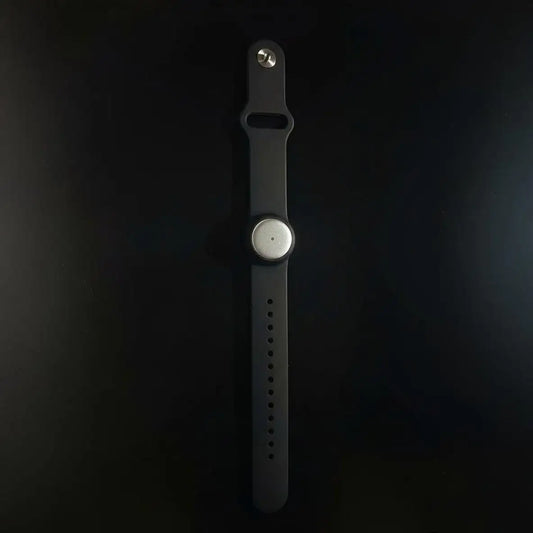
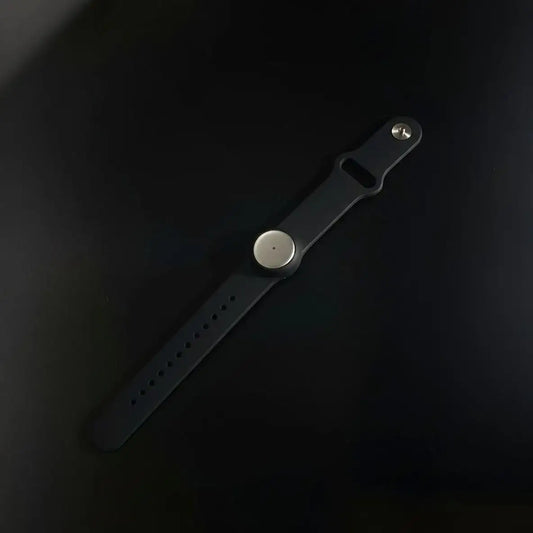
- In-person retros: wear Omi (necklace or wristband) or place it on the table.
- After-talk: record the five-minute "real issue" chat that happens when everyone relaxes.
- Distributed teams: keep one recap format so "truth" does not fragment across time zones.
Ask Omi for a closeout pack: recap, patterns, 5 candidate improvements, then the best 1 to 3 rewritten as tracker-ready tickets. Make it output ticket fields. If it gives you soft language, push back and make it concrete.
Prompt pack you can reuse right after every retro:
- "Summarize what went well, what didn’t, and the repeat patterns."
- "Propose 5 improvements, then recommend the best 1 to 3 based on impact and effort."
- "Turn the chosen 1 to 3 into tickets: owner, due date, definition of done, acceptance criteria."
- "For each ticket, suggest one success signal we can check next retro."
- "Write the next retro opener: review last actions, grouped by closed, in progress, stuck, dropped."
Why retros go nowhere (and how to spot it early)
Most teams do not fail at reflection. They fail at conversion. The meeting feels productive, the notes look fine, and then the action items quietly die.
- You pick too many action items, so none close.
- Items have no owner, no due date, and no definition of done.
- The next retro does not review last actions, so commitments decay.
- Action items live in a doc nobody checks, instead of the tracker.
- "Communication" becomes a placeholder for "we have not defined a behavior change."
- Later, people argue what was decided because there is no shared record.
If you cannot assign an owner, a due date, and a definition of done in the closeout window, the item is not ready. Park it. Do not pretend you committed.
A retro is a loop with follow-up work. If the loop does not close, it turns into noise.
What changes with Omi (when you use it like a system, not a gadget)
Omi helps in a very practical way: speed plus traceability. You stop relying on whoever remembers the most, and you build from a searchable record: transcript, recap, action items, and history across sprints.
- Baseline recap fast, so you are not starting from scratch.
- Custom summary templates, so every retro output looks consistent (even with rotating facilitators).
- Chat to tighten vague action items into ticket fields, with a real definition of done.
- Search across past retros, so "have we tried this before?" is a quick lookup, not a debate.
- Share recaps and action lists cleanly, without dumping raw transcripts on everyone.
- Sync tasks into your favorite task manager, or connect to tools through the apps marketplace and developer docs.
Omi does not run your project management. It does not choose priorities for you. What it does is remove the mush from the output. Clear recap, clean tickets, consistent format, easy recall later.
Small details that matter more than they should
- Accuracy boosts: speech profiles and custom vocabulary help technical teams keep names, tools, and jargon readable. That matters when you are turning talk into tickets.
- Flexibility: you can capture on mobile, desktop/web, and supported wearables. Remote, in-person, hallway follow-up, it all counts.
The action item quality bar: tickets that cannot wiggle
Your team does not need more action items. It needs action items that are specific enough to finish. If you copy one thing from this article, make it this table.
| Component | What good looks like | Common failure |
|---|---|---|
| Problem statement | One sentence in team language ("handoffs break when...") | Generic "we should improve..." |
| Owner | One accountable person | "Everyone" |
| Due date | End of sprint, or a real date | "Soon" |
| Definition of done | Checkable condition ("new checklist exists and was used 3 times") | Vague intent ("communicate better") |
| Acceptance criteria | Ticket-level conditions for "done" | Missing entirely |
| Success signal | One metric or observable change you can review next retro | "We’ll feel it" |
| Checkpoint | A mid-sprint moment to check progress | Drifts until next month |
If your action item starts with "improve" or "better", force it into a behavior change: who does what, where, by when, and what proves it happened.
Omi tip: paste your messiest list of action items into Omi chat and ask it to rewrite them into this structure, and to flag what is missing. You will usually see the pattern immediately.
The improvement ledger: your anti-amnesia system
A retro should compound. Without a ledger, it resets every sprint. The ledger is where you store commitments, track closure, and record whether the change helped.
- Proposed: raw candidates from the retro.
- Chosen: the 1 to 3 items you commit to.
- Tracked: ticket links in your system of record.
- Closed: a one-line impact note.
Ledger fields that stay simple and still work:
| Sprint | Theme | Improvement | Owner | Due | Status | Ticket | Impact note |
|---|---|---|---|---|---|---|---|
| 2026.06 | Release reliability | Quarantine top flaky tests in CI | Ana | End of sprint | In progress | JIRA-123 | Baseline CI flaky rate captured |
A lightweight scoring rubric to pick the 1 to 3 (without the argument spiral)
| Signal | How to score it | What it tells you |
|---|---|---|
| Frequency | Once, sometimes, every sprint | Pattern vs noise |
| Impact | Annoying, costly, sprint-killer | Throughput and quality pain |
| Effort | Small, medium, big | Can it close next sprint? |
| Risk | Low, medium, high | Chance of breaking something else |
Ask Omi to score all candidates using this rubric, then propose the best 1 to 3 with a definition of done that is checkable. It cuts down the "opinion war" vibe and keeps the closeout tight.
The operational playbook: from retro to shipped improvement in nine steps
This is the loop. No theory. No motivational posters. Just the steps that actually move things. Each step includes what you do, what you produce, and the single most useful Omi prompt.
Step 1: Capture the retro, plus the after-talk
If you do not capture, you reconstruct. Reconstruction is where memory gets creative.
- Record the retro (remote or in-person).
- Record the five-minute after-talk if it happens.
- Keep one canonical place for recap + action list.
Omi prompt: "Generate a retro recap: wins, pains, patterns, risks."
Step 2: Generate a structured baseline recap
Make it scannable in a minute. Headings and bullets, not paragraphs.
- Wins (3 to 5 bullets).
- Pains (3 to 5 bullets).
- Patterns (themes).
- Candidate improvements (raw list).
Omi prompt: "Make it skimmable. Headings and bullets only."
Step 3: Build a pattern map that survives time
Group issues into themes you can track across sprints: handoffs, scope churn, flaky tests, CI friction, interruptions, unclear requirements.
- Label each point as observation (what happened) or interpretation (why).
- Mark what is in your control vs dependent on another team.
- Capture contradictions. Do not "resolve" them with opinions.
Omi prompt: "Group by theme. Separate observation from interpretation."
Step 4: Propose 5 improvements, commit to 1 to 3
This is the critical moment. If you cannot say no, you will not close anything.
- Generate 5 candidates, then choose the best 1 to 3.
- Use the rubric (frequency, impact, effort, risk).
- Everything else goes to parking lot, not half-commitment.
Omi prompt: "Recommend the best 1 to 3 improvements and explain why."
Step 5: Write definition of done and acceptance criteria
This is where "we want better" becomes "we changed a thing."
- Definition of done is checkable. Prefer binary when possible.
- Acceptance criteria are ticket-level conditions.
- Add a checkpoint date so it does not drift silently.
Omi prompt: "Write DoD (binary if possible) and acceptance criteria for each item."
Step 6: Add one success signal per item
You do not need a dashboard meeting. You need one signal that tells you if it helped.
- Release reliability: CI flaky failure rate, release lead time.
- Handoffs: blocked time, cycle time, surprise dependencies.
- Scope churn: mid-sprint scope changes, spillover rate.
Omi prompt: "Suggest one success signal per action item we can check next retro."
Step 7: Convert to tracker-ready tickets
If it is not in the tracker, it is not real work yet.
- Create one ticket per chosen improvement.
- Include owner, due date, DoD, acceptance criteria, success signal, checkpoint.
- Add a one-line "why now" so it survives sprint chaos.
Omi prompt: "Output tickets with title, description, owner, due date, DoD, acceptance criteria, success signal, checkpoint."
Step 8: Write the next retro opener (review last actions)
This is the closure ritual. It is what stops your team from re-running the same retro every sprint.
- Closed: impact note.
- In progress: next checkpoint.
- Stuck: blocker and ask.
- Dropped: why, and what you learned.
Omi prompt: "Draft the next retro opener from our ledger."
Step 9: Sync and automate the boring parts (optional)
Two lanes: use ready integrations in the Omi app marketplace at h.omi.me/apps, or build custom workflows via docs.omi.me.
- Push chosen action items into your tracker with owners and due dates.
- Post recap + action list to Slack or Teams.
- Append ledger rows to a shared doc or sheet.
- Store the recap link with the ticket so context stays reachable.
Deliverables: what you should have when you end a real retro
If you finish the retro and you do not have these, you did reflection without conversion. This is the minimum set that makes retros accumulate value over time.
- Retro recap (wins, pains, patterns, risks).
- Pattern map (themes with examples).
- Exactly 1 to 3 chosen improvements.
- Tracker tickets created (owner, due date, definition of done, acceptance criteria).
- Ledger updated (status + ticket links).
- Next retro opener (review last actions).
- Impact note when each closes (what changed, and how you know).
Retro recap template (copy/paste)
Keep this structure stable. The stability is what lets you compare patterns across sprints, instead of treating every retro like a new story.
Sprint / iteration:
Dates:
Team / squad:
Retro format used (optional):

Context:
- Sprint goal:
- Surprises / constraints:
- Definition of done friction (if any):

What went well (3–5 bullets):
-

What hurt (3–5 bullets):
-

Repeat patterns (themes):
- Theme:
  - Examples:
  - Observation (what happened):
  - Interpretation (why, if supported):
  - In our control? yes/no

Candidate improvements (raw list):
-

Chosen improvements (commit to 1–3):
1) Improvement:
   - Owner:
   - Due date:
   - Definition of done:
   - Acceptance criteria:
   - Success signal:
   - Checkpoint date:
2)
3)

Risks for next sprint:
-

Review last actions (for next retro opener):
- Closed:
- In progress:
- Stuck:
- Dropped (why):
Retro action item ticket template (copy/paste)
This is the retrospective action items template that prevents ambiguity. Fill these fields and your close rate goes up. Seriously.
Title:
- [Problem] → [Change] → [Outcome]

Problem statement (team language):
-

Why now:
- Impact (time lost, defects, on-call pain, release drag, handoff friction)

Owner:
Due date:
Checkpoint date:

Definition of done (binary when possible):
-

Acceptance criteria:
-

Success signal (metric or observable change):
-

Risks / side effects:
-

Context link (optional):
- Link to recap / transcript highlight
The improvement memory library: stop re-learning the same lesson every quarter
This is where retros become compounding. Teams lose process knowledge because people rotate, priorities shift, and old docs become unfindable. A memory library fixes that by storing patterns plus what you tried, and what actually worked.
- Tag by theme: handoffs, QA, CI/build, scope churn, incidents, interruptions, requirements clarity.
- Tag by surface: repo/component, team boundary, tool, release step.
- Store closure: ticket link plus impact note, not just "we agreed."
- Make it queryable: "have we tried this fix before?" should be a quick search, not a memory contest.
Use Omi as the record layer. Capture, summarize, extract action items, then keep everything searchable. Later, you can ask "when did this theme last show up?" and get an answer grounded in past retros, not folklore.
Real examples: one clean ticket, one vague ticket rewritten, one incident-style follow-up
Example A: Flaky tests that slow every release
Pattern: "release day chaos" repeats. The team loses hours to failures that are not real failures. The improvement is a scoped prevention move.
- Theme: release reliability / QA friction
- Ticket title: "Flaky tests → quarantine top offenders → reduce CI noise"
- DoD: top 10 flaky tests identified and isolated or fixed, flaky failure rate drops below threshold for 2 releases
- Success signal: CI flaky failure rate and release lead time
- Checkpoint: mid-sprint check plus next retro review
Example B: "Communication" translated into a real behavior change
Someone says "communication is bad." True, but useless. This workflow forces specificity.
- Bad action: "communicate better about scope changes"
- Rewrite: "Any mid-sprint scope change must be posted in #sprint-changes with impact and owner within 30 minutes"
- DoD: rule followed for one sprint, missed changes drop to near-zero
- Success signal: fewer surprise blockers, less rework
Example C: Incident follow-up that behaves like real work
If customers felt it, treat the retro like a postmortem. Learn without blame, but ship prevention with clear owners.
- Theme: reliability / incident response
- Ticket: "Add alert and runbook step to prevent recurrence of failure mode X"
- DoD: alert exists, runbook updated, on-call confirms it works in a test scenario
- Success signal: reduced recurrence count for that failure mode
Example D: Automation that keeps the ledger alive (optional)
Pattern: the ledger dies because updating it feels like extra work. Automate the append step and it stops being "someone’s job".
- Flow: Omi recap → extract chosen 1 to 3 → append to a sheet/doc → post to a channel
- Outcome: the ledger becomes default behavior, not a heroic effort
- Tip: keep the output short, link to the recap for context
Different problems, same shape: pattern, 1 to 3 choices, definition of done, tickets, next retro review, impact note.
Retro mistakes that kill trust and momentum
- Picking too many actions. It feels ambitious, but it usually behaves like avoidance.
- No owner, due date, or definition of done. Ambiguity is how action items die.
- Skipping review last actions. You teach the team that commitments do not matter.
- Keeping actions outside the tracker. You guarantee drift.
- Making everything a big bet. Smaller, shippable improvements learn faster.
- Letting blame creep in. People stop sharing the real constraints.
- No impact note. You cannot tell what helped, so you repeat failed fixes.
FAQ
How many action items should we pick per retro?
Keep a hard cap: 1 to 3. If you pick more, you are usually avoiding the hard prioritization decision. Put the rest in a parking lot and revisit when capacity exists.
What if we can’t agree on the root cause?
Do not force certainty. Write competing explanations and run a small test. A short experiment beats a long argument.
How do we write definition of done for process changes?
Define a behavior plus a verification window. Example: "New handoff checklist exists and is used on 3 handoffs this sprint." Checkable, not theoretical.
How do we keep retros fresh without losing structure?
Keep the output structure stable, rotate the input exercise. Start/Stop/Continue, 4Ls, themed retros when work feels repetitive. The meeting can vary, the closeout should not.
How does Omi help beyond summarizing?
The summary is baseline. The leverage is conversion: action items rewritten into tracker-ready tickets, consistent templates every sprint, and a searchable archive so "have we tried this before?" becomes easy.
How do integrations and automation fit in?
Use Omi’s apps marketplace at h.omi.me/apps for ready integrations, or build custom workflows via docs.omi.me to route action items and recaps where your team works. Keep it simple: append ledger, create tickets, post a short recap.
Quick takeaway: the smallest version that still works
- Capture the retro.
- Generate a recap as baseline: wins, pains, patterns.
- Choose 1 to 3 improvements.
- Define done: owner, due date, definition of done, acceptance criteria, checkpoint.
- Create tickets in the system of record.
- Start next retro by reviewing last actions.
- Write an impact note when each closes.

 www.omi.me