If you’re searching for Chimenote alternatives, you’re usually trying to solve one of these problems:
- you want better meeting summaries and action items (not just transcripts)
- you need a tool that works for in-person + online meetings
- you’re tired of minute caps, seat fees, and hidden limits
- you want privacy controls that match real work, especially in regulated teams
This guide breaks down the most relevant Chimenote alternatives, including both AI meeting recorder apps and hardware voice recorders, with price and plan comparisons, what each tool is great at, and what tends to disappoint.
Updated: March 13, 2026.
Table of contents
What is Chime Note, and why look for Chimenote alternatives?
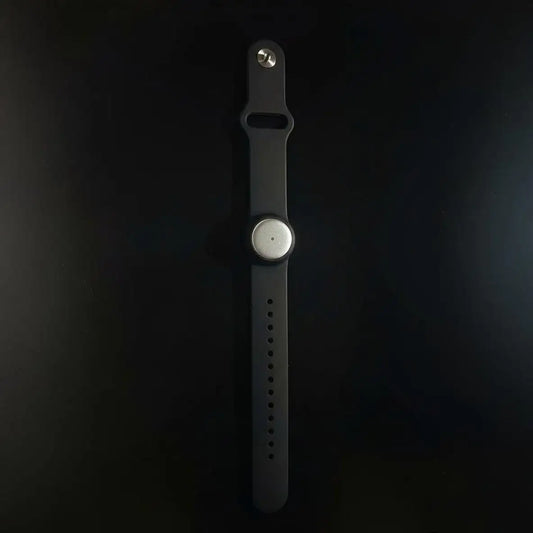
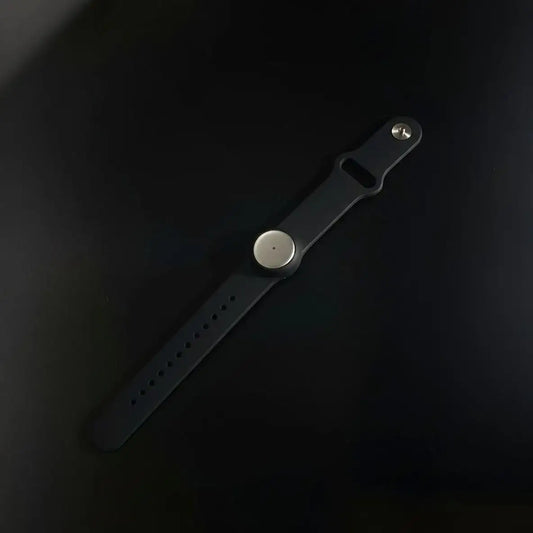
Chime Note (Chimenote) is a physical AI voice recorder that pairs with its app, records audio, then creates transcripts and AI summaries. The current CHIME NOTE Pro device is listed at $189.99 (sale price). (chimenote.com)
What’s interesting about Chime Note is its pricing approach: recording, transcription, and AI summaries are free and unlimited, while “premium” features like real-time transcription, voice translation, and multi-language chatrooms are paid via pay-as-you-go, not a subscription. It also mentions a free trial allowance (5 hours/month for 6 months) for those premium features. (chimenote.com)
So why the surge in Chimenote alternatives?
Because “free transcription” is only one part of the job. Teams and professionals usually hit friction around:
- workflow: exporting notes into tasks, CRMs, project tools
- coverage: capturing online meetings reliably (Meet, Zoom, Teams) and in-person chats
- search: finding decisions and commitments weeks later, not just reading a transcript
- governance: consent, retention, deletion, compliance expectations
The best Chimenote alternative when you want one system for in-person + online meetings
If your goal is: “I want my notes to turn into tasks, and I want everything searchable later,” you’ll usually want a platform that can capture what you say and hear, and then operationalize it.
That’s where Omi tends to land as the first stop among Chimenote alternatives.
Omi is built around capture → summary → tasks → searchable memory, with an apps marketplace and automations layer. It can transcribe what you say and hear, generate summaries/tasks, support 25+ languages, build speech profiles, produce daily recaps, and connect your information into a memory graph style experience.
It also leans hard into “work-forward” features: task syncing, custom summary templates, quick sharing, and an apps marketplace with thousands of tools.
On the privacy side, Omi positions itself as SOC 2 + HIPAA, with TLS in transit and AES-256 at rest, plus controls like export and delete/wipe.
Pricing-wise, Omi’s product page describes a free plan that includes unlimited on-phone transcription plus 1,200 cloud transcription minutes/month, and an upgrade path to Unlimited for unlimited cloud transcription. (omi.me)
For Unlimited, Omi’s help center lists $199/year (about $16/month) or $19/month. (help.omi.me)
Chimenote alternatives price and plan comparison (apps + devices)
Below is a practical pricing snapshot of the most searched Chimenote alternatives. Prices change, but these are the public list prices as of early 2026.
| Tool | Type | Upfront cost | Free plan | Paid plan (starting) | Best at | What could improve |
|---|---|---|---|---|---|---|
| Omi | wearable + apps | device price is commonly listed around $89 (umevo.ai) | unlimited on-phone + 1,200 cloud mins/mo (omi.me) | $19/mo or $199/yr (help.omi.me) | in-person + online capture, tasks, memory, automations | for some users, hardware workflows can feel “power-user” at first |
| Chime Note (Chimenote) | hardware recorder | $189.99 sale (chimenote.com) | transcription + summaries free (chimenote.com) | pay-as-you-go premium features (chimenote.com) | budget-friendly unlimited summaries | paid feature pricing not clearly published, fewer workflow automations |
| Plaud NotePin | wearable recorder | $159 (plaud.ai) | 300 mins/mo included (plaud.ai) | Pro $99.99/yr or Unlimited $239.99/yr (plaud.ai) | great hardware ergonomics, strong transcription | full value is gated behind subscription minutes |
| Otter.ai | app | $0 hardware | Free plan available | Pro $8.33/user/mo annual (otter.ai) | real-time transcript collaboration | per-user pricing adds up for teams |
| Fireflies.ai | meeting bot + app | $0 hardware | Free plan | Pro $10/seat/mo annual (fireflies.ai) | searchable meeting library + integrations | bot presence + enterprise controls are higher tiers |
| Fathom | meeting assistant | $0 hardware | free tier exists | Team shows $15–$19/user/mo (fathom.ai) | fast recaps, lightweight experience | deeper governance + analytics are more limited |
| tl;dv | meeting assistant | $0 hardware | freemium | commonly cited Pro $18/user/mo annual (tldv.io) | structured minutes + clips | official pricing page is JS-heavy, limits can surprise |
| Notta | transcription app | $0 hardware | Free | Pro $8.17/mo annual (notta.ai) | transcription quotas + add-ons | quotas and add-ons can get complex |
| Read AI | meeting assistant | $0 hardware | Free (5 transcripts/mo) (read.ai) | Pro $19.75/user/mo annual (read.ai) | broad “workday” assistant angle | visible meeting assistant behavior may not fit every org |
| Sembly AI | meeting intelligence | $0 hardware | paid plan listed from $10/mo (sembly.ai) | Pro shown $20 annual / $29 monthly (sembly.ai) | meeting intelligence, governance options | pricing presentation is a bit confusing at first glance |
| Avoma | meeting + revenue intelligence | $0 hardware | trial/free exists | from $19/recorder seat/mo annual (avoma.com) | sales + CRM-ready notes | can be heavy if you only want notes |
10 Chimenote alternatives worth considering (with real-world fit)
Below are ten Chimenote alternatives that actually make sense depending on whether you need hardware, meeting bots, or a broader system.
1) Omi (wearable + app ecosystem)
Among Chimenote alternatives, Omi stands out when you want your notes to become a living system: searchable memories, tasks, and automations, not just transcripts. It supports custom summary templates, an apps marketplace, and developer tooling like API and MCP server support.
It’s also designed to work across mobile and desktop contexts (Mac app + web app), plus wearable capture, so you can cover in-person conversations and online meetings in one flow.
If you want to see how this plays out by role, Omi has a solid hub of practical examples in its use cases library, especially for sales and marketing, where follow-ups matter a lot.
2) Plaud NotePin (wearable recorder with plan tiers)
If you like the “clip it on, press once” simplicity, Plaud NotePin is one of the strongest hardware-first Chimenote alternatives. The device lists at $159 and includes 300 transcription minutes/month on the free starter plan.
Paid options are where it becomes a “real” system: Pro and Unlimited tiers show annual pricing like $99.99/year and $239.99/year, and Unlimited is described as unlimited minutes with a daily cap concept.
3) Otter.ai (meeting transcripts with team collaboration)
Otter is one of the classic Chimenote alternatives for online meetings, especially if your team wants collaborative highlights and searchable transcripts. Otter’s pricing page shows Pro at $8.33/user/month billed annually, and Business at higher tiers.
4) Fireflies.ai (meeting library + integrations)
Fireflies is a popular pick when you want a bot to join meetings and build a searchable library. On annual billing, its pricing page shows Pro at $10/seat/month, Business at $19/seat/month, and Enterprise higher.
5) Fathom (lightweight recaps)
Fathom tends to work well for individuals or small teams who want fast recaps without feeling like they’re implementing a “system.” Its pricing page shows a team plan with $15–$19 per user/month pricing depending on billing.
6) tl;dv (structured minutes + clips)
tl;dv sits among the most common Chimenote alternatives for people who want structured meeting minutes and clips. A widely referenced breakdown lists tl;dv Pro at $18/user/month (annual) and Business higher.
If you like comparing tools across the category, Zapier’s best AI meeting assistants is one of the better overview reads.
7) Notta (transcription quotas + add-ons)
Notta is a transcription-first alternative with clear quotas. Its pricing page shows Pro at $8.17/month billed annually, Business at $16.67/month billed annually, with transcription quotas and optional add-ons for translation.
8) Read AI (meeting assistant with multiple tiers)
Read AI is broader than meeting notes, it positions around meetings plus workday summaries. Its pricing page shows Pro at $19.75/user/month billed annually, and higher tiers for playback and enterprise controls.
9) Sembly AI (meeting intelligence + governance knobs)
Sembly’s pricing shows Basic at $10/month, and Pro listed as $20/user/month (annual) alongside $29/user/month (monthly).
This makes Sembly one of the more “ops-friendly” Chimenote alternatives, especially if you care about consent tracking and retention controls.
10) Avoma (CRM-ready notes, sales workflows)
Avoma becomes compelling when meeting notes must map cleanly into CRM objects and follow-ups. Its pricing page shows meeting assistant plans starting at $19 per recorder seat/month billed annually.
For a broader market scan beyond this article, AssemblyAI’s category roundup is a useful second opinion: Top AI notetakers in 2026.
How to choose between Chimenote alternatives (a simple decision framework)
Most “I need Chimenote alternatives” decisions become obvious once you answer 4 questions:
1) Are your meetings mostly in-person, online, or mixed?
- Mostly in-person: wearables win (Omi, Plaud, Chime Note).
- Mostly online: meeting assistants win (Otter, Fireflies, Fathom, tl;dv).
- Mixed reality: you want one system that can do both without juggling exports.
If you manage a lot of coordination work, like product delivery or cross-functional planning, it’s worth skimming Omi’s example for project managers. It highlights the part most tools miss: keeping decisions, owners, and next steps connected.
2) Do you need notes to create tasks automatically?
This is where many Chimenote alternatives start separating. Transcripts are cheap now, execution is not.
If your notes should become real work, look for:
- action item extraction
- task sync
- templates per meeting type (1:1, sales call, standup, interview)
A good quick reference workflow is Omi’s AI meeting summary workflow, because it’s basically the “what happens after the transcript” checklist.
3) Do you have privacy, consent, or compliance constraints?
If you’re in healthcare, HR, or legal, “record everything” is never just a feature, it’s a governance problem.
Omi positions SOC 2 + HIPAA with encryption and deletion controls.
If you operate in regulated settings, it’s worth having a written consent process, here’s a solid internal reference: recording consent and governance.
Also, if you’re actually doing patient or client documentation, the workflow expectations are different. Omi has specific examples for clinicians and healthcare and for legal teams.
4) Do you want integrations, or do you just want a transcript?
If you want your meeting brain to plug into your stack, look at platforms that support automation layers and developer tooling. With Omi, that includes open-source positioning, API, and MCP server support.
If you’re building internal workflows or connecting to coding tools, this is the kind of integration path you’re looking for: MCP integrations (Claude, Cursor).
For teams, it’s also common to connect notes to routing systems and execution tools, for example automation with n8n, Zapier, Make, task and project managers, and CRMs like Salesforce and HubSpot.
FAQ about Chimenote alternatives
Are Chimenote alternatives better than Chime Note for online meetings?
Often, yes. Chime Note is strong as a hardware recorder with free transcripts and summaries, but many Chimenote alternatives are built specifically around Zoom/Meet/Teams capture, searchable libraries, and integrations.
What’s the cheapest option among Chimenote alternatives?
If you mean “lowest ongoing cost,” Chime Note’s free transcription and summaries are hard to beat.
If you mean “best cost for mixed in-person + online workflows,” the math usually depends on whether you need unlimited cloud minutes, and whether the tool turns notes into tasks automatically. Omi’s free plan plus upgrade path is designed around that split.
Which Chimenote alternatives are best for students?
Students usually care about: one-tap recording, good summaries, and fast search before exams. In that world, hardware wearables can be great, but “study kit” style outputs matter more. If you want student-focused examples, Omi has a dedicated page for students.
Do I need to tell people I’m recording?
In many places, yes, and in some contexts it’s mandatory. Even when it’s not mandatory, it’s usually the right move. If your team needs a repeatable approach, start with recording consent and governance.
Quick bottom line
If you’re choosing between Chimenote alternatives, don’t over-optimize for “free transcription.” Optimize for:
- capture coverage (in-person + online)
- outputs (tasks, decisions, follow-ups)
- retrieval (search, memory, structured summaries)
- governance (consent, retention, deletion, compliance)
That’s the difference between “a transcript” and “a system you actually use two weeks later.”

 www.omi.me