Quick takeaway
If you’re searching for Fellow AI alternatives, you’re probably not just hunting for “another transcript tool”.
You want something that actually reduces meeting chaos. Fewer follow ups falling through the cracks. Less context loss. Better handoffs. More automation. And, in a lot of cases, you also want to capture the conversations that happen outside Zoom.
This guide goes deeper than a generic list. It breaks down:
- what Fellow is genuinely strong at (and where it stops)
- what “alternatives” really mean today (bot vs botless, online vs offline, notes vs memory)
- pricing and plan comparisons, using current published pricing
- a practical checklist to pick the right tool for your workflow
What Fellow AI is really built for
Fellow is a meeting system first, and an AI notetaker second.
Yes, it records meetings, transcribes, summarizes, and extracts action items. But its core DNA is: agenda discipline + meeting governance + team habits.
A few specific Fellow mechanics matter when comparing alternatives:
- It can record across Zoom, Google Meet, and Microsoft Teams, and by default it joins meetings as an attendee (visible bot) to record, with a botless option available depending on setup. (fellow.ai)
- It’s positioned as security-first, and states SOC 2, HIPAA, and GDPR compliance, plus “no training on your data.” (fellow.ai)
- Pricing is clearly structured: Free has limited AI notes/recordings, Team adds meeting automations + API access, Business unlocks unlimited AI, Enterprise adds admin controls like transcript redaction and advanced permissions. (fellow.ai)
So… if your problem is “my org’s meetings are a mess, we need consistent agendas + follow-through”, Fellow is a very reasonable center of gravity. But if your problem is “I need everything captured and turned into tasks, across devices, across real life, with integrations and automation”, you’ll likely outgrow it.
The three “levels” of fellow alternatives (this is the part most comparisons miss)
When people say “Fellow alternatives”, they lump very different categories together. In practice, you’re choosing between three product philosophies:
-
1) Meeting governance tools (Fellow-style)
These optimize meeting hygiene: agendas, owners, recurring 1:1s, templates, structured notes. You get better alignment, but you don’t necessarily get “memory” beyond meetings.
-
2) AI notetakers (transcript-first)
These optimize transcription + recap quality for online meetings. They’re often faster to adopt, and cheaper. They’re great if your meetings are mostly Zoom/Meet/Teams and your main pain is “I forgot what we decided.”
-
3) Conversation intelligence and memory systems (workflow-first)
These go beyond “notes” and become infrastructure: capture + search + automation + integrations. This is where Omi fits, because it’s not limited to scheduled calls. It’s designed to become a second brain across your day, including real-world conversations.
1) Omi ai (conversation capture + meeting automation across devices)
Most meeting tools assume the meeting is the unit of work.
Omi assumes the conversation is the unit of work.
That difference matters. A lot.
What makes Omi a true Fellow alternative
Omi is built to record and summarize across:
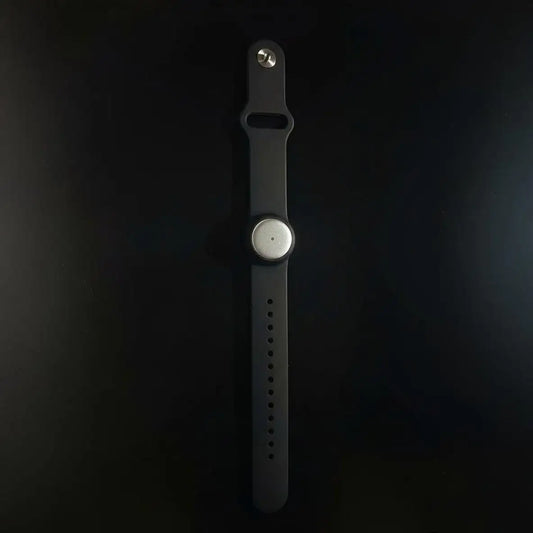
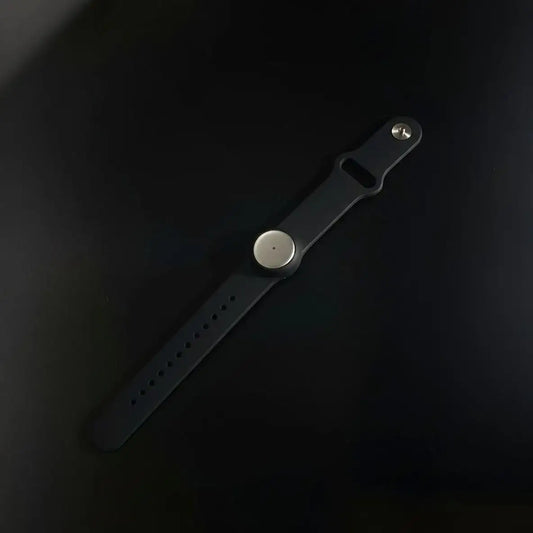
- in-person meetings and real-life conversations (wearable options)
- online meetings (desktop + web workflows)
- phone-style situations and ad hoc conversations
- multiple devices and contexts, not just calendar meetings
And then it converts those captures into usable output:
- summaries, action items, “memories”
- quick sharing and export
- custom prompt templates so the same meeting type always yields the same format
- automations that do something with the notes
Why it scales better than classic meeting tools
Because it plugs into your systems:
- MCP support and developer workflows: https://www.omi.me/blogs/integrations/mcp-claude-cursor
- automation platforms (Zapier, Make, n8n): https://www.omi.me/blogs/integrations/omi-automation-n8n-zapier-make
- and it’s designed to support many professional workflows, not only “team meetings”
A few examples where “Fellow-style” tools usually struggle:
- sales calls that need structured follow ups: https://www.omi.me/blogs/use-cases/sales
- exec conversations that happen everywhere, not just on calendar: https://www.omi.me/blogs/use-cases/executives
- legal conversations where governance matters: https://www.omi.me/blogs/use-cases/legal
- clinicians and healthcare documentation contexts: https://www.omi.me/blogs/use-cases/clinicians-healthcare
- marketing calls and creative reviews: https://www.omi.me/blogs/use-cases/marketing
- project managers who need decisions tracked cleanly: https://www.omi.me/blogs/use-cases/project-managers
- students and lectures that aren’t “meetings”: https://www.omi.me/blogs/use-cases/students
If you want a single workflow reference to anchor what Omi is good at, this one is the simplest “baseline”: https://www.omi.me/blogs/workflows/ai-meeting-summary
Security and privacy (important, because you asked for it explicitly)
Omi publishes a privacy and compliance posture that includes alignment with SOC 2 and HIPAA requirements. (omi.me)
It also highlights encryption in transit and at rest, plus enterprise-grade controls in public listings. (play.google.com)
2) Otter (fast adoption, transcript-first, clear pricing)
Otter is a classic “meeting notes + transcription” tool. It’s strong when you want:
- quick setup
- live transcription
- searchable transcripts
- easy sharing
Otter’s pricing is straightforward: Basic free tier, Pro at $8.33/user/month (annual), Business at $19.99/user/month (annual), with Enterprise available. (otter.ai)
Where Otter tends to fall short compared to workflow-first systems: deeper automations, multi-system orchestration, and capturing non-meeting conversations in a “second brain” way.
3) Fireflies (integration-heavy meeting intelligence)
Fireflies is often chosen when the goal is: “record everything, summarize it, and push it into our tools.”
It emphasizes integrations and has an API. Pricing: Pro can be $10/user/month billed annually (or $18 monthly), Business $19 annually (or $29 monthly), Enterprise higher. (fireflies.ai)
This is one of the better Fellow alternatives if your meetings are primarily online, you care about sending outputs to CRMs or collaboration tools, and you want a familiar “bot joins meeting” workflow.
4) tl;dv (recording + clips + multi-meeting visibility)
tl;dv is built around:
- recording + highlights
- fast clipping for sharing
- team libraries
- sales/product usage
Its pricing page shows a Free plan and Pro at $18 per seat/month (annual), with higher tiers for Business/Enterprise. (tldv.io)
tl;dv is usually a better pick than Fellow when the team says: “We don’t need agenda culture tooling, we need meeting content we can reuse.”
5) Fathom (simple, popular, strong “team library” option)
Fathom became popular because it nails the basics:
- accurate transcripts
- quick summaries
- easy sharing
- clips and playlists
Fathom’s pricing shows a Free individual plan and paid tiers (Premium, Team, Business) with increasing collaboration and CRM features. (fathom.ai)
It’s a good Fellow alternative when you don’t care about structured agendas, you want fast, low-friction meeting summaries, and you want team-wide search as you scale.
Pricing and plan comparison (quick decision view)
Here’s the most useful way to compare these tools: not “who has summaries”, but what you’re actually paying for.
| Tool | What you’re mainly buying | Typical entry price (published) |
|---|---|---|
| Fellow | agendas + governance + AI recaps | Team $7/user/mo annual, Business $15, Enterprise $25 (fellow.ai) |
| Omi | capture-anything + automation + memory | varies by setup (platform + device) |
| Otter | transcription + searchable notes | Pro $8.33/user/mo annual (otter.ai) |
| Fireflies | meeting intelligence + integrations | Pro $10/user/mo annual (guide.fireflies.ai) |
| tl;dv | recording + clips + multi-meeting value | Pro $18/seat/mo annual (tldv.io) |
| Fathom | fast summaries + team search | Free + Team tier pricing published (fathom.ai) |
If you want, validate this against your real usage: how many meetings you record per week, whether you need team-wide search, and whether outputs must land in a CRM or project manager automatically.
A better way to choose: match the tool to your real workflow
If you need meeting culture (agendas, consistent cadence)
Pick: Fellow-style governance.
This is best for orgs that struggle with meeting hygiene and accountability.
If you need “online meeting notes” with minimal change management
Pick: Otter or Fathom.
These are adoption-friendly, and usually the fastest time-to-value.
If you need deep integrations and pipeline/CRM workflows
Pick: Fireflies or tl;dv (depending on whether you want more “intelligence” vs “clips + sharing”).
If you need capture outside meetings, plus automation, plus a second brain
Pick: Omi. This is the category that replaces multiple tools: meeting assistant + recorder + searchable memory + automation layer.
The checklist that prevents a bad purchase (use this before committing)
When comparing Fellow AI alternatives, ask these questions and don’t accept vague answers:
- How does it record? bot joins, botless, device audio, uploads, wearable
- What happens after the meeting? summary only, tasks, CRM updates, workflows
- Can I standardize outputs? templates + custom prompts per meeting type
- How do I search later? cross-meeting search, across channels, across devices
- What’s the retention and export story? export formats, delete controls, retention policies
- What’s the security stance? SOC 2/HIPAA posture, encryption, admin controls, redaction
- What’s the adoption friction? does the whole team need to use it for it to work?
Two external resources worth reading (good “Fellow alternatives” coverage)
These two are solid starting points to cross-check the market:
- G2: Fellow alternatives and competitors (reviews-driven): https://www.g2.com/products/fellow/competitors/alternatives/
- tl;dv: alternatives to Fellow (meeting-note-tool angle): https://tldv.io/blog/alternatives-to-fellow/
Quick takeaway
If you want, tell me your exact scenario (team size, Zoom/Meet/Teams mix, whether you need in-person capture, and where notes must end up: Notion, HubSpot, Slack, Jira, etc.). I’ll recommend the tightest shortlist and the cheapest plan combination that still covers everything.

 www.omi.me