TL;DR
Most people who search Sonix AI alternatives are not saying “Sonix is bad.” They’re saying: “My input is no longer a folder of audio files.” It’s meetings, calls, voice notes, and in-person decisions, and they want a system that turns that into tasks, summaries, and durable memory.
If your workflow is still file-based (upload audio/video, edit transcript, export subtitles), Sonix remains a strong benchmark. If your workflow is capture-first (record now, summarize instantly, follow up fast), your best Sonix AI alternatives look very different.
This guide goes deep on capture lanes, real pricing math, hidden trade-offs, and the best tools and devices to replace Sonix depending on what you actually do all day.

Sonix AI alternatives (2026 guide to transcription, meeting recorders, and AI wearables)
Sonix is optimized for a very specific promise: upload audio or video, get a high-quality transcript fast, edit it cleanly, and ship deliverables like subtitles, translations, and publish-ready text.
But more and more people don’t start with a file anymore. They start with a meeting, a call, or an in-person conversation that needs follow-through.
So the best Sonix AI alternatives fall into three lanes: file-first transcription, meeting-first capture, and “capture anything” systems that cover online and offline moments.
Meta title and meta description
Meta title: Sonix AI alternatives: best transcription and meeting recorder tools (pricing compared)
Meta description: Compare Sonix AI alternatives for transcription, meeting recording, and AI summaries. Includes Omi, Descript, Trint, Happy Scribe, Rev, Otter, Fireflies, MeetGeek, tl;dv, plus wearable AI recorders. Pricing and plan trade-offs included.
Sonix AI alternatives, what Sonix is actually best at
Before you replace Sonix, it helps to name what it does unusually well, because you may want to keep those strengths and swap only the parts that don’t fit anymore.
- File-based reliability: you can work from interviews, podcasts, webinars, customer calls, screen recordings, and anything already recorded.
- Editing velocity: the workflow is designed for transcript cleanup, highlight finding, and export, not just “generate notes.”
- Deliverable depth: subtitles, translations, shareable transcripts, and production outputs tend to be first-class citizens in file-first tools.
- Usage-based economics: if you transcribe in bursts (one big project, then nothing), pay-as-you-go can be easier than per-seat plans.
The catch is that Sonix is not primarily built for “capture surfaces.” It expects you to already have the audio. That’s the moment when people start searching Sonix AI alternatives.
Sonix AI alternatives pricing, the math that surprises teams
Sonix’s pricing is simple to read and easy to underestimate, because it combines a platform subscription (optional) and a per-hour transcription fee (always present).
| Plan | Monthly platform fee | Transcription fee | AI analysis add-on | When it makes sense |
|---|---|---|---|---|
| Standard | $0 | $10/hour | Not included | Occasional projects, bursty usage, one-off interviews |
| Premium | $22 per seat | $5/hour | $5/month (includes 20 hours of analysis) | Regular usage, collaboration workflows, team editing |
| Enterprise | Custom | Custom | Custom | SSO, governance, procurement, scale |
Premium break-even (the simplest way to decide)
If you’re a single user choosing between Standard and Premium, the break-even point is where Premium’s monthly seat fee is offset by the per-hour savings.
- Standard: $10 × hours
- Premium: $22 + ($5 × hours)
- Break-even: 4.4 hours per month (above that, Premium is usually cheaper for transcription volume alone).
A realistic team example (where costs jump)
Imagine a small team with 3 seats, and everyone transcribes a little every week.
| Monthly transcription | Standard total | Premium total | What it means |
|---|---|---|---|
| 6 hours total (2h per seat) | $60 | $96 | Standard wins, Premium seat fees dominate |
| 30 hours total (10h per seat) | $300 | $216 | Premium wins, per-hour savings dominate |
| 60 hours total (20h per seat) | $600 | $366 | Premium often becomes the default choice |
This is why many searches for Sonix AI alternatives are really searches for a different pricing model, minutes-based plans, unlimited capture, or tools that create value beyond the transcript.
Sonix AI alternatives, a decision framework that saves hours
Don’t compare feature lists. Compare the “capture lane” you live in, then evaluate tools inside that lane.
Lane 1: file-first transcription and deliverables
You already have recordings. Your output is subtitles, translations, publish-ready transcripts, story editing, or content repurposing.
Best Sonix replacements here are transcription and editing platforms.
Lane 2: meeting-first capture and follow-through
Your input is Zoom, Meet, Teams, and customer calls. Your output is summaries, action items, and searchable meeting libraries.
Best Sonix replacements here are AI meeting assistants.
Lane 3: capture anything, meetings plus real life
Your valuable decisions happen online and offline. You want one memory layer across devices, with summaries, tasks, quick sharing, templates, and automation.
Sonix AI alternatives, the most complete option when you record more than files
If your day includes client calls, internal meetings, hallway decisions, voice notes, and in-person conversations, the “upload a file later” workflow starts to feel like friction.
In this lane, the win is not a prettier transcript editor. The win is consistent capture plus outcomes, summaries, tasks, and durable memory you can retrieve instantly.
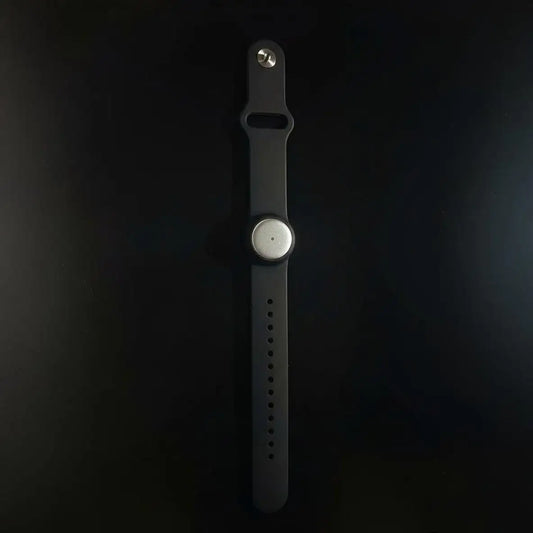
- All-day capture: record in-person conversations throughout the day, wear it on your neck, wrist, or under a shirt, and let the system do the rest.
- Online meeting capture too: record calls in Meet, Zoom, Teams, and more, using desktop and browser workflows.
- Outputs that ship: structured summaries, action items, reminders, and searchable memories, not “a wall of text.”
- Templates and prompts: standardize the outputs your team expects, so the recap is consistent meeting after meeting.
- Automation and integration: push outcomes where work lives, reduce copy-paste, and make follow-through automatic.
- Privacy posture: encrypted storage and compliance-forward options, plus controls for export and deletion.
Where this becomes practical (10 internal paths you can plug into)
Instead of generic “meeting notes,” here are concrete lanes that map to the reasons people leave transcription-only tools. Each link is a ready-made blueprint for output quality.
- Start here: pick your persona inside the use cases hub.
- Marketing: turn calls into briefs and content angles, see marketing use cases.
- Sales: get follow-ups that actually ship, see sales use cases.
- Project management: decisions become tasks and owners, see project managers use cases.
- Students: lectures and study sessions become structured recall, see students use cases.
- Clinicians and healthcare: conversations become documentation support, see clinicians and healthcare use cases.
- Legal: clarity, retention discipline, and fast retrieval, see legal use cases.
- Standardize outputs: use a consistent recap format with ai meeting summary workflow.
- Automate the last mile: connect outcomes with n8n, Zapier, and Make.
- Developer lane: build deeper workflows with MCP integrations (Claude and Cursor).
If you came to Sonix for accuracy, this lane is about something else: making sure nothing important slips through, online or offline.
Sonix AI alternatives for file-first creators and editors
If your output is subtitles, translations, publish-ready transcripts, or story edits, you may want a Sonix replacement that is still file-first, but stronger in editing or post-production.
| Tool | Best for | Pricing model | Where it can beat Sonix |
|---|---|---|---|
| Descript | Audio and video editing through text | Per-seat subscription (Hobbyist $16, Creator $24, Business $50) | Editing workflow, collaboration for media teams |
| Happy Scribe | Subtitles, translations, mixed AI and human review | Subscription plus usage, and human services billed per minute | Localization and subtitling pipelines |
| Trint | Newsroom collaboration and story workflow | Per-seat subscription (often premium-priced) | Team editing, newsroom velocity, live workflows |
| Rev | AI transcription plus upgrade path to human verification | Subscription minutes, plus human services | When accuracy requirements force human verification |
If your deliverable is “publishable text,” these are the most direct Sonix AI alternatives to test first.
Sonix AI alternatives for meetings and team follow-through
Meeting assistants solve a different problem than Sonix: they start at capture, then end at “what do we do next.”
They typically win when your pain is missed action items, scattered context, and rewatching calls.
| Tool | Capture style | Paid starting price | Best when |
|---|---|---|---|
| Otter | Meeting notes and transcripts | $8.33 per user per month (annual) | You want a simple meeting assistant with a familiar workflow |
| Fireflies | Meeting library plus integrations | $10 per seat per month (annual) | You need search plus a broad integrations ecosystem |
| MeetGeek | Meeting automation, summaries, analytics | $9.99 per user per month | You want structured templates and reliable summaries |
| tl;dv | Meeting recording, clips, and reporting | $18 per seat per month (annual) | You share clips and want multi-meeting reporting |
If you’re searching Sonix AI alternatives because you’re drowning in calls, this category is usually the fastest relief.
Sonix AI alternatives in hardware, wearables and recorders
Hardware matters when your best decisions happen in person, after the calendar invite ends.
In this category, the key question is not “does it record.” It’s “what happens after it records.” Do you get tasks, searchable memory, shareable summaries, and automations, or do you just get more files.
| Device | Typical upfront cost | Ongoing cost | Best for |
|---|---|---|---|
| Omi wearable + apps | $89 | Limited plan minutes, Unlimited available | All-day capture plus online meetings, with tasks and memory layer |
| Plaud NotePin | Often $159, newer NotePin S reported at $179 | Optional subscriptions (Pro and Unlimited tiers exist) | Wearable in-person capture with a growing desktop capture ecosystem |
| Basic recorders | $20 to $200+ | None | When you just need raw audio, and you will handle transcription elsewhere |
If you’re considering devices as Sonix AI alternatives, you’re usually saying: “I need capture to be effortless.” That’s the right instinct.
Sonix AI alternatives, hidden trade-offs people discover late
Most disappointments come from mismatched assumptions. Here are the ones that matter.
- Seat fees vs usage fees: per-seat can be cheaper at scale, or painfully expensive when only a few people actually transcribe.
- “Unlimited” rarely means unlimited: some plans are unlimited in words, but limited in minutes, or capped per file, per conversation, or by retention.
- Bot presence: some orgs hate meeting bots on client calls, which removes half the market immediately.
- Retention and exports: a tool can be great, until you need consistent exports, deletion, admin controls, or compliance posture.
- Outcome quality: action items that don’t become assigned work are just polite text.
This is why the best Sonix AI alternatives are chosen by workflow, not by feature checkboxes.
Sonix AI alternatives privacy and compliance, what “safe” should mean
For sensitive environments, “privacy” is not a marketing sentence. It’s a workflow: consent habits, retention rules, access controls, and encryption.
- Start with consent: decide when you disclose recording, especially in client meetings, interviews, and healthcare.
- Define retention: how long should transcripts, summaries, and notes live, and who can export them.
- Choose systems with real controls: encryption, deletion, exports, and a compliance posture that matches your use case.
Sonix AI alternatives, a 14-day evaluation plan
If you want a fair comparison, don’t run demos. Run one repeatable workflow test and grade the outcomes.
Step 1: pick one recurring input
Choose either one recurring meeting type (weekly check-in, customer calls) or one recurring file type (interviews, podcasts).
Step 2: define the “output contract”
What must be produced every time, a recap, action items with owners, publish-ready transcript, subtitles, or a decision log.
Step 3: grade the last mile
How much manual cleanup remains. How fast retrieval is. Whether tasks actually land where work happens.
Step 4: add real life in week two
Test cross-device capture and retrieval. This is where many “great tools” break in practice.
Prompt pack to standardize outputs
Prompt 1: decision log
- decisions made
- what changed vs last time
- open questions
- next steps with owners and due dates

Prompt 2: recap someone will forward
- 6 bullets max
- include numbers and commitments
- include risks/blockers
- include what happens next

Prompt 3: task creation
- one task per bullet
- include acceptance criteria
- suggest the best owner role
Two external reads on Sonix AI alternatives
Sonix AI alternatives FAQ
Are Sonix AI alternatives better for meetings?
If “meetings” are your primary input, meeting assistants are often better because they start at capture and end at action items. Sonix is strongest when the input is already a file and the output is a deliverable.
Which Sonix AI alternatives are best for creators?
If you edit audio and video regularly, Descript is often the closest “editing-first” alternative. If you need subtitling and localization workflows, Happy Scribe is a common comparison. If you work in newsroom-style collaboration, Trint is frequently evaluated.
What’s the most common pricing mistake when replacing Sonix?
Comparing the monthly subscription fee without modeling your real usage. Some tools are cheaper per seat but cap minutes. Others are usage-based but become expensive when your capture surface expands.
Do I need a wearable to replace Sonix?
No. But if your important conversations happen in person, a wearable reduces friction dramatically. The deciding factor is what happens after recording, whether you get searchable memory and tasks, or just more audio files.
What’s the fastest way to pick the right Sonix AI alternative?
Pick your lane (file-first, meeting-first, capture-anything), run a 14-day workflow test, then choose the tool that produces the output you actually need, consistently, with the least manual cleanup.

 www.omi.me