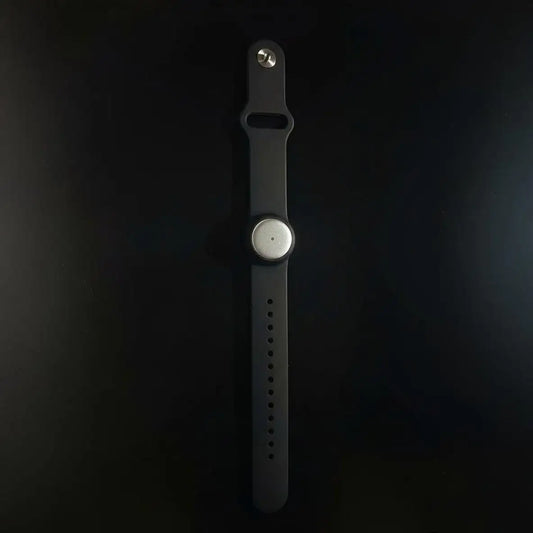
This workflow makes your CRM feel less like homework. Omi captures what you hear and say, turns it into a structured recap, action items, and searchable “account memories”, then syncs the useful parts into Salesforce or HubSpot as notes, activities, and tasks.
The best version of CRM automation is not “more data.” It’s less typing, fewer missed follow-ups, and a timeline you can trust during deal review. Default to safe summaries, keep deeper context in Omi, and make updates happen while the call is still fresh.
Updated on February 25, 2026. If you want the fastest setup, start with ready-made apps. If you want real control (dedupe, routing, approvals), build an Omi Integration App that posts to your own webhook.
Why CRM notes and activity logs quietly decide your forecast
Most teams don’t have a “selling problem.” They have a recall problem and a follow-through problem. Deals drift because the next steps were verbal, the recap got written days later (or never), and the pipeline fields became guesses.
Salesforce themselves call out how much time reps lose on non-selling tasks, including manually entering customer notes into the CRM. When that work is painful, data quality drops, managers stop trusting the pipeline, and reps stop caring.
- One truthful recap beats ten vague notes: the CRM becomes a reliable record, not a graveyard of half-written updates.
- Handoffs stop leaking context: SDR → AE, AE → CSM, sales → implementation. Everyone sees the same commitments.
- Coaching becomes measurable: objections, decision process, and risks are visible, not trapped in someone’s memory.
- Follow-ups stop being optional: action items become assigned tasks with dates. No more “we should do that.”
The real win is attention. If reps can stay present on calls and still produce high-quality CRM updates, you get better conversations and cleaner pipeline at the same time.
Best for
This workflow is built for teams that live in customer conversations and still need a CRM that stays accurate. It’s a natural fit for sales, operations, and leaders who need deal review clarity without micromanaging.
- SDRs and BDRs: log discovery fast, keep momentum between calls, and reduce “I’ll update later” gaps. Pair with ai sales summaries workflow.
- Account executives: consistent recaps, clean next steps, searchable objections and decision process notes. Useful for sales.
- Customer success managers: renewal notes, risk flags, commitments, and follow-ups that don’t get lost. Pair with customer success.
- Sales managers: pipeline inspection with evidence, not vibes. Add a repeatable cadence using weekly OKR check-in for consistency.
- RevOps / Sales ops: standardization, governance, approvals, and analytics on structured deal signals. Related: recording consent and governance.
- Solutions engineers and implementation: requirements and constraints attached to the right account and deal. Helpful for project managers.
- Marketing ops: why deals move, what messages resonate, what objections repeat. Relevant: marketing.
- Executives: fast deal health reviews for big bets and exceptions. See executives.
A simple test: could someone new to the account read the last CRM note and run the next call without calling the rep for context.
What counts as a “CRM update” here (it’s bigger than one call note)
This workflow covers the whole customer-facing loop, not just discovery calls. It applies to:
- Discovery: pains, desired outcomes, stakeholders, next steps.
- Demos and evaluations: requirements, objections, success criteria, technical constraints.
- Procurement and vendor meetings: approvals, legal/security steps, timeline, blockers. Related: vendor procurement meeting.
- Renewals and expansions: health signals, risks, commitments, plan of action.
- Support escalations: issue summary, impact, promised actions, ownership. Pair with support conversation to ticket.
- Internal deal reviews: “what changed”, blockers, dependencies, next steps.
- Handoffs: SDR → AE, AE → CSM, SE → implementation, when customer context is fragile.
The moment you open Omi (where quality is won)
The trigger isn’t “we should update the CRM.” The trigger is right after the conversation, while context is still warm. That’s when commitments are crisp, timelines are accurate, and risks haven’t been softened by memory.
Omi captures the conversation, then produces summaries, tasks, and memories you can search later. From there, you either: (1) push a CRM-safe recap into Salesforce/HubSpot, or (2) keep deeper detail in Omi and only log what’s operationally useful.
- “Draft the CRM recap for this deal.” (structured, short, scan-friendly)
- “Turn next steps into tasks with owners and due dates.” (follow-through becomes default)
- “What did they say last time about budget and procurement?” (retrieve the exact context, then update the record)
This is also where Omi shines compared to generic note tools: you can come back later and ask the system to retrieve a specific detail across conversations, not just read one long transcript.
What breaks without structure (and why “just log it” doesn’t work)
Without a clean workflow, CRM updates become late, inconsistent, and hard to trust. Even strong teams fall into the same traps because the system asks for admin work at the worst time.
- Context switching kills momentum: the call ends, the rep opens the CRM, energy drops, and updates get delayed.
- Notes become incomparable: one rep writes paragraphs, another writes “good call”. Managers can’t coach off that.
- Wrong association poisons the timeline: a perfect recap attached to the wrong deal is silent damage.
- Next steps become fiction: no owner, no date, no task. Weeks later everyone swears it was agreed.
- Forecast fields become guesses: stage/close date changes happen without an evidence trail.
- Shadow systems multiply: private docs, spreadsheets, Slack threads. The CRM stops being “the place”.
The goal is not “more CRM discipline.” The goal is a system where logging is easier than not logging.
What you gain with Omi (the practical version)
When this is implemented well, CRM hygiene becomes a side effect of customer conversations, not a separate chore. You get consistency without forcing reps to type everything twice.
- Clean deal recaps: short, structured notes that read like a real human wrote them.
- Follow-ups that land: next steps extracted as tasks with owners and due dates.
- Searchable customer truth: stakeholders, constraints, objections, timelines, commitments, retrievable later.
- Faster deal reviews: less “reconstruct what happened”, more “decide what we do next”.
- Better handoffs: sales → CS and support with context attached to the account record, not buried in chat.
- Safer sharing: CRM gets a safe summary, Omi keeps deeper context and raw detail when appropriate.
- Less rep fatigue: fewer tabs, fewer copy/pastes, fewer “do CRM” blocks after calls.
If you’ve ever lost a deal because “we didn’t realize procurement would take 6 weeks,” you already know why this matters.
What a great CRM update should capture (so future you can act fast)
A good update isn’t longer. It’s more specific. It makes it obvious what happened, what changed, and what happens next. If someone opens the record two weeks later, they should be able to keep moving.
| Section | What to capture | How to write it |
|---|---|---|
| Context | why the conversation happened | one sentence, no fluff |
| What changed | new info since last touch | lead with this, every time |
| Pains and outcomes | what they want and what blocks them | bullets, include constraints |
| Stakeholders and process | who decides, how they buy, steps | name roles and approvals |
| Objections and risks | pricing, security, competitor, blockers | tie to what was said |
| Commitments | what both sides agreed to do | make it measurable |
| Next steps | follow-ups with owners and dates | tasks, not prose |
| Suggested CRM changes | stage, close date, amount | draft + approval early on |
Workflow steps
This is the repeatable loop. The baseline is automatic structure. The “pro” version is correct association, dedupe, and governance. Do those three things and the workflow scales.
Step 1: Capture the customer conversation (low friction or it won’t stick)
Capture has to be simple. If it’s clunky, it will happen only on “important deals”, which is how pipelines get weird.
- Calls and meetings: capture on mobile, desktop, or wearable.
- In person: wear Omi or place it on the table for clean audio.
- Internal deal reviews: capture the review too, because commitments get made there.
- Governance: treat consent and policy as part of rollout. See recording consent and governance.
You’re not capturing for the sake of capturing. You’re preserving the decision context that makes follow-ups and forecasts accurate.
Step 2: Produce a CRM-safe recap (short, structured, readable)
Omi generates summaries, highlights, tasks, and memories. Your CRM should receive the operational slice: what changed, what matters, what happens next. Not a transcript dump.
- what changed since last touch
- pains and outcomes
- stakeholders and buying process
- objections and risk flags
- next steps with owners and dates
Step 3: Attach it to the right account + contact + deal (accuracy beats automation)
This is where most setups fail. If the recap lands on the wrong deal, you’re better off not syncing. Use a simple strategy:
- Primary match: participant email and company domain.
- Secondary match: normalized account name.
- Fallback: route low-confidence matches to a review queue instead of guessing.
If you want a simple review queue, you can stage conversation outputs in a Notion database using Notion Data Sync.
Step 4: Write the recap + tasks into CRM (start narrow, expand later)
Start with the smallest reliable write: one deal note + tasks for next steps. Expand to more objects after trust is established.
- Deal note: recap in a consistent format (easy to scan during review).
- Tasks: one task per next step, owner + due date required.
- Tags: controlled labels like “security”, “pricing”, “timeline”, “competitor”.
This pairs naturally with ai meeting summary for consistent recap structure.
Step 5: Draft pipeline-impacting changes (with approval)
Stage, close date, and amount changes affect forecasts. Don’t auto-change blindly. A safer default: draft the changes, then require approval.
- suggest stage changes based on explicit commitments
- suggest close date changes based on timeline signals
- suggest risk flags based on blockers and dependencies
Once the team trusts the workflow, you can automate more. Early on, approvals keep the data honest.
Step 6: Turn it “hands-free” with live sync and voice actions
This is the fun part, but it’s also useful. With real-time transcript processing you can build live-sync behaviors (nudges during the call, draft records, or instant reminders).
- Voice check: “Hey Omi, what’s the last open next step on ACME?”
- Voice add: “Hey Omi, add this recap to the ACME deal and tag it as security.”
- Voice update: “Hey Omi, move the due date to Friday and assign it to the deal owner.”
- Voice share: “Hey Omi, send this recap to my manager.”
- Voice delete (guarded): “Hey Omi, delete the draft note, it includes sensitive details.”
The rule: live actions should be draft-first and auditable. You can be fast without being reckless.
Step 7: Choose your integration path (install now, build later)
Most teams start with a marketplace app for speed, then graduate to a custom connector when they need cleaner routing, dedupe, and approvals.
- Fast lane: use Zapier to push recaps and tasks quickly.
- Control lane: build a webhook integration using Omi Integration Apps.
- Archive lane: sync everything to Drive for audit/replay with Google Drive.
Two roads to a CRM sync (install it, or build the “real” version)
Here’s the honest breakdown. If you want something working today, install an app. If you want something you can trust at scale, build a connector. Both are valid. They just solve different problems.
| Path | What you get | Effort | Best when | Links |
|---|---|---|---|---|
| Marketplace automation | Quick push of recaps/tasks into CRM or staging tools | Low | You want results this week | Zapier |
| Staging first (review queue) | Write conversation outputs into a structured table, then sync to CRM after review | Low–Medium | Wrong association is expensive | Notion Data Sync |
| Webhook connector (Integration App) | Dedupe, routing, approvals, correct association, custom fields | Medium | You need “RevOps-grade” hygiene | Integration Apps |
| Chat tools + voice actions | “Hey Omi” actions: create/update/share drafts and tasks during or after calls | Medium–High | You want hands-free operation with guardrails | Apps introduction |
| MCP + agents | Let agents query Omi memory and drive workflow changes (with approvals) | High | You want “think, then act” automation | MCP |
A good rollout strategy is: install → standardize recap format → build connector → add voice actions. Most teams fail by trying to build everything on day one.
Ready-made Omi apps that actually fit CRM workflows
These apps aren’t “CRM integrations” in name, but they solve the real pieces: routing, staging, archiving, coaching, and follow-through. If you’re building a CRM workflow, these are worth checking first.
-
Zapier
Fast automation lane. Good for pushing a structured recap into your CRM or creating follow-up tasks.
-
Notion Data Sync
A clean staging layer. Store every conversation in a database and review low-confidence matches before syncing to CRM.
-
Google Drive
Archive lane. Keep a searchable audit trail of memories/transcripts/action items outside the CRM.
-
Task Flow
Turns conversations into structured tasks (JSON). Useful when you want task hygiene even before CRM writes.
-
Omi Mentor
Proactive coaching. Great for live nudges (“you missed pricing” / “confirm next step”) before the recap is finalized.
-
PitchPerfect Assistant
Sales coaching built around real pitches: tone, objection handling, and closing. Useful for improving what ends up in the CRM.
-
Google Calendar (voice)
Schedule follow-ups hands-free. Helpful when the “next step” is literally booking the next meeting.
-
Rilla connector
If your team uses conversation intelligence tooling, this connects Omi to that system for deeper analysis.
If you don’t see a Salesforce/HubSpot-native app yet, that’s fine. The clean approach is still the same: push structured outputs via automation first, then build a webhook connector when you’re ready.
Build your own CRM connector (the “grown-up” setup)
If you want correct association, dedupe, routing by call type, and approvals, you’ll want a webhook-based Integration App. Omi sends your webhook the memory object (summary, transcript, action items, metadata). Your backend decides what to write into Salesforce/HubSpot.
Step A: Create an Integration App with memory triggers
Use Omi Integration Apps to receive data on memory creation (post-conversation), real-time transcripts (live sync behavior), or even raw audio for advanced pipelines.
Start with memory triggers first. Live sync is powerful, but it can also create noisy automations if you don’t gate it.
Step B: Decide your “CRM event schema” (one format, many CRMs)
Normalize Omi output into a single internal object, then map to Salesforce or HubSpot. That lets you support both without rewriting your whole pipeline.
{
  "omi_memory_id": "mem_123",
  "occurred_at": "ISO_TIMESTAMP",
  "conversation_type": "discovery|demo|procurement|renewal|support",
  "association": {
    "account": {"id": "crm_account_id", "confidence": 0.92},
    "deal": {"id": "crm_deal_id", "confidence": 0.87},
    "contacts": [{"id": "crm_contact_id"}]
  },
  "payload": {
    "title": "ACME - Q2 expansion - discovery - 2026-02-25",
    "safe_summary": "...",
    "tags": ["security", "timeline"],
    "next_steps": [
      {"text": "Send security questionnaire", "owner": "deal_owner", "due": "2026-02-27"}
    ],
    "source_link": "https://app.omi.me/..."
  },
  "governance": {
    "requires_approval": true,
    "blocked_content_flags": []
  }
}
Step C: Add dedupe (non-negotiable)
Store omi_memory_id on the CRM side and upsert by it. When Omi reprocesses a conversation, update the existing note instead of creating duplicates.
If you skip this, your timeline will get spammed, and adoption will collapse fast.
Step D: Add voice actions with chat tools (draft-first)
Build chat tools for “create note”, “create tasks”, “share recap”, “approve changes”, and “delete draft”. Keep high-impact actions behind approvals.
If you want a pattern to copy, the Omi Slack integration codebase shows real-time processors and voice-style commands end-to-end.
Step E: Add proactive nudges (the subtle performance upgrade)
Use notifications for reminders and live nudges: “you didn’t confirm next steps”, “timeline wasn’t captured”, “assign an owner”. This improves the recap quality before it hits the CRM.
Keep it calm: nudges should help, not interrupt.
If you’re building agents (ChatGPT/Claude/OpenClaw), this connector becomes your bridge: Omi provides the real-world context, your agent decides what to write, and CRM becomes the operational record.
Deliverables
These outputs are designed to be easy to review and hard to misinterpret. They reduce “CRM archaeology” and make deal momentum visible.
| Deliverable | What it includes | Why it matters |
|---|---|---|
| Deal recap note | what changed, pains, outcomes, decision process, risks | pipeline review becomes grounded |
| Next-step task list | owner + due date per follow-up | prevents silent slippage |
| Account memory snapshot | stakeholders, constraints, commitments, blockers | reduces repeat questions and confusion |
| Risk and objection tags | controlled taxonomy: pricing, security, competitor, procurement | enables analytics and consistent coaching |
| Pipeline change draft | suggested stage/close date/amount changes + rationale | keeps trust high with approvals |
| Source link back to Omi | link to the originating conversation | CRM stays clean, truth stays accessible |
CRM recap template
Use this template to keep updates consistent across the team. It is built for scanability and search. If reps hate CRM updates, this format is usually what changes the mood.
Account:
Deal:
Call type:
Date/time:
Attendees:

What changed since last touch:
-

Customer pains and desired outcomes:
-
-

Decision process and stakeholders:
- Decision maker:
- Champion:
- Steps (procurement, security, legal):
- Timeline:

Objections and risks (with evidence):
- Risk:
- Evidence (what was said):

Commitments made:
- Customer:
- Us:

Next steps (owner + date):
- [Owner] [Action] [Due date]

Suggested CRM changes (draft only):
- Stage:
- Close date:
- Amount:
- Forecast note:

Source:
- Omi link:
Deal review and pipeline change log template
This template keeps internal deal reviews short and reviewable. It separates evidence from assumptions and creates a trail for why fields changed. Sales managers and RevOps teams love this when it’s enforced consistently.
Account:
Deal:
Review date/time:
Participants:

One sentence deal status:
-

Evidence highlights:
- Evidence 1:
- Evidence 2:
- Evidence 3:

Top risks (and mitigation plan):
-
-

Dependencies:
- Security:
- Legal:
- Procurement:
- Technical validation:

Next steps (owner + date):
-
-

Pipeline changes requested:
- Stage change:
- Close date change:
- Amount change:
- Forecast category:

Rationale (why this change is justified now):
-

Approval:
- Approved by:
- Approved on:
Examples
Discovery call → deal note + tasks (no more “I’ll update later”)
An SDR runs discovery. Omi captures the call and produces a structured recap. The system writes a deal note with “what changed,” key pains, and the decision process, then creates tasks for follow-ups.
Fits sales and pairs well with ai sales summaries workflow.
Demo → requirements + objections + success criteria (SE-ready recap)
During a demo, the buyer mentions success criteria, technical constraints, and a competitor. Omi extracts the signals, and the CRM note becomes an “evaluation snapshot” an SE or manager can scan in 60 seconds.
Complements ai meeting summary for consistent structure.
Renewal call → risk log + plan (CSM follow-through without drama)
A CSM has a renewal call where the customer hints at churn risk and a champion change. The system writes a renewal recap, tags risks, and creates a plan as tasks with owners and dates.
Built for customer success and operations.
Escalation call → ticket-style follow-up (capture impact, assign owners)
A support escalation happens on a call. Omi generates an incident-style summary with impact and promised actions. The CRM gets a safe recap, and tasks are assigned for the fix and follow-up.
Pair with support conversation to ticket and shift handoff workflow.
The pattern stays the same: capture first, structure second, associate correctly, then write a clean recap and tasks. That’s how this becomes a system, not a trick.
Common mistakes
- Dumping transcripts into CRM: it feels thorough, but it becomes unreadable and risky.
- Associating to the wrong record: wrong deal notes are silent damage. Use staging when unsure.
- Skipping idempotency: duplicates flood the timeline and kill trust.
- Over-automating forecast fields: stage/close date/amount changes need approvals early on.
- Unowned tasks: if a follow-up has no owner, it will not happen.
- Ignoring governance: consent, sensitive content, and access controls must be part of rollout.
The best CRM automation isn’t louder. It’s cleaner, calmer, and more trustworthy.
FAQ
Do I need a native Salesforce or HubSpot integration for this to work?
No. Start with Zapier to push structured recaps/tasks quickly. When you need cleaner routing, dedupe, and approvals, build a webhook connector using Omi Integration Apps.
How do I make sure notes go to the right deal?
Use a matching strategy (email/domain first, then normalized account name) and confidence thresholds. Below the threshold, stage for review (for example with Notion Data Sync) instead of guessing.
How do I prevent duplicates?
Store the Omi memory id on the CRM side and upsert by it. If a conversation is reprocessed, update the existing note instead of creating a new one.
Can I do live sync during the call?
Yes, using real-time transcript processing. The smartest approach is to create drafts or nudges during the call, then write the final recap after. Keep live behaviors gated to explicit triggers so you don’t spam your CRM.
Can “Hey Omi” voice actions create, update, share, or delete CRM items?
If you build chat tools and wire them to your CRM connector, yes. The best practice is draft-first and auditable actions, with approvals for pipeline-impacting changes.
What about privacy, consent, and sensitive content?
Default to CRM-safe summaries and keep deeper context in Omi. Follow your company policy and local rules for recording, and bake governance into rollout using recording consent and governance.
Quick takeaway
- Capture the conversation and write the CRM update while context is still fresh.
- Push a structured recap, not a transcript.
- Association + dedupe + governance are the three things that make this scale.
- Tasks need owners and dates, otherwise “next steps” are imaginary.
- Start with marketplace apps, build a webhook connector when you need control.

 www.omi.me