TL;DR
Can ChatGPT take notes? Yes, but mostly in a “give me text, I will organize it” way. If you paste a transcript, rough bullets, or even a messy brain dump, ChatGPT can turn it into clean notes, action items, and a summary.
Where it gets tricky is the part people really mean: can ChatGPT take notes automatically during your day, across meetings, calls, and random conversations. On its own, not really. You need a capture layer (recording, transcription, or a meeting assistant) before ChatGPT can help.
If you want notes that feel personal, searchable, and useful weeks later, the “best” setup is usually: capture everything first, then run AI on top. That is exactly what we built in Omi: all-day capture plus meeting capture, with summaries, tasks, memories, sharing, templates, and automations across devices.

Key takeaways
- Can ChatGPT take notes? Yes, if you already have text (or you use a recorder/transcriber first).
- ChatGPT note taking is strongest at structuring, extracting decisions, and turning talk into tasks.
- The main limitation is capture: can ChatGPT take notes automatically across your day? Not by itself, and not across every device.
- If you want “notes that don’t disappear,” pick a system that stores searchable transcripts, tasks, and memories, not just a chat thread.
Table of contents
Can ChatGPT take notes?
Can ChatGPT take notes? Yes, but think of it like a very strong “notes editor,” not a full note-taking system. If you give it raw material, a transcript, a meeting agenda, a voice memo transcription, even scattered bullets, it can produce structured notes that are easier to share and act on.
So the real question becomes: can ChatGPT take notes from your life without you doing extra work? Most people want it to quietly capture, remember, and summarize. ChatGPT alone does not “live” inside your meetings, your hallway conversations, or your day.
Quick comparison table
| Option | Best when | Not ideal when | What to do next |
|---|---|---|---|
| ChatGPT (copy/paste) | You already have text and you want clean notes fast | You need automatic capture, search, follow-ups, and long-term memory | Use a repeatable prompt and a consistent format for outputs |
| ChatGPT record mode | You are on macOS and want a quick “record, transcribe, summarize” loop | You need all-day capture, cross-device capture, or deeper workflows | Pair it with a system that stores, organizes, and automates your notes |
How ChatGPT takes notes in practice
If you want ChatGPT note taking to feel magical, use it where it is strongest: structure and extraction. It is great at turning long talk into a clear summary, decisions, risks, and action items with owners.
But there is a simple rule: the input quality controls the output quality. If the transcript is messy, speaker turns are unclear, or the meeting had ten topics with no agenda, the notes will still need a human skim.
A simple workflow you can copy
1) Capture the raw material
Capture the conversation as audio or text. This can be a transcript from a meeting platform, a recorder, or a meeting assistant. If you are trying to answer “can ChatGPT take notes,” this is the part people forget. AI cannot summarize what you never captured.
2) Ask for a specific note format
Tell ChatGPT exactly what “good notes” means for you: bullets, decisions, action items, risks, next meeting agenda, follow-up email draft. The more specific you are, the more consistent the notes become.
3) Turn notes into follow-through
This is the real value. Notes that do not become tasks die in a folder. The best workflows push action items to where work happens, your task manager, CRM, inbox, or a shared doc.
Checklist table
| Step | What “good” looks like | Common mistake | Fix |
|---|---|---|---|
| Capture | Audio is clear, speakers are distinguishable, timestamps exist | Recording starts late or misses key moments | Use a system that captures both scheduled meetings and spontaneous conversations |
| Summarize | Notes include decisions, owners, and deadlines | Generic summary with no accountability | Force an “action items with owner + due date” section every time |
| Store | You can find the note two months later in 10 seconds | Notes live in random chat threads | Use a searchable memory system with folders, tags, and sharing |
Can ChatGPT take notes automatically? Limitations you will feel fast
Can ChatGPT take notes automatically? Not in the way most people mean it. It can help after the fact, and in some setups it can record and summarize, but “all-day note taking” needs capture, storage, and workflows that live outside a single chat window.
Where ChatGPT note taking breaks down
- Capture is not universal: without a recorder or meeting assistant, ChatGPT is not present in your in-person conversations, quick hallway decisions, or client calls.
- Notes are not a system: a chat thread is not a knowledge base. Search, permissions, sharing, and structure are limited compared to a real notes pipeline.
- It forgets your context unless you rebuild it: you can paste context, but doing that daily gets old fast. That is why people move from “prompting” to “memory systems.”
- Meeting reality is messy: interruptions, accents, jargon, and side discussions reduce transcription accuracy, which reduces summary accuracy.
- Teams and compliance: many organizations want SOC 2, HIPAA, encryption, retention controls, and governance. A random plugin is not enough.
- Social friction: meeting bots can feel intrusive. People notice, ask questions, and sometimes push back.
If you are asking “can ChatGPT take notes,” you are usually asking for a system that captures, remembers, and turns talk into action. That is bigger than ChatGPT.
How to take notes with ChatGPT step by step
This is the cleanest “minimum effort” answer to can ChatGPT take notes. It works for meetings, lectures, interviews, and even personal reflections.
Step 1: Capture audio or transcript
Use whatever you already have. If your meetings are in Google Meet, Zoom, or Teams, export a transcript if available. For in-person, record audio. If you want a complete solution, use Omi so capture works for both scheduled meetings and real-life conversations.
Step 2: Use a consistent prompt
Ask for one format every time. Consistency matters more than cleverness. You want notes that look the same across meetings so your brain trusts the system.
Prompt:
Turn this transcript into meeting notes.

Output format:
1) 5-bullet summary
2) Decisions (with owner)
3) Action items (owner + due date)
4) Risks / open questions
5) Next meeting agenda (3 bullets)

Transcript:
[PASTE]
Step 3: Put the notes where work happens
Paste action items into your task manager, or automate it. If you do this manually once, you will do it manually forever. That is why integrations and automations matter.
Want this workflow already built end-to-end? Start with our ai meeting summary workflow, then connect it to your stack via integrations.
Tools that beat ChatGPT note taking for real life
ChatGPT is a great “thinking layer.” It is not always the best “capture + memory + workflow” layer. Below are tools that solve different parts of the problem, plus where they fit when you are still asking can ChatGPT take notes.
-
Omi (all-day notes + meeting notes)
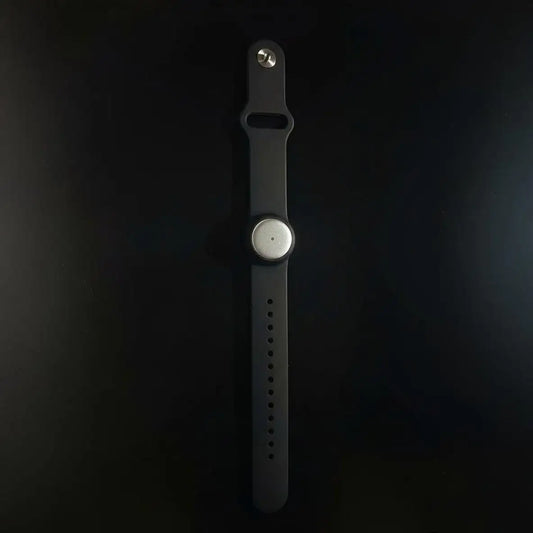
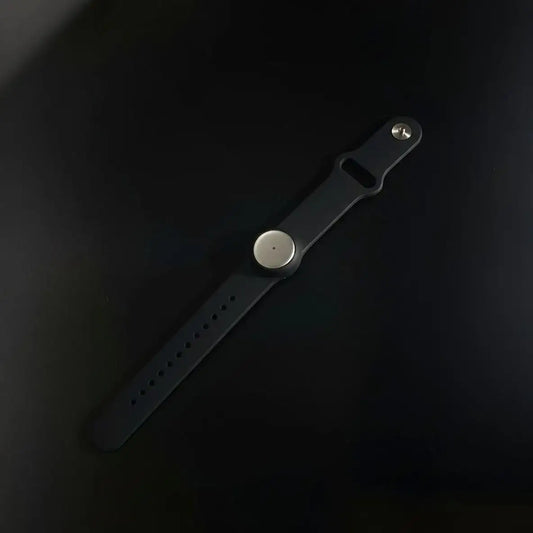
We built Omi to capture what you say and hear, then turn it into summaries, tasks, and searchable memories. It works across iOS, Android, Mac desktop, and a web app in any browser. You can use it with wearables for hands-free capture, plus the Mac and web apps for online meetings.
Explore use cases: use cases hub, project managers, marketing, sales.
-
Notion ai meeting notes
Notion’s AI Meeting Notes focuses on capturing meeting audio and producing summaries and action items, inside your workspace. It is a clean option when your team already lives in Notion and you want notes to land directly where docs live.
Trade-off: it is meeting-first, not “capture your whole day.”
-
Otter and Fireflies (meeting assistants)
Otter and Fireflies are built around meeting capture: transcripts, summaries, and searchable meeting history. Fireflies also pushes an AI assistant (AskFred) on top of your meetings, which feels like ChatGPT, but scoped to your call library.
Trade-off: most workflows are “meeting-only,” not spontaneous conversations.
-
Fathom and tl;dv (fast summaries + highlights)
Fathom is popular for quick call summaries and searchable meeting history. tl;dv shines when you want clips, highlights, and async sharing across teams, especially for Zoom/Meet/Teams heavy orgs.
Trade-off: great for video meetings, less for in-person life capture.
-
Plaud (hardware capture + summaries)
Plaud focuses on physical recording devices plus transcription and templates. It is strong if you want a dedicated recorder for calls and in-person meetings, then AI summaries afterward. People use it when they want a “button to record” habit.
Trade-off: it is a capture device first, workflow system second.
-
Browser add-ons for ChatGPT notes
If your “notes” are mostly ChatGPT conversations, use browser extensions that add folders, search, and export. This does not make ChatGPT a note taker for meetings, but it does make your AI chats easier to organize.
Typical use: save threads as PDF/Markdown and build a personal library.
One more important point: Gemini can’t take notes as an all-purpose “capture my life” tool either. But Google’s ecosystem can take notes inside Google Meet and place them into a Google Doc automatically. That setup is useful if your organization is all-in on Google Workspace.
External references: OpenAI’s ChatGPT record mode documentation and Google Meet “take notes for me” guide.
Can ChatGPT take notes better with Omi?
Here is the honest framing: we still use ChatGPT-style models because they are excellent at summarizing and reasoning. The difference is that we do not force you to be the “capture engine.” We capture first, then apply AI on top.
What we do that makes notes feel personal
- Capture everything you say and hear: in-person conversations, quick decisions, and meetings, not only scheduled calls.
- Summaries, tasks, and memories: notes become action items and searchable context you can reuse later.
- Custom summary templates: the same meeting can produce different outputs depending on your role, sales summary, project recap, interview notes, study kit.
- Apps and automations: push tasks to your systems, trigger workflows, and share notes fast.
- MCP and API: if you want Omi to feed your internal tools, we built it for that.
Where this matters most
| Situation | Why “can ChatGPT take notes” is not enough | How we handle it |
|---|---|---|
| Client calls + follow-ups | You need decisions, tasks, and a follow-up email fast | Use our sales workflows plus CRM integrations |
| In-person meetings | No transcript means no notes, no memory | Wearable capture plus a searchable “second brain” you can query later |
| Cross-functional execution | Notes die unless they become tasks | Connect tasks via task integrations and automation |
| Regulated environments | Security and policy are non-negotiable | Govern recording with recording consent and governance |
If you want notes that keep getting smarter over time, you want a memory system, not just a prompt.
Is it safe to use ChatGPT for notes?
This is the part most “can ChatGPT take notes” answers skip. Notes often contain sensitive information: client names, product plans, HR topics, health details, legal strategy. So “safe” is not only about encryption, it is also about consent, retention, and access control.
Trade-offs you should know
- Convenience: fast summaries vs the risk of dumping sensitive text into the wrong place
- Automation: bots joining meetings vs the social and security friction they can create
Decision table
| If you care most about… | Choose… | Because… |
|---|---|---|
| Minimizing risk and keeping control | A system with strong controls and clear governance | It is easier to manage retention, permissions, exports, and deletion consistently |
| Fast meeting summaries for internal calls | Built-in assistants in your meeting platform | They usually reduce third-party bot sprawl and keep data inside your stack |
FAQ
Can ChatGPT take notes automatically during a meeting?
Can ChatGPT take notes automatically? Not in a universal way. It can summarize after you provide a transcript, and some setups can record and summarize, but most people still need a capture tool first. For consistent results, make capture automatic, then let AI do the formatting.
Can ChatGPT take notes from Zoom, Google Meet, or Teams?
Yes, if you can get audio or a transcript out of the call. The easiest path is using a meeting assistant that already captures the call and outputs a transcript, then you can ask ChatGPT to structure it. If you want one system for both online and in-person, use a tool built for both.
Why do my ChatGPT meeting notes feel generic?
Because the prompt is generic, or the transcript lacks structure. Add a standard output format (decisions, action items, owners, deadlines) and require “evidence” like quotes or timestamps for key claims. That forces specificity.
Gemini can take notes, right?
Gemini can help summarize and refine text, but it is not a universal “always-on notes” tool. Google Meet has a “take notes for me” feature that creates a meeting notes doc in Google Docs, and then you can use Gemini to improve that doc. It is powerful inside the Google ecosystem.
What is the fastest way to get great notes from any conversation?
Capture first, summarize second, act third. If capture is effortless and consistent, everything improves: accuracy, recall, follow-through. That is why all-day capture plus meeting capture is the most reliable path when you are serious about notes.
Next step
If you came here asking can ChatGPT take notes, try the simplest upgrade: stop relying on copy and paste. Use a workflow that captures automatically, stores notes as searchable memory, and turns action items into tasks.
Start with our ai meeting summary workflow and then map it to your team: HR, IT, professional workers, students, teachers, clinicians, legal, finance, operations, accounting.

 www.omi.me