Most calendar pain is not “too many meetings.” It’s the tiny gaps between a conversation and a time block. Someone says, “Let’s meet tomorrow at 2,” everyone agrees, then the call ends and life eats the follow-up.
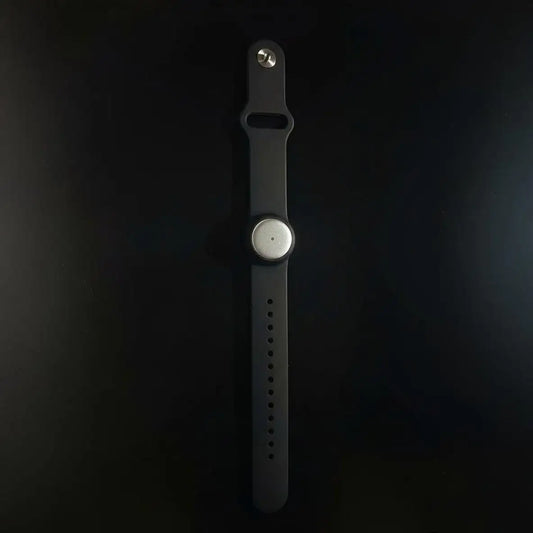
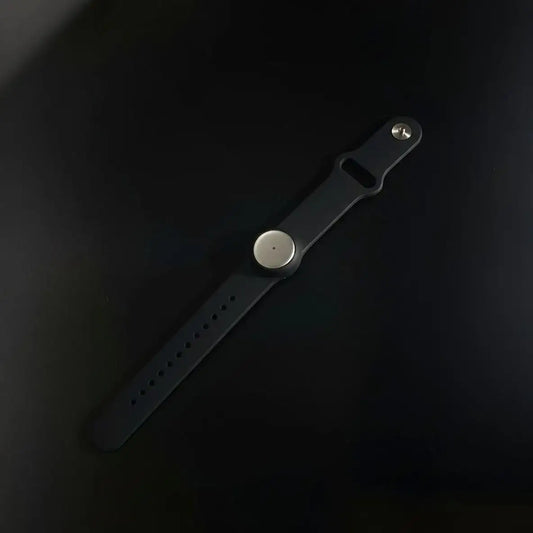
Omi closes that gap. It’s an AI wearable recorder you use all day. It captures what you hear and say, then produces meeting summaries, extracts tasks, and saves searchable memories so you can retrieve context later in seconds. When you connect calendars, Omi doesn’t just remember. It schedules.
The practical upgrade: use voice to create, edit, cancel, and share appointments in the moment, while the details are still accurate. The calendar stays clean and readable. Omi holds the deep record.
Why voice-first scheduling beats “I’ll do it later”
Scheduling fails for one boring reason: friction. Switching apps, choosing a calendar, typing names, writing an agenda. People postpone it. Then it slips.
Voice commands remove the friction without removing control. You keep your attention on the conversation, and you still get a real calendar object at the end. That’s the point: turn spoken commitments into scheduled reality.
- Hands-free capture: schedule while walking, driving, or moving between meetings (no app switching).
- Higher accuracy: you schedule while details are fresh, before memory rewrites them.
- Instant context: Omi can attach agenda, decisions, and next steps from the conversation to the event.
- Less cognitive load: your brain stays on thinking and talking, Omi handles the remembering and the booking.
If you already use Omi for summaries and tasks, voice scheduling is the missing last step. It turns “we agreed” into “it’s on the calendar.”
Best for (people who live inside calendars)
This workflow works for anyone, but it hits hardest in roles where time is the core asset and follow-ups are the core failure mode.
- Executives and chiefs of staff: decisions become scheduled checkpoints, 1:1s stay anchored to open loops.
- Sales and customer success: next steps get booked while the call is warm, renewals get real checkpoints.
- Project managers: rituals stay consistent, retros turn into scheduled follow-ups that actually happen.
- Operations and procurement: vendor calls become a timeline of checkpoints with owners, not scattered promises.
- IT teams: incident calls become postmortems and follow-up blocks with owners and deadlines.
If your calendar is packed but outcomes feel fuzzy, this is usually the missing bridge.
What counts as “calendar-worthy” (and what should stay as a task)
The fastest way to kill calendar automation is to turn everything into meetings. This workflow is strict on purpose.
- Confirmed time: there’s a real day and time (even if it’s “tomorrow afternoon”).
- Coordination required: more than one person must align, or a decision must happen live.
- Recurring rituals: 1:1s, OKR check-ins, retros, shift handoffs, vendor reviews.
- Prep blocks: protect time before high-stakes meetings (negotiations, exec reviews, interviews).
- Closure checkpoints: a follow-up block after meetings that generate real work.
- Not calendar-worthy yet: “we should meet sometime,” “let’s circle back.” That becomes a task: propose times, assign owner, set a due date.
The moment you open Omi (where scheduling stops being fragile)
The best time to schedule is when everyone is still precise. Not two hours later. Not “after lunch.” In the moment.
Omi is wearable, which makes that moment easy to catch. You capture the conversation, get a summary and tasks, then you schedule the follow-up immediately with a voice command. The commitment doesn’t have a chance to decay.
The mental model: Omi captures the truth, your calendar receives the time block, and a single link connects them.
The failure mode without guardrails (time zones, duplicates, and accidental invites)
Calendar integrations fail in predictable ways. If you design against the failure modes upfront, the system stays boring and reliable.
- Time zone drift: events show up an hour off and trust dies immediately.
- Duplicate events: retries and “create vs update” mistakes clutter calendars fast.
- Blank event blocks: “Sync” with no agenda leads to slow, unfocused meetings.
- Wrong calendar destination: internal meetings land in shared external calendars.
- Invite mistakes: auto-inviting the wrong people is both awkward and risky.
- Over-sharing: transcripts pasted into event descriptions where too many people have access.
A calendar is visible by default. Omi is where the deep record belongs. Keep calendar text minimal and link back to Omi.
What you gain with Omi + calendars (the “meeting operating system” effect)
The obvious win is faster scheduling. The deeper win is connected memory across time: decisions lead to checkpoints, checkpoints lead to execution, and everything stays retrievable.
- Voice scheduling that sticks: create, edit, cancel, and share appointments while the conversation is still fresh.
- Events that read like briefs: agenda and next steps live in the event, not scattered across tools.
- Searchable meeting memory: summaries, decisions, tasks, and memories stay in Omi, easy to retrieve later.
- Cleaner handoffs: someone who missed a meeting can catch up in minutes.
- Less “replanning”: you stop reconstructing decisions from scraps.
- Real control: you decide what data leaves Omi through integrations and automations.
Your calendar becomes the index. Omi becomes the record. That separation is what keeps the system usable.
What a great appointment should capture (minimum data, maximum clarity)
Appointments should be readable in 20 seconds. The deep detail stays in Omi.
| Event element | What to include | Why it matters |
|---|---|---|
| Title | Type + who/what + outcome (ex: “Acme renewal follow-up, timeline decision”) | Searchability. “Sync” is not searchable. |
| Time and time zone | Explicit start/end, consistent time zone contract | Prevents the “off by one hour” trap. |
| Attendees | Required vs optional, plus a safe rule for external invites | Stops invite mistakes and reduces risk. |
| Agenda block | 3–6 bullets phrased as outcomes | People come prepared. Meetings converge. |
| Next steps block | Owner + due date list (short) | Turns meetings into execution. |
| Link back to Omi | One link to the deep record (summary, tasks, memories) | Keeps the calendar lightweight, keeps context retrievable. |
| Sensitivity rule | Never paste full transcripts into calendar text | Calendars are not vaults. |
Workflow steps (voice commands included)
This is the repeatable loop that works for Google Calendar and Outlook Calendar. Pick the simplest lane that survives your real life.
Step 1: pick your integration lane (start boring)
- Lane A (google-first): use the Omi Google Calendar app for event creation and management.
- Lane B (outlook via automation): use Zapier/Make/n8n to create and update Outlook events from Omi outputs.
- Lane C (enterprise outlook): build on Microsoft Graph if you need auditing, strict controls, and reliable update behavior.
The mistake is mixing lanes on day one. Earn complexity later.
Step 2: connect accounts and choose one default destination calendar
Pick a default calendar (work, personal, shared). Test on a sandbox calendar for a week. This single decision prevents 80% of messy outcomes.
- Default calendar: where events go unless a rule overrides it.
- Shared vs private: if it impacts others, it belongs in a shared calendar.
- Naming standard: set it now so search works later.
Step 3: define the time zone contract (trust starts here)
Time zones are not a detail. If you get this wrong, the entire automation feels broken even when it “works.”
- Rule: store start/end times with explicit time zone handling end-to-end.
- Test: create one known-time event (like “tomorrow 2pm”) and confirm it shows correctly on all devices.
Step 4: use voice to create appointments (fast, hands-free, accurate)
This is the habit that changes everything: schedule the moment it’s agreed, with a voice command. No app switching. No “I’ll do it later.”
Hey Omi, create an appointment tomorrow at 2pm with John.
Hey Omi, add an agenda: pricing, timeline, and next decision.
Hey Omi, invite Sam and Alex too.
Hey Omi, set it for 25 minutes.
Hey Omi, add a reminder 30 minutes before.- Benefit 1: you schedule while the details are still correct, before memory drifts.
- Benefit 2: your hands stay free, which matters when you’re moving, presenting, or in back-to-back meetings.
- Benefit 3: you can attach agenda and next steps immediately, so the meeting has direction.
Step 5: edit appointments by voice (reschedule without losing context)
Rescheduling is where context usually gets lost. Voice editing keeps the event intact and updates the time cleanly.
Hey Omi, move my appointment with John to 3pm tomorrow.
Hey Omi, change the duration to 50 minutes.
Hey Omi, update the title to "Acme follow-up, timeline decision".- Benefit: you don’t rebuild the event from scratch, so agendas, links, and ownership survive reschedules.
Step 6: cancel appointments by voice (clean cancellations, fewer no-shows)
Cancellations should be fast and unambiguous. Voice makes it instant, especially when you’re running late or switching plans.
Hey Omi, cancel my appointment with John tomorrow.
Hey Omi, cancel the vendor checkpoint on Friday.
Hey Omi, cancel and create a follow-up task to propose new times by end of day.
The key is clean follow-up: cancel the event, then create a task so the intent doesn’t disappear.
Step 7: share appointments and follow-ups (without copying and pasting)
Sharing is where teams waste time: copying notes into Slack, sending half-context emails, forgetting the link. Use voice to share what matters.
Hey Omi, share this appointment with Mary.
Hey Omi, send the agenda to the attendees.
Hey Omi, share the meeting summary link after the meeting.- Benefit: the right people get the right context without transcript dumping or messy paste jobs.
Step 8: attach the meeting artifact (agenda, decisions, next steps, Omi link)
Your calendar should contain a tiny brief. Your deep record stays in Omi. Put agenda first, then next steps, then one link back.
- Agenda: what we’ll decide.
- Next steps: owner + due date list.
- Omi link: summary + tasks + memories.
Step 9: prevent duplicates (idempotency is not optional)
Duplicates kill trust. Design for “find then update,” not “create again.”
- Stable key: conversation ID + start time + attendee set.
- Update logic: if event exists, update it; if not, create it.
- Retry-safe: treat retries as updates, not new creates.
Step 10: builder lane (routing rules, governance, and custom integrations)
Once the basics are stable, teams often add routing and controls: different calendars by meeting type, approval steps for external invites, and privacy presets for sensitive contexts.
-
Explore community apps:
https://h.omi.me/apps -
Read developer docs:
https://docs.omi.me/ - Governance workflow: recording consent and governance
Deliverables (what you get after doing this for a week)
These outputs are what make the system feel real, not theoretical.
| Deliverable | What it includes | Why it matters |
|---|---|---|
| Voice-created appointments | Events created in the moment, with consistent titles and agenda blocks | Commitments stop slipping through cracks |
| Voice edits and cancellations | Reschedules that preserve context, cancellations that keep intent via tasks | Plans stay accurate without losing the thread |
| Shareable appointment context | Agenda + next steps + link back to Omi (instead of messy paste jobs) | Teams stay aligned with minimal exposure |
| Searchable meeting memory in Omi | Summaries, highlights, decisions, tasks, memories | You can retrieve context later in seconds |
| Follow-up checkpoints | Scheduled next steps and closure blocks with owners | Execution becomes inevitable |
| Governance defaults (teams) | Invite policy, privacy rules, routing rules, approval steps | Prevents chaos and accidental over-sharing |
Event quality template (copy-paste standard)
Use this template to keep events consistent across roles and teams. It’s simple enough to follow and strict enough to prevent chaos.
Event title:
- [type] [who/what] - [outcome]

Voice prompt (optional, how you create it):
- "Hey Omi, create an appointment tomorrow at 2pm with John."

Type:
- Sales follow-up / 1:1 / Retro / OKR check-in / Interview / Vendor / Support / Other

Time:
- Start:
- End:
- Time zone (explicit):

Attendees:
- Required:
- Optional:
- External attendees: yes/no
- If external: draft until approved (yes/no)

Agenda (3–6 bullets phrased as outcomes):
- We will leave with:
- We will decide:
- We will align on:

Context (optional, 1 paragraph max):
-

Pre-reads / links:
- Doc:
- Ticket:
- Proposal:

Next steps (owner + due date, short list):
-

Link back to Omi record:
- Conversation / memory link:
Debrief and decision log template (post-appointment closure)
This keeps debriefs short, decisions reviewable, and follow-ups owned. It also keeps your calendar clean by storing deep context in Omi.
Appointment:
- Title:
- Date/time:
- Attendees:

One-sentence summary:
-

Decisions (what changed):
-

Key context to remember later:
-

Next steps (owner + due date):
-

Follow-up checkpoint:
- Schedule next appointment? yes/no
- If yes: date/time window:
- Owner:

Risks / open questions:
-

Deep record:
- Omi link:
Examples (real workflows by role, with internal links)
Executive 1:1s that don’t drift into status updates
Capture the 1:1 with Omi, extract open loops, then voice-create the next checkpoint before you leave the room. The event contains an agenda and a link back to the Omi record.
Sales follow-ups booked by voice while the call is still warm
Prospect says “tomorrow at 2.” You say: “Hey Omi, create an appointment tomorrow at 2pm with John.” Omi captures objections and next steps, then you attach a tight agenda to the event.
Incident calls that become postmortems with real deadlines
Omi captures the incident call, extracts tasks, then you voice-schedule the postmortem and the follow-up checkpoint. No “we’ll do it sometime.”
Vendor reviews that keep a decision trail
Capture the vendor call, then schedule the next checkpoint by voice (security review, legal review, pricing approval). Your calendar becomes the timeline. Omi holds the record.
Same loop every time: capture → summarize → extract owners → schedule the checkpoint → keep the deep record linked and searchable.
Common mistakes (and the guardrails that prevent them)
- Voice commands without confirmation rules: “tomorrow” can be ambiguous across time zones. Use a time zone contract and test it.
- Letting tools guess time zones: the fastest way to kill trust. Validate known-time events.
- Auto-inviting external attendees by default: use draft mode or allowlist mode.
- Creating events when time is not confirmed: use tasks for “propose times.”
- Ignoring idempotency: retries create duplicates. Always “find then update.”
- Transcript dumping into calendar text: keep sensitive detail in Omi, link back for depth.
The best calendar automation feels boring: correct time, no duplicates, readable events, and clear ownership.
FAQ
Can I create appointments with Omi using voice?
Yes. The whole point is scheduling in the moment. Example: “Hey Omi, create an appointment tomorrow at 2pm with John.” Then add agenda and reminders by voice so the event is useful, not a blank block.
Can I edit or cancel appointments by voice too?
Yes. Editing is where voice shines: reschedule without losing context. Cancelling is where voice prevents sloppy outcomes: cancel the event, then create a follow-up task to propose new times so intent doesn’t disappear.
How do I share the appointment or the meeting context?
Share the event itself, and share context safely: agenda and next steps in the description, then a single link back to Omi for the deep record. That keeps calendars readable and reduces accidental over-sharing.
What’s the best path for google calendar vs outlook calendar?
Google Calendar is typically the simplest lane via an Omi app. Outlook Calendar is usually best via automation (Zapier/Make/n8n) or Microsoft Graph if you need enterprise controls and reliable updates.
What should never go into a calendar event description?
Full transcripts and sensitive details. Keep minimal context in the event and link back to Omi for the record: summary, tasks, and searchable memories.
How do I disable the integration and revoke access safely?
Disable the relevant Omi app or automation, then revoke permissions in the connected Google or Microsoft account. For custom API/webhook setups, rotate credentials and disable endpoints. Always test “off” like you test “on.”
Quick takeaway
- Schedule in the moment using voice: “Hey Omi, create an appointment tomorrow at 2pm with John.”
- Edit and cancel by voice: keep plans accurate without losing context.
- Share safely: agenda and next steps in the event, deep record linked in Omi.
- Keep calendars clean: confirmed time becomes events, vague time becomes tasks with owners.
- Protect trust: time zones and duplicates are the failure modes. Design against them up front.

 www.omi.me