TL;DR
Granola AI alternatives are not all trying to solve the same problem. Some are elegant meeting note apps. Some are team-focused meeting bots. Some are hardware or wearable systems built for real-world conversations, all-day memory, and hybrid work.
The best Granola AI alternative for most professionals is the one that can handle both online meetings and real-world conversations, then turn them into summaries, tasks, memories, and follow-up actions across the tools you already use.
This guide compares the top Granola AI alternatives in 2026, including Omi, Otter, Fireflies, Fathom, tl;dv, Notta, Avoma, MeetGeek, Read AI, Krisp, and Plaud, with a deeper focus on pricing, workflow fit, privacy, and long-term usability.

Granola AI alternatives: 11 better options
If you are searching for Granola AI alternatives, the real question is not “which tool also summarizes meetings?” It is “where does my work actually happen?” Granola is strong if you want a bot-free note app for meetings on desktop and iPhone, especially if you like guiding the notes yourself. But the best Granola AI alternatives win when you need broader device support, all-day capture, better in-person recording, stronger automation, more flexible pricing, or a true memory layer beyond meeting recaps.
Granola has a distinct product philosophy. It is not trying to be a passive life logger or a wearable memory device. It is an AI notepad that listens to your meeting, refines what you wrote, and helps structure the output around what mattered. That is exactly why many people love it. It is also why many users eventually start comparing Granola AI alternatives that go further than desktop-only meeting notes.
- What Granola does well: clean UX, bot-free capture, and thoughtful note enhancement.
- Why people switch: they want more device coverage, more automation, or more memory beyond scheduled meetings.
- What makes this category tricky: many tools look similar, but they serve very different workflows.
- What actually matters: capture context, output quality, integrations, privacy, and total cost over time.
That is why this guide compares Granola AI alternatives as complete workflows, not just note-taking apps.
Why people start looking for Granola AI alternatives
Granola is best when your work lives in scheduled calls and active note-taking. It is not the right shape for all-day ambient capture. If your most important conversations happen in hallways, site visits, fieldwork, classes, dinners, or in-person customer meetings, software-only note tools start to feel thin.
People usually start looking for Granola AI alternatives for five reasons. They want broader platform flexibility. They want better capture outside scheduled calls. They want deeper automation. They want hardware or wearable options. Or they want stronger workflow economics as their usage grows.
- Meeting-first limitation: Granola shines in calls, but it is narrower by design than some alternatives.
- In-person gaps: software-only tools struggle when your work happens away from the laptop.
- Workflow friction: many users want summaries that become tasks, CRM updates, docs, or automations.
- Memory depth: some people want searchable memory, not just single-meeting recaps.
- Price fit: the right alternative may replace more tools and lower total cost over time.
What Granola still does really well
Before jumping into Granola AI alternatives, it is worth being fair. Granola’s strengths are real. It is bot-free. It captures your computer’s audio directly instead of sending a visible meeting bot into the call. For confidential calls, investor meetings, hiring loops, or sensitive customer conversations, that is a real advantage.
Granola is also good when you want AI to enhance your own judgment instead of replacing it. Its core appeal is simple. Write as much or as little as you want, let AI flesh it out, and keep the human in the driver’s seat.
That is why the best Granola AI alternatives are not always “more AI.” Often, they are just better matched to the way you actually work.
Granola AI alternatives at a glance
If you want a fast answer before the deeper comparison, use this table first. Then read the sections below so you do not buy the wrong kind of product.
| Option | Best when | Not ideal when | What to do next |
|---|---|---|---|
| Omi | You want one system for in-person conversations, online meetings, summaries, tasks, memories, quick sharing, custom templates, automations, and developer extensibility. | You only want a simple desktop meeting notes app with minimal workflow features. | Start with the AI meeting summary workflow, then connect task and project tools and MCP integrations. |
| Otter | You want a mature software-only meeting assistant with familiar collaboration features. | You need wearable capture or a broader memory system beyond meetings. | Compare it if your work is mostly Zoom, Meet, or Teams. |
| Fireflies.ai | You want broad integrations and scalable team workflows. | You strongly prefer bot-free capture or more personal note-taking behavior. | Use it if your priority is meeting intelligence across a team. |
| Fathom | You want a very strong free option for meeting summaries and search. | You need in-person capture, wearable workflows, or memory across contexts. | Test it if you want a software-only value pick. |
| Plaud | You want polished hardware and strong in-person capture. | You need deeper automation, open extensibility, or a more flexible workflow platform. | Compare it if hardware experience is your main priority. |
| MeetGeek / Krisp | You want bot-free paths with strong meeting utility. | You want a full second-brain or ambient memory system. | Check them if privacy and clean capture are high priorities. |
The best Granola AI alternatives in 2026
1. Omi
If you want the broadest answer to the Granola AI alternatives question, start with Omi.
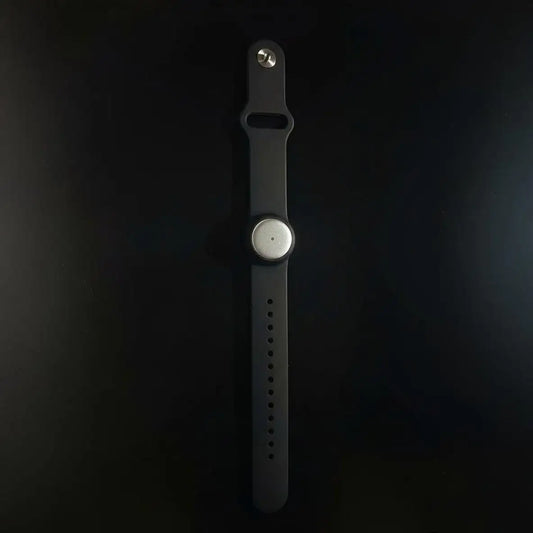
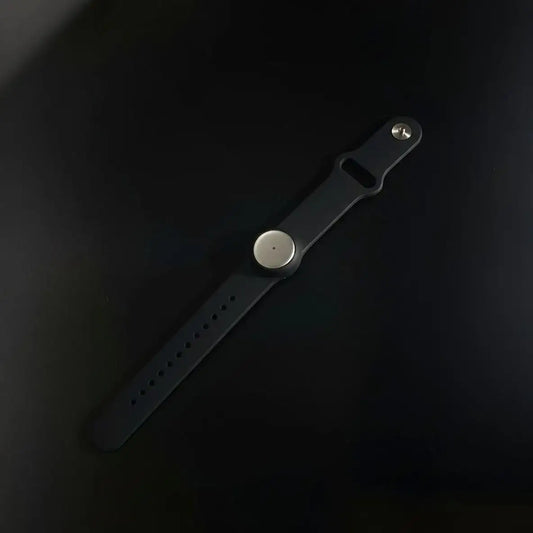
Omi is not just a meeting note tool. It is a full capture, memory, and automation system. It works across iPhone, Android, Mac, Windows, and browser, with wearable capture for in-person conversations and desktop or web capture for online meetings. It turns conversations into searchable transcripts, summaries, action items, and memories, while also supporting quick sharing, custom summary templates, automations, API access, MCP support, and an app store with thousands of tools.
This is why Omi is stronger than Granola for people whose work extends beyond desktop meeting notes. If you are a professional worker, executive, sales professional, marketer, or project manager, Omi fits the whole chain from capture to memory to follow-through better than Granola does.
- Hybrid capture: wearable for real-world conversations plus online meeting capture in one system.
- Workflow outputs: summaries, tasks, reminders, memories, and reusable templates.
- Automation depth: powerful workflows with n8n, Zapier, and Make.
- Developer path: API, MCP support, and app ecosystem extensibility.
- Privacy-first posture: encrypted, HIPAA compliant and SOC 2 compliant, with strong export and delete controls.
If your search for Granola AI alternatives is really a search for “one system that handles everything,” this is the best place to start.
2. Otter
Otter is one of the safest software-only Granola AI alternatives if your world is mostly Zoom, Teams, and Google Meet. It offers live transcription, speaker identification, mobile apps, and strong collaborative search.
Otter is a strong choice for classic meeting workflows. But it is still more of a meeting assistant than a full memory system.
3. Fireflies.ai
Fireflies is one of the most common Granola AI alternatives for teams that care more about integrations and scale than about a no-bot experience. It is strong for async sharing, searchable transcripts, and connecting meeting data into team systems.
It makes sense for ops-heavy and revenue-heavy teams, but it feels more like a meeting system than a personal notepad.
4. Fathom
Fathom is one of the strongest value picks among Granola AI alternatives, especially for individual users. It is fast, generous on the free plan, and good for instant AI summaries and meeting search.
It is a strong software-only option if your workflow is almost entirely online meetings.
5. tl;dv
tl;dv is a popular option for teams that want broad meeting coverage and conversation analysis. It is especially useful for product, research, and sales teams reviewing lots of calls.
It is a strong meetings product, but still not a true second-brain system.
6. Notta
Notta is one of the better Granola AI alternatives if multilingual transcription matters a lot. It is attractive on price, sensible on upgrades, and useful for teams that work across multiple languages.
The trade-off is that it remains closer to a transcription platform than to a broader memory and automation platform.
7. Avoma
Avoma is one of the more sales- and revenue-oriented Granola AI alternatives. It is strong for meeting intelligence, coaching, structured team workflows, and CRM-heavy organizations.
For team systems and structured operations, Avoma can be stronger than Granola. For personal elegance and lighter use, Granola may still feel nicer.
8. MeetGeek
MeetGeek is a useful middle ground. It brings strong meeting capture, AI summaries, search, API access, and bot-free browser or desktop routes.
It is a good option if you want more meeting flexibility without jumping all the way into a wearable or memory-first product.
9. Read AI
Read AI is one of the more polished Granola AI alternatives for teams that want meeting summaries plus productivity analytics and broad device support.
It is useful if you want more reporting and team intelligence layered on top of meetings.
10. Krisp
Krisp is underrated because it combines AI note-taking with strong audio cleanup. If your problem is not just notes but messy audio, it becomes one of the more practical Granola AI alternatives.
It is especially compelling when audio quality itself is part of the buying decision.
11. Plaud
Plaud is one of the best hardware-led Granola AI alternatives if your problem is really “I need better in-person capture.” It offers polished hardware, strong wearable and device options, and a consumer-friendly ecosystem.
Plaud is excellent for capture. But if you want stronger developer flexibility, deeper workflow automation, and more extensibility, Omi goes further.
How the best Granola AI alternative works in practice
The best Granola AI alternative is not the product with the flashiest AI marketing. It is the one that captures consistently, creates usable outputs, and plugs into your workflow without friction.
A practical capture-to-action loop for Granola AI alternatives
Capture in the right context
Use a wearable when the conversation is in person. Use desktop or web capture for online meetings. This sounds obvious, but it is one of the main reasons people abandon tools. They bought a product optimized for a different context than their real week.
Generate outputs that match your role
A good system does more than transcript plus generic summary. It should produce role-aware outputs like decisions, tasks, follow-ups, objections, study notes, reminders, or handoff summaries.
Route notes into your stack
This is the difference between a nice note app and a real productivity gain. If notes and tasks can move into chat, docs, CRM, email, calendars, or your knowledge base, the value compounds quickly.
Checklist table:
| Step | What “good” looks like | Common mistake | Fix |
|---|---|---|---|
| Capture | Consistent behavior and a device or app that fits your actual workflow | Choosing a meeting-only tool when your most important conversations happen in person | Map your week first, then choose desktop-only, hardware-first, or hybrid |
| Summary output | Clear next steps, decisions, and repeatable structure | Relying on generic AI summaries without a workflow format | Use custom templates and role-specific outputs where available |
| Follow-through | Tasks synced, notes shared, memory searchable, automations firing | Copy-pasting between tools every time | Connect chat tools, email, and knowledge base systems |
Granola AI alternatives pricing and plan comparison
Pricing is where many buyers make the wrong decision. They compare the monthly number only, then ignore minute limits, device costs, feature gates, and whether they will still need another tool for in-person conversations or follow-up workflows.
| Tool | Entry pricing | What stands out | What could improve |
|---|---|---|---|
| Granola | Free, Business $14/user/month, Enterprise from $35/user/month | Bot-free capture, clean note enhancement, strong meeting-first UX | Narrower than broader memory or hardware-led options |
| Omi | $89 device, free path with 1,200 cloud minutes, Unlimited $19/month or $199/year | Wearable + online meetings + memories + tasks + automations + API/MCP | More system than you need if you only want minimal meeting notes |
| Otter | Free, Pro from $8.33 annually or $16.99 monthly | Mature software-only meeting assistant | Minute caps can appear quickly for heavy users |
| Fireflies | Free, Pro from $10 annually or $18 monthly | Strong integrations and team scalability | Bot model is not ideal for every meeting type |
| Fathom | Free forever, paid tiers from about $16 annually | Excellent value for individual users | Still meeting-centric, not memory-centric |
| tl;dv | Free, paid tiers from about $18 annually | Strong conversation review and team use | Not a hybrid memory system |
| Notta | Free, Pro from $8.17 annually | Strong multilingual transcription angle | Less expansive workflow depth |
| Avoma | Free trial, paid tiers from $19 annually | Great for revenue and structured team workflows | Heavier product than some individual users want |
| MeetGeek | Free, Pro $9.99, Business $17 | Good bot-free options, summaries, search, API | Still more meeting-focused than memory-focused |
| Read AI | Free, Pro from $15 annually | Productivity analytics plus meeting summaries | More team intelligence than personal memory |
| Krisp | Free trial, Core from $8 annually | Strong audio cleanup plus AI notes | Less of a second-brain system |
| Plaud | Hardware from $159, free 300 minutes monthly, paid annual plans available | Polished hardware and strong in-person capture | Less flexible than Omi for developer and automation-heavy workflows |
The best Granola AI alternative is often the one with the best workflow economics, not the cheapest sticker price.
Best Granola AI alternative by role and workflow
The easiest way to pick the best Granola AI alternative is by role. Not by feature list. Not by polished demos. By what your actual week looks like.
- Executives and leaders: you need fast recall across formal meetings and side conversations. A hybrid capture system usually works best. See executive use cases and weekly OKR check-ins.
- Sales teams: you need objections, follow-ups, and action items to move fast into your workflow. Compare tools with strong CRM handoff and automation. See sales use cases, AI sales summaries, and CRM integrations.
- HR and recruiting: you need consistent interviews, structured notes, and clean follow-up. See human resources and interview to hiring.
- Operations and project managers: your bottleneck is handoffs, decisions, and accountability. Pick a system with task sync and searchable history. See operations and shift handoff workflow.
- IT, QA, and R&D: you need accurate context capture, fast retrieval, and structured technical review. See IT, QA, R&D, and QA triage workflow.
- Students, teachers, and creators: you need lectures, classes, and conversations to turn into usable notes later. See students, teachers and professors, and content creators.
If you are a mixed-role person, founder, consultant, operator, or manager, the best Granola AI alternative is usually the one that handles multiple contexts and multiple outputs without friction.
Granola AI alternatives and privacy trade-offs you should not ignore
The AI note-taking category is powerful because it reduces note-taking friction. It is also sensitive for the same reason. You are capturing real people and real conversations, so privacy, consent, and control are product features, not footnotes.
When comparing Granola AI alternatives, there are two layers to evaluate. The first is product controls, like encryption, deletion, export, recording behavior, and security posture. The second is your own process, when you record, how you disclose it, and where the data goes afterward.
| If you care most about… | Choose… | Because… |
|---|---|---|
| Enterprise-ready privacy controls plus extensibility | Omi | Strong privacy posture, encryption, export and delete controls, and flexible developer integrations for more controlled workflows. |
| Simple bot-free meeting capture | Granola or MeetGeek or Krisp | These can be easier to adopt when your work is mostly online meetings and privacy in live calls matters. |
| Hardware-led in-person capture | Omi or Plaud | They solve a different class of problem than pure desktop tools and make more sense when work happens away from the laptop. |
If you plan to roll any AI recorder out to a team, start with a clear process for recording consent and governance before you scale usage.
Granola AI alternatives and software-only possibilities
Sometimes the right answer is not another hardware or wearable option. If your work is almost entirely online meetings and you rarely need in-person capture, a software meeting assistant can still be the better move.
That is why software tools like Otter, Fireflies, Fathom, Avoma, Read AI, and MeetGeek remain valid Granola AI alternatives, even when they are not direct replacements for a broader memory system.
- Choose meeting software instead of a hybrid system when almost all your important conversations happen on Zoom, Meet, or Teams.
- Choose a wearable or hybrid system instead when decisions happen in the real world, not only on calls.
- Choose a hybrid platform when your week is mixed and you do not want fragmented memory across tools.
How to choose the best Granola AI alternative step by step
You can avoid most buyer regret with a simple test. Do not start with features. Start with your last seven days.
Step 1: Map your real capture moments
List the top three situations where you lose details today. Examples: client calls, hallway decisions, interviews, workshops, lectures, weekly team syncs. This tells you whether you need meeting-first, hardware-first, or hybrid capture.
Step 2: Define the output you need each week
Do you need sales follow-ups, executive recaps, study notes, handoff logs, support tickets, or research insights? The best Granola AI alternative is the one that produces the right output repeatedly, not the one with the longest feature page.
Step 3: Test retrieval and action, not just transcription
Ask a harder question than “was the transcript good?” Ask “can I find the decision later, share it fast, and trigger the next step?” Connect notes into email, calendars, and your broader integrations stack if that matches your work.
Step 4: Pick the system you will actually use every day
A technically better product you leave at home is worse than a practical one that fits your life. Comfort, habit, and workflow fit always win.
Granola AI alternatives, common buying mistakes
- Choosing by demo summaries only: demos nearly always look good. Problems usually show up in week two, when you need search, exports, and follow-up automation.
- Ignoring context mismatch: buying a meeting-only tool when your most important conversations happen in person, or buying hardware when your real pain is online calls.
- Underestimating privacy workflow needs: no recording habit, no team policy, no retention plan.
- Paying for notes but not the ecosystem: if the product does not support your outputs, it quickly becomes a novelty.
- Not testing cross-device behavior: this matters a lot if you move between meetings, mobile, and real-world conversations.
- Skipping automation setup: the biggest gains usually come from routing notes into your systems, not from transcription alone.
If you want the best Granola AI alternative, test the whole workflow, capture, summarize, retrieve, share, and act, not just the transcript quality.
Granola AI alternatives and what people are also reading
If you want broader context before deciding, these two external reads are useful because they cover adjacent searches and category thinking around Granola AI alternatives and nearby comparison terms.
- ToolFinder’s Granola AI alternatives guide, useful if you want to see how Granola is being compared in broader productivity-buying conversations.
- MeetGeek’s Granola AI alternatives article, useful if you want another angle on the software-first comparison landscape.
They are not substitutes for a workflow-specific evaluation, but they are useful while narrowing your shortlist of Granola AI alternatives.
Granola AI alternatives FAQ
What is the best Granola AI alternative for people who have both online meetings and in-person conversations?
For most mixed workflows, the best Granola AI alternative is a hybrid system that supports both real-world conversation capture and online meeting capture, then turns those inputs into summaries, tasks, memories, and follow-up actions in one place. Omi is the strongest fit for that kind of workflow.
Which Granola AI alternatives work without a visible meeting bot?
Granola, Omi, MeetGeek through browser and desktop routes, Krisp, and Plaud all offer bot-free or bot-light paths depending on setup. That matters a lot for sensitive meetings.
Is Granola still a good choice in 2026?
Yes. Granola is still one of the best meeting note apps if you want a minimal interface, bot-free capture, and AI that refines your own note-taking rather than taking over the whole workflow.
Are hardware devices actually better than Granola for meeting notes?
Only if your real work happens away from the laptop. If your key conversations happen in person, on the move, or all day long, hardware options like Omi and Plaud solve a different class of problem.
How important are integrations when comparing Granola AI alternatives?
Very important. Integrations decide whether your notes become actions. A product that creates good summaries but cannot connect to your daily tools often creates more manual work than expected.
How do I start evaluating Granola AI alternatives without wasting money?
Map your weekly capture contexts, define your required outputs, and test one real workflow end to end. A good starting point is to build around workflows first, then add integrations only after the first recap and task flow works reliably.
Quick takeaway
- Granola AI alternatives are not one category, they split into meeting apps, hybrid systems, and hardware-led capture tools.
- The best Granola AI alternative is the one that matches your real capture context and produces outputs you can actually reuse.
- For hybrid work, wearable plus desktop or web capture in one system usually beats single-context tools.
- Workflow depth matters more than demo summaries, especially search, tasks, sharing, templates, and automations.
- Start with a privacy-safe recording habit, then connect your notes to your stack so conversations turn into action.

 www.omi.me